An In-Depth Portrait of Servando “La Tuta” Gómez Martínez: Co-Leader and Propagandist of Mexico’s Knights Templar Cartel
An In-Depth Portrait of Servando “La Tuta” Gómez Martínez: Co-Leader and Propagandist of Mexico’s Knights Templar Cartel
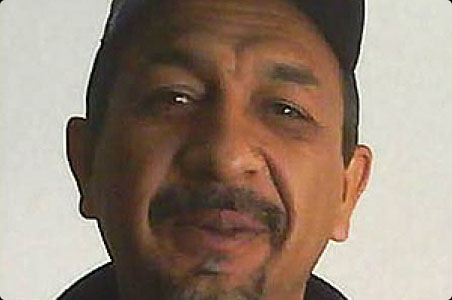
Servando “La Tuta” Gómez Martínez
Servando Gómez Martínez (a.k.a. El Profe, La Tuta—the teacher), was born in Arteaga, Michoacán, Mexico on February 6, 1966 (El Universal, August 7, 2009). He is co-leader of Los Caballeros Templarios (the Knights Templar), a Transnational Criminal Organization (TCO) based in the Michoacán region. Gómez Martínez (henceforth, La Tuta) is an ambitious, ruthless, hands-on leader with experience in several Michoacán-based TCOs. A former elementary school teacher, he should be noted for an insightful, comprehensive approach to propaganda focused specifically toward Michoacán rather than Mexico in general.
La Familia Michoacana (2006—2010)
Previous to his co-leadership of the Knights Templar, La Tuta was one of four key figures leading La Familia Michoacana, a now largely-diminished TCO also based in Michoacán. La Familia represented a chimerical synthesis of evangelical Christian religiosity, cult-like obedience, vigilantism, territorialism, local protectionism and profit-generation through drug exportation, extortion, kidnapping, murder-for-hire, human smuggling, petroleum theft, prostitution, loans, debt collection and other licit and illicit businesses. [1] The validity of dismissing the La Familia’s religious elements as purely part of a public relations front to legitimize its heinous activities can be debated. In fact, two factions within La Familia polarized around that very disagreement. A faction headed by José de Jesús “El Chango” Méndez Vargas, who was the second most influential individual, had difficulties with La Familia’s cult-like aspects.
The other faction was led by La Familia’s leader, Nozario “El Chayo” Moreno González, whose persona was a focus of its religious propaganda. La Tuta was the second or third in power within El Chayo’s faction. Along with Enrique “Kike” Plancarte Solís, La Tuta took a leading role in advancing the religious and vigilantism elements of La Familia’s image through methods focused upon the key audience of Michoacán primarily through easily accessible media such as television and radio, local newspapers, pamphlets, booklets, bibles, picnics, parades, protests and other public events. [2] This was continuous with its approach to psychological warfare, whereby mutilated victims would be publically displayed with messages drawing upon religious and vigilantism themes to frame the propaganda of the deed. La Tuta has assumed direct involvement within this campaign as La Familia’s public spokesperson, even phoning television and radio shows to advance La Familia’s cause. [3]
On one occasion he claimed that La Familia would disband if the Mexican government could defend the Michoacán public from incursions from Los Zetas. To doubt the sincerity of that offer is reasonable but immaterial to his rhetorical effect, which was to highlight the government’s infamous failure to defeat Los Zetas in other Mexican regions against La Familia’s relative success limiting Zeta presence within Michoacán. This provocation drew attention from the government that did not bode well for La Familia.
While Michoacán authorities were corrupted through terror and bribery, the federal forces subsequently dispatched into Michoacán were not well infiltrated by La Familia. In retaliation for a succession of key arrests, they killed at least 17 federal police in July 2009. [4] This provocation also backfired, resulting in President Felipe Calderón’s decision to saturate Michoacán with more federal police and military. On December 9, 2010, El Chayo was reportedly killed in a shootout with federal forces. It was La Tuta who first publically acknowledged Mexico’s claims that La Familia’s charismatic leader was dead. [5] Eulogizing El Chayo as a great man, La Tuta publically vowed to continue the fight with God’s favor against La Familia’s enemies.
The Knights Templar (2011—present)
The power vacuum within La Familia Michoacana triggered a leadership succession crisis related to blame-shifting for the death El Chayo. The faction previously lead by the charismatic leader, now co-led by La Tuta and Kike Plancarte, began to position for power against the faction headed by El Chango. La Tuta’s group accused El Chango of betraying El Chayo by refusing to support him with reinforcements, and of betraying La Familia through a pact with their enemies, Los Zetas. El Chango’s rise as leader of La Familia precipitated the splintering of the opposing faction into what became the Knights Templar. Internecine conflict transformed into inter-TCO warfare, as the Knights Templar engaged the remnants of La Familia in a brutal struggle for control of Michoacán. It is popularly believed that intelligence from La Tuta’s faction aided the federal police in their capture of El Chango on June 21, 2011. These suspicions were affirmed in El Chango’s widely circulated federal interrogation video, in which he accused La Tuta of being a traitor. [6]
El Chango has burnt important bridges, but he is ruthless, calculating, resourceful, and retains many underworld connections, including common associates. It remains to be seen whether Mexican imprisonment will impede him from further TCO involvement. El Chango has indicated the most basic motive for revenge if given the chance. Even if imprisoned, his survival remains a loose end that could jeopardize La Tuta’s safety.
Drawing upon the legend of the Knights Templar has enabled La Tuta and Kike Plancarte to more effectively reconcile the alchemy of religious devotion, masculinity, vigilantism, communal protectionism, power, righteousness, ruthlessness, territorial defense and demonization of the alien other that ultimately destabilized La Familia. Consolidated through a comprehensive theme, and a streamlined leadership structure unified in its support, the Knights Templar proceeded to assimilate or destroy most of the remnants of La Familia, ascending to dominance within Michoacán by early 2011 (InSightCrime, January 25, 2011).
La Tuta’s propaganda approach for the Knights Templar has remained focused on citizens of Michoacán. Its public displays of victims remain as terrifying as that of La Familia, and they have continued with acts of public beneficence, such as claiming to have negotiated lower food prices and vowing to minimize violence during Pope Benedict XVI’s visit to Michoacán in 2012 (InSightCrime, April 3, 2012; Borderland Beat, March 18, 2012). The Mexican authorities are attempting to repress the Knights Templar as they did La Familia, with 8,000 troops and 1,500 federal police being stationed in Michoacán as of March 2012 (Borderland Beat, March 21, 2012).
Unfortunately, the Mexican federal counter-propaganda campaign, which has emphasized prisoner interrogations and presentations, has been disseminated to a pan-Mexican audience mainly through online social media. This overshoots the key audience of Michoacán, an impoverished and presumably less wired region. Additionally, it doesn’t tell Michoacanos anything important they don’t already know.
The key issues aren’t whether the Knights Templar or La Familia are internally divided, drug-abusing, depraved, exploitative, hypocritical, enact ceremonies with mediaeval garb or collude with corrupt local government (key themes of Mexico’s counter-propaganda campaign), but rather, whether they are local, mobilize themes and symbols that resonate with the unique religious culture of Michoacán, are capable of repelling Los Zetas, curtail local methamphetamine abuse and ensure drug exportation to American markets with the return of US dollars to Michoacán.
Under La Tuta’s direction, the Knights Templar have made an affirmative claim on each, whereas the federal counter-propaganda campaign hasn’t effectively addressed any of them. Ironically, the local focus is being employed by the New Generation Jalisco Cartel, a rival TCO that has publically requested impunity from the government while it cleanses Michoacán and Guerrero of the evil, malignant plague of the Knights Templar, who have allegedly become bandits, extortionists, robbers, and rapists, the true enemies of the local population. This theme is being propagated through messages with mutilated victims in addition to videos disseminated through social media (Borderland Beat, March 18, 2012). [7] Regardless of whether the CJNG is hypocritical, its counter-propaganda campaign is drawing upon territorial, vigilantism, and religious elements famously utilized by the Knights Templar and La Familia to consolidate influence in Michoacán.
Conclusions
La Tuta Servando Gómez Martínez is highly experienced, ambitious, and a demonstrated survivor. He was once in La Empresa, the TCO that evolved into La Familia Michoacana, and emerged from that internecine conflict as co-leader of the Knights Templar. Each of those organizations was Michoacán-based, yet each went progressively further in the attempt to reconcile mandates of profit generation, regional territorialism, vigilantism and religiosity. [8]
La Tuta has made significant achievements related to his propaganda campaign focused toward Michoacán, which is thematically continuous with the psychological warfare employed against enemies of the Knights Templar. The Mexican government proved it could disrupt La Familia through military repression, but continues to fight against the Knights Templar, and has not yet mounted a compelling counter-propaganda campaign tailored for that region.
La Tuta’s most significant failure internal to the Knights Templar has been the inability to control intra-organizational corruption that ultimately alienates the crucial Michoacán power-base, including extortion, robbery, drug abuse, and gratuitous violence. His most significant failure external to the Knights Templar is the continued inability to avoid armed confrontation with Mexican federal forces. If the Knights Templar becomes overwhelmed by federal repression or inter-TCO violence, and Gómez Martínez evades death and capture, he can be expected to emerge at the pinnacle of whatever TCO materializes to claim dominance in Michoacán, where he will continue to hone a signature propagandist approach resonating more with the local population than with Mexico in general.
Notes
1. Grayson, George W., Mexico: Narco-Violence and a Failed State? New Jersey: Transaction Publishers, 2011, 179-218.
2. Grayson, George W., La Familia Drug Cartel: Implications for U.S.-Mexican Security, Carlisle, PA: Strategic Studies Institute, U.S. Army War College, 2010.
3. See: https://www.youtube.com/watch?v=FLQecfqIMN0; See: https://www.youtube.com/watch?v=HBoGR9u9XNM.
4. Grayson, George W., La Familia Drug Cartel: Implications for U.S.-Mexican Security, Carlisle, PA: Strategic Studies Institute, U.S. Army War College, 2010.
5. See: https://www.youtube.com/watch?v=7TXFLuxOaF8&feature=related.
6. See: https://www.youtube.com/watch?v=3egsaTAKPjE&feature=related
7. “Video: The Knights Templar Narcorespuestas to the CJNG,” U.S. Open Borders, March 23, 2012, https://usopenborders.com/2012/03/video-the-knights-templar-narcorespuestas-to-the-cjng/.
8. For an examination of vigilantism as a cultural phenomenon, see: Grayson, George W., Threat Posed By Mounting Vigilantism in Mexico, U.S. Army War College, Strategic Studies Institute, 2011.