A Post-Mortem Analysis of the Filipino Communist Guerrilla — Jorge “Ka Oris”
A Post-Mortem Analysis of the Filipino Communist Guerrilla — Jorge “Ka Oris”
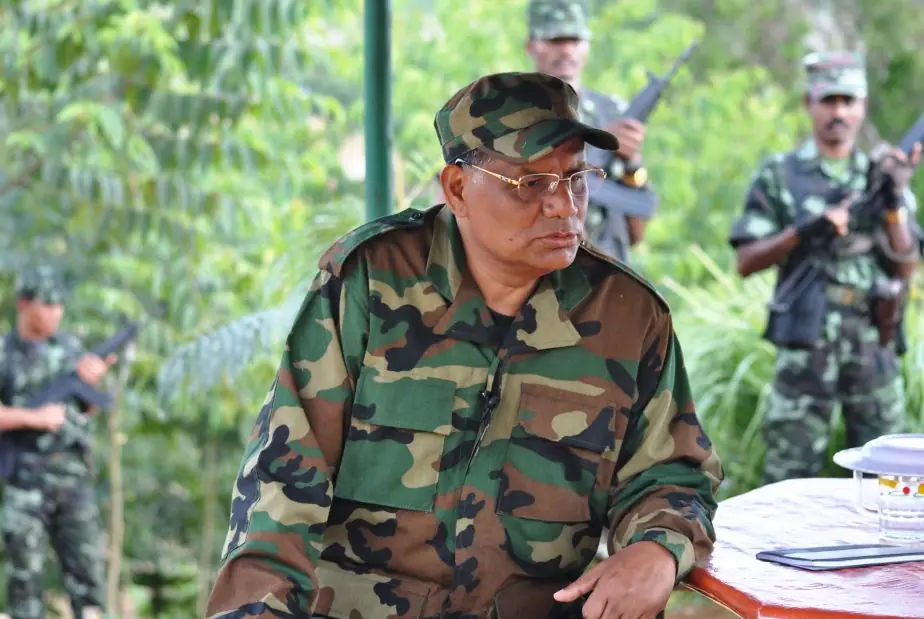
In late October 2021, a high-ranking Filipino communist rebel commander and spokesman, Jorge “Ka Oris” Madlos, was killed by soldiers in Bukidnon, Mindanao. He was on his way to receive medical treatment at the moment of attack. The Armed Forces of the Philippines (AFP) referred to Ka Oris as the “topmost wanted NPA [New People’s Army] commander in the country” and accused him of committing “murder, multiple murders with double frustrated murder, and robbery with double homicide and damage to properties” (Twitter/@TeamAFP, October 30, 2021). A spokesperson for the National Task Force to End Local Communist Armed Conflict (NTF-ELCAC), stated that Oris “played a lead role in the recruitment and radicalization of the helpless, the most gullible among us, mutating them into violent extremists of the NPA” (Manila News, November 1, 2021).
Jorge “Ka Oris” Madlos’s place in the Filipino and global Communist cause
was as a highly charismatic leader. He was a globally renowned revolutionary revered for his personality, writings, speeches, songs, as well as his seniority and longevity in the movement. His wide-reaching influence was highlighted after the confirmation of his death, which saw messages of respect pour in from communist supporters and organizations all over the world. These including the outlawed Türkiye Komünist Partisi/Marksist-Leninist (TKP/ML) party and its paramilitary wing, Türkiye İşçi-Köylü Kurtuluş Ordusu (TiKKO), and from underground Turkish Communists currently fighting in Rojava, Syria, including the Marksist-Leninist Komünist Parti (MLKP Turkey/Kurdistan) (Twitter/@ATKPML2, November 6, 2021; Twitter/@MLKP_IB, November 4, 2021). The CPP gave him the “highest revolutionary salute” and declared November 7 the “International Day of Remembrance for Ka Oris”. (Twitter/@pasabilisSMR, November 14, 2021).
Speaking on Ka Oris’ enduring legacy, the CPP asserted that the state has “succeeded only in immortalizing” him and added that “he now lives forever in the hearts and minds of the Filipino people as one of their heroes and icons” (Twitter/@cpp_marco, November 2, 2021). The CPP Central Committee also noted that he had “inspired, trained and developed thousands of his successors.” It added that his “martyrdom further inspires the current generation and further generations to continue the people’s democratic revolution through protracted war” (PRWC, November 2, 2021).
Months before his death, Ka Oris recalled the year 1968 and his enrollment in Central Mindanao University in Musuan, Bukidnon. In his words, at the time the region “was then budding with political activism within the ranks of the students and among the ranks of peasants, workers, the religious and other middle class sectors” (PRWC, January 26, 2021). The CPP Central Committee itself detailed how Ka Oris himself was one such “young student activist in the early 1970s … driven by the cause of democracy and social action” and therefore “helped organize his fellow students” (PRWC, November 2, 2021). Oris also wrote about how he came from a conservative Christian background and decided to join the reformist Khi Rho, the youth arm of the Federation of Free Farmers (FFF). He decided not to join the Kabataang Makabayan (KM) and Samahang Demokratiko ng Kabataan (SDK) underground socialist youth organizations.
Coming of Age
The student activists’ “revolutionary ferment” reached a critical point on September 22, 1972, when martial law was declared by “the dictator [Ferdinand] Marcos.” According to Ka Oris, who was an agricultural engineering student at the time, this effectively put an end to the “reform or revolution” debate (PRWC, January 26, 2021). That night, according to Oris, “more than a hundred active members of KM, SDK and Khi-Rho met at the oval ground of our university campus, and in the cover of darkness we pledged to continue the fight against the fascist dictatorship and against feudalism and imperialism by joining the New People’s Army (NPA) to wage armed revolution” (PRWC, January 26, 2021). In a 2011 interview, he again recounted the decision to go into the hills to join the armed resistance with around one hundred fellow students following the enactment of martial law (MindaNews, January 6, 2011).
Oris explained that the day after martial law was declared, hundreds of students were detained by the military, while “the rest of us who made it to the countryside found ourselves groping for guidance on how to launch armed struggle because there was no NPA unit yet then to absorb us” (PRWC, January 26, 2021). He then headed to the forested area of Davao and the Upper Pulangi River and engaged in “urban underground organizing” (PRWC, January 26, 2021). His wife, Ka Maria Malaya, a spokesperson of the National Democratic Front-North Eastern Mindanao, also detailed how Oris was captured in 1974 and held until 1976, before returning to guerrilla territory and helping grow the NPA in Mindanao again (PRWC, November 16, 2021).
Oris had appeared in the 1988 documentary “A Rustling of Leaves: Inside the Philippine Revolution,” which showed how Jorge Madlos changed his name in 1977 to ‘Comrade Oris’ and went underground, where he would remain for the rest of his life (Canada Wild Productions, January 1, 1988). Oris joined the NPA while underground and fought in one of the first Communist guerrilla groups that emerged in Mindanao. He is said to have played a significant role in the NPA’s development in the 1970s and 1980s, which saw considerable growth in the NPA’s ranks and insurgent capabilities (PRWC, November 2, 2021).
Rising in the Ranks
The CPP described how Ka Oris was selected as a representative of the National Democratic Front (NDF) in peace talks with the Corazon Aquino government starting in 1986; he was captured by state forces in 1987 when negotiations fell through. After this, he was imprisoned for five years until his release in 1992 (PRWC, November 2, 2021). During this stint in jail, Oris allegedly suffered from a bladder infection and was refused medical attention (Red Spark, November 7, 2021). This resulted in permanent health issues, which he dealt with for the rest of his life. It is likely the reason why he was travelling to see a doctor when he was killed in October 2021. CPP founder Jose Maria Sison spoke about Oris’s toughness and determination after his death, pointing out how “despite [Oris’] health condition, he trekked long distances from one guerrilla front to another, to observe first-hand the work of Party committees and NPA units” (Red Spark, November 7, 2021).
In the late 1980s and early 1990s, the NPA faced a series of setbacks and losses. Ka Oris, after being freed from prison, “served as one of the strongest pillars of the Second Great Rectification Movement which the Central Committee declared in 1992 to reaffirm the Party’s basic Marxist-Leninist-Maoist principles” as well as “its strategic line of people’s democratic revolution through protracted people’s war” (PRWC, November 2, 2021). In the final two decades of his life, Oris played a leading role as an advocate for the Communist revolutionary cause and acted as a commander of NPA insurgents in northeast Mindanao. In 2015, he was appointed as a top commander of the National Operational Command of the NPA (PRWC, November 2, 2021). The following year, he played an influential role in bringing together members of all the regional party committees from across the Philippines for the 2nd Congress of the CPP. At this event, the CPP explained that Oris was elected as a member of the Central Committee, the Political Bureau, and the Executive Committee. He was then tasked as a “leading cadre” of the Military Commission, the Mindanao Commission, and as a consultant in the NDFP peace negotiations (PRWC, November 2, 2021).
Oris also became a spokesman for the National Democratic Front of the Philippines (NDFP) in Mindinao, and during the final years of his life he served as the spokesman of the NPA. He was strongly influenced by Marxism, Leninism, and Maoism, and he had a penchant for reading the works of Communist guerrilla strategy by Mao Zedong, Ho Chi Minh, Vo Nguyen Giap, and others. The CPP notes how he “meticulously studied the history and successful experiences of waging people’s war in semicolonial and semifeudal countries” and “devoted time and effort to training the young cadres and Red fighters in the art and science of guerrilla warfare” and “wrote manuals and training courses for officers and men of the NPA” (PRWC, November 2, 2021). After his death, the CPP celebrated Oris as “a master military strategist” and “a seasoned tactician who led and participated in numerous tactical offensives” (Twitter/@prwc_info, November 7, 2021). His wife also ruminated on his militant leadership tendencies, stating that “he showed and inspired Red fighters to be creative and daring in military actions, to persist to strike a blow against the enemy without being too adventurous to avoid casualties and defeat” (PRWC, November 16, 2021).
Besides combat and ideology, Oris also championed environmental causes and his regional NPA Mindanao forces became known as “the Green Guerrillas,” which was the title of a 1995 documentary about the group’s struggle against commercial logging (Red Spark, November 7, 2021; Rod Prosser, 1995). He issued annual statements on Earth Day and condemned lumber, mining, and monocrop companies for harming regional ecosystems and negatively impacting the lives of local communities (Red Spark, November 7, 2021).
Killing and Controversy
The killing of Ka Oris was a significant victory for the Filipino state and military. Oris’ comrades and the states, however, provided contrasting versions of the events of October 30, 2021. The army’s 4th Infantry Division (4ID) claimed Oris was killed in an armed encounter, while the CPP alleged that Oris posed no threat and was ambushed on his way to receive medical treatment. The CPP stated that he and his medical aide, Eighfel Dela Peña (also known as “Ka Pika”), were unarmed and travelling via motorcycle when they were killed (PRWC, November 18, 2021).
The CPP claims that the 4ID propagates lies “to cover up their crime,” and asserts that the army could easily have arrested them as both were unarmed and in no position to give battle” (PRWC, November 2, 2021). The CPP then accuses the military of conducting airstrikes on a nearby mountain “to create the impression of an intense battle.” It added that the “plot to kill Ka Oris was personally directed by the tyrant himself … none other than Rodrigo Duterte” (Twitter/@Phil_Insider, October 31, 2021).
It was also reported that Ka Oris was located after a civilian alerted authorities to his whereabouts. The civilian was subsequently awarded an outstanding bounty of 7,800,000 Philippine pesos by the 4ID (Manila Bulletin, February 5).This is roughly equivalent to $152,120.
Conclusion
The killing of Jorge “Ka Oris” Madlos dealt a serious blow to the NPA. His death reverberated far beyond the Philippines as he was known and appreciated by Communist insurgents around the world. No comparable charismatic leadership figure likely remains in the NPA. Despite losing this icon, the NPA network in the Philippines continues to fight on and shows no signs of letting up.