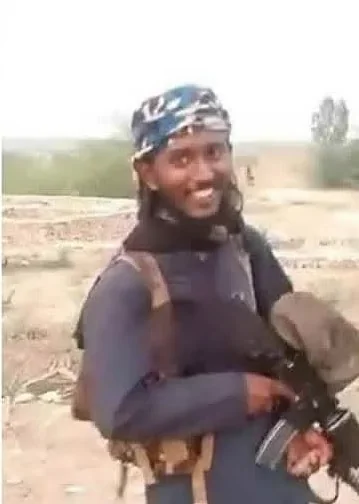
A Profile of Shari Baloch: The First Baluch Female Suicide Bomber
A Profile of Shari Baloch: The First Baluch Female Suicide Bomber
On April 26, Shari Hayat Baloch, a female suicide bomber of the Baluch Liberation Army (BLA)’s Majeed Brigade, targeted Karachi University’s Confucius Centre, killing four people, including three Chinese nationals and their Pakistani driver (Dawn, April 26). This was the first ever female suicide bombing by a Baluch separatist group since the start of fifth wave of ethno-separatist insurgency in 2002 in the strategically located and mineral-rich Baluchistan province. [1]
Although the drivers of Baluch insurgency are well known, the participation of a Baluch woman in the insurgency in a combat operation marks an inflection point (Terrorism Monitor, May 20). What further adds to the significance of this operation is Shari’s educated, middle-class background. Therefore, her profile not only reveals the changing nature of Baluch insurgency from a tribal to an educated, middle-class struggle, but also the evolving role of women from a supportive role as propagandists, recruiters, and fund collectors to a more primary position as combatants involved on the frontlines of the conflict.
Shari Baloch’s Profile
Shari, who is also known as “Barmash,” hailed from an educated, middle-class with no evidence of state repression against her. For example, none of her family members have been extra-judicially detained or killed by the Pakistani security agencies, which otherwise is the main driving force behind the current wave of insurgency in Baluchistan. Hence, revenge can be excluded as a push factor behind Shari’s decision to perpetrate her suicide attack (Independent Urdu, April 26).
In 2019, the 30-year-old Shari began working as a secondary school teacher at a local government school in Turbat, Baluchistan. She was a native of Baluchistan’s Kech district and held a masters in zoology from the University of Baluchistan and earned a Masters of Philosophy in education from the Allam Iqbal Open University (AIOU) in 2018. Before that, she completed her bachelor’s, also in education, from AIOU in 2014 (BBC Urdu, April 27).
Six months before carrying out the suicide attack, she was absent from her academic duties and was served with a show-cause notice. During this period, she moved from Baluchistan to Karachi and rented an apartment in Scheme 33 area of the port city. There she became an avid reader of revolutionary literature, particularly the works of Che Guevara, Mao Zedong, and Jean-Jacques Rousseau. In addition, she read modern and classical writers and poets, including Dante Alighieri, Mark Twain, Robert A. Heinlein, and Paulo Coelho (Daily Pakistan, April 29).
Shari’s social media posts also provide important insights about her pathway to radicalization. She was wedded to the cause of Baluch separatism and strongly driven by the revolutionary desire to sacrifice her life to resist discrimination and oppression. She believed that such a sacrifice would lead to a better future for the Baluch community. For instance, in her December 13, 2021, tweet, she wrote, “Sacrifices for a better tomorrow” (Express Tribune, May 1). Two more tweets in the same month noted: “I am not a story that will live forever. I will play my role and exit” and “You cannot buy the revolution. You cannot make the revolution. You can only be the revolution. It is in your spirit, or it is nowhere.” From these posts, it becomes obvious that her journey to self-sacrifice was driven by the desire to act on behalf of the Baluch community to secure a better future.
Family Background
Another aspect of Shari’s personality, which has puzzled many observers, is her family background. She hails from a well-established and educated middle-class family with no history of state repression, as noted above. Thus, neither poverty, nor illiteracy nor revenge, account for her pathway to radicalization. Shari was married with two kids, an eight-year-old daughter Mahrosh and a four-year-old son Meer Hassan. Her husband, Dr. Haibatan Bashir Baloch, is a dentist and a professor at Makran Medical College (Express Tribune, April 27). Meanwhile, Shari’s father retired as a director in a government agency and later served as the member of the district council for three years. Her uncle Siddique Azat is a well-known Baluch author, human rights activist and a professor (Urdu News, April 28).
In contemporary asymmetric insurgencies, it is not unusual for educated female militants from middle-class families to practice suicide terrorism. Although Shari is the first female suicide bomber in the Baluch insurgency, the phenomena of female suicide terrorism in Pakistan is as old as the history of terrorism in the country. Both Tehreek-e-Taliban Pakistan (TTP, or “Pakistani Taliban”) and Islamic State in Khorasan Province (ISKP) have used female suicide bombers to strike their targets in Pakistan (Dawn, May 6). In that respect, Baluch insurgents are new entrants to a pre-existing pattern of Pakistan’s asymmetric conflicts. In other words, Shari’s suicide attack represents a continuity rather an anomaly of Pakistan’s insurgent and terrorist landscape.
Association with BSO-Azad and BLA
The most important clue about Shari’s entry into radicalization comes from her longstanding association with the Baluch Student Organization-Azad (BSO-A) faction, which was founded by Dr. Allah Nazar Baloch of the Baluch Liberation Front (BLF) in 2002 (Twitter/@Bashirgwakh, April 27). From her college days, Shari remained an active member of BSO-A. She partook in various protest demonstrations, sit-ins and walks organized by BSO-A pertaining to the cases of Baluch missing persons, such as Baluchi’s extra judicially detained by the security agencies (Baluchistan Post, April 28). Over the years, BSO-A has played a pivotal role in sustaining and transforming the Baluch insurgency from a tribal to an educated, middle-class struggle. Presently, the three commanders who spearhead the Baluch insurgency, BLF’s chief Dr Allah Nazar Baluch, the Baluch Liberation Army (BLA)’s Basher Zeb and the Baluch Republican Army (BRA)’s head Gulzar Imam have been the chairmen of BSO-A central or its local chapters.
Two years ago, in 2020, Shari decided to join BLA’s Majeed Brigade, which is the group’s suicide squad, and volunteered for the suicide mission. [2] As per Majeed Brigade’s established practice, she was given a chance to reconsider her decision, while serving in different units of BLA (Baluchistan Post, July 20, 2020). Six months prior to her attack, she confirmed that she wanted to go ahead with the suicide mission. On the day of attack, Karachi University’s CCTV Cameras spotted her outside the gate of the Confucius Centre where she was waiting for the van of Chinese officials to arrive to detonate her vest.
Shari’s Husband Endorses the Attack
Shari’s husband is another crucial link in understanding her decision to carry out the suicide bombing. Though there is no evidence linking him to any Baluch separatist group, he went missing after Shari perpetrated the attack. It is important to mention that apart from her husband, no other member of Shari’s family knew about her intention to carry out a suicide attack or her affiliation with BLA. In his April 27 twitter post along with a family picture, Shari’s husband, Dr. Haibatan, praised Shari’s attack by stating, “Shari Jan, your selfless act has left me speechless, but I am also beaming with pride today. Makran and Meer Hassan will grow into very proud humans thinking what a great woman their mother was. You will continue to remain an important part of our lives (Twitter, April 27).”
Generally, it is assumed that women take to militancy if their fathers or husbands are affiliated with insurgent or terrorist organizations. As daughters and wives, they participate in terrorism out of obedience, loyalty or family pressure (Arab News Pakistan, May 10). However, in Shari’s case, it is quite evident that while her husband approved her decision and celebrated it later, he was not the main catalyst behind her decision to conduct the attack. [3] Rather, it was her past association with BSO-A which eventually led her toward BLA’s Majeed Brigade as well as her strong worldview about the political, ethnic and economic marginalization of the Baluch community. Therefore, a familial radicalization framework does not explain why she carried out the attack. Rather, it was individual level factors, such as her revolutionary leanings as well as feeling strongly about the repression of the Baluch community, that propelled her to her decision.
Conclusion
The participation of a Baluch woman in a suicide mission for the first time is of immense symbolic significance and points to changing tactics and a new phase of Baluch insurgency. In a detailed statement, BLA stated that Shari’s suicide attack will open the door for other Baluch women to follow her footsteps, and it claimed that several other female suicide bombers are in its suicide squad. This claim is corroborated by the fact that two weeks after Shari’s attack, the Pakistani security agency arrested another female suicide bomber belonging to BLA (Express Tribune, May 16). She was planning to attack a convoy of Chinese nationals in the restive province.
After two decades of hit-and-run guerrilla struggle, the Baluch insurgency has come of age, transforming into a formidable insurgent movement which has moved away from tribal leanings to a movement of Baluchistan’s educated, middle-class. Furthermore, the evolving roles of women within the insurgent movement and its expansion from Baluchistan’s mountains to cities like Karachi accounts for its resilience and potency. The militarized response of the Pakistani state to what primarily is a political problem has also sustained the insurgent struggle. Pakistan will have to revisit its counter-insurgency framework in Baluchistan by subordinating it to a political strategy along with addressing the grievances of the Baluch community to stem the rising tide of violence in the province.
Notes:
[1] Previously, the Baluch have waged an insurgent struggle against Pakistan in 1948, 1958-59, 1962-63 and 1973-77. [2] Author’s interview with Adnan Amir, a Baluch journalist based in Islamabad, May 7, 2022. [3] Author’s interview with a Pakistani security official in Islamabad, May 8, 2022.