Bringing the Battle to Turkey: A Profile of Islamic State Recruiter Mustafa Dokumacı
Bringing the Battle to Turkey: A Profile of Islamic State Recruiter Mustafa Dokumacı
In 2015, three terror attacks carried out by Islamic State (IS) took place in Turkey, in the cities of Diyarbakır, Suruç, Ankara, on June 5, July 20 and October 10, respectively. All three attacks were primarily directed at Halkların Demokratik Partisi (HDP, Peoples’ Democratic Party)-affiliated groups and people, a political party frequently accused of having direct links to the Partiya Karkerên Kurdistanê (PKK, Kurdistan Worker’s Party). Moreover, all of these attacks were linked to an IS cell in the city of Adıyaman, in southeastern Turkey. These links provide strong support for the argument that these attacks were an extension of PKK-IS fighting in Syria — specifically, clashes between the Yekîneyên Parastina Gel (YPG, People’s Protection Units), a PKK-linked Kurdish militia, and IS.
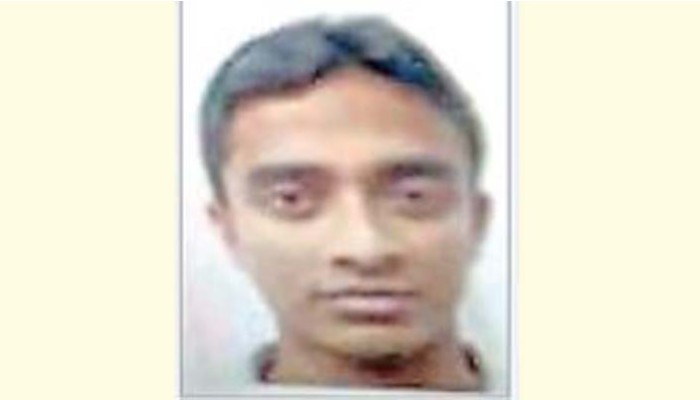
The attacks pointed to the existence of a key IS cell in Adıyaman, the Dokumacı (Weaver) group, which was credited with carrying out such attacks and recruiting IS militants. Following the Dokumacı group’s emergence, other IS cells in other Turkish cities began to emerge —each of the cells occupies different positions in IS’ organizational structure in Turkey and vary in their significance. Investigations into the IS attacks against HDP-affiliated targets and the role the Dokumacı cell played in those attacks revealed the name of an important leader within the group, Mustafa Dokumacı. Previously affiliated with al-Qaeda, Dokumacı was revealed to be a key recruiter for the group. He was so successful in his work that the cell was given his name.
Background
Born in 1985 in Adana, Mustafa Dokumacı has been on the radar of the Turkish authorities since 2013, when a thorough al-Qaeda investigation took place. A lawsuit was opened against him in 2014 within the context of a broader al-Qaeda investigation. Intercepted phone calls he made revealed that he had been living in Adıyaman, and then traveled to Syria, where he fought the YPG in Raqqa (Radikal, October 18, 2015; HaberFedai, October 25, 2015). This is important to understanding the scope of Dokumacı’s connections and capabilities. Not only was he a key contact point for potential recruits to fight in the IS ranks, but also was able to travel uninhibited to Syria and fight.
Recruitment Activity
Mustafa Dokumacı was particularly known for recruiting the two militants who carried out the bombing that took place in Ankara on October 10, 2015 (Amerika’nın Sesi, October 15, 2015). The target was a peace rally organized, in part, by the HDP. Over 100 people died in the attack, which was carried out by Yunus Emre and Ömer Deniz Dündar (Hürriyet, October 12, 2015). The attackers had traveled to Syria in 2013 and then returned to Adıyaman in 2014 with their wives, who they married in Syria, confirming the claims about the group’s efforts to facilitate people going to Syria and then returning to Turkey in order to recruit new people after they received the necessary training (HaberFedai, October, 25, 2015). While one of the deadliest attacks was linked to Dokumacı, it was not the only one.
Dokumacı is believed to have successfully enlisted around 400 recruits from in and around the city of Adıyaman to fight for IS in Syria, though other accounts refer to the group as 60-strong. It is likely that the group enlisted around 400 people, of which 60 are trained as suicide bombers. Some of those trained as suicide bombers, along with the other recruits, remained in Syria to fight (Amerika’nın Sesi, October 15, 2015; İnternetHaber, October 14, 2015; al Monitor, October 23, 2015). The other trained suicide bombers returned to Turkey to carry out their attacks. Thanks to their Turkish citizenship, it is easier for them to carry out suicide attacks due to their easier access to the assets of other cells and greater freedom of movement. In order to avoid the possibility of detection, most traveled to other cities such as Gaziantep, İstanbul and Ankara, and avoided spending too much time in Adıyaman (al Monitor, October 23, 2015).
The group organized in the suburbs of Adıyaman, recruiting local people to fight for IS. They carefully selected people from poor families in their recruiting. Then some of those who were sent to train in Syria came back to Turkey to recruit more people, in order to ensure a sustainable flow of human resources to Syria, where IS needed more and more fighters in the face of military losses.
Dokumacı and his cell’s successful recruiting efforts helped position the IS-affiliate for intensifying terror attacks in Turkey after Turkey became increasingly actively involved in the anti-IS coalition. Such attacks came to halt after the conclusion of Turkey’s Euphrates Shield Operation. Reports indicate that Dokumacı was captured — and possibly killed — about a year before the Turkish operation while participating in IS’ fight against YPG in Tel Abyad (Haber3, July 22, 2015). The Dokumacılar group’s spate of attacks has also gained the attention of the United States. On March 19, 2016, a suicide attack in Istanbul that has been attributed to the cell included two U.S. citizens among its victims. The FBI has started an investigation into the group, and the U.S. Department of Justice has requested Turkey’s assistance (Hurriyet Daily News, March 14).
While active, Dokumacı acted as the recruitment contact point for the so-called “frontier emir” in Turkey, İlhami Bali. Born in Saudi Arabia in 1982, Bali lived in Turkey until 2014. He played a key role in facilitating the travel of foreign fighters who want to join the fight in Syria by passing through Turkey. After Bali “retreated” to Raqqa, he was replaced with Mustafa Mol (born in 1981 in Şanlıurfa). From that point forward, Mol also assumed Bali’s position over the Dokumacı group. Whereas Bali was on the Turkish Interior Ministry’s “red list,” with a $4 million reward on his head, Mol, apparently assessed to be less of a threat, has been added to the “green list,” with a $1 million bounty on him. This association proved to be an important one for the fate of the Dokumacilar group. Indeed, Bali’s call was the key reason behind the Mustafa Dokumacı and the Dokumacilar group’s decision to travel to Syria to fight (ABC Gazetesi, July 9, 2016; Milliyet, July 9, 2016; NTV, October 28, 2015).
Conclusion
Understanding Mustafa Dokumacı’s militant activity is important to understanding both the expansion of IS militant activity in Turkey and the recruitment of foreign fighters by Islamic State. The group’s targeting of socio-economically marginalized youth for recruitment shows a developed understanding of which demographics are most vulnerable to their tactics. Moreover, Mustafa Dokumacı and his cell’s focus on local recruits is calculated in order to facilitate the groups spread, as well as to produce militants who can easily access strategic targets throughout Turkey. Dokumacı’s recruitment patterns also suggests that his cell focuses on building specific capabilities to meet anticipated needs — for example, enlisting Turkish recruits to train as suicide bombers. It can be argued that the group, in line with the orders from more senior IS leadership, is strategically calculating the needs it will have in order to execute future attacks and recruiting accordingly. Understanding this level of strategic planning reveals the true sophistication of the IS operation in Turkey, of which Dokumacı and his cell are a part.
Turkey’s security forces have long been conducting counter-terrorism operations aimed at exposing IS cells in Turkey and taking legal action against them. Several such operations took place quite recently in the cities of Gaziantep, Sakarya, İstanbul, Konya, İzmir, and Çorum (CNN Türk, May 19 2016; Hürriyet, July 12; Milliyet, February 5; Hürriyet, February 5; Gerçek Gündem, July 17; NTV, July 14; NTV, March 11). Moreover, the Euphrates Shield Operation and stricter border controls heavily damaged the IS-linked foreign terrorist fighter (FTF) movement. Still, returning FTFs and the potential socio-economic drivers of possible future recruitment for radical groups require a comprehensive approach, along with increased security measures, in order to avoid the rise of groups like the Dokumacı cell and its other IS-affiliates.