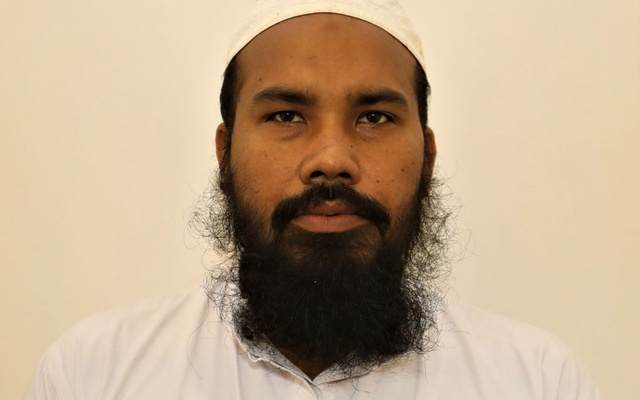
A Portrait of Shahid Mehmood: Lashkar-e-Taiba’s International Financier
A Portrait of Shahid Mehmood: Lashkar-e-Taiba’s International Financier
Shahid Mehmood is a senior leader of Lashkar-e-Taiba (LeT), which is a Pakistan-based proscribed terrorist group. Mehmood has been affiliated with LeT since 2007 and previously served as the deputy chairman of Falah-i-Insaniat Foundation (FIF)—the humanitarian and fundraising arm of LeT (Indian Express, October 19). As head of FIF in Sindh province, Mehmood helped plan LeT’s global operations, which extended to Myanmar, Bangladesh, Syria, Turkey, and Gaza, according to the U.S. Treasury Department (The Hindu, October 20). For example, in order to expand international recruitment into LeT, Mehmood travelled to a Burmese refugee camp in Bangladesh in August 2012. In 2014, he travelled to Syria and Turkey and was subsequently appointed to lead FIF operations in both countries (Indian Express, October 19). He has thus enhanced the group’s capacity to carry out attacks in foreign countries, most notably the 2008 Mumbai attacks in India (aljazeera, June 28).
Terrorist Designation in the U.S. and India, but Not China
Mehmood was born in Karachi on April 10, 1980. After joining LeT, he associated with FIF in Karachi in 2012 and travelled to many countries and developed working relationships with international organizations for LeT. As a result, in 2016, the U.S. Department of the Treasury designated Mahmood as a Specially Designated Global Terrorist (SDGT) (Global fight against Terrorism Financing, January 16, 2017). This was because he was found to have facilitated terrorist attacks with LeT’s top leadership. In August 2013, for example, he was identified as a LeT media wing member.
After designating Mehmood a terrorist in 2016, the U.S. also imposed sanctions on him and alleged that he was involved in terror attacks across in several countries, particularly in India (Indian Express, October 19). Unsurprisingly, Mehmood is also a designated terrorist in India for his role in planning and executing attacks in that country, and is wanted by Indian investigative authorities in a terror funding case. He allegedly hatched a conspiracy to establish sleeper cells in New Delhi and Haryana under the cover of religious, charity, and welfare work on the instruction of LeT’s top leader and founder, Hafiz Saeed. In 2020, Mehmood was subsequently placed on India’s “most wanted” terrorist list (The Hindu, October 20).
Besides Hafiz Saeed, Mehmood has long been a close associate of Sajid Mir, who is the brain behind the LeT’s global terrorist operations. Mir, for example, planned and directed deadly attacks in several countries in the past two decades, the most well-known being the 2008 Mumbai attacks in India. In 2009, Mir also planned an attack on a Danish newspaper in retaliation for blasphemous cartoons of Prophet Muhammad they had published in 2005 (Times of India, October 28, 2009).
In October 2022, however, China blocked a proposal by the U.S. and India to designate Mehmood as a global terrorist in the UN Security Council. This was the fourth time since June 2022 that Beijing blocked bids to blacklist Pakistan-based terrorists at the UN (The Quint, October 25). This move to block the designation of Pakistan-based Mehmood as a global terrorist aided China’s strategic partner, Pakistan, in avoiding being put on a grey-list by the Financial Action Task Force (FATF).
Pakistan had been under scrutiny by the FATF for its failure to counter the financing of terrorism within its borders since 2018. To block the listing of Mehmood, China alleged there was insufficient evidence against him and sought more time to review the details of the potential listing. India responded by accusing Beijing of double standards and labelled its move to block the designation as “politically motivated” (The Hindu, October 20).
Conclusion
Mehmood is an important figure in the LeT, particularly in the areas of recruitment and fundraising. Under the guise of FIF, he expanded LeT’s operations globally and played a key role in forging covert links with Islamic organizations in other countries, such as Bangladesh and Myanmar. Despite India’s attempt to have Mehmood listed as a global terrorist by the UN, China came through on its all-weather friendship with Pakistan to rescue Islamabad from a potential-grey listing by the FATF.
The presence of operatives like Mehmood in LeT ensures a consistent supply of financial and human capital to LeT, allowing it to carry out its activities across the world. Although he is among the group’s behind-the-scenes operatives, Mehmood’s case reflects the geopolitics of LeT and terrorism designations more generally. The veto-holding major powers in the UN Security Council prioritize their own strategic interests in terrorism designation cases, rather than considering the designation proposal on the basis of evidence and merit. This geopolitical nature of decision-making has weakened the global campaign against terrorism and, in Mehmood’s case, has enabled him to have more breathing room to operate and fundraise.