A Post-Mortem Profile of Senior ISIS Leader Usama al-Muhajir
A Post-Mortem Profile of Senior ISIS Leader Usama al-Muhajir
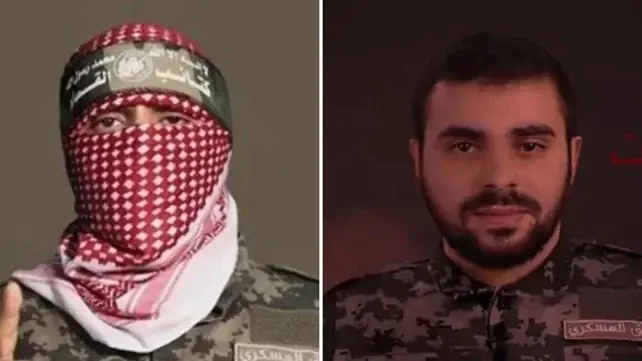
US Central Command (CENTCOM) issued a statement on July 9 to announce that it killed an Islamic State (IS) leader in eastern Syria two days earlier. This leader, Usama al-Muhajir, [1] was killed in an air strike conducted by an MQ9 drone (centcom.mil, July 9). This was the same drone that was harassed by Russian airplanes in an incident that attracted world attention only days before al-Muhajir was killed (baladi-news.com, July 8). Indeed, the Russian airplane incident attracted more headlines in the international press than the killing of al-Muhajir.
Al-Muhajir was the IS commander of eastern Syria, but he was killed near the city of al-Bab in northwestern Syria. He was the latest in a series of IS senior figures to be killed in northwestern Syria in an area controlled by rival Syrian opposition groups. There is bitter animosity and differences in strategic calculations between the Sunni Syrian opposition groups that dominate the country’s northwest—the only part of Syria where the local Sunni Arab community is not under the rule of non-Sunni authorities. This might have made it possible for IS figures to seek refuge and try to blend in within the community there (annahar.com, July 9).
The killing of al-Muhajir, and other IS leaders before him, indicates the immense pressure and major losses that IS has been suffering. Paradoxically, it also shows the group’s resistance and the changing way it now operates in Syria. IS seems to have adapted fairly quickly to this new era, where it has lost almost all of its former senior leadership from when Abubakar al-Baghdadi was caliph. Despite frequently losing top- and mid-level leaders, IS nevertheless still operates and even adopts new strategies in Syria. For example, IS has been found filtering into areas controlled by rival Sunni militant groups, even reportedly reaching agreements with their Shia foes in order to focus on targeting the US and its allies (npasyria.com, June 20).
IS has been rebuilding its network in the group’s previous stronghold in eastern Syria, and al-Muhajir was in charge of that task. Moreover, IS has been increasingly active in the vast Syrian desert (syriapostnews.com, March 22). Even in the northwest (where IS’s rivals are in control) the group continues to maintain a small but significant presence. This reflects IS’s hope that potential geopolitical changes, such as the potential withdrawal of Turkey or the US from the region, might bring about opportunities for an IS revival in both northwestern and northeastern Syria—and possibly beyond (7al.net, February 3).
Al-Muhajir’s Role in IS
As IS commander in charge of eastern Syria, al-Muhajir oversaw the part of Syria that had once been IS’s main stronghold in the days when it controlled and ruled large swaths of Syria and Iraq. Currently, however, eastern Syria is under the control of the Kurdish-dominated Syrian Democratic forces (SDF), which are supported by the US. The fact that al-Muhajir was living in northwestern Syria, an area controlled by the Syrian Sunni opposition, indicates that IS still does not have the ability to have command bases in its former heartland in the east (syria.news, April 25).
Al-Muhajir was also known by other aliases, such as Humam al-Shami, Humam al-Khidher, and Abu Anas. These different aliases obscured his identity, especially while he was living a calm life with his wife and undertaking simple jobs like many other displaced Syrians who found refuge in the northwest. Even so, after his death local sources revealed some previously unknown biographical details about al-Muhajir. He was 30 years old when he was killed, and he came originally from the mountainous region of al-Qalamoun in western Syria, near the border with Lebanon. He later lived in al-Hasaka Province in northeastern Syria (akhbaralaan.net, July 28).
Al-Muhajir was killed in the village of Zara’a near al-Bab in Aleppo province. Intelligence provided by the SDF has proven crucial in targeting IS leaders. That notwithstanding, al-Bab is in an area controlled by Turkish-backed Syrian Sunni Arab rebels. There was apparently some critical intelligence cooperation on the ground that helped the operation to kill al-Muhajir succeed. Not only was al-Muhajir’s location spotted, but also his course of movement; he was struck travelling on a highway on a motorcycle (skynewsarabia.com, July 9).
Caliphs Killed
Northwestern Syria evidently became the refuge of senior IS leaders as the group lost its stronghold in eastern Syria and neighboring Iraq. With the exception of IS’s third caliph, Abu al-Hassan al-Qurashi—who was killed almost accidentally in clashes between Syrian rebel groups in Daraa in southern Syria—other prominent IS figures were killed in northwestern Syria (al-arabiya.net, December 1, 2022).
IS’s first caliph, Abubakr al-Baghdadi, was killed in 2019 in a US operation in northwestern Syria (aljazeera.net, October 27, 2019). His successor, Abu Ibrahim al-Hashimi, was also killed in a US raid in 2022 in that same region (addustour.com, February 4, 2022). Northwestern Syria consists roughly of two areas, based on who has power: The first section is Idlib Governorate, which is controlled by Hay’at Tahrir al-Sham (HTS). The backbone of HTS is the former organization of Jabhat al-Nusra, which was for years al-Qaeda’s branch in Syria. However, since controlling Idlib in 2017, Jabhat al-Nusra’s leader, Abu Muhammad al-Julani, has significantly changed his group’s ideology and even the group’s name, which became Fatah al-Sham and then eventually HTS. He also severed ties with al-Qaeda’s global network and claimed his militant organization now identifies as a localized “Syrian” group (aljazeera.net, April 28).
Both of IS’s first two caliphs were killed in areas controlled by al-Julani’s fighters, but without any interference or known cooperation between HTS and the US. HTS was rumored to have tried to cooperate in the killing of al-Muhajir, however. In April, the US killed another prominent IS leader in HTS areas, Ahmad Ayad al-Jabouri, who was in charge of IS operations in Europe. Al-Julani and his forces, which are the largest and most unified Sunni opposition group, have been designated as terrorists by the US for some time. As such, the US does not deal with them. The ultimate goal of al-Julani’s strategy, however, is to reverse that designation and to be recognized as a legitimate opposition force internationally (jusoor.co, February 8, 2021). The killing of al-Muhajir revived the suggestions from Syrians that al-Julani has been cooperating with the US. No evidence has been provided to support that claim except geographical proximity to key past IS killings. However, there were reports that al-Muhajir had lived in HTS areas before having to move to the al-Bab area, where he was killed (akhbaralaan.net, July 28).
The killing of al-Muhajir took place in another area of northwestern Syria, which is controlled by Turkey and Turkish-backed rebel groups. Turkish president Recep Tayyip Erdogan also announced in April that Turkish forces had killed IS’s fourth caliph, Abu al-Hussein al-Qurashi, in an operation in the Turkish-controlled area in Syria (arabi21.com, May 1). If true, this was the most significant Turkish strike on IS leadership to date, and the killing of al-Muhajir shows an increasing focus from Turkey and its Syrian allies on IS. This is in spite of the fact that Turkey considers Kurdish rebels in both Turkey and Syria to be the main threat to its national security. Al-Muhajir was detained by the local Turkish-backed militia which controlled the town he last lived in. Al-Muhajir was reportedly interrogated and his phone and computer were temporarily confiscated and searched. He was later released without charges, but after his killing there have been suggestions that information about him was shared with Turkey (and probably the US) afterwards (akhbaralaan.net, July 28).
Shifting Alliances
Abu al-Hussein was declared IS caliph in November 2022, after the killing of his predecessor in Daraa, southern Syria. He is believed to have only spent a few months as caliph. More significantly he was not from the IS “old guard” that had been present and active with the group’s first caliph, al-Baghdadi. Rather, Abu al-Hussein had joined the group relatively late, in 2013 (aljazeera.net, May 2).
This new generation of IS leadership has been operating under immense pressure, but they seem to have managed to continue operating, even introducing new initiatives. The prominent Syrian opposition platform, Syrian Observatory for Human Rights (SOHR), for example, published a bombshell report claiming that Iran and Iranian-backed militias had made a secret deal with IS in 2021. According to the deal, Iran and its allies would support IS in its focus to orient its operations around striking US and US-backed forces (namely, the SDF) in eastern Syria. In return, IS would reduce attacks against Iran and its allies in the Syrian desert, where the latter has to maintain long supply lines (syriahr.com, July 14).
The SOHR report was not verified by other sources, but is worth considering. IS had famously reached an agreement with Lebanese Hezbollah in 2017 to evacuate IS fighters and families from areas adjacent to Lebanon into eastern Syria, where the group had still controlled some areas at the time (alwatannews.net, August 30, 2017). This reported agreement with Iran would, however, suggest that Iran and IS were willing to coordinate with one another to a significantly higher level than previously believed.
Conclusion
IS has increasingly suffered major losses in its leadership in Syria. This has been strategically negative for IS, because both the group’s symbolic and actual leadership remains in Syria, despite the fact that most of its strength is currently elsewhere in the world; most of IS’s power today lies with its franchise groups, such as Islamic State in West Africa Province (ISWAP). This does not mean that IS has vanished in Syria. On the contrary, it has shown some resilience under the tremendous pressure of the US and other opposed powers (alaraby.co.uk, May 15).
In Iraq, where most IS leaders originally hail from, the group is facing a more difficult time than Syria. Iraqi forces and Iran-backed Shia militias have gained overwhelming control across Sunni areas that were once IS strongholds. Syria is still more chaotic than Iraq, which offers IS some leeway. IS has mainly resorted to the desert of central and eastern Syria, which extends to western Iraq and parts of Jordan. The reports about a possible agreement between Iran and IS would indicate that IS is strategically changing under younger leaders like al-Muhajir—and that they still matter. Indeed, under Usama al-Muhajir’s tenure as an IS commander in eastern Syria, the group managed to avoid total annihilation. The group even managed to launch operations, including the attack on al-Sinaa prison in Hasaka in 2022 (elaph.com, February 2, 2022). Said operation was reportedly a result of the cooperation with Iran, which led IS to regain its ability to operate deep behind the enemy lines (syriahr.com, July 14).
While Russia’s harassment of a US drone could not stop the US operation to kill al-Muhajir, it was a stark reminder of the complexities of having multiple state and non-state actors in Syria, as well as the impact of these issues on US national security. In addition to Russia, which remains the main international backer of the Syrian government, one must also consider Iran, whose network of Shia militias are deployed across Syria. Other powers are also pursuing strategies to deal with US counter-IS strategies. Prominent among those are HTS and Turkey (as well as Turkish-aligned Syrian opposition groups). Cooperation between different parties in the field was reportedly vital in the killing of al-Muhajir, and this was probably the case in the operations that killed other IS leaders as well. Nevertheless, without clear terms of cooperation or protocols in place, the US’s strategy to cripple IS in Syria will still be prone to setbacks or strategic outmaneuvering by opponents, especially if new IS leaders after al-Muhajir’s generation show more pragmatism in finding allies that are interested in defying US counter-terrorism objectives.
Notes:
[1] Usama al-Mujahir is not to be confused with Abu Usama al-Muhajir, who was an IS leader in Yemen that Saudi Arabia claimed to have captured in 2019 (aawsat.com, June 9, 2019).