A Profile of Syria’s Influential Sunni-Arab Tribal Militia Leader—Shaykh Humaydi Daham al-Hadi Jarba
A Profile of Syria’s Influential Sunni-Arab Tribal Militia Leader—Shaykh Humaydi Daham al-Hadi Jarba
Over the last two months, an anti-Islamic State offensive conducted by Sunni Arab tribal forces has sought to displace the jihadist organization from two important towns in northeastern Syria’s al-Hasakah governorate: al-Shaddadeh and al-Hawl. These towns serve as major routes of resupply and reinforcement for the Islamic State between Syria and Iraq, and seizing them would weaken the Islamic State’s ability to defend Raqqa from attack. U.S. Special Forces operators are reportedly coordinating the campaign against the Islamic State, and the primary Sunni Arab military force that is conducting this offensive is Jaysh al-Sanadid (Sanadid Army, also referred to as Quwat al-Sanadid, or the Sanadid Force), under the overall leadership of Shaykh Humaydi Daham al-Hadi Jarba. Jaysh al-Sanadid seized al-Hawl in the middle of November, and Shaykh Humaydi was prominently featured in the celebration after the capture of the town (Twitter, November 14; ARA News [Qamishli], November 6; AFP, November 4).
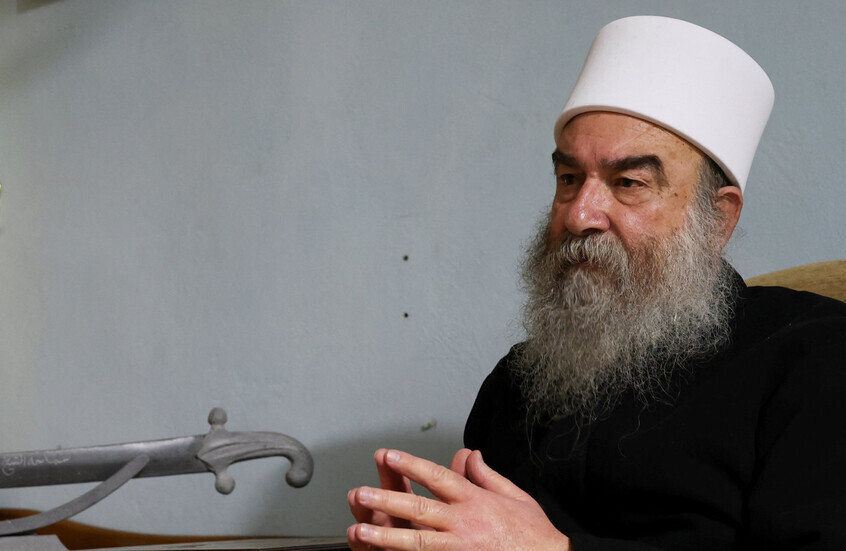
Shaykh Humaydi, 70, is the leader of a section of the Jarba, a sub-tribe of the powerful, trans-national Shammar Arab tribal confederation that has a strong presence in northeastern Syria, throughout Iraq, Saudi Arabia and in other areas of the Middle East. His tribal section is particularly powerful in the Sunni Arab-majority areas in the southeastern portion of al-Hasakah governorate, with significant tribal social networks into northwestern Iraq’s Ninewah governorate, where there is also a large presence of the Shammar confederation. The Shammar confederation are historical rivals to the Anaza confederation, of which the al-Saud rulers of Saudi Arabia are members. This historical rivalry, and sometimes animosity, between Shammar and Anaza, which in the context of the region that would become Saudi Arabia played out between the Anaza al-Saud dynasty and the Shammar al-Rashid dynasty, was recently referenced by Shaykh Humaydi in an interview with a Western reporter, in which he stated that he would work toward the collapse of the al-Saud regime in favor of the return to power of the al-Rashid (McClatchy [Tal Alo], October 27).
Shaykh Humaydi frequently states that Arab tribal identity, as opposed to Islamist political identities, are fundamental to Arab nationalism and can prevent the destruction of the Arab world, stop conflicts in the Middle East and can be a strong ideological alternative and bulwark against recruitment by the Islamic State and other militant Islamist organizations (YouTube, July 29; YouTube, June 14; YouTube, June 9; al-Jazeera, April 26, 2005). He derides Syrian opposition leaders outside of the country as being “on vacation,” asserts that the reality of Syria is war and argues that pragmatic social relations between Syria’s diverse ethnic and sectarian groups can provide security, such as in the Kurdish-led governance structure in northeastern Syria (YouTube, June 14; YouTube, June 9). Shaykh Humaydi is also controversial for stating that in order to end the conflict, he would negotiate with the al-Assad government (al-Hadath News [Qamishli], July 11, 2014; Aksalser [Qamishli], June 28, 2014).
A native of the village of Tal Alo, which is located southeast of the major al-Hasakah city of Qamishli in an ethnically mixed, oil-rich area of the governorate, Shaykh Humaydi descends from a notable lineage of the Jarba, a bloodline which provides him with significant authority over their fellow tribesmen in northeastern Syria and northwestern Iraq. His father, Shaykh Daham al-Hadi Jarba, was a powerful Shammar shaykh in northwestern Iraq who also had authority over tribesmen in northeastern Syria, and who worked closely with the British, and then the French, during the Mandate era. He eventually settled in Tal Alo, in what would become Syria, due to disputes with the al-Yawwar sub-tribe of the Shammar, which is powerful in northwestern Iraq and which enjoyed the support of the then newly installed Iraqi King Faisal. In spite of his relocation to Syria, Shaykh Daham was able to leverage his British and French patronage, ties with urban notables in the major city of Aleppo and newly privatized agricultural land received from the newly independent Syrian state—along with that which was inherited by his son Humaydi—into wealth that facilitated his ability to reinforce and strengthen their ties of patron-and-client among the Shammar tribesmen that accepted their authority. [1]
In order to cultivate the image of his overall leadership of the Shammar, Shaykh Humaydi’s official Twitter page is titled “Shaykh al-Mashaykh Shammar (Shaykh of the Shaykhs of the Shammar),” although his assertion of leadership over both the Jarba sub-tribe and over all of the Shammar of Syria is disputed (Siraj Press [Qamishli], June 4, 2014; al-Akhbar [Beirut], July 18, 2013). Shaykh Humaydi, who is a businessman, has lived and worked in Saudi Arabia, the United Arab Emirates, Qatar and the Kurdistan region of Iraq (al-Hadath News [Qamishli], July 11, 2014). Prior to the outbreak of the Syrian uprising in 2011, Shaykh Humaydi was forced into a form of exile from Syria, reportedly due to pressure applied against him by the al-Assad government because he was working with the Kurdish population of northeastern Syria, which at the time was experiencing significant repression (Siraj Press [Qamishli], June 4, 2014).
Although his claims of leadership over the Shammar of Syria are met with skepticism by competing family members, such as the prominent Syrian opposition leader Ahmad Jarba, Shaykh Humaydi’s position as the overall commander of Jaysh al-Sanadid gives him authority over what is likely to be the most powerful Arab Sunni tribal force, which is not mobilized by the al-Assad government and which is actively confronting the Islamic State in northeastern Syria. Jaysh al-Sanadid, originally called Jaysh al-Karama (Army of Dignity), is estimated to have approximately 3,000 fighters. It was first mobilized by Shaykh Humaydi in late 2013 to displace the Islamic State (then known as the Islamic State of Iraq and Syria—ISIS) from the important Syrian border town of al-Yaroubiya, which is a major transit point between Syria and Iraq (YouTube, August 7, 2014; al-Hadath News [Qamishli], July 11, 2014; Aksalser [Qamishli], June 28, 2014; Siraj Press [Qamishli], June 4, 2014). Shaykh Humaydi’s force is an autonomous military unit within the larger People’s Protection Units (Yekîneyên Parastina Gel—YPG) militia structure that is dominated by Kurds, and although the majority of Jaysh al-Sanadid’s fighters are Shammar and recognize Shaykh Humaydi’s authority, he claims that tribesmen from other Sunni Arab tribes present in al-Hasakah, including the Jabbour and Taie, are fighting together with Jaysh al-Sanadid (YouTube; August 12; YouTube, June 9; YouTube, April 18).
Controversially, Jaysh al-Sanadid has established itself as the preeminent Sunni Arab tribal militia and Shammar-mobilized armed group, at the expense of the Free Syrian Army affiliate Liwa Ahrar al-Jazirah (Free Ones of al-Jazirah Brigade), which was led by Shaykh Mujaham al-Assi al-Jarba, a competitor to Shaykh Humaydi for influence and authority among the Jarba sub-tribe (ARA News [Qamishli], August 17, 2014; Siraj Press [Qamishli], June 4, 2014). Opponents of Shaykh Humaydi assert that his militia acted aggressively against Liwa Ahrar al-Jazirah, in coordination with Kurdish forces, in order to control lucrative cross-border trade at al-Yaroubiyah, control oil resources in the area of Tal Alo and prevent the rise of a competing armed organization supported by the Shammar that would threaten his position (Siraj Press [Qamishli], June 4, 2014). [2]
Further, similar to his Kurdish allies, Shaykh Humaydi has maintained tenuous ties to the al-Assad government’s remaining security structures in al-Hasakah governorate, and Jaysh al-Sanadid’s early operations against the Islamic State in the area of al-Yaroubiyah were reportedly initially conducted with the approval of and coordination with the Syrian regime’s security forces (ARA News [Qamishli], August 17, 2014; YouTube, August 7, 2014). In spite of these notable early operations against the Islamic State, Jaysh al-Sanadid first gained notoriety in late 2014 for its role in the YPG-led offensive campaign against the Islamic State in the area of Tal Hamis, which is a strategic town located in an oil-rich area of southeastern al-Hasakah governorate. However, credible reports of the displacement of local Sunni Arab residents from Tal Hamis and its surrounding area by the Kurdish-dominated YPG, in cooperation with Jaysh al-Sanadid, has negatively impacted Sunni Arab perceptions of Jaysh al-Sanadid and Shaykh Humaydi, and has been utilized as a recruiting tool by the Islamic State in al-Hasakah (see Terrorism Monitor, April 3).
One of Shaykh Humaydi’s greatest strengths is his ability to coordinate closely with the Kurdish-led governing structure dominated by the Democratic Union Party (Partiya Yekîtiya Demokrat—PYD) that is being instituted in al-Hasakah Governorate. He has consistently positioned himself as a Sunni Arab leader who could reach out to and work with the diverse population of the governorate, including Kurds, Assyrians and Armenians (YouTube, July 29; All4Syria [Qamishli], June 10; YouTube, June 14; YouTube, June 9; YouTube, April 18; Hawar News Agency [Qamishli], March 12; Azad Hye [Qamishli], August 16, 2006). He has consistently supported the Syrian Kurds in al-Hasakah
Governorate, which has elevated him to the position of Co-Governor (sometimes referred to as the “Vice President”) of the Kurdish-run governance structure in the governorate, which the Kurds refer to as Rojava, and which he refers to as al-Jazirah (McClatchy [Tal Alo], October 27; YouTube, September 21; YouTube, June 17; YouTube, June 14; YouTube, June 9). A pragmatic leader, Shaykh Humaydi’s tolerance for the Kurds’ preeminence in al-Hasakah, even as the al-Assad government maintains patchwork authority centered in the governorate’s two major cities of al-Hasakah and Qamishli, marks him as one of the more unique figures in the Syrian civil war.
Therefore, Shaykh Humaydi is the preeminent Sunni Arab leader in northeastern Syria who has accepted the reality of a Kurdish-run, albeit pluralistic, governance structure in that region of the country. His primary role within that governance structure is symbolic of its potential diversity, bringing together Kurds, Arabs and other sectarian and ethnic groups. He features prominently in the media output of Jaysh al-Sanadid as a symbol of the potential for the diversity of al-Hasakah to be a strength against the Islamic State and its call for Sunni Arab tribes to mobilize on behalf of the Caliphate. Shaykh Humaydi appears frequently at PYD events, and in June 2015, he was sent to the Iraqi city of Sinjar to liaise with local Kurdish and Arab forces, and to meet local civilians from minority communities, such as the Yazidis, that survived the Islamic State’s rule (YouTube, August 4). These trips to Iraq are also meant to display Shaykh Humaydi as a trans-national leader among the Shammar, and more broadly as a Sunni Arab tribal leader who not only rejects the Islamic State and has a militia capable of pushing back against it, but who is also willing to accommodate minority populations.
In this capacity, Shaykh Humaydi is positioning himself, and the section of the Syrian Shammar that he leads, to be both cooperative within, and autonomous from, the Kurdish-run administration in al-Hasakah Governorate. This position of autonomy, which is a socio-political arrangement with dominant governing authorities that has traditionally been sought by Arab tribes, has the potential to elevate Shaykh Humaydi to even greater prominence, if he can become a unifying Sunni Arab tribal figure who can serve as a leader of a networked Sunni Arab tribal revolt against the Islamic State. Jaysh al-Sanadid’s cooperation with U.S. forces, and the resulting military largesse that would result from this cooperation and coordination with the anti-Islamic State campaign in Iraq and Syria, could further this goal.
However, there are potential inhibiting factors that would prevent Shaykh Humaydi from rising to a position of authority and prestige higher than he currently holds. The first limiting factor is that his closeness to the Kurdish-run governing structure in northeastern Syria further reinforces the notion that he is a client shaykh, in this context, of the Kurds. A second limiting factor is that the Syrian Arab Ba’ath Party and the al-Assad governments have sought to weaken these Syrian Arab tribal structures, and forced them to shift from being multi-regional confederations to highly localized tribal groups. While Shaykh Humaydi may be seeking to position himself as a leader of the entire Shammar confederation in Syria, his authority is likely to be more limited, more localized and challenged by competing shaykhs of the Jarba sub-tribe within the larger Shamar confederation in Syria. This would prevent Shaykh Humaydi from fully mobilizing the Syrian Shammar or other Sunni Arab tribes in such areas as al-Hasakah, Deir al-Zor and Raqqa, where the Islamic State is the preeminent governing and military authority.
Further, Jaysh al-Sanadid is highly dependent on the personality of Shaykh Humaydi for its mobilization and its continued relevance. In the event of Shaykh Humaydi’s assassination by the Islamic State, or if he becomes disempowered by the Kurdish-run administration in al-Hasakah, Jaysh al-Sanadid could collapse. However, in the near term, the personality-driven military force of Jaysh al-Sanadid, led by Shaykh Humaydi is probably the most reliable model of a Sunni Arab tribal militia group that can reach an accommodation with the Kurds and work to defeat the Islamic State. For these reasons, Shaykh Humaydi’s militia, although its mobilization potential may be limited to that part of the sub-tribe of the Shammar confederation that he has personal authority over, can provide a model for how similar Sunni Arab tribal militias can be built either to fight the Islamic State or be mobilized once the jihadist organization has been displaced from territory that it holds. Assuming he survives, Shaykh Humaydi is positioned to remain for the foreseeable future a leading Sunni Arab leader in northeastern Syria, and one of the most important—albeit complicated and limited—Sunni Arab anti-Islamic State leaders in the civil wars in Iraq and Syria.
Nicholas A. Heras is a Middle East researcher at the Center for a New American Security (CNAS) and an associate fellow for the Jamestown Foundation.
Notes
1. Information in this paragraph came from the following: Philip S. Khoury, Syria and the French Mandate: The Politics of Arab Nationalism: 1920-1945, (Princeton: Princeton University Press, 2014), pg. 533; Nelida Fuccaro, The Other Kurds: Yazidis in Colonial Iraq, (New York: I.B. Tauris, 1999), pgs. 121-124; Philip S. Khoury, “The Tribal Shaykh, French Tribal Policy, and the Nationalist Movement in Syria Between Two World Wars,” in Middle Eastern Studies, Vol. 18 no. 2, April 1982, pgs. 185-187.
2. Viber interviews with two former Liwa Ahrar al-Jazirah fighters, from the Shammar tribe, from the area of Tal Hamis in al-Hasakah governorate, now residents of the city of Qamishli. Interviews conducted on November 24, 2015.