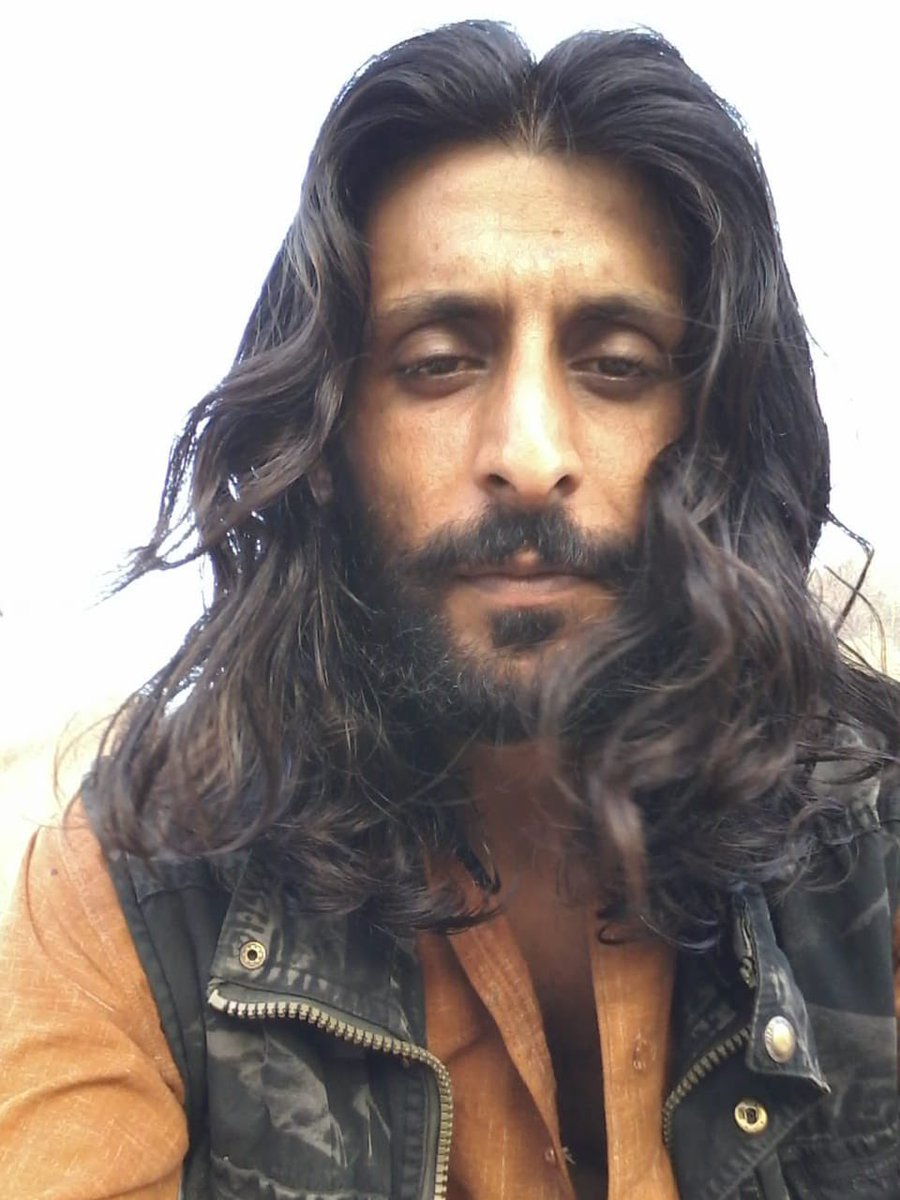
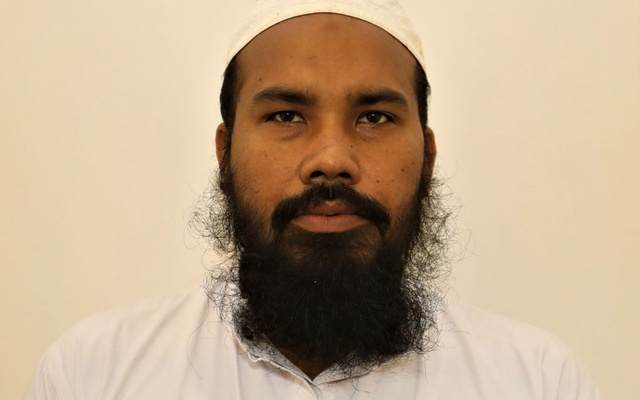
Abbas Betani: Mid-Level Commander Who Mediated Between Pakistani Taliban Factions Killed
Abbas Betani: Mid-Level Commander Who Mediated Between Pakistani Taliban Factions Killed
Executive Summary:
- On May 27, Pakistani security forces conducted a raid that appears to have killed Abbas Betani, a commander in the Pakistani Taliban (TTP). While Betani was a prominent middle-level commander at the time of his death, members of his tashkeel (fighting unit) from 2005 appeared to coordinate with his forces operationally, despite having joined other, potentially adversarial factions within the TTP over time.
- Despite a formal denial of an alliance between the mainstream TTP and groups like the Majlis-e-Askari and the Hafiz Gul Bahadur faction by their leaders, propaganda from all three lamented Betani’s death. This may suggest increased jihadist unity in the face of Pakistan’s “Operation Azm-e-Istehkam” counter-insurgency campaign, which began in June.
On May 27, Pakistani security forces conducted a raid in Tank District, Khyber Pakhtunkhwa Province. According to the Pakistan Armed Forces’ Inter-Services Public Relations (ISPR), the raid led to the death of ten militants, but further details were not provided (Dawn, May 27). However, following the ISPR press release, militants affiliated with the Tehreek-e-Taliban Pakistan (TTP), or Pakistani Taliban, issued condolence messages across multiple social media platforms to eulogize TTP commander Abbas Betani, who had been killed in the operation.
On June 7, the TTP media series dedicated to its slain militants, Rasm-e-Mohabbat, issued a poster that featured Betani and acknowledged his death. On June 28, the TTP also published a video episode of Rasm-e-Mohabbat that paid tribute to Betani, providing some previously unknown background details about his life.
Betani exemplifies the fluid nature of TTP militants, who often transition from one group to another according to their prominence on the ground. These individuals are not only jihadists but also warlords—an important dynamic to understand when assessing the alliances between militant groups. Betani was a top TTP commander, whose ability to move between militant factions allowed the TTP to increase its influence on the ground.
Who Was Abbas Betani?
Betani, whose real name is Hassan Khan, was born in 1991 and was originally from Umar Khan Kalay, which is located approximately 10 kilometers from Tank Bazaar in Tank District, Khyber Pakhtunkhwa Province, Pakistan. Betani underwent military training in 2004 under future TTP commander Azmatullah Mehsud, which he first put into practice by leading a tashkeel (fighting unit) in Afghanistan in 2005. According to the TTP’s video, Betani immediately joined the TTP with his own co-fighters when it was first launched in 2007. Betani was a major TTP commander and carried out several operations, becoming particularly active under the leadership of the TTP’s second emir, Hakimullah Mehsud (TOLOnews, November 2, 2013). During this period, approximately ten members of Betani’s family died as a result of different forces’ operations in Tank District, where his family lived.
Between 2008 and 2009, Abbas Betani fought against a pro-Pakistan Taliban militant commander, Turkistan Bettani, in Tank District. He later traveled to other cities in Pakistan, including Peshawar, Karachi, and eventually Miranshah in the tribal North Waziristan District. [1] In 2014, when Operation Zarb-e-Azb was launched by Pakistan’s Army, Betani joined his cousins Mawlana Dawood and Hamza in order to oppose Pakistan’s counter-insurgency efforts (Dawn, June 16, 2014).
Mistaken Identity
On March 15, the TTP issued a statement announcing that a group led by “Maulvi Abbas” from the Darazinda Area of Dera Ismail Khan District, Khyber Pakhtunkhwa Province had pledged allegiance to the TTP’s current leader, Mufti Noor Wali Mehsud (The Khorasan Diary, March 15). Some accounts on X associated with pro-Pakistani security forces speculated that Maulvi Abbas was actually Abbas Betani. On the same day, the TTP issued a second statement arguing that the group had established two new “shadow districts” in its “shadow province” of Dera Ismail Khan: Dera Ismail Khan City and Darazinda. The text further argued that Maulvi Abbas had been appointed district governor of Darazinda (The Khorasan Diary, March 15).
Given existing suspicions that Maulvi Abbas was Abbas Betani, this announcement led some to believe that it was Betani who had really been appointed district governor. However, this allegation appears to be incorrect. According to TTP members who fought alongside Betani, he was never posted to Darazinda, or more generally, to Dera Ismail Khan District. On the contrary, since Betani’s activities had always revolved around Tank District, his companions in the TTP stated that Betani had been put in charge of Bettani Tehsil in Lakki Marwat District, where he had been active since 2014. Further refuting the original claim, the same sources stated that Betani had never left the TTP, so there would have been no need for him to pledge allegiance again to the group’s emir. [2]
These claims were supported by the publication of the TTP’s organizational structure in early 2024. In the section that outlined the administrative structure of the Bannu shadow province, Betani was listed as the head of the sub-provincial Tajauri Area inside Lakki Marwat District. It would be unlikely for the TTP to appoint Betani to run two multiple areas inside separate districts, much less shadow provinces. As such, it can be assumed that Abbas Betani and Maulvi Abbas were not the same person.
Overlapping Loyalties
On April 16, TTP accounts on social media circulated a picture of a meeting that allegedly occurred in an undisclosed area inside Tank District on the previous day. The meeting involved numerous TTP leaders: Betani—referred to here once again as the shadow governor of the Tajauri Area of Lakki Marwat District; Maulana Umar Malang, the shadow economic manager of Tank District (under the Dera Ismail Khan shadow province, also substantiated by the aforementioned organizational chart); Abdul Baseer, TTP shadow governor of Jandola Area of Dera Ismail Khan District (likewise featured in the organizational chart); and another TTP commander below Betani, Commander Ghufran (alias Talha), who was killed on May 18 during an attack against security forces in Tank District.
Three low-level commanders were also present, including Tariq Kochi, Shahid Betani, and Granit Betani. Having all previously served under Betani, these men represented a different part of the TTP. They had pledged allegiance on March 31 to Akhtar Khalil Mansoor of the group Majlis-e-Askari, which is a part of the Hafiz Gul Bahadur faction. Under Akhtar Khalil Mansoor, they had all been given control over their own respective shadow territories: Granit Betani was appointed to Tank District, Shahid Betani was charged with the Upper Tank Area, and Tariq Kochi was made responsible for the Gomal Area.
In spite of appearances, this meeting did not reflect a structural alliance between the TTP and Hafiz Gul Bahadur’s faction. On Facebook, Abdul Baseer and the TTP’s top military commander overseeing Dera Ismail Khan, Saiful Rehman, issued a statement to the commanders who had participated in the meeting and all militants operating in the Tank and Jandola districts. The message asserted that while unity among the TTP’s factions was important—and more so in this case, as the fighters in Tank and Jandola belong to the same tribe—the TTP was nevertheless not allied to the Hafiz Gul Bahadur-aligned commanders. Some TTP members complained the leaders of Majlis-e-Askari (including their three former associates) had begun to operate more like thieves than jihadists. An undisclosed senior TTP member likewise substantiated this, denying that Akhtar Khalil’s militants and the TTP had agreed to work together in the Tank District under Betani, despite allegations to that effect online. [3]
It is important to consider the April 15 meeting in the context of a local game of warlord/jihadist politics between factions of a group with overlapping allegiances. Betani has been able to act as a key figure linking the TTP and Hafiz Gul Bahadur’s Akhtar Khalil group. One of Betani’s former companions was able to confirm that relations between the commanders that met were in fact cordial. [4]
In April, videos shared on social media by members of the TTP, the Hafiz Gul Bahadur group, and the Akhtar Khalil group featured Betani roaming around Tank and Dera Ismail Khan districts with 20–30 militants in his tashkeel. One of the videos notably includes Granit Betani, and Tariq Kochi is visible in another. This suggests quite strongly that at the very least, members of Betani’s tashkeel were still actively taking part together in operations together, despite notionally having broken away from Betani’s faction of the TTP. At present, Betani’s tashkeel is believed to comprise some 30–35 militants.
Conclusion
After Betani’s death, all TTP factions circulated videos and pictures of Betani. Some of these pictures also included his family, such as his sons Shahid and Hafiz Muhammad, who were around eight and ten years old at the time of his death. While Betani was a prominent middle-level commander, it is notable that cooperation between TTP factions is becoming more visible. In the wake of the Pakistani Army’s June offensive against militants, “Operation Azm-e-Istehkam,” there is a chance that such cooperation will evolve into a united front against the government’s security forces (The Diplomat, June 25).
Notes:
[1] Interview with a former affiliate of Abbas Betani, conducted remotely, June 28. Senior journalist Kiran Butt managed to set up the interview through her contacts.
[2] Idem.
[3] Interview with TTP member who knew about the meeting, conducted remotely, June 12.
[4] Interview with a former affiliate of Abbas Betani, conducted remotely, June 28. Senior journalist Kiran Butt managed to set up the interview through her contacts.