Abdul Bari: Mastermind Behind ISKP’s Massacre of Hazara Shias Finally Arrested
Abdul Bari: Mastermind Behind ISKP’s Massacre of Hazara Shias Finally Arrested
Immediately after the fall of Mosul in June 2014 and the subsequent declaration of a “caliphate” in Iraq and Syria, Islamic State (IS) reached out to Islamist terrorist networks, cultivated contacts, and developed franchises in South Asia and Afghanistan. IS’s caliph, Abubakar al-Baghdadi, demanded all Islamist militant groups pledge allegiance to himself. IS was able to establish a presence in Pakistan and Afghanistan, with a number of smaller Islamist cells developing in India, Bangladesh, and Sri Lanka. These groups succeeded in perpetrating scores of terrorist attacks.
Pakistan, with its abundance of jihadist activity, was heavily affected by the number of Islamist terrorist groups that pledged fealty to al-Baghdadi. Although IS had established cells across Pakistan, the western provinces of Khyber-Pakhtunkhwa and Balochistan were the most affected by the group’s activities. To this day, despite years of counter-terrorism operations in Balochistan, IS’s branch there remains active and continues to launch terrorist attacks both in the province itself and neighboring Sindh.
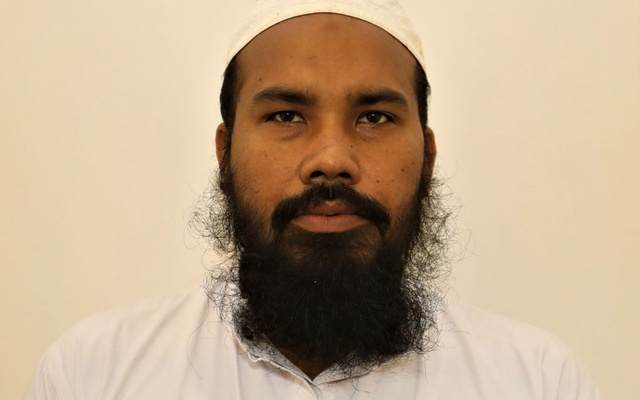
Abdul Bari is a commander of Islamic State in Khorasan Province (ISKP) and was arrested near Quetta in Balochistan in early September 2023. Given Bari’s activities in the region, this was a significant achievement for law enforcement and security forces. He was involved in perpetrating some of the most heinous attacks in Balochistan and Sindh Province. Most important among those attacks was the massacre of 11 Hazara Shia miners in 2021, an event which made Bari one of the most notorious jihadists in Pakistan (Khaama News, September 7).
The Mach Massacre
In January 2021, ISKP launched a major attack in the Mach area of Bolan District, where 11 miners from the ethnic Shia Hazara community were killed. Mach is a coal mining town 50 kilometers from Quetta. Laborers from across Pakistan live and work in the area, a significant number which are Shia–Hazara. This is why ISKP targeted Mach’s miners, who were kidnapped and taken to mountains in the Bolan area and then killed in a hut. A video of their bodies was also released by ISKP, appearing to show the miners’ corpses with their hands tied (Dawn, January 3, 2021; BBC Asia, January 3, 2021).
The attack ignited widespread protests and a six-day sit-in near the parliament building by the Shia–Hazara community in Quetta, Balochistan’s provincial capital. The protestors blocked the main city street, demanding that then-Prime Minister Imran Khan visit Quetta and form an independent judicial committee. Until he met with them, they refused to bury the deceased (Al Jazeera, January 4, 2021).
The Mastermind
Following an investigation, Pakistan’s intelligence and law enforcement bodies found that the mastermind of the Mach killings was ISKP’s Abdul Bari. Hailing from the Mastung District of Balochistan, Bari is the son of a government employee and is an ethnic Barahvi. While Mastung is known to have an ISKP presence, it is also the main base of recruitment for sectarian militant organization Lashkar-e-Jhangvi (LeJ) in Balochistan (News International, September 6). In 2017, for example, an ISKP training camp was discovered in the area by the Balochistan police’s Counter Terrorism Department (CTD) (see Terrorism Monitor, January 27, 2017).
Bari studied at religious seminaries in Karachi and Rahim Yar Khan District and started his jihadi career with LeJ in Balochistan. He had also fought with the Afghan Taliban in Afghanistan for almost a decade, finding safe havens in Afghanistan when Pakistani security forces pursued LeJ cells in Balochistan. He subsequently moved to Afghanistan in 2015 and participated in operations against US and Afghan government forces alongside the Afghan Taliban. Bari worked as an Islamist recruiter of Baloch youth and sent many of them to Afghanistan, where they also received training at camps run by the Afghan Taliban. Despite being in Afghanistan, Bari maintained contacts with LeJ cells in Balochistan. Bari’s primary focus, however, was planning terrorist attacks against the Hazara Shia community, which he despised and considered non-Muslim. Altogether, he killed over 40 members of the Hazara Shia community in a number of different terrorist attacks. [1]
Before relocating to Afghanistan, Bari and his LeJ network perpetrated a number of high-profile terrorist attacks in Sindh and Balochistan provinces. He also orchestrated the Abdullah Shah Ghazi Mazar attack in Karachi in October 2010, which injured many and killed ten. He also masterminded the killing of 14 Shia Hazara bus passengers near Quetta in October 2011. In April 2013, Bari and three other LeJ militants targeted Hazaras working at a store in Quetta, killing six people and injuring three others. Finally, in December 2017, he planned and executed a terrorist attack on a Catholic Church in Quetta, resulting in nine deaths and 56 injuries (News International, September 6).
Finally Arrested
Bari eventually joined ISKP in 2016 after the group launched a branch in Pakistan. Since then, ISKP has had a particular focus on attacking the Hazara Shia community based in Quetta. ISKP has also incited sectarian violence between the other groups and the Hazara, leading to tensions and unrest within the province. After joining ISKP, he collected funds from drug traffickers and affluent businessmen in Quetta by capitalizing on his old associations with the Afghan Taliban. He then used these funds to execute terrorist attacks in Balochistan, including the Mach attack in 2020. The attack in Mach occurred after an ISKP commander in Afghanistan, Qari Ubaid Ullah, alerted Bari to the fact that there were many Hazara Shias living there. Bari, Qari Ubaid Ullah, and other ISKP militants held a meeting in Quetta to plan and execute the attack. [2]
The havoc Bari created led to a concerted effort by the Pakistani security apparatus in Balochistan to arrest him. The federal Intelligence Bureau (IB) also played a pivotal role in Bari’s arrest. Working together, the IB and Balochistan police were able to gather critical intelligence regarding Bari’s movements near the Pakistan-Afghanistan border. [3]
It became known that Bari frequently moved back and forth from Spin Boldak (an Afghan border town) to Quetta, mostly staying in rural areas along the border. His movements were continuously tracked by IB operatives, who prepared for his arrival in Pakistan. Bari was surprised by the ambush and was finally arrested in a joint operation led by the IB.
Conclusion
ISKP’s presence in Balochistan is of concern to Pakistani law enforcement organizations. Bari’s arrest, however, marks a significant victory in the ongoing fight against terrorism. His arrest underscores the relentless efforts of law enforcement agencies and intelligence services in tracking him down and serves as a reminder of the importance of cooperation among multiple security, intelligence, and law enforcement organizations. While Bari’s capture is a notable achievement, it also highlights the need for continued vigilance and proactive measures to prevent the radicalization of individuals and the recruitment of new militants to ISKP and its partner militant groups.
Notes:
[1] From discussions with a senior law enforcement officer on September 22, 2023.
[2] Ibid.
[3] Ibid.