Abu Zachariah: Islamic State’s Little-Known Leader in Southeast Asia
Abu Zachariah: Islamic State’s Little-Known Leader in Southeast Asia
In March, Islamic State (IS)’s centralized media apparatus announced the selection of a new caliph, Abu al-Hassan al-Hashimi al-Quraysh, and IS provinces began disseminating photos and short videos to show pledges of allegiance to him (al-Furqan Media, March 10). The Islamic State in East Asia Province (ISEAP) disseminated its own pledge through a photostream published March 11, showing at least two operational cells (Amaq News Agency, March 11). On April 3, a seven-minute video was also released showing two ISEAP cells with at least 40 fighters swearing allegiance to the new IS leader (Amaq News Agency, April 3).
On November 30, IS media announced the death of the aforementioned caliph following his roughly half-year term in leadership and appointed Abu al-Husayn al-Husseini al-Qurashi as his successor (al-Furqan Media, November 30). On December 1, IS media began publishing photo and video reports of all the provinces and cells around the world pledging allegiance to the new caliph. ISEAP pledge images arrived after seventeen days—more than a week after all the other oaths. The photographs referenced only the Philippines areas (as opposed to their full range of their claims) and provided only four images, which showed a small group of ten fighters in addition to the speaker; this was unlike the previous pledges to caliphs, which displayed two large cells with over fifty fighters each (Amaq News Agency, December 17).
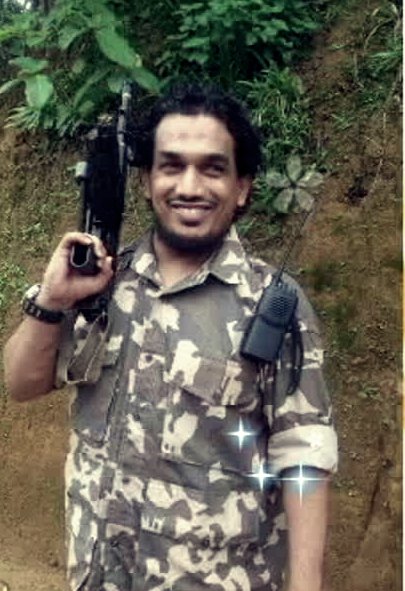
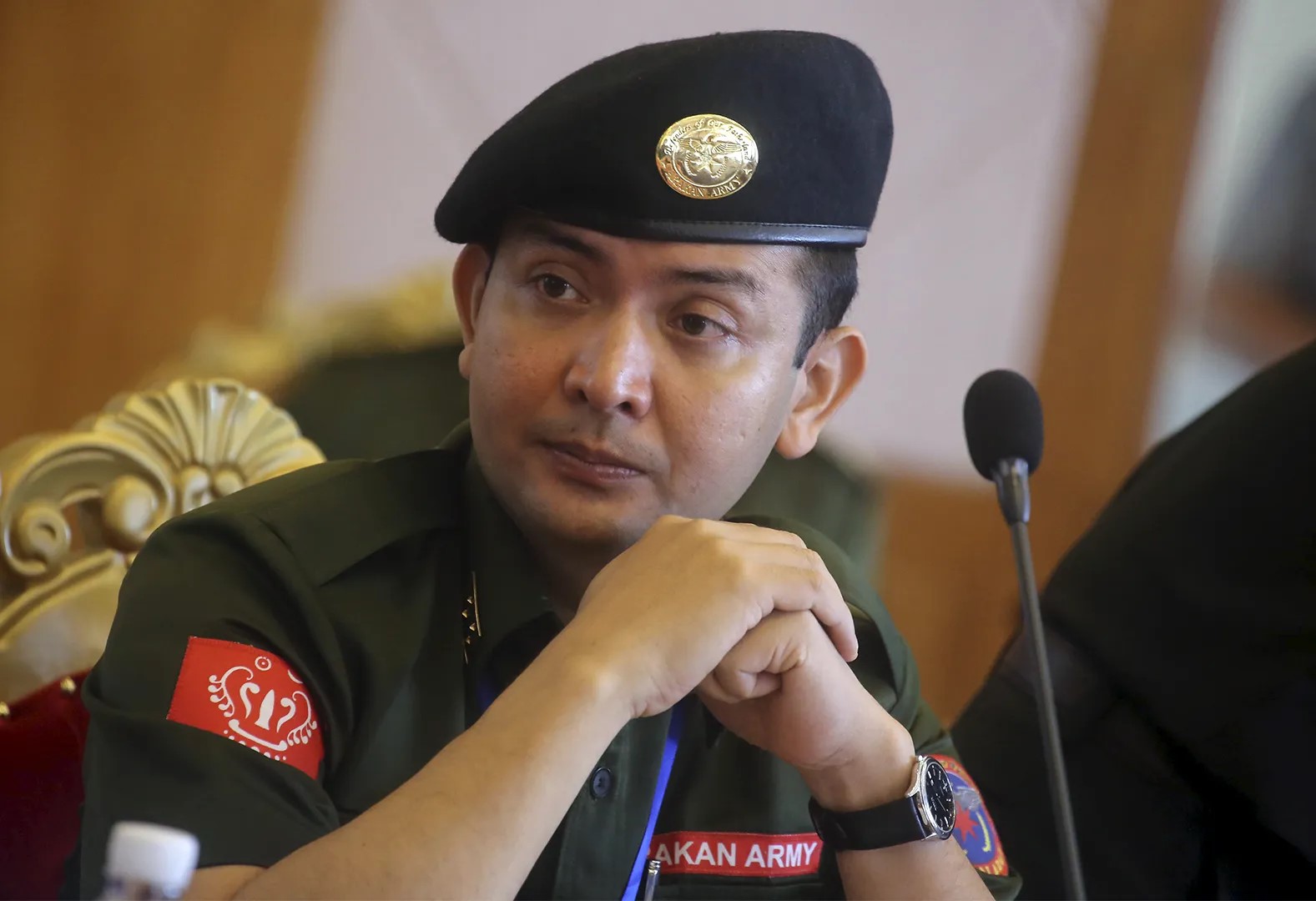
In all ISEAP propaganda material, one never sees the faces of the speakers or cell leaders. Thus, very little has been known about ISEAP’s own leader. Based on claims made in the past year, the group operates in the Philippines and Indonesia and has intentions to expand into other theatres, such as Thailand, Malaysia, and Singapore. Nevertheless, ISEAP has a specific leader, according to information disseminated by the Armed Forces of the Philippines (AFP). This leader is Faharudin Hadji Satar (or Jer Mimbantas and Abu Bakar), but he is commonly referred to by his alias, “Abu Zachariah” (Minda News, March 2).
Abu Zachariah’s Path to Power
Abu Zachariah belongs to the Mempantas clan, which is one of the main clans in the Philippine province of Lanao. He is a nephew of Alim Abdul Aziz Mimbantas, who was an important member of the Moro Islamic Liberation Front (MILF) (Benar News, March 3). This former Filipino rebel group is now collaborating with the government in Manila as provided for in the Bangsamoro Organic Law. [1] Abu Zachariah had problems with his clan because he decided to join the Maute Group, which had pledged allegiance to IS (The Diplomat, June 1).
Despite these family issues, Abu Zachariah distinguished himself within the Maute Group during the long siege of Marawi in 2017 under Omar Maute’s and Abdullah Maute’s leadership. With Abu Sayyaf, then led by Isnilon Totoni Hapilon, the Mautes and their fighters besieged the Philippine city for over five months under the banner of IS. The two charismatic “Maute Brothers” were killed during the siege by Philippine government forces and other city commanders (Benar News, October 16, 2017).
However, Abu Zar, the succeeding leader of the Maute Group, and Abu Zachariah managed to escape Marawi. They left shortly before the final assault by the Philippine army, with orders to gather reinforcements and establish a food supply route for the besieged (Manila Times, March 3). The leader of ISEAP then became Abu Zar, who was also running several other local jihadist groups [2] until March 2019, when he was killed in a counter-terrorism operation. The leadership of ISEAP then passed to Abu Sayyaf leader Hatib Hajan Sawadjaan, while Abu Zachariah became leader of the Maute Group, itself named after the two brothers killed during the siege of Marawi in 2017 (Benar News, October 10, 2020).
Becoming ISEAP Leader on the Run
In July 2020, ISEAP leader Sawadjaan was killed in clashes with Philippine security forces (Philippine News Agency, March 4). There was no news of any succession to the ISEAP leadership position or of Abu Zachariah until November 2020. At that time, the Philippine Security Forces in Lanao del Sur reported that seven relatives of Abu Zachariah, including his parents, had surrendered to government authorities and demanded that the leader of the Maute Group himself surrender (Sunstar.com.ph, November 20, 2020).
Although no official note or statement from IS has been released since 2020, Abu Zachariah has been considered to be the leader of ISEAP for some time. Confirmation of his leadership finally was confirmed by the Philippine counter-terrorism forces who killed several ISEAP leaders in an operation in the town of Maging in Lanao del Sur in March 2022. Unfortunately, the operation failed to capture Abu Zachariah (Benar News, March 2).
Abu Zachariah is still alive but on the run. This is known from a report released by the Philippine Army on December 12, 2022. In the report, the Philippine army announced the capture of an encampment of Maute Group holdouts in Marogong in Lanao del Sur, alongside war materiel and explosives they had cached there. Major General Roy Galido, head of the army’s 6th Infantry Division, stated that intelligence reports confirmed that Abu Zacharia, the leader of IESAP, was in the Marogong area with about 30 of his fighters, but that once the military operation started and government forces reached the camp, the militants had all fled (Philippines News Agency, December 13).
Conclusion
Since Abu Zachariah became ISEAP’s leader, as part of both its economic warfare and war of attrition strategies the group has claimed to have perpetrated a total of 16 attacks in the Philippines and four others in Indonesia in 2021. From January to June 2022, ISEAP proceeded to conduct seven attacks in the Philippines (Jihad Analytics, July 1). However, with Abu Zachariah’s assumption of leadership, ISEAP’s power center is now the Maute Group, which will have to face the challenge of managing the various local Filipino and Indonesian jihadist groups loyal to IS, such as Abu Sayyaf and Indonesian cells. In addition to increasing attacks, Abu Zachariah is focusing heavily on boosting recruitment, especially in the Marawi area among citizens disgruntled by the slow reconstruction of the city; other major recruiting grounds include the Balindong, Madalum, and Piagapo areas where there are many MILF camps (Benar News, October 16, 2020). In MILF ranks there are also many heavily armed separatist militants who are dissatisfied with the Bangsamoro Organic Law that was signed with the Manila government. They too could become potential recruits.
The delay in ISEAP’s renewal of the pledge of allegiance, the lack of dissemination of materials from several weeks of claims and attacks conducted by the group, and the recent news of counter-terrorism operations against ISEAP collectively suggest that the group is facing significant difficulties. It also reveals a leader on the run. Despite this, Abu Zachariah is a capable and veteran leader who operates in a territory that favors armed and clandestine struggle.
Abu Zachariah is also facing issues related to the diminishing influence of IS ideology in the region, with local insurgencies filling the vacuum IS’s decline has left. He, therefore, needs to provide a sufficiently inspiring goal for all local jihadist and separatist groups to unite under his leadership. Strengthening ISEAP depends heavily on the group’s ability to evade counter-terrorism operations that have hit the group hard over the past two years. To survive, ISEAP will need to create long-term strategies to boost funding networks, military operations, and recruitment, while gaining local popular support, defending strongholds, and reviving the various armed groups loyal to IS in Indonesia and the Philippines. These groups have never disappeared, but, like Abu Sayyaf, they have suffered heavy losses and defeats over the past three years (Terrorism Monitor, August 12).
Notes
[1] This Philippine law ended the conflict between the Philippine government and the MILF and to establish the Bangsamoro Autonomous Region in Muslim Mindanao (BARMM). It also led to the disarmament of the MILF’s military arsenal. [2] Maute Group, Abu Sayyaf, a faction of the Bangsamoro Islamic Freedom Fighters (BIFF), Ansharul Khilafah Philippines, Dawlatul Islamiyah-Maguindanao, Dawlatul Islamiyah Waliyatul Masrik and Dawlatul Islamiyah-Torayfe Group.