Allah Nazar: The Face of Baluch Separatist Militancy in Pakistan
Allah Nazar: The Face of Baluch Separatist Militancy in Pakistan
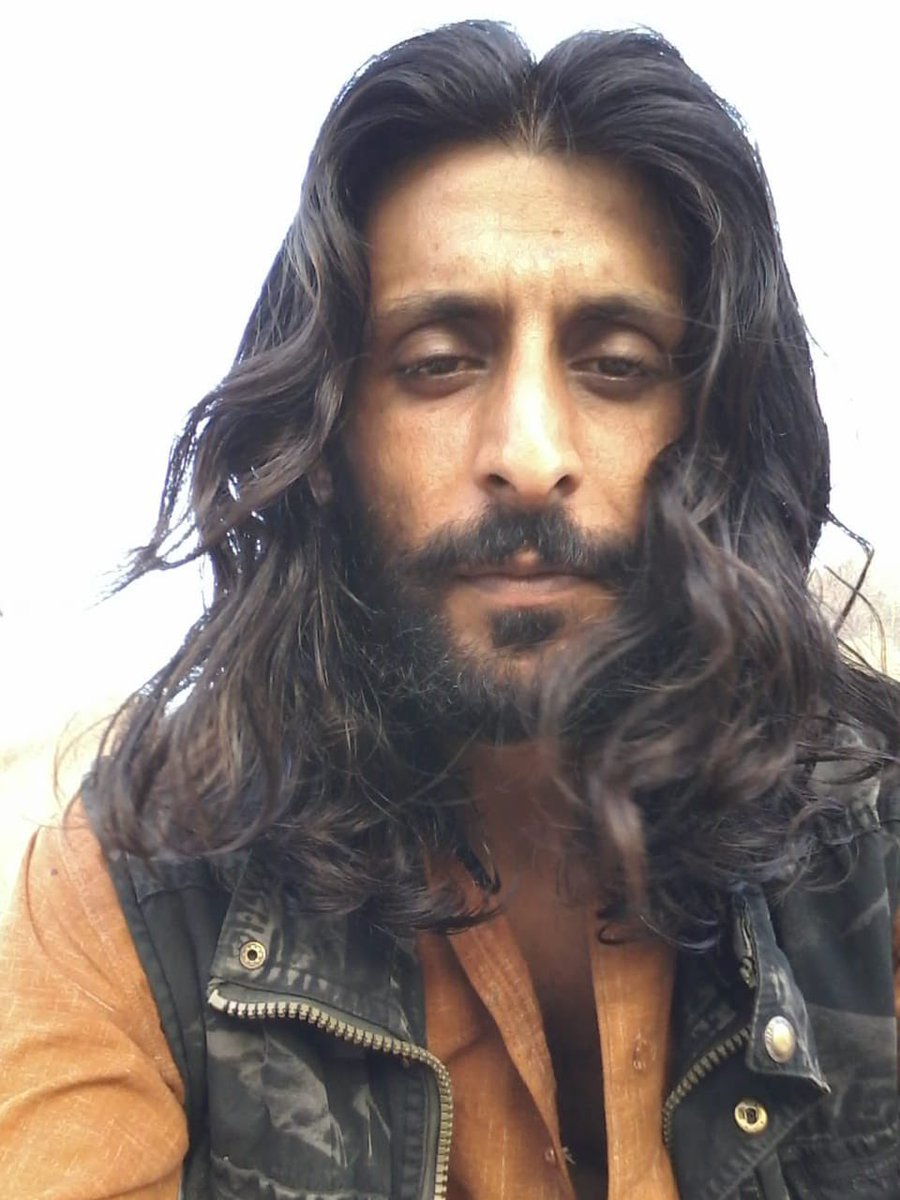
Allah Nazar is the leader of the Baluchistan Liberation Front (BLF), a banned militant group engaged in a war against Pakistan and seeking the independence of Baluchistan province. As a separatist Baluch leader, Allah Nazar’s BLF has thus far carried out hundreds of terrorist attacks on Pakistan’s armed forces and civilians. Nazar himself has become a new face of Baluch separatism, despite coming from a middle-class, as opposed to upper-class, family background.
Nazar was originally the founder of Baluch Student Organization Azad (BSO-Azad) (“Azad” means “free” in Urdu language), which has had great appeal among young Baluch’s with separatist and militant tendencies (Bolan Voice, February 24, 2013). His orientation toward youth recruitment since his time with BSO-Azad has meant he has long been popular among young Baluch’s. Pakistan banned BSO-Azad in 2013 for its alleged involvement in terrorist activities (DOPEL, April 2022).
The BLF has been strengthened by Nazar’s ties to the disgruntled youth of Baluchistan, and indeed, the BLF still recruits its young, energetic, and daring members from BSO-AZAD.
Nazar’s Early Life, Political Struggle, and Militancy
Allah Nazar studied medicine and is a physician by profession. Born on October 2, 1968 in the Mashkay area of Baluchistan’s Awaran district, he received his early education in that same district and completed his high school education in 1986. Nazar later relocated to Kech district in Baluchistan province and, in 1989, acquired his intermediate education from Atta Shad Degree College in Kech. After this, he moved to Quetta, the capital of Baluchistan, where he attended Bolan Medical College in 1992. He became the winner of a gold medal in gynecology in 1999 while there (The News, August 11, 2015; People Pill, April 2022).
Nazar joined the BSO during his studies in Atta Shad Degree College in Kech in 1989. This was the beginning of his political career. In 2002, however, he gave up his political struggle as a Baluch nationalist and became a separatist by supporting armed struggle against the Pakistani state. He then formed his own militant group, BLF, and went underground in 2003. BLF first announced itself publicly in May 2004 when it claimed a terrorist attack that killed three Chinese engineers in the southern port city of Gwadar (Dawn, May 5, 2004). In 2005, the country’s intelligence agencies captured him in Karachi and for one year he was considered a missing person. In 2006, he was moved to a jail in Quetta, but was later released in 2008 by Pakistani authorities after he reached a deal with the military establishment and agreed to give up the path of violence and desist from terrorist activities against Pakistan (Express Tribune, September 9, 2015). Nazar, however, violated the agreement and continued to orchestrate attacks on Pakistan’s security forces. This forced him back underground after his release and he has since remained engaged in militant activities against Pakistan’s security forces (The News, August 11, 2015; Express Tribune, September 9, 2015)
Although Nazar has not been captured since 2005, in October 2017, Pakistan’s security forces detained four women and three children in Chaman on the Pakistan-Afghanistan border as they were travelling illegally into Pakistan from Afghanistan. The detainees included the wife and daughter of Nazar. A week later, the Baluchistan government set free the family members of Nazar because they were not involved in terrorist activities (The News, November 4, 2017).
In Nazar’s Own Words
Nazar is neither a tribal chief nor the son of a Baluch tribal chief. Rather, his middle-class upbringing coincided with his challenging the prevailing tribal system in Baluchistan and his calling most of the Baluch tribal chiefs stooges of the Pakistani establishment. For example, he repeatedly stated, “the current tribal system is not the one our ancestors practiced.” He strongly believed that tribalism and the tribal system was losing its influence across the province, which was beneficial because it was an obsolete and exploitative system that hindered Baluch progress (The News, August 11, 2015).
In another interview, Nazar declared, “The Baluch movement is entirely a political struggle. Baluch militancy is also bound by the golden principles of politics. Our political ideals mean our political state; a democratic and prosperous Free Baluchistan.” Further, he added that the “Baluch freedom movement is an indigenous movement from the very beginning. We rely on our own people who support us by all means; logistically as well as financially. We will keep continuing until victory. Although the international community has closed their eyes towards the Baluch, they are not fulfilling their international humanitarian obligations and are reluctant to move against Pakistan which has committed heinous crimes against humanity in Baluchistan.”
He also stated, “there is more than one organization struggling for an independent Baluchistan, which has its own advantages and disadvantages. But all of us agree over one point, that is an independent Baluchistan. In this way we suffer more, but the brutality and tyranny of the occupier will compel us to unite and confront the enemy” (Naked Punch, March 1, 2015).
Nazar’s Attacks on Military and Civilian Targets
Nazar’s BLF has attacked both civilian and military targets in Baluchistan. He himself, for example, claimed several attacks on Pakistani security forces and carried out killings of non-Baluch Pakistani citizens along ethnic lines. Further, he was allegedly involved in targeted killings of dozens of journalists in Baluchistan (Radio Free Europe, October 9, 2014).
In 2017, Nazar even threatened through a tweet from his now suspended personal account to kill school children. The tweet stated the “Pak[istan] army compels us to do the same in Lahore’s schools So they may feel the pain of our kids. Don’t scream then as you did in Peshawar” (Security Analysis Blog, November 2, 2017). This indicated his threatening to repeat the attack in 2014 on the Army Public School in Peshawar city in which 132 school children were killed by Tehreek-e-Taliban Pakistan (TTP) (Express Tribune, December 16, 2014). He even went so far as to announce that he will target Chinese interests in Baluchistan by declaring the China Pakistan Economic Corridor (CPEC), the flagship project of China’s Belt and Road Initiative (BRI), as the prime target of his militant group. BLF blames the Pakistani government for unfair exploitation of Baluchistan’s natural resources and sees China as a partner in this exploitation. Hence, the group targets both Chinese nationals and Chinese projects in the province (NDTV, February 3).
Most recently, on January 25-26, ten Pakistani soldiers were killed in a terrorist attack on a security forces checkpoint in Kech district of Baluchistan. The BLF claimed responsibility for the attack (Dawn, January 27; Gandhara, January 27). Responding to a question as to why his group attacks people from Punjab province on ethnic lines, Nazar stated he condemns attacks on civilians, but “one who supports the policies of the colonizer [the Pakistani state] and plays the role of fifth column, the Baluch consider him as a collaborator. So the Baluch target the collaborators without any discrimination of ethnicity they belong to. No matter Baluch by race or a settler (Naked Punch, March 1, 2015).” People from Punjab, which is the most populous province in Pakistan, tend to dominate the power corridors in Islamabad, including the military establishment, while Baluchistan is Pakistan’s largest province with respect to area, but is the least populous in the country. This has fed grievances against Islamabad and the Punjabi establishment for not providing sufficient funds to combat underdevelopment in Baluchistan province. Hence, Baluch-Punjab relations have been tense over distribution of federal resources, which is reflected in Nazar’s statements.
The Geopolitics of Nazar
Nazar is believed to be using Iranian soil to orchestrate terrorist attacks inside Pakistan. His BLF is one component of Baluch Raaji Ajoi Sangar (BRAS), an umbrella group of Baluch insurgent groups. BRAS, which is based in Iran, has launched several attacks on Pakistani citizens. In 2019, it brutally killed 14 bus passengers along the border with Iran (Arab News , June 5, 2020). Pakistani officials have, therefore, repeatedly called on Tehran to take action against BRAS militants (Terrorism Monitor, March 25)
Pakistan also accuses its archrival India of fueling unrest in Baluchistan by funding the Baluch separatists, including Nazar’s BLF. Pakistani authorities claimed that the attack on Pearl Continental Hotel, a five-star hotel in Gwadar, on May 11, 2019 was masterminded by Nazar, with the alleged involvement of the Indian spy agency, Research Analysis Wing (RAW). The attack had allegedly been planned and financed by RAW, which remained in contact with the attacker using an Afghan phone number. As part of the plan, Nazar allegedly travelled to India on a fake Afghan passport under the cover name of Haji Nabi (Dawn, November 15, 2020).
In an interview with an Indian media outlet in 2019, Nazar even expressed his grievances against Pakistan and asked the Indian government to extend help to Baluch separatist groups. He stated Pakistan has “no interest in the welfare of Baluchistan and the Baluch nation. They are only interested in our 750 miles long coast and minerals. So we Baluch have no way other than resistance, to divert the attention of the world towards oppressed Baluch. We appeal to the Indian government and PM Narendra Modi as the prime minister of the largest democracy of the world to support the Baluch movement morally, diplomatically and financially (OPIndia, July 22, 2019).
Conclusion
Pakistan’s southwestern Baluchistan province, which borders Afghanistan and Iran, has been reeling under a Baluch separatist insurgency since 2004. It is evident from Nazar’s profile that he abandoned the political struggle for the constitutional rights of Baluch people and adopted a path of militancy and has waged a war against the state of Pakistan. It was the frustration of many Baluch youth that pushed him and others into joining militant groups after Pakistan’s security forces killed veteran Baluch nationalist leader Nawab Akbar Khan Bugti in 2006 (Dawn, August 27, 2006).
The 80-year old Bugti had served as chief minister and governor of Baluchistan province. Nazar has continued Bugti’s legacy, but what distinguishes Nazar from other Baluch separatist leaders is his middle class-background. This combined with his medical experience and appeal with the younger generations has only increased the influence of BLF.