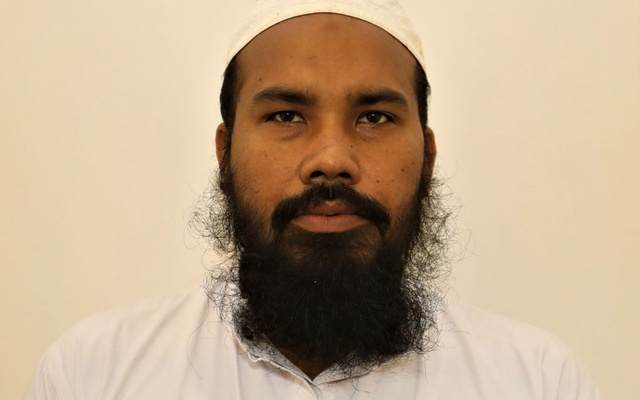
Asif Adnan: Urban, Young, and Digital Face of Islamist Extremism in Bangladesh
Asif Adnan: Urban, Young, and Digital Face of Islamist Extremism in Bangladesh
Executive Summary:- Asif Adnan, son of a High Court judge and former musician, became radicalized after the 2013 Shapla Square movement and was arrested in 2014 for ties to Ansarullah Bangla Team and al-Qaeda networks, though quickly released on bail.
- Since then, he has reinvented himself as an Islamist author and translator, framing extremist discourse in intellectual terms that resonate with Bangladesh’s urban, educated youth.
- Adnan has built a large online platform—over 300,000 Facebook followers plus YouTube, TikTok, and blogs—using sophisticated digital outreach rarely seen in Bangladeshi jihadist circles.
- His influence has expanded since the fall of Sheikh Hasina’s government; his role in a foiled July 2025 plot against the U.S. Embassy in Dhaka underscores the regional risks posed by his blend of academic credibility, digital charisma, and global jihadist messaging.
Traditional religious fundamentalism in Bangladesh is now making use of digital technology for dissemination, spearheaded by a new generation of urban and tech-savvy extremists with mainstream academic backgrounds. This evolution presents a significant hurdle for counter-extremism efforts in the country (S. Rajaratnam School of International Studies, June 4). Within this normalized radical milieu, Asif Adnan (also known as Shuvo and Julkarnain) has emerged as a prominent ideologue, evolving from a musician to a radical preacher, activist, and author. Adnan and other new actors leverage their educational credentials and digital expertise to portray violent ideologies as intellectually and morally sound so that they may resonate with Bangladesh’s younger, urban, and educated demographic. The trend has intensified since the August 2024 regime change in Dhaka, which allowed previously isolated extremist groups to forge alliances on common platforms like SEAN Publication. [1] The recent political shifts have created a more permissive environment for radical discourses, enabling figures like Adnan to gain unprecedented traction among a susceptible populace. Unlike similar individuals who focus solely on Bangladesh, Adnan appears to operate as a jihadist strategist with a global agenda. From Mainstream Academia to Radical Preacher Asif Adnan’s background is notably different from that of many traditional Islamist figures in Bangladesh. The son of a former High Court judge, Abdus Salam Mamun, Adnan pursued his education at Bangladesh’s prestigious mainstream institutions, including St. Joseph School, Notre Dame College, and the University of Dhaka, where he earned a master’s degree in Economics. Adnan's family highlighted Adnan’s "brilliant academic and cultural records" and first-class degree in economics in a bail application (blabbermouth.net, October 3, 2014). Prior to his radicalization, Adnan was involved in music as a guitarist and singer in a death-metal band called Jahiliyyah (Arabic: جاهلية, referring to the pre-Islamic “Age of Ignorance” and idolatry). Formed in 2010, Adnan previously maintained that his passion for metal music was fully compatible with his Islamic faith. “I’m a Muslim and I follow the rules of my religion, but that doesn’t stop me from living with a passion for metal, and keep an open mind,” he remarked in response to questions about how his faith and his love of death metal could coexist in a 2014 interview (Roads and Kingdoms, April 8, 2014). Adnan's transformation began in the aftermath of the 2013 Shapla Square movement. The movement was led by Hefazat-e-Islam Bangladesh, a radical Islamist platform demanding the enactment of blasphemy laws (Muslim Bangla, June 1, 2024). This period of heightened tension between Islamists and secularists in Bangladesh, coupled with the escalating crises in Syria and Iraq, appears to have served as a catalyst for Adnan's radicalization. In 2013, Adnan was one of the country’s prominent voices against atheism at a time when atheist bloggers, writers, and activists were being hacked to death by the members of Ansar al-Islam, the Bangladeshi wing of al-Qaeda in the Indian Subcontinent (AQIS) (see Terrorism Monitor, December 9, 2017). Extremist Escalation Adnan's involvement in extremist activities led to his arrest, together with his friend, Fazle Elahi Tanzil, a former senior bureaucrat’s son, on September 24, 2014, by the Bangladesh Police’s Detective Branch (DB). Both were allegedly followers of Ansarullah Bangla Team's spiritual leader Jasimuddin Rahmani, and inspired by then-al-Qaeda leader Ayman al-Zawahiri (Deutsche Welle, October 17, 2022). Adnan allegedly plotted subversive activities, hoping to overthrow the Bangladeshi government. The DB seized a computer, three cell phones, two thumb drives, and three CDs from the suspects during the arrest. DB officials stated they retrieved texts Asif and Tanzil had exchanged. The duo sent messages to different cell phone numbers, encouraging others to join in their jihad. For example, Adnan wrote in a text message to Tanzil: “I just want to be in the land of jihad. Among the mujahideen. Living a life only for Allah” (The Daily Star [Bangladesh], December 24, 2014). Investigations revealed his intentions to join an al-Qaeda-affiliated network in Bangladesh (the Ansarullah Bangla Team being a part of this network) and/or travel to conflict zones in Syria and Myanmar and join al-Qaeda affiliates like AQIS or the al-Nusra Front in Syria. (The Daily Star [Bangladesh], September 25, 2014). Crucially, Adnan was also in contact with Samiun Rahman, a 24-year-old British–Bangladeshi militant recruiter and London minicab driver who had returned from Syria and was subsequently arrested in Bangladesh (Prothom Alo, September 29, 2014; The Times [United Kingdom], October 5, 2014). Rahman had met with Adnan and Tanzil multiple times before his arrest. Rahman was later released from jail, left Bangladesh, and was then arrested in India. Rahman’s release on bail and the return of his passport sparked significant controversy in Bangladesh (Dhaka Tribune, September 22, 2017; Deutsche Welle, October 17, 2022). In an interview, Adnan said that he was in prison for three months (5Pillars, November 10, 2024). Despite the gravity of the charges against Adnan and his plans to engage in jihadist activities, he was granted bail by Bangladesh’s High Court on December 23, 2014 (Prothom Alo, December 23, 2014; The Daily Star [Bangladesh], December 24, 2014). Tanzil also secured bail and subsequently disappeared. The two’s swift release and escape from proportionate legal consequences raise questions regarding potential familial, political, and legal influences surrounding their case. This points toward potential vulnerabilities within Bangladesh’s justice system when addressing high-profile extremism. Radical Authorship and Digital Influence Following his release from jail, Adnan focused on writing and translating radical works. In 2019, he authored a widely discussed Bengali book, Chintaporadh (Bangla: চিন্তাপরাধ, lit. “Thought Crime”) and translated Islamist YouTuber Daniel Haqiqatjou’s The Modernist Menace to Islam into Bengali, titled Shongshoybadi (Bangla: সংশয়বাদী, The Skeptic). These publications frame extremist viewpoints within a faux intellectual framework, targeting an educated audience. Adnan's return to public prominence has been particularly notable since the fall of Sheikh Hasina's administration in August 2024. He uses digital platforms, including Facebook, YouTube, Instagram, and TikTok, to spread his views. Adnan often comments on contentious global issues such as the Gaza conflict, as he advocates for an anti-secular stance and promotes jihadist narratives. His Facebook page, with over 308,000 followers, is a primary conduit for disseminating provocative extremist and anti-secular rhetoric. Adnan also operates a Bengali-language blog, Chintaporadh, where his radical essays and articles are published (chintaporadh.com, accessed September 12). Adnan’s writing style is often complex, scholarly, and challenging for the average reader. Beyond his direct platforms, Adnan's narratives are amplified through various Bengali-language extremist platforms, such as SEAN Publication, which hosts his public speeches on its YouTube channel. Viral TikTok clips, often shared by Adnan's followers, further expand his reach, particularly among younger audiences. His charisma and ability to attract a mainstream following—dominated by educated, urban youth beyond traditional madrasa [Arabic: مدرسة, Islamic seminary] networks—marks a departure from conventional extremist recruitment patterns in Bangladesh. In a November 2024 lecture in Chittagong, Adnan explicitly called for the “Liberation of al-Quds” (Arabic: القدس, Jerusalem) through “revolutionary jihad and violent upheaval of the global order,” dismissing peaceful negotiations as futile. He asserted that this "bloody and brutal" process must overthrow the current world order, which he believes established Israel, and that freedom for “al-Quds” would not come through the United Nations, international law, or existing Muslim rulers. He stressed the necessity of “ummah (Arabic: أمة, global Muslim community]-centric" jihad, involving qital (Arabic: قتال, lit. “battling”), the establishment of Islamic shari’a in Muslim-majority countries, and replacing “tyrannical puppets with men of God”—a change he stated would "not come through ballot boxes" (YouTube/SEAN Publication, November 21, 2024). Adnan also discussed tamkin (Arabic: تمكين, lit. “establishing, cementing” power), and advocated for seizing control of land, particularly the areas of Syria that border Israel, to build military bases for incremental liberation. He borrowed Maoist rhetoric, emphasizing that “political power comes through the barrel of a gun.” Adnan’s speeches portray the "enemy" as a multi-faceted entity comprising the North Atlantic Treaty Organization, Israel, Arab rulers, and the United States, asserting that “al-Quds” cannot be freed within the United States’s framework (YouTube/SEAN Publication, November 21, 2024). Conclusion Asif Adnan represents a new form of extremism in Bangladesh, blending academic credibility with radical religious ideology and sophisticated digital outreach. Born into an affluent and educated family, he aims to appeal to educated, urban audiences in a fashion differing notably from traditional radicalization models, which were heavily based on personal networks, Islamic institutions, and recruitment from the community of existing conservatives. Adnan’s pedigree allows him to float extremist discourse as acceptable cultural criticism, while his intellectual approach, international ties, and online persona make him a serious threat to monitor, as he accelerates “self-radicalization” among youth and aids terrorist recruitment among a segment of Bangladeshi society less susceptible—but also less inoculated—to extremism. In July, Adnan was named as a key suspect in a foiled plot to attack the U.S. Embassy in Dhaka (Bangla Outlook, August 25). The plot was only disrupted by Bangladeshi authorities after Washington provided intelligence detailing plans to kidnap and murder embassy staff. Asif Adnan was identified alongside several others, including key al-Qaeda-oriented militant leader and Jama'atul Ansar Fil Hindal Sharqiya (JAFHS) founder, Shamin Mahfuz, who was arrested in July by Bangladesh's Anti-Terrorism Unit (ATU) for his suspected ties to the Tehrik-e-Taliban Pakistan (TTP) (for more on Shamin Mahfuz, see Militant Leadership Monitor, March 6). [2] Adnan was named in a case filed by the interrogation of another suspect, Md Foysal, who was arrested on July 2 and claimed that he, Adnan, and other individuals were in contact with the TTP (The Daily Star [Bangladesh], July 15). In response to the allegations, Asif Adnan held a press conference at the Dhaka Press Club on July 17. He denied allegations and suggested that the charges against him were part of a "conspiracy to suppress Islamists" (insaf24.com, July 17). Adnan urged "collective action" against what he described as a "shrinking public space for Islamic expression." Countrywide protests, including one in Dhaka where Adnan himself spoke, echoed his claims that these cases are "planned state drama" designed to suppress Islamists and diminish Islam's public presence in Bangladesh (insaf24.com, July 18). Another rally on July 25 in Dhaka’s commercial district was attended by extremist figures, including Jasim Uddin Rahmani, Mahmudul Hasan Gunobi, and Enayetullah Abbasi, among others (insaf24.com, July 25). Adnan’s increasing visibility, including his online presence and lectures, combined with his skill in delivering a radical message, positions Adnan as a rising figure in South and Southeast Asia’s Islamist scene. His PhD candidacy at the International Islamic University Malaysia (IIUM) and frequent travel between Bangladesh and Malaysia also raise concerns about his potential to facilitate extremist activities in the region, as does his ability to reach and help radicalize elements within Bangladesh’s urban professional class who are not as closely monitored by the country’s security services. Notes: [1] Established in 2013, SEAN Publication produces books and organizes public events, among other activities intended to propagate radicalism, with the primary goal of engaging educated young audiences in dawah (Arabic: دعوة, lit “calling,” Islamic proselytism or preaching) activities across various platforms. [2] Shamin Mahfuz is a prominent Bangladeshi militant with a long history of involvement in various banned groups, including a key role in forming Jama'atul Ansar Fil Hindal Sharqiya, and he has been arrested for alleged ties to the TTP. He faces multiple charges for terrorism and related crimes.