Ataullah Abu Ammar Al Jununi: Arakan Rohingya Salvation Army Leader Arrested in Bangladesh
Ataullah Abu Ammar Al Jununi: Arakan Rohingya Salvation Army Leader Arrested in Bangladesh
Executive Summary:- On April 18, the infamous Rohingya militant leader Ataullah Abu Ammar Al Jununi was captured by Bangladeshi counterterrorist forces. Ataullah was formerly the head of the Arakan Rohingya Salvation Army (ARSA), a militia that played a key role in the 2017 Rohingya crisis and has since taken over Rohingya refugee camps in Bangladesh and turned them into hubs for criminal activity and militancy.
- While Ataullah has fought the government of Myanmar in the past, he presently appears to be allied with the military junta that took power in 2021 against the other various ethnic militias active in the country’s ongoing civil war. Ataullah has also had an evolving relationship with Bangladesh in the past; his group’s use of human and drug trafficking in the camps to obtain funds and a string of murders made him a target for Bangladesh’s security forces.
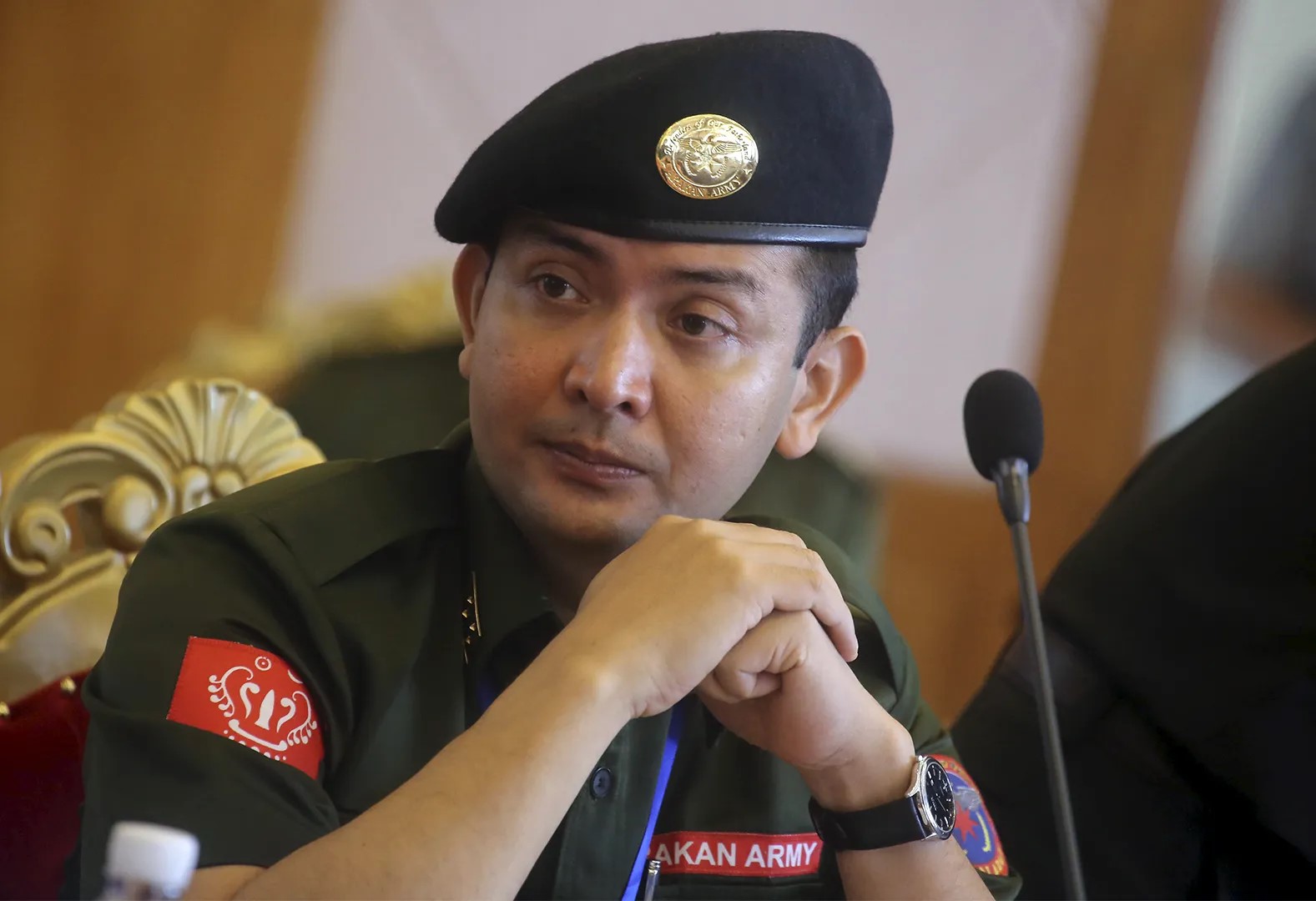
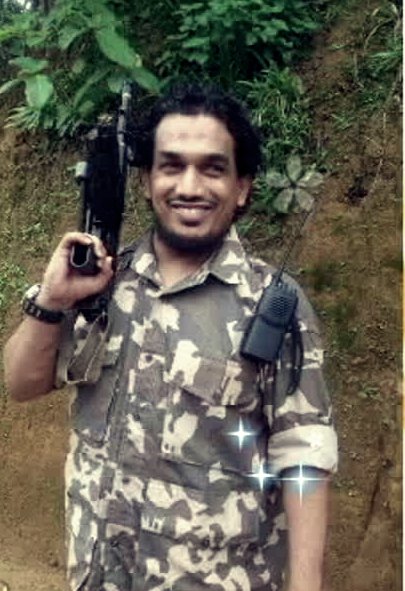
On April 18, Battalion-11 of Bangladesh’s elite counterterrorism unit, the Rapid Action Battalion (RAB), conducted a raid in Siddhirganj sub-district near the industrial city of Narayanganj. In the raid, the RAB captured infamous Rohingya militant leader Ataullah Abu Ammar Al Jununi (New Age [Bangladesh], March 18). Ataullah is the founding leader and chief military strategist of the Arakan Rohingya Salvation Army (ARSA) (Southeast Asia Globe, February 16, 2017). His military offensive in 2017 was a catalyst for the Rohingya crisis, which has persisted to the present. In addition, his involvement in criminal activities in Rohingya refugee camps in Bangladesh and Myanmar's civil war has made him a notorious militant leader in both countries (The Daily Star [Bangladesh], March 19). Ataullah’s Early Life Besides the nom de guerre of Abu Ammar Al Jununi and Hafiz Tohar, Ataullah is also known as Amer Abu Amar. He was born in 1977 in a refugee camp in Karachi, Pakistan (Benar News, March 21). Before Ataullah’s birth, his family resided in Buthidaung township of Rakhine State in Myanmar. His family fled Myanmar when the military cracked down on the Rohingya people in the 1960s. After fleeing Rakhine State, Ataullah’s family travelled a long way from Jashore, Bangladesh, to Kolkata, India. From there, they moved to Kashmir and crossed the border to settle in Pakistan (Dhaka Tribune, October 20, 2017). At an early age, Ataullah relocated from Pakistan to Saudi Arabia. He was educated in Islamic religious schools (madrassas) in Mecca and became fluent in Arabic, which helped him become a religious scholar. The people of his community also liked and respected him due to his generous and modest behavior. He was later employed as an imam in a mosque adjacent to Highway 40, which connects Jeddah and Riyadh and traverses the Arabian Peninsula (Asia Times, August 28, 2017; Dhaka Tribune, October 20, 2017). There, he received a salary of 3000 riyal (approximately $800) and earned the patronage of a Saudi sheikh, leading a decent life compared to other Rohingya expatriates (Southeast Asia Globe, February 16, 2017; Dhaka Tribune, October 20, 2017). Forming the Arakan Rohingya Salvation Army (ARSA) In 2012, communal riots and violence involving Muslim Rohingya broke out around Rakhine. This resulted in severe persecution and internal displacement of the Rohingya in the state (Al Jazeera, September 13, 2017). Ataullah was shocked by such incidents, prompting him to form the ARSA as a homegrown resistance to Rohingya persecution and systemic abuses by the Myanmar government. Some speculate that Ataullah visited Rakhine State immediately after the June 2012 violence, but this account is disputed, and as of yet, there are no eyewitnesses to this claim (Dhaka Tribune, October 20, 2017). What is confirmed from the local Rohingya and one of the ARSA spokespeople, Abdullah, is that Ataullah established contacts with Rohingya youths in Rakhine and first started recruiting them for his cause in 2013 (Asia Times, August 28, 2017). His organization was originally named Harakah al-Yakin (HaY) (“Faith Movement”), which was changed in 2017 to the ARSA (RFA, September 1, 2017). Ataullah clandestinely trained ARSA recruits in military operations throughout 2014 (Asia Times, August 28, 2017). In 2015, Rohingya people saw Ataullah in Saudi Arabia working in a mosque until he returned to Rakhine in 2016 to lead the ARSA's anti-government insurgency (Dhaka Tribune, October 20, 2017). Despite being a well-behaved and competent administrator, he was rarely seen among ordinary ARSA members, however (Asia Times, August 28, 2017). The ARSA’s 2016–2017 Offensives and the Rohingya Crisis On October 9, 2016, Ataullah ordered his first explicit offensive against Myanmar’s government in a coordinated attack on three police outposts in Maungdaw and Rathedaung townships. This killed 9 police officers and was the group’s first time making international headlines (see Terrorism Monitor, November 10, 2017). Ataullah also publicly revealed himself to the world in a video statement after the attack on the outpost (Al Jazeera, September 13, 2017). On August 18, 2017, Ataullah released a video statement to justify the ARSA’s actions as an answer to abuses by the Myanmar government and its security forces against the Rohingya (Radio Free Asia, September 1, 2017). A week after this statement, a coordinated ARSA attack on around 30 security outposts killed at least 12 government personnel (Xinhua, August 28, 2017). On the same day, Ataullah’s group also massacred Hindus in the village of Kha Maung Seik and later killed seven members of the Mro minority. In response, Myanmar’s security forces started a brutal area clearance operation in Rakhine State, which triggered a mass exodus of Rohingya into Bangladesh and became known as the “Rohingya Crisis of 2017” (Xinhua, August 31, 2017; Dhaka Tribune, October 18, 2017; The Straits Times, May 23, 2018). Post-2017 Rohingya Crisis The clearance operation in Rakhine effectively dislodged and weakened the ARSA. Ataullah, however, managed to survive the operation and went into hiding. Before his arrest, he was believed to have run the group by moving back and forth between Bangladesh and Myanmar. Despite dire conditions and setbacks, he decided to keep the group alive by reorganizing it within the confines of the refugee camps of Cox’s Bazar in Bangladesh (Asia Times, May 5, 2020). There, he concentrated the group’s activities on establishing dominance within the camp by taking down rival Rohingya armed groups (Prothom Alo, October 16, 2021). By 2023, the ARSA had established a significant presence within the camps (The Daily Star [Bangladesh], February 15, 2023). Once this was achieved, he involved the ARSA in various criminal activities, such as human and drug trafficking (Prothom Alo, October 16, 2021; Dhaka Tribune, June 20, 2024). Amid reviving the ARSA, Ataullah eliminated any individual who defected from the group or opposed its activities in the camps (Benar News, August 24, 2022; The Daily Star [Bangladesh], January 14, 2024). In September 2021, he also ordered the assassination of a popular Rohingya social worker and activist, Muhib Ullah, due to his growing popularity and refusal to work with the ARSA (Radio Free Asia, June 14, 2022). His group regularly threatened and killed civilians within the camp, including community leaders who cooperated with his enemies (Prothom Alo, October 16, 2021; Radio Free Asia, December 20, 2021). During a joint anti-narcotic raid in 2022, Ataullah infamously shot and killed Rizwan Rushdie in November 2022, an intelligence officer and squadron leader of the Directorate General of Forces Intelligence (DGFI) of Bangladesh. This occurred during a counter-narcotics operation in an area considered no-man’s land near the border with Myanmar (Benar News, December 2, 2022). He also orchestrated a series of killings, which left seven people dead just after International Criminal Court (ICC) Prosecutor Karim A.A. Khan visited Camp-8 of Ukhiya in Cox's Bazar District (The Daily Star [Bangladesh], July 9, 2023). Conflict and Collaboration with the SAC From 2018 to 2021, Ataullah directed a low-intensity insurgency primarily in Buthidaung and Maungdaw townships by conducting surprise ambushes and indiscriminate mine attacks (Radio Free Asia, January 5, 2018; Mizzima, January 21, 2019; The Irrawaddy, November 18, 2020). After the February 2021 military coup in Myanmar, the military-led State Administration Council (SAC) took power in the country, which initiated a civil war. Ataullah pledged solidarity with the pro-democratic National Unity Government (NUG) to fight against the SAC. The NUG rejected his offer, however, due to the ARSA’s poor reputation (Benar News, February 2, 2023). From November 2023, the Arakan Army (AA), one of the largest ethnic rebel groups, started taking large swaths of territory from the SAC in Rakhine State. Ataullah thus decided to collude with those who would otherwise be his main enemy, the SAC. He forcibly recruited Rohingya to fight alongside SAC forces. In April 2024, Ataullah’s men jointly cooperated with the SAC to resist the AA’s advances in Rakhine (Frontier Myanmar, May 7). Conclusion Ataullah can be considered a prudent, if brutal, militant leader. His insurgents lacked sufficient arms and ammunition to be effective in combat, which he overcame using human wave tactics. He also ensured the group’s survival by relocating its core operations to refugee camps in Bangladesh (Radio Free Asia, February 2, 2023). Further, he managed to fund the group’s operations locally by involving it in cross-border criminal activities and fleecing civilians within the camps (Rohingya Khobor, May 14, 2024). Allying with the SAC also helped his group acquire sophisticated weapons and offered access to training and combat engagements with other groups, turning the ARSA into the battle-hardened force it is today (The Transnational Institute, September 20, 2023; The Irrawaddy, May 24, 2024). Ataullah also maintained a public presence through statements, videos, and interviews. Although Facebook banned the ARSA, Ataullah’s messages are still available on the group’s X account (X/@ARSA_Official, March 2017). In December 2019, he appeared in a video thanking the Gambia for filing genocide charges against Myanmar at the International Court of Justice, and in February 2022, he was interviewed on Jamuna TV in Bangladesh (Jamuna TV, February 24, 2022; The Irrawaddy, December 11, 2019). He resurfaced in October 2022 in an ARSA video celebrating the anniversary of their 2016 attacks (Radio Free Asia, October 11, 2022). This demonstrates his comfort level with being in the media. In addition, Ataullah has significant external links not only in Saudi Arabia and the Indian subcontinent but also in Malaysia and Indonesia, where a large community of Rohingya is based. Ataullah received financial support from these sympathetic diaspora communities and conducted recruitment efforts in both countries (Free Malaysia Today, 2018). Law enforcement recovered Malaysian currency when Ataullah was arrested, confirming his recent links to Malaysia, for example (New Age [Bangladesh], March 18, 2025). Although there is no concrete evidence of his links to international terrorists, his mentor is believed to be Abdus Qadoos, who has ties to Lashkar-e-Taiba (LeT), one of South Asia’s most prominent Islamic terrorist organizations (The Irrawaddy, September 22, 2017). LeT or a wing of it is believed to have been the group responsible for the Pahalgam attack in April that killed 26 and brought India and Pakistan to the verge of war (Times of India, June 23). Ataullah is not especially rational, as demonstrated by his futile offensive in August 2017 (The Straits Times, September 10, 2017). He also killed other religious and ethnic minorities, which made the ARSA unacceptable among locals in Rakhine State (Hindustan Times, September 7, 2017). In the Rohingya camps, assassinations, revenge killings, and criminal activities further made Ataullah and the ARSA severely unpopular among ordinary Rohingya (New Age [Bangladesh], December 8, 2021; Anadolu Ajansi, July 22, 2023; Frontier Myanmar, March 19, 2025). He is even believed to have controlled at least six torture cells within the camps (Dhaka Tribune, October 27, 2023). Although previously he praised Bangladesh for sheltering Rohingya, Ataullah failed to secure Dhaka’s blessings due to his actions (The Irrawaddy, October 3, 2017). His brother, Md Shah Ali, was arrested in Bangladesh in January 2022 (Daily Observer [Bangladesh], January 17, 2022). Several key deputies of Ataullah, including his personal secretary Noman, finance head Karim, and personal bodyguard Akij were also captured by Bangladeshi security forces in consecutive raids, which weakened the ARSA (The Business Standard [Bangladesh], October 4, 2023; Dhaka Tribune, The Daily Star [Bangladesh], March 14, 2024; May 23, 2024; Dhaka Tribune, September 20, 2024). His alliance with the SAC and operations against the AA also backfired, as the AA effectively took complete control over Northern Rakhine, which had formerly been the primary operational area of the ARSA (Radio Free Asia, April 6, 2024). Thus, Ataullah’s arrest came at a crucial moment when Bangladesh is informally negotiating with the AA about Rohingya refugee repatriation and border security. The ARSA is seen as the most prominent spoiler to these negotiation agendas. The incarceration of Ataullah is thus a strategic win for Bangladesh in containing militant and criminal activities along the Bangladesh–Myanmar border (Radio Free Asia, March 23). His arrest is, overall, a blow to the ARSA but a relief to the Rohingyas living in refugee camps in Bangladesh.