Cameroon Rattled by Twin Insurgencies Amid Presidential Elections
Cameroon Rattled by Twin Insurgencies Amid Presidential Elections
Executive Summary:
- Cameroon’s presidential election has intensified long-running security crises, as Ambazonian separatist factions continue a fragmented insurgency in the country’s anglophone regions despite reduced attack frequency.
- In the country’s Far North Region, Boko Haram and Islamic State–West Africa Province (ISWAP) remain a persistent threat, with recent cross-border attacks and the seizure of advanced weaponry underscoring the limits of Cameroon’s counterterrorism capacity.
Cameroon’s presidential election has intensified long-standing security challenges in both its anglophone regions and near the country’s northern border. On October 27, the Cameroonian Constitutional Council declared 92-year-old President Paul Biya the victor of the presidential election. Having ruled Cameroon since 1982 and served seven consecutive terms thus far, Biya’s election to his eighth term under questionable circumstances sparked violent protests across the country. Clashes broke out between security forces and demonstrators supporting the runner-up, Issa Tchiroma Bakary (RFI, October 27).
The fallout from the presidential election has deepened Cameroon’s existing security challenges. Under Biya’s long rule, the nation has been plagued by a violent separatist insurgency in its English-speaking western regions and by cross-border jihadist attacks by Boko Haram in the north.
The Ambazonian Insurgency
Cameroon has been fighting a secessionist movement in its English-speaking regions since 2017. The insurgency was launched through peaceful demonstrations by English-speaking lawyers and teachers in Cameroon’s Northwest and Southwest regions who decried judicial and institutional discrimination—ultimately escalating into a violent separatist insurgency (Al Jazeera, December 5, 2016). The movement seeks to form a separatist state of “Ambazonia” as an English-speaking country and break away from the country’s French-speaking majority.
The Ambazonian separatist movement continues to fragment. Even as it sustains a low-intensity insurgency in western Cameroon, the conflict has claimed over 6,500 lives and displaced more than 600,000 people. Although separatist attacks have become less frequent in recent years, the crisis remains unresolved. Multiple rounds of peace talks, including those facilitated by international mediators, have collapsed amid mutual accusations of bad faith between the government and separatist leaders (AllAfrica, August 19). Internal competition and the diminishing capacity of separatist groups will hinder any progress towards the independence of the anglophone region. The strategic significance of the anglophone region’s natural resources, including oil, timber and highly fertile agricultural land, makes concessions for full autonomy improbable, while both separatist fighters and state forces target civilians and perpetuate tensions (Global Initiative, September 10, 2024). At present, there appears to be little political will within the government in Yaoundé to offer more substantial political concessions to the anglophone provinces.
The separatist movement lacks a unified command structure. Instead, it comprises numerous militias and self-defense groups that operate independently or in loose alliances, often competing for territory and influence. One of the most prominent militias is the Ambazonia Defence Forces (ADF), considered the military wing of the Ambazonia Governing Council (Global Initiative, September 10, 2024).
A roadside bomb killed seven soldiers near the town of Malende on September 5 (Facebook/Cameroon News Agency, September 5). The attack was claimed by the Fako Unity Warriors, a previously unknown separatist faction. The same day, United States federal prosecutors in Minnesota indicted two alleged separatist leaders, Benedict Nwana Kuah and Pascal Kikishy Wongbi, both naturalized U.S. citizens. According to the U.S. Department of Justice, the two men were commanders within the ADF and were accused of financing and directing insurgent operations from the United States—including bombings, kidnappings, and targeted killings in Cameroon (US Department of Justice, September 5).
Jihadist Terrorism in Cameroon
Boko Haram and Islamic State–West Africa Province (ISWAP) continue to pose a persistent threat in Cameroon’s Far North region despite years of regional counterterrorism efforts. Jihadism in Cameroon is deeply intertwined with the country’s proximity to neighboring states affected by such violence, especially Nigeria and Chad. The Far North Region, which borders both countries, has been witnessing the spillover effect of these insurgencies for over a decade. Between 2016 and 2019, Boko Haram and its more powerful ISWAP offshoot carried out numerous attacks in Cameroon, often targeting refugee camps and civilians. One of the deadliest incidents occurred in January 2016, when four female suicide bombers launched a coordinated attack in the town of Bodo, killing up to 35 people and injuring more than 80 (Deutsche Welle, January 25, 2016).
In response, President Biya’s government intensified regional cooperation through the Multinational Joint Task Force (MNJTF). This counterterrorism coalition, which includes Cameroon, Nigeria, Chad, Niger, and Benin, was established to combat Boko Haram’s insurgency in the Lake Chad Basin. The MNJTF’s effectiveness has nonetheless been limited. Early attacks on its bases forced member forces into a largely defensive posture, hindering their ability to sustain offensive operations.
Over 300 Boko Haram fighters assaulted a Cameroonian military base in Darak in the Far North Region on June 9, 2019. The attack resulted in around 20 Cameroonian and MNJTF fatalities, while 64 Boko Haram militants were killed in the ensuing battle (237Online, June 13, 2019). This confrontation marked the high-water point of Boko Haram’s attempts to expand deeper into Cameroonian territory.
Boko Haram has been active along the Cameroon–Nigeria border since 2021. Following the death of Boko Haram leader Abubakar Shekau in May 2021, and the group’s loss of its Sambisa Forest stronghold in Nigeria, Boko Haram shifted its activities toward the Lake Chad region near the Cameroonian border, operating near localities like Wulgo, Waza, Gwoza, Pulka, and the Mandara Mountains (Terrorism Monitor, May 30, 2024). Cameroonian troops have since maintained forward positions across the border in Nigeria as part of joint counterterrorism operations.
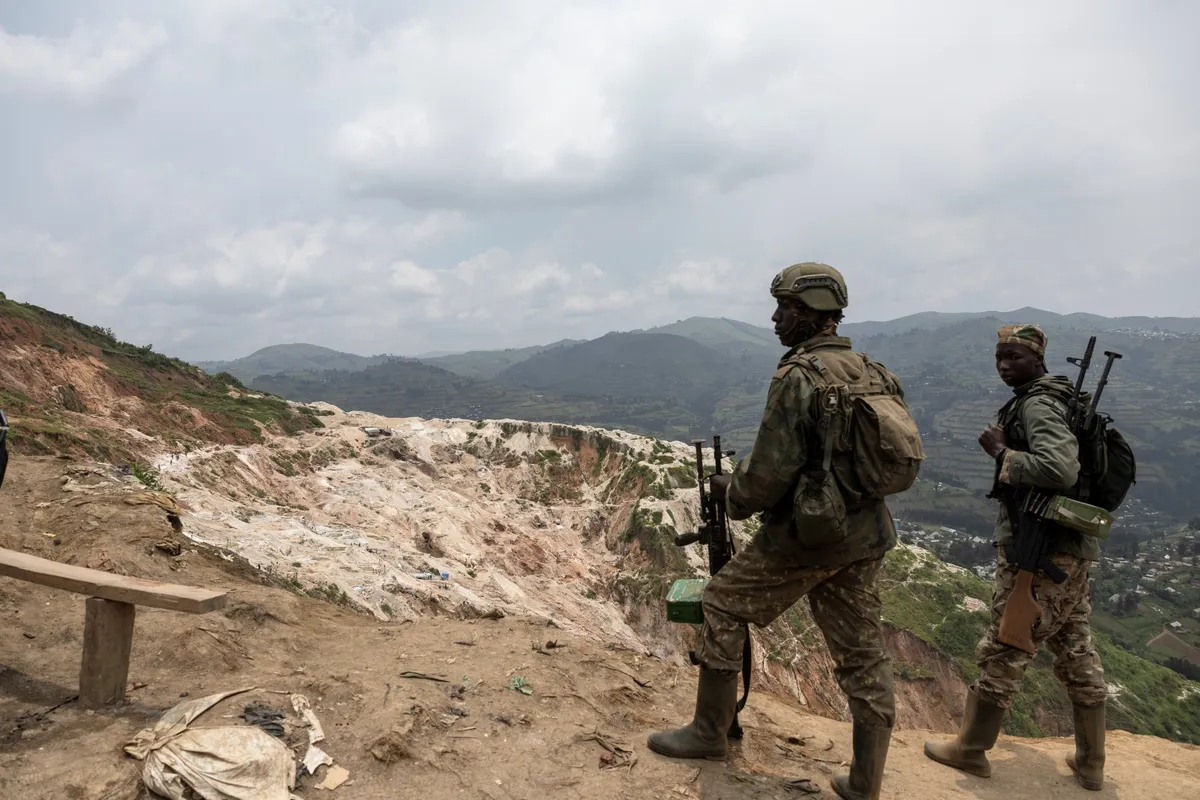
On March 25, Boko Haram militants attacked a Cameroonian base near Wulgo and seized significant war materiel. Among the equipment lost were Soviet-made, radar-guided ZSU-23-4 Shilka self-propelled anti-aircraft guns. 20 Cameroonian soldiers were killed in the assault (France24, March 25). According to the Cameroonian Ministry of Defense, the attackers employed “advanced weaponry,” including explosive-laden drones (ADF Magazine, June 17).
Conclusion
Cameroon’s twin anglophone–jihadist crises are likely to deepen as Biya enters yet another term without clear political or military strategies to resolve them. While neither Ambazonian separatists nor jihadist terrorists have been able to disrupt Cameroon’s presidential elections, the re-election of President Biya will not strengthen Cameroon’s resilience against these threats. With political instability ahead, the security situation Cameroon is facing risks becoming more severe.