China–Kyrgyzstan–Uzbekistan Railway Financing Loan Signed
China–Kyrgyzstan–Uzbekistan Railway Financing Loan Signed
Executive Summary:
- The CKU Railway Company LLC signed a $4.7 billion loan agreement in December 2025 that advances the long-delayed China–Kyrgyzstan–Uzbekistan (CKU) railway. The People’s Republic of China (PRC) is providing over half the funding through a 35-year loan to the joint venture.
- The CKU railway is a technically complex project with extensive tunnels and bridges, and will significantly reduce transit times between the PRC and Europe, boosting Central Asia’s role as a critical Eurasian transit hub.
- This railway creates a bypass route that avoids transit routes in Russia, diminishing Moscow’s regional transit influence and elevating Kyrgyzstan and Uzbekistan as key partners in diversified Eurasian trade routes.
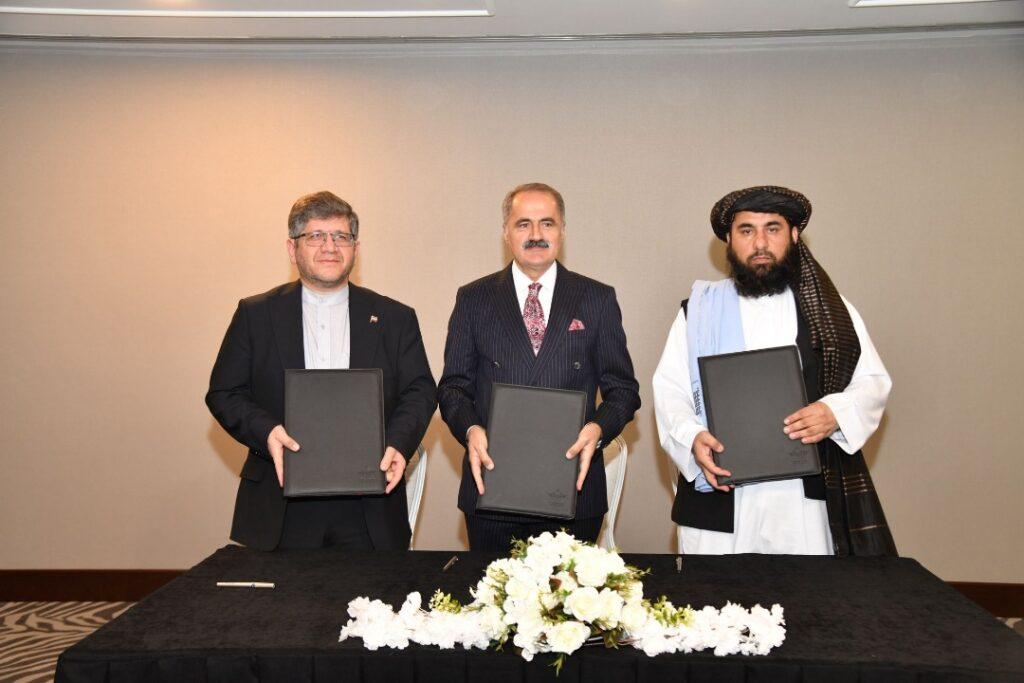
CKU Railway Company LLC, a joint venture formed by the People’s Republic of China (PRC), Kyrgyzstan, and Uzbekistan and a syndicate of PRC banks, signed a loan agreement to finance the $4.7 billion China–Kyrgyzstan–Uzbekistan (CKU) railway construction project on December 16 in Bishkek, Kyrgyzstan (Times of Central Asia, December 17, 2025). Under the deal, the PRC will provide $2.3 billion, approximately half of the project’s cost, as a 35-year loan to be repaid by the joint venture company. The remaining amount will be provided by the three countries, with the PRC contributing 51 percent and Kyrgyzstan and Uzbekistan each contributing 24.5 percent. Speaking at the signing ceremony, Kyrgyzstan’s Deputy Chairman of the Cabinet of Ministers Bakyt Torobayev said, “This achievement deserves high praise and clearly demonstrates the readiness of the Joint Project Company, created by the three countries, to implement international-level projects” (Government of Kyrgyzstan, December 16, 2025). The agreement to finance the CKU railway is a milestone that has laid the foundation for the connectivity project, which has faced delays for three decades due to financial issues and geopolitical concerns (see EDM, May 7, July 17, 2024, April 8, December 4, 2025).
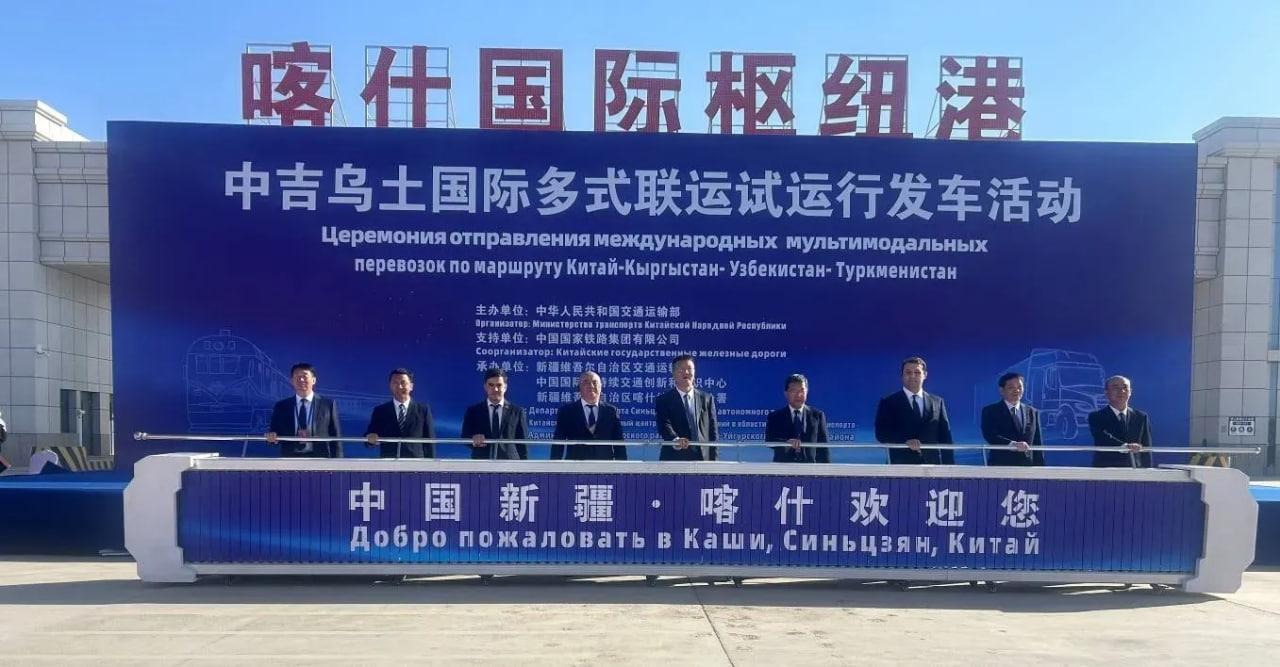
Initially conceived in the 1990s, the CKU railway made little headway over the following three decades due to financial, technical, and geopolitical constraints. The project emerged from cold storage in 2012, when then-Kyrgyz President Almazbek Atambayev went to the PRC on an official visit (PRC Ministry of Foreign Affairs, September 2, 2012). From 2012 onward, the project faced continuous delays due to financing issues and changing geopolitical realities in the region (see EDM, February 13, 2024). In 2023, Beijing and Bishkek discussed the need to begin construction of the CKU railway project during Kyrgyz President Sadyr Japarov’s official visit to Beijing (PRC State Council Information Office, May 18, 2023). In June 2024, the PRC, Kyrgyzstan, and Uzbekistan signed an agreement to finance and begin construction for the CKU railway project (Xinhua, June 6, 2024; see EDM, July 17, 2024). In December 2024, the project was launched at a ceremony held in Kyrgyzstan’s border city of Jalal-Abad (see EDM, May 7, 2024, April 8, 2025; President of Kyrgyzstan; PRC State Council, December 27, 2024).
The CKU route starts in Kashgar, PRC, enters Kyrgyzstan via the Torugart Pass, traverses the Makmal and Jalal-Abad stations, and ends in Andijan, Uzbekistan. The railroad will run up to 213 kilometers (approximately 130 miles) in the PRC, 260 kilometers (approximately 160 miles) in Kyrgyzstan, and 50 kilometers (approximately 30 miles) in Uzbekistan (News Central Asia, December 23, 2025).
As one of the most technically complex and formidable engineering projects in the region, the CKU railway involves the construction of 50 bridges and 29 tunnels, which together account for 40 percent of the entire route (Gazeta, December 18, 2025). Construction of two-section railway lines with different gauges will take an estimated six years. In the first section, a 165.5-kilometer (approximately 100-mile) line with a 1435 mm gauge, as per the PRC standard, will be built from the PRC border to Makmal station in Kyrgyzstan. In the second section, a 146.2-kilometer (approximately 90-mile) railway line with a 1520 mm gauge will be built from Makmal station to Jalal-Abad in Kyrgyzstan. Trains will be reorganized, and cargo will be reloaded at Makmal station due to differences in gauge line (Spot.uz, June 19, 2024).
The CKU railroad is estimated to transport up to 15 million tons of cargo annually. It will shorten transit distance by thousands of kilometers and reduce delivery times from the PRC to Europe by seven days. It could serve as a bridge between the East and the West. In the future, it could be integrated with other regional connectivity corridors such as the Trans-Afghan corridor (see EDM, January 15, November 12, 2025). Such an integration will strengthen transport and communication links between the PRC, Central Asia, and South Asia (Gazeta, December 30, 2024).
The 530-kilometer (approximately 330-mile) long CKU railroad is a geopolitically ambitious regional transport project aimed at bolstering connectivity across Central and South Asia. The project will underscore Central Asia’s position as a transit hub between the PRC and Europe. The CKU line will lead to the diversification of Eurasian trade routes, turning landlocked Central Asian states into land-linked countries, boosting their economic potential (The Times of Central Asia, December 17, 2025).
While addressing the launching ceremony of the CKU railway project in December 2024, Japarov highlighted the importance of this project, stating:
This route will ensure the delivery of goods from the PRC to Kyrgyzstan, as well as to the countries of Central Asia and the Middle East, including Türkiye, and further to the European Union. The project will strengthen interregional ties, help diversify transport routes, and increase the region’s competitiveness as an international transport and transit hub, aligning with the goals of Central Asian countries (President of Kyrgyzstan, December 27, 2024; Gazeta, December 30, 2024).
Presently, the PRC uses transit routes through Kazakhstan and Russia. The CKU railway could be a game-changer for the region, as it will expand the PRC’s connectivity to Eurasian and European markets. As a project of the PRC’s One Belt One Road (OBOR) initiative, it will connect the PRC directly with Kyrgyzstan and Uzbekistan, reduce its dependence on Russian transit, and create a shorter, faster, and direct southern corridor for freight between the PRC, Europe, and the Middle East (EurasiaNet, January 7, 2025; News Central Asia, December 23, 2025).
The PRC’s development of logistics routes such as the CKU railway, which bypasses Russia, continues to erode Moscow’s influence in Central Asia. The PRC’s OBOR infrastructure projects pose a direct challenge to Russia’s position as the primary Eurasian trade conduit in the region. The CKU, which provides alternatives to traditional routes via Russian territory, is set to undermine Russia’s influence and redirect trade flows around it. The CKU corridor will provide the PRC with direct access to European and Middle Eastern countries without transiting Russian territory (Special Eurasia, November 19, 2024).
The CKU railway is against the interests of Russia and Kazakhstan, the PRC’s most influential partners in the region. The proposed railway will curtail the use of transit routes passing through Russia and Kazakhstan. It will sideline Moscow and Astana, making Tashkent and Bishkek more important transit partners for PRC exports. The CKU railway could become the shortest route between the PRC and Europe because Uzbekistan is already connected to Turkmenistan and Iran (see EDM, May 7, 2024).
The shifting geopolitics in Central Asia following Russia’s full-scale invasion of Ukraine in 2022 have revived interest in the CKU project after 25 years. The project will run without Russia’s participation, which is not in a position to oppose the CKU railway following the imposition of Western sanctions on Moscow over its war against Ukraine. The sanctioned and isolated Russia currently relies mainly on the PRC for trade, while the PRC is working on expanding trade and transit cooperation without Moscow.