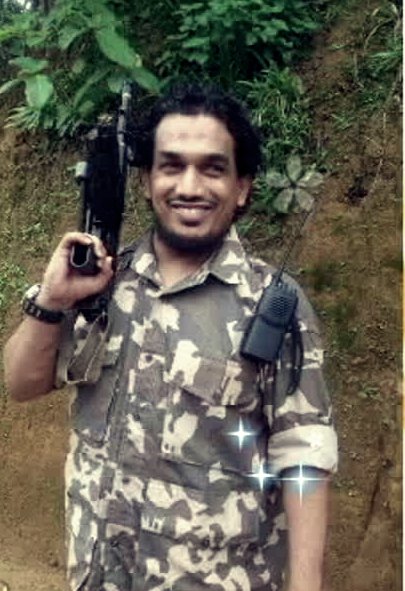
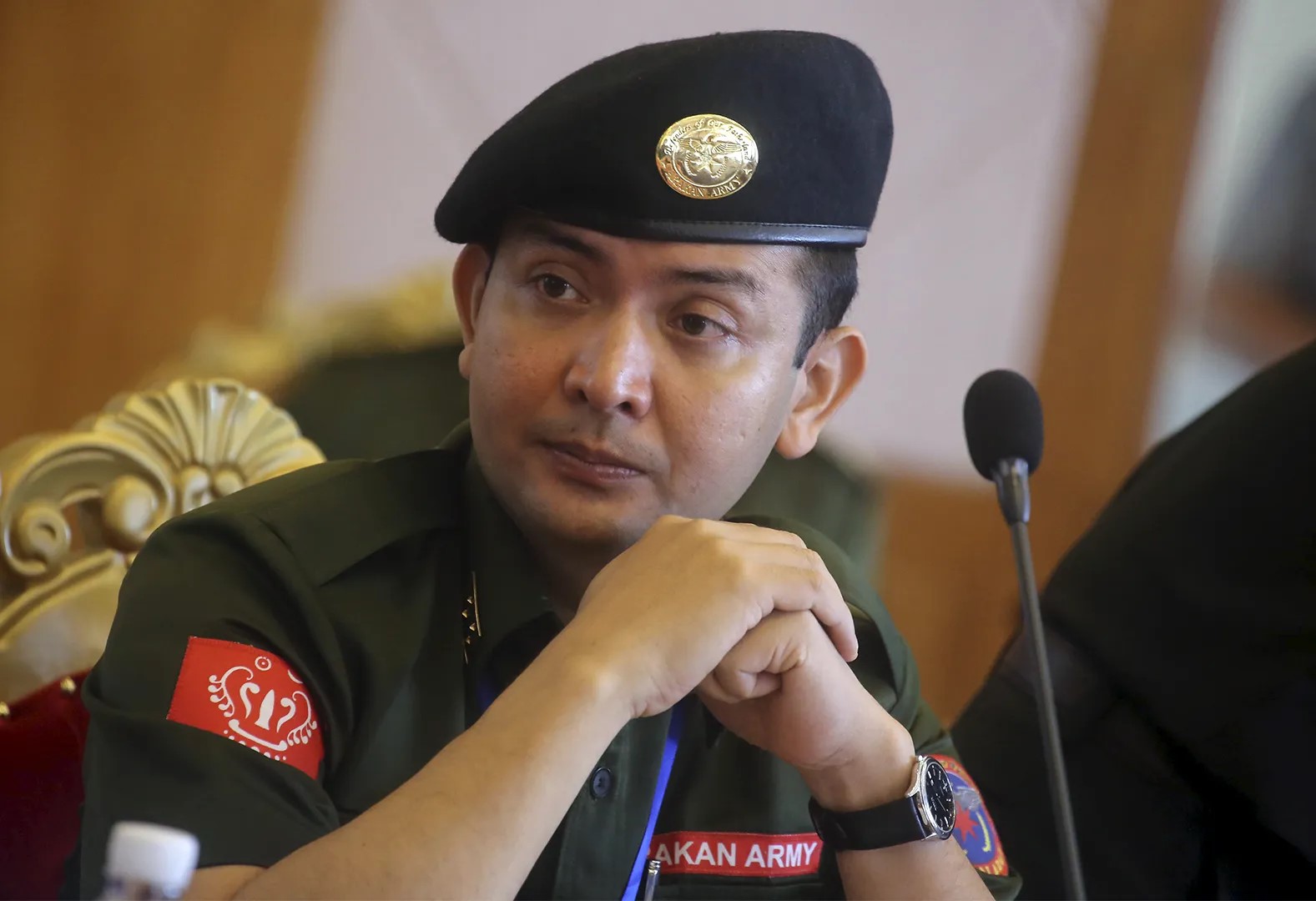
Eganius Kogoya: The Headline-Making Leader of the West Papua National Liberation Army
Eganius Kogoya: The Headline-Making Leader of the West Papua National Liberation Army
Since 2017, Eganius Kogoya has committed 65 attacks, resulting in the deaths of 46 individuals (kompas, February 12). He has also waged a guerilla war on two fronts: The first one is in the Papuan jungles, where he and his militants exploit the mountain’s difficult terrain (detik, May, 15; hot.grid.id, May 18); the second one entails propaganda on social media (tribunnews, August 21, 2021).
In consequence, Egianus’ first and second entry into international headlines evoked assertions that his guerilla warfare techniques are on-par with those of other, older “second generation” West Papua National Liberation Army (TPNPB) military commanders, such as Chairman of the United Liberation Movement West Papua (ULMWP), Benny Wanda, and Commander-in-Chief of TPNPB for the Paniai region, Demaniaus Yogi (suarapapua, June 28, 2021). Eganius, however, has thus far failed to demonstrate prowess on the international diplomatic front by, for example, not succeeding in his goal of holding an international dialogue with the UN in West Papua, with the hope that it might pressure Indonesia into allowing an independence referendum.
International Headlines
Egianus first made international headlines in December 2018 when, at the age of 19, he led his group of young militant troops in the abduction of 24 Indonesian construction workers. The construction team had been working on the Trans-Papua Highway project in Nduga Region. Subsequently, 17 of them were executed (hot.grid.id, December 4, 2018; detik, Dec 7, 2018; tribunnews, November 27, 2019). As a result, several hundred Nduga villagers fled to refugee camps and a humanitarian crisis ensued. Egianus designated the district area as a TPNPB “war zone,” causing villagers to fear returning to their home (suarapapua, January 4). For one year, Egianus paralyzed the growth of the Nduga region, which consisted of 32 districts, 248 villages, and a total population of 73,696 people. The living conditions of refugees after his attack has since been weaponized repeatedly by Eganius to attract human rights watchers (arsip.jubi.id, July 18, 2019; October 10, 2019).
Egianus consequently employed an identical tactic to again attract international headlines when his threats to 15 health clinic construction workers forced the workers to leave the Paro District. This occurred not long before Eganius’ fighters actually kidnapped a New Zealander pilot, who has remained in captivity since February (kompas, February 22). He then proclaimed Paro District a war zone, escalating the humanitarian crisis as a tactic. For example, Egianus forced the exodus of Paro residents to refugee camps in districts both within and beyond the Nduga region, such as Wamena District (detik, Feb 21; cenderawasihpos, March 3; kompas, Feb 17).
Yet the difference between the first and second instances where Egianus made international headlines was his transformation from child soldier to commander-in-chief of the Nduga war zone. In this transition, Egianus was able to complete the internal restructuring of his Regional Defense Command and extended his area of operation, increasing the number of his battalions, and recruiting and training child soldiers. Of a more personal signifigance, Egianus also reactivated the old platoon of his father (suarapapua, Feb 3, 2022).
The Rise of Egianus Kogoya
Egianus is the son of General Silas Kogoya. Other “second generation” militants include Benny Wenda—25 years older than Egianus—who is the son of General Mathias Wenda; and Demaniaus Yogi, the son of General Tadeus Yogi—just five years older than Egianus (kompas, December 4, 2020; tribunnews, October 9, 2022; thetpn-pbnews, January 26, 2021). Additionally, Benny Wenda, Daminaus Yogi, and Egianus Kogoya were all raised in three different regions: Benny in Wamena District, Jayapura Region; Demianus in the Paniai District; and Egianus in the remote Mugi District in the Nduga region of the Papua highlands.
In the 1970s, the insurgent unit led by General Kelly Kwalik recruited and trained Egianus’ father and other members of his Dani tribe, who formed platoons and battalions for their respective districts (suarapapua, February 3, 2022). Thus, Egianus grew up in Mugi village and heard about how his father became an insurgent commander-in-chief alongside other “first generation” TPNPB generals. Most importantly, Egianus was also raised listening to the story of how his father’s hostage-taking of 26 people in Mapenduma garnered the attention of UN Secretary General Boutross Ghali and Pope Paul John II. This occurred prior to Egianus’ birth in 1999, but would inspire the methods used in his own attacks later in life (militer.id, March 26; militer.id, March 28). After his father passed away in 2011 from an illness, Egianus continued junior high school at Wamena District. Egianus, who was then a 12-year-old Papuan from a remote village with limited educational opportunities, was lagging behind his peers in reading, writing, and mathematics. As a result, he developed a guarded personality. This did not prevent Egianus from expressing his discontent with the government of Indonesia. He refused to recite the Indonesian national anthem and salute the flag during the school’s flag ceremony. This rebellious behavior was not deterred by punishment from his teachers or bullying from the other students (nusaraya, March 31).
Starting the Ndugama War
Egianus became a young insurgent of the TPNPB in Nduga by raising the West Papuan flag in his father’s hometown, Mugi district, and launching his first offensive in late 2017 against construction workers building Trans-Papua Highway, resulting in the death of one of the workers (BBC, December 13, 2018). In addition to being a competent insurgent commander, Egianus also functioned as a recruiter and trainer of Papua’s youth. As a training commander, he instructed young soldiers and children in the use of traditional combat weapons, such as bows and arrows, spears, and machetes (westpapuadaily, May 16, 2022). The fact that Egianus was surrounded by child soldiers when he consented to be interviewed by a senior Papuan journalist in 2019—during which he discussed Silas Kogoya as his father—is evidence of his recruitment methods (hot.grid.id, July 31, 2019). Further, on his most recent raid, on April 16, he surrounded the military rescue team with child soldiers and female militants, which made it difficult to identify the actual insurgent combatants (detik, April 19; suarapapua, April 16).
As previously stated, in December 2018, Egianus first made international headlines after his abduction and murder of 20 Indonesian construction workers. This signaled the start of the “Ndugama War.” West Papuan separatists celebrate the anniversary of their independence from the Dutch on December 1, and one of the workers took an unauthorized photo of a local militant group during the ceremony and refused to delete it. Egianus and his youth-militant organization chased the worker back to their camp, using this event as a pretext to initiate the Ndugama War. The location of the construction workers camp—already categorized as a “red zone”—is an eight-hour drive from Wamena, the capital city of the Jayawijaya region, and additionally requires several more kilometers of walking to reach. Furthermore, there is no phone signal available in the area (hot.grid.id, December 4, 2018). The Ndugama War was publically declared on Egianus’ social media account on July 20, 2019 (hot.grid.id, Aug 20, 2019).
Despite the fact that Egianus’ war had already begun in 2018, his declaration of war was withheld from the public at large until the February 2023 kidnapping, when a letter was discovered on the grounds of the same Paro airport, supposedly having been left behind in October 2018. In addition, in a report put out by the TPNPB, the “2019 Report of Regional Defense Command III Nderakma Ndugama,” Egianus highlighted the significance of the Ndugama War for the second generation of TPNPB combatants in the Nduga region (kompas, February 17; suarapapua, Jan 2, 2020). Egianus and his young militant squad were reported to have performed a traditional war dance before brutally executing the construction workers and declaring the beginning of his Ndugama War (detik, December 7, 2018).
Conclusion
Eganius represents the second generation of the Free Papua Movement (OPM), which was founded to oppose the transfer of West Papua (formerly Irian Jaya) to then-President Sukarno’s administration (surabaya.inews, May 2; tribunnews, November 15, 2021). As the children of OPM guerilla fighters, they witnessed how the military operations conducted during the administrations of Sukarno and his successor Suharto affected their lives, particularly those who were raised in the Nduga region (kompas, April 20; republika, February 9; en.jubi.co.id, January 31, 2022; en.jubi.co.id, February 1, 2022; okezone, May 25, 2021; suarapapua, January 2, 2020). Therefore, Egianaus and his militant fighters, which include child combatants and female insurgents, are suspicious of any proposed negotiations and any peace is unlikely to occur so long as Eganius is in command (kumparan, February 13; merdeka, February 25; sumeks.disway.id, May 4).
Egianus had sought to propose a peaceful negotiation to end the conflict through intervention from the United Nations. This is why, on May 26, Egianus issued a two-month deadline for the execution of the New Zealander pilot who his fighters have held captive since February 7. If the international community and countries like New Zealand and Australia do not initiate a dialogue with Indonesia regarding West Papua’s independence, it is possible that Eganius will kill his hostage, further increasing his international notoriety (nzherald, May 26; suara papua, May 27; cnnindonesia, May 27; cnnindonesia, May 29).