Ikramul Haque: From Madrassa Student to AQIS Recruiter in India and Bangladesh
Ikramul Haque: From Madrassa Student to AQIS Recruiter in India and Bangladesh
Executive Summary
- Ikramul Haque, deputy head of al-Qaeda in the Indian Subcontinent (AQIS) and head of the group’s propaganda wing, was arrested in Bangladesh in May 2023.
- His story of recruitment and radicalization highlights AQIS’s cross-border coordination and recruitment in India and Bangladesh, particularly through religious education institutions.
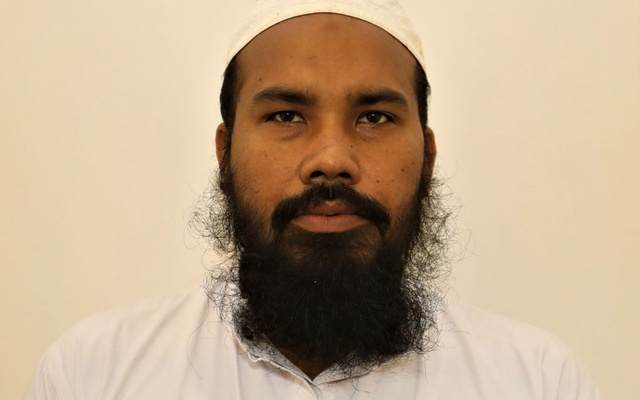
Ikramul Haque served as the top leader of the dawah (propaganda) wing of al-Qaeda in the Indian Subcontinent (AQIS) until his arrest in Bangladesh in May 2023. As a high-value terrorist recruiter in his early 30s, Haque faced at least ten police charges in India. He played a crucial role in recruiting for AQIS in India and Bangladesh (his home country) and expanded al-Qaeda’s network in the region (Prothom Alo, July 7, 2023). Haque also allegedly trained AQIS members in India and Bangladesh and served as a liaison between AQIS and Ansar al-Islam—Bangladesh’s al-Qaeda chapter, formerly known as the Ansarullah Bangla Team. Haque is believed to have maintained contacts with al-Qaeda leaders in Pakistan and Afghanistan. Haque’s arrest in Dhaka revealed that he had fraudulently acquired an Indian passport, and his wife had an Aadhaar Card (a voluntary biometric ID card) from India. Haque’s arrest marks a significant development in regional counter-terrorism efforts, mainly due to his close ties to Ansar al-Islam’s top leader, Osman Gani (alias Abu Imran) (Prothom Alo, July 7, 2023).
Biography and Radicalization Journey
Ikramul Haque (aliases Abu Talha, Maulana Sabet, Noor Hossain, Milan, and Mansur) originates from the Bororchar Area of Mymensingh District in north-central Bangladesh (Samakal, July 5, 2023). Despite the extremist milieu prevalent in his home district, Haque’s radicalization journey likely originated elsewhere. It was during his studies in the country’s capital, Dhaka, that he was first exposed to extremist ideologies and subsequently recruited. Moreover, Haque joined AQIS and eventually emerged as a key leader in India rather than Bangladesh.
Born into a modest family with a father who was a farmer, Haque was forced to attend a madrassa due to financial constraints. Demonstrating academic excellence from an early age, Haque pursued his studies at Jamia Islamia Darul Uloom Madania Jatrabari (locally known as Jatrabari Madrassa) in Dhaka. Besides becoming proficient in Bengali, Urdu, Arabic, and English, he also possessed technical knowledge in computers and IT. In 2007, he achieved the top position in the national-level junior madrassa examination and subsequently enrolled in Jamia Arabia Imdadul Uloom (locally known as Faridabad Madrassa) in Dhaka. There, Haque graduated with a Dawra-e-Hadith degree (equivalent to a Masters in Islamic Studies and Arabic) (Bangla Tribune, July 5, 2023). [1]
Continuing his studies at Faridabad Madrasa from 2008 to 2017, Haque became involved in militancy under the influence of one of the teachers, Osman Gani (alias Abu Imran)—the enigmatic emir of Ansar al-Islam. Gani was associated with several terrorist cells operating that occurred in the mid-2010s and facilitated Haque’s journey to India in 2018. Gani is also the one who indoctrinated and recruited him into Ansar al-Islam. With support from Gani’s contacts in India, Haque obtained a tourist visa, later fraudulently obtaining an Indian passport under the name Noor Hossain with false family details. An AQIS sleeper cell member named Nannu Mia—who was eventually arrested by the Indian authorities—reportedly also helped Haque obtain Indian identity documents (Newstime Express, September 26, 2023).
Once in India on a tourist visa in 2018, Haque enrolled in the prestigious Darul Uloom Deoband (widely known as the “Deoband Madrassa”) in Uttar Pradesh. He was able to use his fraudulent identity documents to obtain admission. During his arrest interrogation, Haque revealed that his involvement with AQIS was facilitated by an individual named Aman while he was studying in the Deoband Madrasa. During his stay in the Deoband Madrassa, Haque came into close contact with many top al-Qaeda militants, developing links with key leaders in Pakistan and Afghanistan. He also had regular meetings with AQIS chief Asim Umar before Umar was killed in 2019 (Samakal, July 5, 2023). Haque reportedly also traveled to Pakistan-administered Kashmir, presumably to meet other senior leaders of AQIS and for advanced training.
In 2020, while he was still a student of the Deoband Madrassa, Haque illegally entered Bangladesh and married Faria Afrin Anika, a resident of Mymensingh District. Two months later, Haque moved to India again, with Anika joining him after a time. Haque indoctrinated and trained Anika, and she eventually joined AQIS’s female wing and continued to assist him. Haque created an Indian identity card with fake information for her. In 2023, the couple had a child. Later, Haque reportedly managed to take a job at a madrassa in the Deoband Area in Uttar Pradesh by concealing his identity.
Expanding AQIS in India
Haque engaged in extensive efforts to organize AQIS activities across various regions in India, including West Bengal, Madhya Pradesh, Assam, and Delhi. He conducted classes both online and offline, targeting newly recruited AQIS members. Haque was particularly effective at disseminating al-Qaeda’s ideology among Bengali-speaking Indian Muslims. According to reports, his primary targets were unemployed youth. Consistent with this, in October 2022, the Indian Anti-Terrorism Squad (ATS) arrested eight AQIS members in Bhopal, Madya Pradesh). During interrogation, they identified Haque as the group’s top leader. On May 2023, ATS arrested four more AQIS members from Gujarat, India. The four were reportedly Bangladeshi citizens, and during interrogation, they, too, identified Haque as their recruiter (ANI, July 8, 2023).
During the COVID-19 lockdown, Haque established three cells in West Bengal (Anandabazar Patrika, July 10, 2023). He also rose to the position of deputy head of AQIS and head of the dawah wing. His arrest in May 2023, however, followed months of intelligence operations by the Indian police, who had conducted more than 50 arrests across India in a short period (see Terrorism Monitor, March 1). The crackdown against AQIS in India began in March 2022 with the arrest of a prominent Bangladeshi leader. Haque had established cells in various parts of India, and upon learning of the arrests, he fled to Bangladesh with his wife around late 2022 or early 2023. Upon his return, Haque moved to his native village in Mymensingh. He reportedly started to teach there in a madrassa while coordinating AQIS activities in India and Bangladesh (Kalbela, July 6, 2023).
Investigators have indicated that Haque was issuing instructions to militants in India from Bangladesh through various encrypted apps. These included the “Conversation” app for mobile devices and “VirtualBox” for laptops. He was additionally involved in offline, person-to-person recruitment activities. However, Haque was known to the other Bangladeshi members of Ansar al-Islam as “Maulana Sabet” (Samakal, July 5, 2023).
The Bangladeshi authorities arrested Haque and his wife in the Madertek Area of Dhaka on May 30, 2023. Haque confessed in court to his close contacts with top al-Qaeda militants, to having developed a special security module for the organization’s recruitment work, and to having connections with Asim Umar. Forensic tests have shown that Haque advocated for al-Qaeda’s ideology in numerous audios, videos, and images sent via encrypted apps. Bangladeshi police officials claimed that uncovering Haque’s network saved both Bangladesh and India from a major risk of terrorist attacks (Samakal, July 5, 2023). Meanwhile, multiple cases are pending against Haque in India, where he is considered a top militant leader. Several teams are actively working to apprehend Haque’s accomplices and financial network.
Conclusion
Ikramul Haque’s arrest highlights AQIS’s cross-border coordination and recruitment in India and Bangladesh, particularly through religious education institutions. His radicalization journey exposes the exploitation of certain madrassas by terrorists for recruitment purposes and underscores the robust collaboration between al-Qaeda members in India and Bangladesh. While Haque’s arrest is a positive development in the sense that both Bangladesh and India have been able to respond to a significant threat, it does not signal the end of that threat by any means. For instance, Haque’s radicalized wife was released on bail, which will necessitate measures to prevent further extremist activities. The noteworthy cross-border networking of AQIS also emphasizes the importance of regional collaboration in counter-terrorism efforts.
Notes:
[1] It is worth noting that in 2016, Faridabad Madrassa gained attention when one of its teachers was arrested by Bangladeshi authorities for purportedly recruiting for Ansar al-Islam (Kaler Kantho, June 28, 2016). In 2017, a former student was apprehended for his role in the targeted killings of secular bloggers and activists in Bangladesh (Bangla Tribune, April 8, 2017).