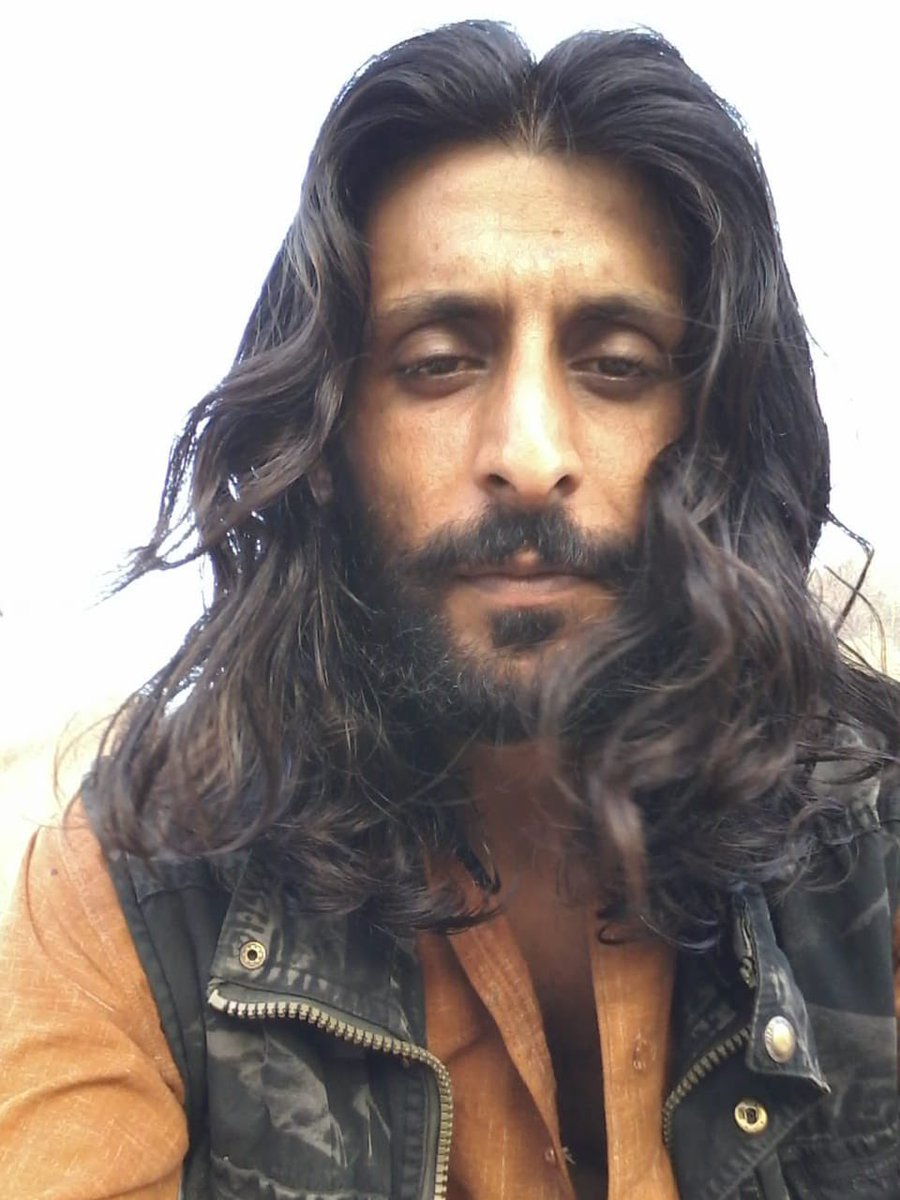
In the Shadow of Iqbal: A Snapshot of His Younger Brother Riyaz Bhatkal—Co-Founder of the Indian Mujahideen
In the Shadow of Iqbal: A Snapshot of His Younger Brother Riyaz Bhatkal—Co-Founder of the Indian Mujahideen
Riyaz Ismail Shahbandari aka Riyaz Bhatkal is one of the top Indian jihadis and co-founders of the Indian Mujahideen (IM). He is the younger brother of IM ideologue, Iqbal Bhatkal, another co-founder of the IM. [1] Riyaz has been involved in several high profile terrorist attacks in India, particularly in Hyderabad, Jaipur, Ahmedabad and Delhi. [2] Riyaz Bhatkal appeared on the radar of the Indian security agencies after the twin blasts at Gateway of India and Zaveri Bazaar in 2003. Riyaz had joined the Lashkar-e-Taiba (LeT) much before he and other co-founders founded the IM (Times of India, February 11).
Riyaz Bhatkal’s father, Ismail Shahbandri, left Bhatkal in search of greener pastures in metropolitan Mumbai 30 years ago. He set up a leather-tanning business in the Kurla neighborhood of Mumbai. [3] His business flourished and he soon purchased an apartment in Kardar Building off the busy Pipe Road. The neighborhood was not a shanty town but close to it. One report in the Indian press describes it as follows, “Filth and squalor stretch for miles on end, and the stench rises up to the structures that pass off for homes.” [4] However, as time passed, his father was able to save money and get the family out of the total squalor. His father’s success in business made it easy for him to send Riyaz, who was born in 1976, to a good school and later to the Saboo Siddiqui Engineering College in Mumbai, from where he graduated as civil engineer (The Hindu [New Dehli] December 1, 2011). However, Riyaz decided to enter the world of jihad instead.
In 2002, Riyaz married a woman from Bhatkal named Nashua Ismail who ran an electronics store. Nashua Ismail’s family was known previously to the Bhatkal family. Nashua Ismail’s brother, Shafiq Ahmed, was studying in Mumbai and staying with the Bhatkals. Shafiq Ahmed was an activist of Students Islamic Movement of India (SIMI). The Indian government proscribed SIMI in 2001 but it remains active underground. In addition to Shafiq Ahmed, Riyaz Bhatkal’s elder brother Iqbal Bhatkal also had a tremendous influence on Riyaz Bhatkal (See accompanying article on Iqbal Bhatkal Militant Leadership Monitor, September, 2012). In 2002, Riyaz and his brother Iqbal started sending Indian Muslim boys to Pakistan for jihadist militant training. [5]
Like many Islamists in India, Riyaz Bhatkal became involved in organized crime in Mumbai. At one point, he was associated with the Fazlur Rehman group (Chennai Online, September 27, 2008). He ran his own kidnapping gang called “RN” (Riyaz Nasir) in Kurla after he left the Fazlur Rehman group (Indian Express, April 18). He was also linked to gang-lord Aftab Ansari through whom he established contacts with crime-lord Asif Raza Khan a year before the latter was killed in an encounter with the police in Gujrat State in 2002. The two were working to fund jihad through crime. After the death of Asif Khan, his brother, Amir Raza Khan, founded a jihadist group called the Asif Raza Commando Force. Amir Khan is known to have carried out a number of terrorist operations, including an attack on the U.S. Consulate in Kolkata. Amir Khan helped Riyaz Bhatkal’s men obtain passports and funds to travel to Pakistan and receive militant training. [6]
Police arrested 11 IM members in Mumbai and recovered a large number of anesthesia injections, among other things. Rakesh Maria, Mumbai’s Joint commissioner of police claimed that the IM suspects had planned to kidnap a builder and a jeweler for ransom in Pune. They had planned to inject anesthesia to the kidnapped man. Maria claimed that Riyaz Bhatkal was the mastermind of the plan (Times of India, October 14, 2008).
Some of Riyaz Bhatkal’s plans could not be implemented. Mohammad Abrar, an IM member, who was involved in the 2008 Ahmedabad serial blasts, told the Indian interrogators that Riyaz Bhatkal had prepared a plan to kill Rashtriya Swayamsewak Sangh (RSS) chief Mohan Bhagwat (Indian Express, April 18). Abrar’s accounts also provided evidence that the LeT is helping the creation of mortal jihadi groups outside Pakistan in addition to providing sanctuaries to non-Pakistani jihadis.
In early 2011, Chhota Rajan claimed that his men had killed Riyaz Bhatkal and another terrorist, Anwar, in the Gulshan Iqbal neighborhood of Karachi. Rajan even claimed that Riyaz “died on bed number 18 in ward 222 of the Jiauddin hospital in Karachi” (Rediff.com [India], January 12, 2011). However, the news later proved unfounded (Daily News Analysis, [Mumbai], January 13, 2011). It is still not clear why this rumor was floated. Was it an innocent mistake on the Chhota Rajan gang or was it an effort to cover the tracks of Riyaz Bhatkal? The safe bet is that it was an effort to lead security officials away from the scent of a terrorist.
Riyaz Bhatkal belongs to the first generation of Indian Muslims outside the state of Kashmir who have adopted the path of jihad. Before the 9/11 terrorist attacks in New York and Washington, there were few Indian Muslims outside the state of Kashmir who became radicalized. Although the roots of the radicalization of the Indian Muslims are in India, the IM have a pan-Islamic worldview. If they become stronger, they are likely to spill out of India into the rest of the world and become a major terrorist threat.
Notes
1. For a background on the Indian Mujahideen, see Namrata Goswami, “Backgrounder: Who is the Indian Mujahideen?” Institute for Defensc Studies and Analyses, February 3 2009. Available at https://www.idsa.in/backgrounder/IndianMujahideen.
2. Shishir Gupta, “Pak-based terrorists involved in cases in India,” Hindustan Times [New Dehli], April 8, 2012, https://www.hindustantimes.com/India-news/NewDelhi/Pak-based-terrorists-involved-in-cases-in-India/Article1-837267.aspx.
3. Praveen Swami, “Riyaz Bhatkal and the origins of the Indian Mujahideen,” in CTC Sentinel, Combating Terrorism Center at West Point, May 3, 2010. Available at https://www.ctc.usma.edu/posts/riyaz-bhatkal-and-the-origins-of-the-indian-mujahidin.
4. Samruti Koppikar, “IM Printed,” Outlook India, August 1, 2011. Available at https://www.outlookindia.com/article.aspx?277757.
5. Praveen Swami, “The rebirth of the Indian Mujahideen” The Hindu [India] April 19, 2010. Available at https://www.hindu.com/2010/04/19/stories/2010041956910900.htm.
6. Swami, op cit.