Janjaweed Commander to Political Power Broker: An In-Depth Profile of Sudanese General Hemedti
Janjaweed Commander to Political Power Broker: An In-Depth Profile of Sudanese General Hemedti
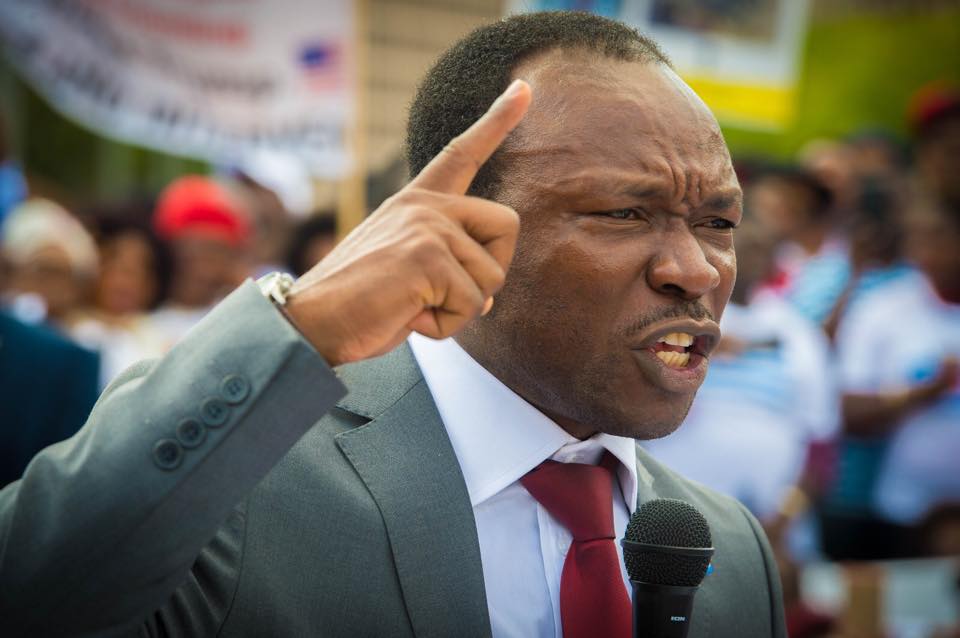
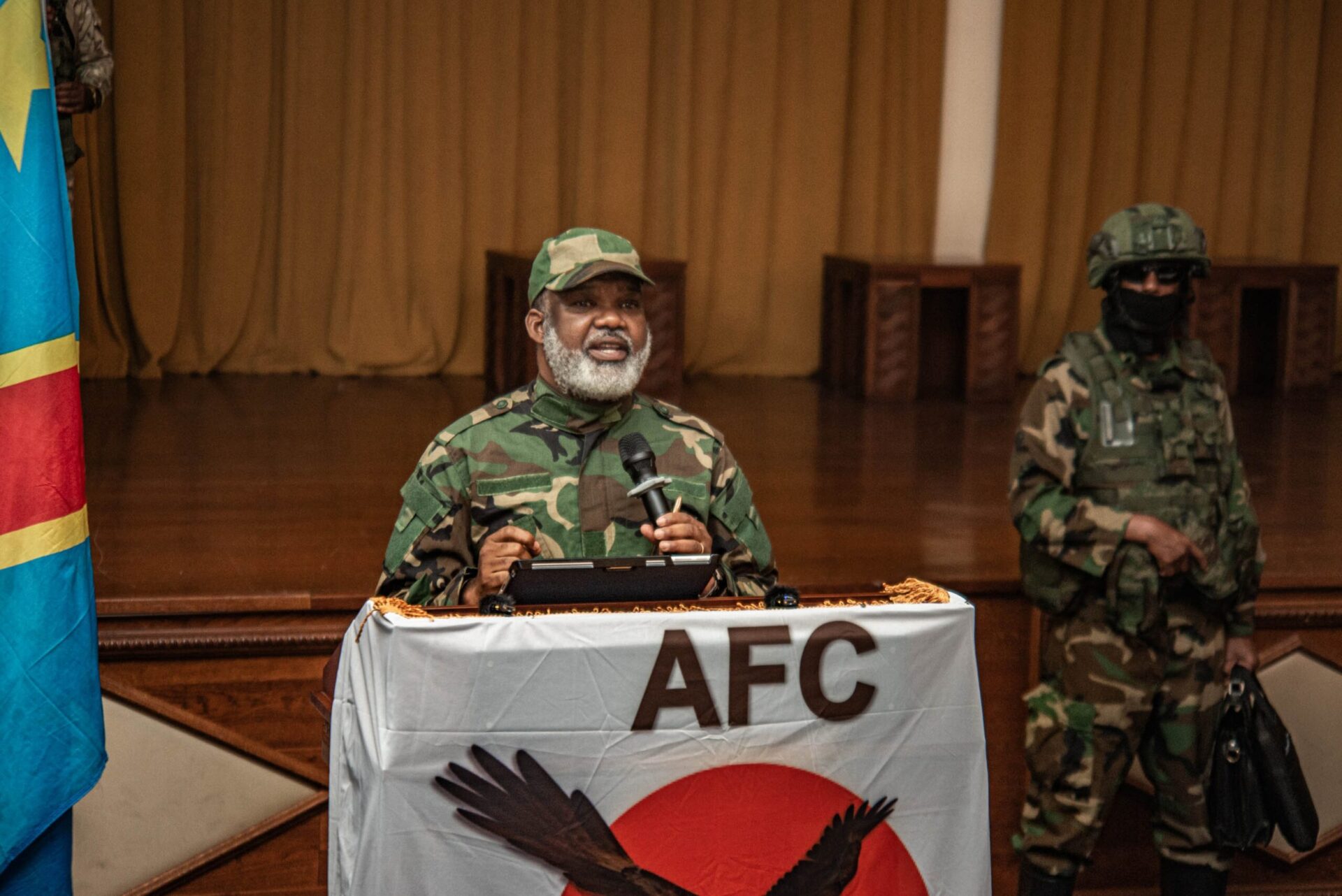
On April 15, clashes broke out in Sudan’s capital city of Khartoum between rival factions of the country’s military government. Pitted against each other were the Sudanese Armed Forces (SAF) and the paramilitary Rapid Support Forces (RSF). The latter is led by Mohamed Hamdan Dagalo (alias Hemedti or “Little Mohamed”), who is a mercurial figure in Sudanese power politics. He has risen from being a militia commander in Darfur to become one of the richest and most powerful men in the country—and now one of the two main actors in the latest armed conflict to engulf Sudan.
Hemedti’s Humble Origins
Hemedti was born in western Sudan’s Darfur region around the year 1974. He grew up in a camel-herding and trading clan called the Mahariya of the Rizeigat. This Chadian Arab sub-clan fled wars and drought in Chad to take refuge in Darfur.
Hemedti is also reportedly the grandson of the head of a sub-clan of the Mahariya Rizeigat. His uncle Juma Dagalo was not recognized as a tribal leader in Sudan’s North Darfur state, however. Nevertheless, South Darfur authorities welcomed the newcomers and allowed them to settle on land belonging to the Fur tribe, which is Darfur’s main indigenous non-Arab group. The Sudanese authorities also armed Dagalo’s followers, who, as early as the 1990s, began attacking their Fur neighbours (The Conversation, April 17).
During the 1990s, Hemedti was a teenager who had dropped out of primary school in the third grade to trade camels across the borders of Libya and Egypt. When the Darfur rebellion began in 2003, he became a militia commander in the area and led attacks against neighboring Fur villages. The most common story about Hemedti is that he was compelled to take up arms in the Darfur conflict when men attacked his trade convoy and killed 60 members of his family and looted his camels (Al Jazeera, April 16). To justify joining the government-backed militias, Hemedti himself has claimed that the rebels attacked a caravan of fellow camel traders on their way to Libya and killed 75 men and looted 3,000 camels (The East African, July 21, 2019).
Darfur Conflict
The war in Darfur began in 2003 when two rebel groups, the Sudan Liberation Movement (SLA) and the Justice and Equality Movement (JEM), launched a rebellion against the Sudanese government. Opposing Omar al-Bashir’s regime, the rebel groups mostly recruited from local non-Arab communities, and in particular the Fur, Zaghawa, and Masalit. The government responded with a counter-insurgency strategy based on mobilizing Arab militias (known pejoratively as Janjaweed) and enlisting the support of some of the nomadic tribes in Darfur, including the Rizeigat, to put down the rebellion.
Hemedti gradually moved up from being just one of the Janjaweed warlords to becoming their primary leader. During its initial and most intense years, the war in Darfur led to the deaths of several hundred thousand non-Arab civilians and displaced around two million people (un.org, October 7, 2003). In 2006, armed with new equipment, Hemedti led several hundred men on a raid across the rebel-held area of North Darfur. His violent methods created tensions with accompanying army officers, but gained the attention of Sudan’s military dictator, Omar al-Bashir. In Darfur, Hemedti earned a reputation as a ruthless commander and a loyal servant to al-Bashir, who called him instead “Hemayti,” meaning “my protector.” The dictator was evidently fond of Hemedti and sometimes appeared to treat him as the son he never had (The Conversation, April 17).
Promotion after Darfur
Hemedti knew how to promote himself. Following the Darfur conflict, Chad and Sudan began a proxy war through their respective rebel groups. The Chadian government used its own Arab officials to push the Janjaweed to betray Khartoum. Bichara Issa Jadallah, a cousin of Hemedti, was the Defence minister in Chad at the time and, in 2006, he invited Hemedti to N’Djamena and had him sign a secret nonaggression pact with JEM behind the back of Khartoum. Shortly afterward, Hemedti announced that he had become a rebel, although he remained a rebel for only six months before switching back to Khartoum’s side. He stated in an interview in 2009 that: “We didn’t really become rebels… We just wanted to attract the government’s attention and tell them we’re here in order to obtain rights, military ranks, political positions, and development in our area” (Foreign Policy, May 14, 2019).
Hemedti was rewarded for defecting from the rebels with the position of security advisor to South Darfur’s governor, which was his first official government position. Other Janjaweed leaders were also increasingly critical of the government, including the most powerful among them, Musa Hilal, who in 2013 quit his post as presidential advisor in Khartoum and began forming his own movement. Hilal returned to North Darfur, where his fighters launched widespread attacks on government forces and allied militias (Dabangasudan.org, March 16, 2014). Hemedti, however, remained loyal to Khartoum and was picked to lead the Rapid Support Forces (RSF), which was an enhanced paramilitary force initially intended to re-establish control over the Janjaweed. However, the RSF became uncontrollable and engaged in looting, killing, and rape in Darfur, as well as in South Kordofan and Blue Nile states (Dabangasudan.org, March 28, 2014).
Controlling the Goldmines
Years after the 2003 Darfur conflict had ended, Hemedti and his militia took full control of the goldmines of Darfur’s Jebel Amer mountain region in 2017 from Musa Hilal (Dabangasudan.org, May 30, 2017). Al-Bashir allowed him to hold onto the region’s prize. This enabled Hemedti to build a fortune, with family-controlled companies flying gold bars worth millions of dollars to Dubai and later to Russia. The profits were used to build up the RSF and allowed Hemedti’s business ventures to virtually merge with his own militia called al-Junaid (the soldiers). Meanwhile, a gold trading company formed from Hemedti’s coffers was run by Hemedti’s brother, Abdul Rahim, who has also served as the deputy head of the RSF. In addition, two of Hemedti’s nephews, who are the sons of Abdul Rahim, were given key positions in the same company. Moreover, yet another brother of Hemedti, Algoney Hamdan Daglo, is a director of another company that has channelled funds to the RSF (Globalwitness.org, December 9, 2019).
The RSF has been protecting their source of wealth ruthlessly against any local protests since 2019 (Reuters, November 26, 2019). Until 2019, Hemedti remained loyal to al-Bashir, with Hemedti’s forces crushing demonstrations in the capital in September 2013 and later in 2018. This occurred before Hemedti—together with his current adversary, army chief Abdel Fattah al-Burhan—ousted al-Bashir from power amidst popular protests against the regime in 2019 (Sudan Tribune, July 29, 2019).
Regional Alliances
Hemedti and al-Burhan initially got along well, but they reportedly had meetings with Emirati and Saudi officials to discuss the post-al-Bashir era. These officials informed them that they were the men that the Emirati, Saudi, and Egyptian government were looking to lead Sudan. This is because they were Arab military leaders, who were not Islamists or friendly with Qatar, Iran, or the Egyptian Muslim Brotherhood like al-Bashir had been. These meetings formed the basis for Hemedti to build regional alliances, with thousands of RSF fighters being sent to fight as an “army for hire” for Saudi Arabia and the United Arab Emirates in Yemen’s civil war (where up to 10,000 RSF-members were fighting at one time), and possibly in Libya as well. Hemedti has also always maintained close relations with the Libyan rebel general, Khalifa Haftar (Middle East Eye, April 20).
This model of “state mercenarism” brought hard cash and modern weapons to the RSF. It remains to be seen if Hemedti will be able to leverage these relations in the current conflict. However, according to some reports UAE continues to back Hemedti with weaponry (Middle East Monitor, April 26). Hemedti’s political networks, moreover, span across the Gulf region and also to the south, where Hemedti has been involved in the affairs of the neighbouring Central African Republic (CAR). For example, he allegedly prevented a coup against the government of President Faustin Archange Touadera earlier this year (Darfur24.com, January 3; Sudantribune.com, January 3).
Hemedti and Wagner
It is noteworthy that both in Libya and CAR Hemedti is on the same side as the Russian mercenary company, the Wagner Group. Hemedti’s business interests converge with those of Wagner, with the mercenary company allegedly buying Sudanese gold and transporting it via Libya and Syria to Russia. Active in Sudan since 2017, Wagner has allegedly provided security at its gold mines, while also training the RSF in Libya, including in using surface-to-air-missiles (The New Arab, April 25). Hemedti’s links to Russia became undeniable when Russian President, Vladimir Putin, received Hemedti in Moscow on the same day that he launched his invasion of Ukraine on 24 February, 2022 (Al Arabiya News, February 23).
The outbreak of violence in Khartoum in April was preceded by frenzied diplomatic lobbying. In March, Hemedti was invited to meet Eritrea’s authoritarian leader, Isais Afwerki, ostensibly to speak about bilateral relations. It is, however, possible that the discussions also included an exchange of information on the issue of eastern Sudan. The details of these discussions are not known, but it was pointed out that the visit came amid a rapprochement between Russia and Eritrea and in the context of the RSF pursuing its own political agenda; this included the fostering of regional and international relationships separate from the Sudanese government (Dabangasudan.com, March 14).
Conclusion
It remains to be seen if Hemedti’s international connections are strong enough to resist the pressures of an open war with the Sudanese army, as regional states will have to calculate several factors before providing any support to the RSF. Hemedti is reportedly backed by some of the same Darfuri Arab politicians who created the Janjaweed 16 years ago. If they rise to power, it would threaten to “steal the revolution from the people,” as one protest slogan claims, and transform Sudan from a military regime into a militia state, replacing the Islamism that the military still represent with Hemedti’s Darfurian Arab supremacism.