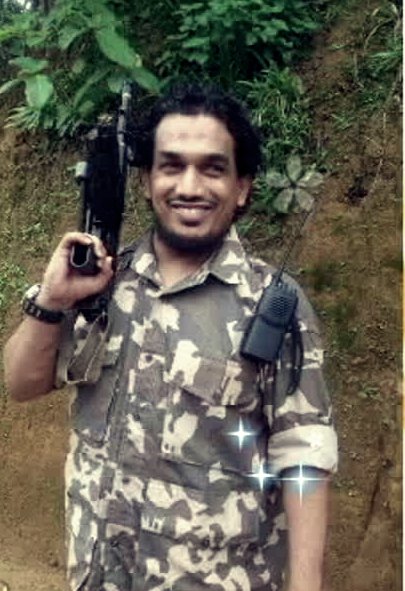
Lamek Alipky Taplo: West Papuan Separatist Killed in Counterterrorism Operation
Lamek Alipky Taplo: West Papuan Separatist Killed in Counterterrorism Operation
Executive Summary:
- Lamek Alipky Taplo’s death removed a locally dominant but low-capacity insurgent leader whose influence derived less from his ability to sustain insecurity, displace civilians, and disrupt state presence in a remote frontier district of West Papua in Indonesia.
- His killing has fractured leadership within the area of his group’s control and temporarily reduced pressure on local communities, but it has not eliminated the underlying separatist threat, illustrating the limits of leadership decapitation in low-intensity insurgencies.
Brigadier General Lamek Alipky Taplo (“Lamek”) of the West Papua National Liberation Army–Free Papua Movement (TPNPB-OPM) was killed on October 19 after a years-long campaign. Taplo operated primarily in KODAP V Ngalum Kupel (Indonesian: Commando Territory 5 of the Ngalum people in the Kupel area), one of the territorial military commands of the TPNPB-OPM, which was responsible for operations in the Kiwirok district and surrounding areas of Pegunungan Bintang. Although the group’s operations in this remote frontier zone have typically been small in scale, Lamek earned an outsized profile inside the movement by sustaining continuous attacks, repeatedly disrupting security force movements, and turning Kiwirok district into an inhospitable conflict area that displaced nearly all of its residents. His reputation for uncompromising violence, combined with his command of seized Indonesian military rifles and his ability to elude capture in difficult mountain terrain, made him a symbolic figure for TPNPB-OPM and a persistent tactical nuisance for Indonesian security forces (detik, November 6, 2021; October 20; okezone, October 20).
Following his death, TPNPB-OPM spokesman Sebby Sambo mourned him as a national hero while publicly declaring his intent to continue the struggle for West Papuan independence. Nonetheless, the organization will likely struggle to resolve the leadership succession inside KODAP V, reflecting Lamek’s influence and the factional sensitivities his absence immediately exposed (seputarpapua, October 19; suarapapua, October 20; fajarpapua, October. 27; SripokuTV, November 1).
Lamek’s militant campaign was limited in scale but persistent in its local impact. Between 2020 and 2025, attacks attributed to KODAP V resulted in a small number of fatalities and injuries, alongside the destruction of government facilities and construction equipment associated with Indonesian state presence in the area. His significance lay less in casualty figures than in his ability to keep the area he controlled insecure for the Indonesian government over an extended period of time: Lamek’s operations displaced much of the population of Kiwirok district, disrupted infrastructure projects, and turned the area into a contested security zone that Indonesian authorities struggled to stabilize for several years.
Lamek Seizes Indonesian Rifles
KODAP V Ngalum Kupel operates in one of Papua’s most remote and difficult security environments. The command is based in Kiwirok district in Pegunungan Bintang, a mountainous frontier region near the Papua New Guinea border where steep terrain and limited ground access have long complicated Indonesian security operations (detik, September 21, 2021). This geography shaped one of the defining episodes of Lamek’s leadership: after Indonesian authorities lost contact with an MI-17 helicopter flying from Oksibil to Sentani in June 2019, Lamek claimed responsibility for firing on the aircraft, and his unit later recovered the crash site and seized the rifles carried by the soldiers on board in early 2020 (VOA Indonesia, February 7, 2020; kumparanNEWS, February 10, 2020). Possession of these weapons allowed Lamek to sustain intermittent attacks and harassment operations in Kiwirok from March 2020 until his death in October 2025, reinforcing his status within TPNPB-OPM despite the limited scale of his campaign (Sripoku.com, May 22, 2021).
Lamek and the Refugee Camps
Lamek escalated attacks against Indonesian state targets after obtaining military weapons in early 2020. His first confirmed operation using the seized rifles occurred on March 2, 2020, when militants under his command attacked a truck carrying construction materials for the Trans-Papua road project between Yahukimo and Pegunungan Bintang, injuring three workers (Kompas.com, October 21, 2020). Violence expanded thereafter to include shootings of security personnel, attacks on aircraft, and assaults on medical workers and civilians, alongside the destruction of healthcare facilities and government buildings. The campaign peaked on September 13, 2021, when Lamek’s fighters killed medical personnel and destroyed medical, educational, and public facilities in Kiwirok district (detik, September 15, 2021).
Indonesian authorities deployed additional security forces to the area later that month, but limited ground access forced troops to conduct a prolonged overland approach from Oksibil, during which Lamek’s unit ambushed them at multiple points (Tribun-Timur.com, September 20, 2021). The sustained fighting emptied much of Kiwirok district, driving residents into nearby refugee camps and prompting the suspension of operations at Kiwirok Frontier Airport amid concerns over militant use of the facility (detik, November 6, 2021; kumparanNEWS, November 21, 2022). Although the airport resumed operations in late 2022, Lamek continued to evade capture and conduct intermittent attacks in the surrounding area until his death (Tempo.co, December 3, 2022; Tribun-Timur.com, January 18, 2022).
Lamek’s Last Stand
Lamek’s final weeks were marked by scattered attacks and increasingly contradictory militant claims. In late September, TPNPB-OPM spokesman Sebby Sambo alleged that Lamek’s unit shot three Indonesian police officers, killing one and wounding two, followed days later by claims that KODAP V fighters attacked additional security personnel and set fire to schools and medical facilities, although Indonesian authorities did not confirm these incidents (West Papua Daily, September 26; fajarpapua, September 27). On October 11, Sebby reported that militants under Lamek’s command shot an Indonesian army soldier during a patrol in Kiwirok district, an incident later acknowledged by Indonesian media (Tribun-Timur.com, October 13). Days later, an attack near a refugee camp resulted in an accidental shooting that injured a civilian, underscoring the increasingly indiscriminate nature of the violence (TerasTimur, October 14).
Indonesian security forces killed Lamek on October 19 during a raid on a militant position after receiving intelligence indicating an imminent attack. Three other fighters were also reported killed. Subsequent militant accounts of his death varied sharply, however, with Sebby alternatively claiming that Lamek was killed by a drone strike and later asserting that Lamek and his companions died when an improvised explosive device (IED) detonated accidentally while being assembled inside their base (suarapapua, October 19). Sebby’s public characterization of the incident as a “stupid and embarrassingly avoidable death” (Indonesian: “mati konyol”) sparked backlash within TPNPB-OPM ranks and highlighted growing internal tensions, prompting him to issue cautionary statements on the handling of explosives amid reports of leadership disputes and organizational strain following Lamek’s death (TerasTimur, November 4).
Conclusion
Lamek’s death immediately triggered leadership fragmentation within KODAP V Ngalum Kupel. Shortly after his killing, Corporal Egianus Kobak declared himself Lamek’s successor, but loyalists of Lamek’s deputy, Colonel Denius Wonda, rejected the claim, leading to internal clashes that reportedly killed four militants and split the command into rival factions (fajarpapua, October 27; SripokuTV, November 1). One faction sought to maintain operations in Kiwirok district, while the other aimed to redeploy fighters to Yahukimo, underscoring the absence of a clear succession mechanism and the personalized nature of authority within the unit.
Lamek’s removal weakened KODAP V without ending militant activity in the area. Although fighters formerly under his command remain committed to the broader goal of West Papuan independence, the loss of centralized leadership reduced their capacity to sustain prolonged insecurity, allowing displaced residents to gradually return to Kiwirok and resume daily life with reduced fear of coercion or reprisal (fajarpapua, November 5, 2022; November 30, 2022). The district has since experienced a relative stabilization compared to the peak of violence under Lamek’s leadership, reflecting how the death of a locally dominant commander can degrade operational coherence even in low-intensity insurgencies.