Mushtaq Kohi: BLA Financier’s Fate Obscured
Executive Summary:
- Mushtaq Kohi, a senior Baloch Liberation Army (BLA) financial and logistical coordinator, was widely reported to have been killed in early 2025, but conflicting accounts, organizational silence, and circumstantial indicators have left his fate unresolved.
- The ambiguity surrounding Kohi’s status underscores the BLA’s ability to obscure leadership outcomes, complicating Pakistani counterterrorism assessments and reducing confidence in claims of successful leadership decapitation.
- Kohi’s case illustrates how compartmentalized, non-public figures can sustain militant financing and coordination even when removed from public view, highlighting an adaptive insurgent security culture capable of absorbing—or concealing—senior leadership losses without immediate operational collapse.
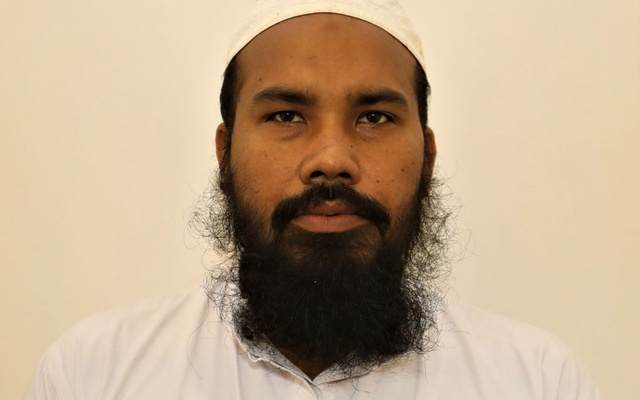
Mushtaq Kohi (Balochi: مشتاق کوہی) has been among the key figures of the Baloch Liberation Army (Balochi: بلۏچستان آجوییء لشکر, BLA) faction led by Aslam Baloch and Bashir Zaib (names in Balochi: اسلم بلوچ؛ بشیر زیب). Kohi has played a decisive role in overseeing financial operations, managing the flow of resources, and ensuring the continuation of the militant campaign across the region since his rise as a student activist. [1] While he is widely believed to have been killed in February 2025, a combination of unconfirmed reporting, organizational silence, and circumstantial indicators has fueled speculation that he may have survived the attack and withdrawn from public view.
Background: The BLA’s Fragmentation
The Baloch Liberation Army (BLA) has experienced significant fragmentation and restructuring over the past seven years that has reshaped the militant separatist landscape in Pakistan’s Balochistan (Urdu: بلوچستان) province. The first major split occurred in 2012, triggered by disputes between the Marri brothers—Hairbyar Marri and his younger brother Mehran Marri (names in Balochi: حیربیار مری; مہران مری)—over allegations of financial misconduct and mismanagement within the organization (Dawn, June 1, 2015). This initial division weakened the group temporarily, but later internal disagreements and power struggles led to a more comprehensive organizational restructuring.
These new changes not only altered the command structure but also increased the frequency and scale of attacks carried out by the group. The restructuring further affected key leadership positions, including members of the BLA’s highest decision-making body, the “Command Council,” as well as the management of BLA operations, logistics, and finances. Over time, these developments allowed the BLA to adapt to counterinsurgency pressures while maintaining its ability to coordinate militant activities across Balochistan.
The restructuring triggered a significant escalation of violence by the group. After a period of internal fragmentation, a new faction identifying itself as the BLA emerged under the leadership of Aslam Baloch and Bashir Zaib, along with four other senior members of its command council (Terrorism Monitor, December 1, 2023). This faction assumed responsibility for key operational, logistical, and financial decisions, strengthening the group’s overall structure and coordination.
Biography and Career in the BLA
Mustaq Kohi, the son of Mir Afzal Mengal (Balochi: میر افضل مینگل), is originally from Noshki (Balochi: نوشکے) but moved with his family to the provincial capital. Known by the alias “Kohi” (Balochi: کوہی, “pertaining to the mountains”), he comes from the Qazi Abad area (Urdu: قاضي اباد) of Noshki. His nickname reflects both his roots and the rugged landscape associated with his involvement in the armed movement, which has shaped much of his identity. Kohi began his political involvement through the Baloch Student Organization (Balochi: بلۏچی نۏدربرانءِ اورگان, BSO-Azad) during his university years at the University of Balochistan. Though not academically serious, he was active in student circles and political gatherings. In his early days as a student activist, Kohi led the BSO at the university. This experience strengthened his interest in political participation and helped him rise to higher positions in the organization, eventually becoming a member of its Central Committee. Despite his active role, however, he was often seen as someone who was more supportive of armed struggle than political activism (Humgaam News, September 29, 2014).
Kohi later joined the BLA and quickly became an active and trusted member after his deployment to the Bolan (Balochi: بولان) region. During this period, he developed a close relationship with Aslam Baloch, the BLA’s leader, who acted as a fatherly figure and mentored him in organizational and operational matters. Baloch’s mentorship helped Kohi rise steadily through the ranks, eventually taking responsibility for the group’s financial operations. In this role, he managed and oversaw funds collected through various means, including extortion from coal mining areas in Bolan, Quetta (Balochi: کوئٹہ), and Dukki (Balochi: دوکی).
Kohi became a key figure in distributing finances among BLA cells and compounds. His influence reached both the group’s top leadership and regional commanders, allegedly placing him on the same level as senior commander Bashir Zaib. Although the BLA’s internal financial system is difficult to understand since it relies heavily on cash and informal transactions, Kohi’s role was to manage these funds while generating new resources. His control over financial distribution strengthened his position and helped the group hide its financial routes and networks across Bolan, Makran, the Rakshan division, and the Jhalawan regions (names in Urdu not already given: مکران؛ رخشن، جھالاوان). Moreover, the networks’ links to Bolan provided it a foothold in a strategic area that has long served as a natural hideout and a major source of funds, especially through its wide stretch of coal-mining regions (South Asia Times, February 2). These resources, which are considered vital to the BLA’s operations, further expanded Kohi’s influence.
Within the group, Kohi’s followers—along with the loyalists of former BLA head Aslam—are often referred to as “Aslamists” and “Bolani,” referring to Aslam Baloch and Kohi himself, respectively. In addition, a list of Balochistan’s separatist leaders showed that the Balochistan Counter Terrorism Department and the provincial interior ministry announced a bounty of around $3,500 on him in 2016 (Daily Azadi, March 17, 2016).
Doubts Surrounding Death
Kohi is one of the few high-ranking senior members of the BLA who has remained largely out of sight of Pakistan’s counterinsurgency actors. His strategy also became visible during an incident in which reports claimed he had been stabbed to death in a taxi in Afghanistan by an unknown killer—an allegation the BLA has neither confirmed nor denied (Balochistan Pulse, February 3). His reported death was portrayed as a major success for the state and the most important assassination of a BLA commander since the killing of Aslam Baloch in 2018. However, the continued flow of finances and the unchanged intensity of the group’s attacks suggest that the celebration may have been premature (Khbarkhada, February 3).
A former close associate of Kohi dismissed the reports of his death. He explained that although Kohi had been seriously injured during the incident, he was quickly rescued by members of the group. The associate added that Kohi received immediate medical attention, was kept in a secure location, and recovered. However, the associate did not mention the location where Kohi was attacked, which further complicated the media’s claims and added uncertainty to the reports about the incident. [2]
The BLA, for its part, has learned to remain silent about failed attacks or rumors surrounding the deaths of its senior commanders, including Majeed Brigade commander Captain Rahman Gul (Balochi: رحمان گل) (Militant Leadership Monitor, August 13). A similar pattern was seen when Kohi narrowly survived a knife attack. Although the BLA regularly glorifies its fallen members as martyrs and uses their stories as propaganda to attract recruits, it has shown a different approach in this case, prompting room for speculation (The Balochistan Post, August 17).
This year’s commemoration of slain BLA fighters notably included no references to Kohi. The group commemorates its dead every year on November 13, the day it dedicates to Baloch fighters and political workers who have been killed, disappeared, or suppressed. On this occasion, it releases images and brief tributes to its “martyrs,” highlighting their roles and sacrifices. During its most recent online concert, the group displayed photos of several slain fighters as part of its commemorative visuals, but did not include Kohi’s image or offer any indication that he had been killed. This stands in clear contrast to claims made by Pakistani media, which reported his death as a certainty, despite lacking confirmation from the group itself (The Balochistan Post, November 13).
Conclusion
Kohi held an important role in maintaining the operation of his faction of the BLA. His assignments included managing finances, operations, and to some extent ensuring the logistic supply line for the group. Moreover, his familiarity with guerrilla strategy, staying beyond the reach of Pakistan’s counter-terrorism authorities and leaving no footprints on the battlefield or in digital spaces, indicates a closed communication network and the compartmentalization of the BLA’s approach. However, his unconfirmed rescue after being stabbed—if true—highlights the BLA’s ability to secure its leadership’s safety even under intense spontaneous threats.
Kohi’s prolonged absence from public militant discourse has itself become analytically significant. This reflects the group’s preference for opacity when leadership outcomes are uncertain or strategically sensitive. The BLA’s silence following reports of his death, combined with the lack of definitive confirmation and the continued functioning of financial and operational networks associated with his portfolio, underscores the difficulty facing Pakistani counterterrorism authorities in accurately assessing leadership attrition within the insurgency.
For Pakistani counter-terrorism forces, Kohi poses significant challenges in tracking the Baloch insurgency’s leadership and understanding its expanding operational capabilities. Furthermore, the failed early 2025 attempt to assassinate Kohi is likely to prompt the BLA to adopt stricter security measures to safeguard its senior commanders. This speaks to the group’s resilience, mobility, and ability to continue to maintain control over contested areas.
At present, the available evidence is insufficient to conclusively determine Kohi’s fate. What can be stated with greater confidence is that the ambiguity surrounding his status highlights the BLA’s adaptive security culture, its reliance on compartmentalized leadership roles, and its ability to absorb—or obscure—the loss of senior figures without immediate operational collapse. For Pakistani security services, this uncertainty complicates efforts to measure the effectiveness of targeted killings and underscores the need for caution in declaring strategic success absent corroboration.
Notes:
[1] “Chadda,” a Guidebook of BLA.” Hakkal, 2023, p. 53.
[2] Former Member of BSO-Azad. Mushtaq Kohi. Oct. 2025. Spoke on condition of anonymity.