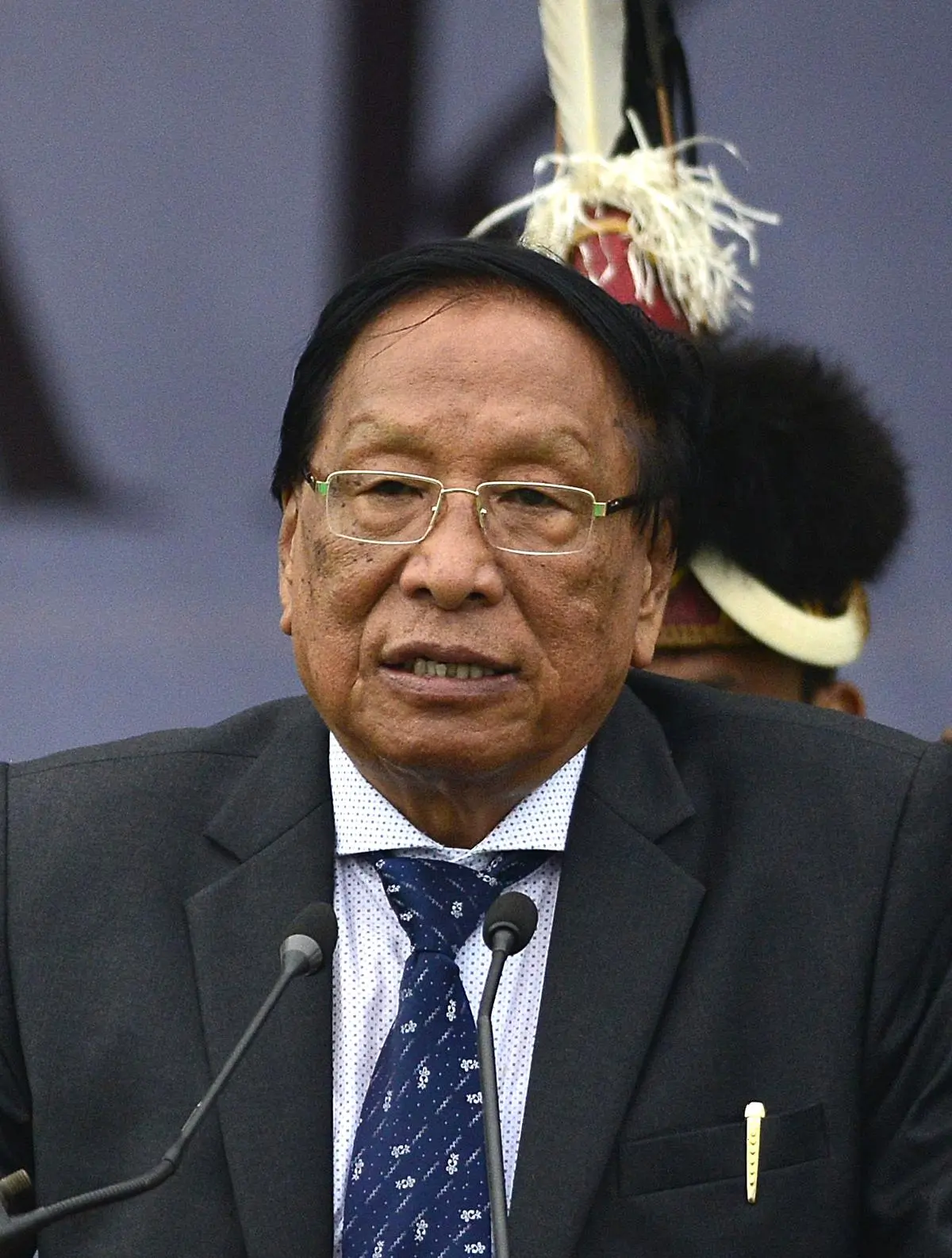
Nathan Bawm: The Artist-Turned-Militant Mastermind in Bangladesh’s Chittagong Hill Tracts
Nathan Bawm: The Artist-Turned-Militant Mastermind in Bangladesh’s Chittagong Hill Tracts
Executive Summary:
- Nathan Bawm is a former artist and activist who transformed an organization named the Kuki-Chin National Development Organization into the present-day Kuki-Chin National Front and the Kuki-Chin National Army (KNA), an ethnic militant group that stands in opposition to a key peace accord in eastern Bangladesh that ended a two-decade insurgency.
- Bawm, whose location is not known, has been successful in making the KNA an effective fighting force, notable for its ability to attack rival groups in the Chittagong Hill Tracts and ambush Bangladeshi security forces. This may have been made possible by transnational support from the broader Kuki-Chin community in India and Myanmar.
- Bawm’s demands have changed over time from a separate Kuki-Chin nation to an autonomous zone across three countries with its own governance structure. To achieve this, he has demonstrated a willingness to pragmatically work with groups like Jama’atul Ansar Fil Hindal Sharqiya (JAFHS), an al-Qaeda affiliate.
Since the historic 1997 Chittagong Hill Tracts Peace Accord was signed between the Bangladeshi government and Shanti Bahini insurgents, Bangladesh’s Chittagong Hill Tracts (CHT) have seen relative peace and stability (The Daily Star, December 2, 2022). The accord marked the end of nearly 20 years of insurgency in the CHT. However, after roughly 25 years of peace, CHT has witnessed a renewed insurgency led by a banned ethno-nationalist group named the Kuki-Chin National Front (KNF), which is locally known as the “Bawm Party” (The Business Standard, May 17, 2023).
The KNF stands out for carrying out bold actions against law enforcement agencies, looting banks, and using remote violence, such as detonating improvised explosive devices (IEDs), to wage irregular warfare. The group has a political wing, which goes by the name of KNF itself, and an armed wing called the Kuki-Chin National Army (KNA). The group also possesses an intelligence wing named the Information and Intelligence Branch (IIB), displaying an unusual degree of organizational sophistication. The KNA seeks to secure the autonomy of the regions of Bangladesh inhabited by six ethnic groups: the Bawm, Pankhwa, Lusai, Khiang, Mro, and Khumi (Prothom Alo English, April 6).
The mastermind and founder of the KNF is Nathan Bawm, a former artist and activist who transformed an organization named the Kuki-Chin National Development Organization (KNDO) into the present-day KNF. He shares his last name with the Bawm ethnic minority group that lives in the CHT. Little is known about Nathan Bawm, who has a reputation for allying with various hill-based organizations before turning his back on them. Under Bawm’s direction, KNF is harassing local civilians, killing rival hill-based groups, and targeting Bangladeshi government forces (The Business Standard, April 7).
Early Life and Politics
Born in 1980, Bawm was raised in the neighborhood of Eden Para in Ruma County, Bandarban District, Chittagong Province. Bawm’s family was impoverished, and he was the youngest of all six children. Bawm grew up seeing the lack of development of the hill-based ethnic groups (Somoy News, April 5). It was this struggle that motivated him to join the ranks of Pahari Chhatra Parishad (PCP), which was the hill-based student organization of Parbatya Chattagram Jana Samhati Samiti (PCJSS). PCJSS was the political arm of Shati Bahini, an ethnic militant group led by the famous insurgent figure M.N. Larma (The Business Standard, April 7).
Bawm attended college in Dhaka and was finally admitted into the Fine Arts Faculty of Dhaka University (DU), the country’s foremost educational institution. It is alleged that he failed to qualify for the DU entrance exam, instead gaining admission due to PCJSS directly lobbying for Bawm to represent the underdeveloped community of the hills at the school. This demonstrates Bawm’s strong connections with PCJSS, even before he became involved with militancy. Later, in 2000, Bawm designed a sculpture of M.N. Larma at Larma Square in Khagracchari, the capital of Khagracchari District, Chittagong Province, for which Bawm gained some renown as an artist. After graduation, Bawm wrote various historical and ethnographic articles and books on the Bawm people, which solidified his stature as an advocate for minority causes. In 2002, he founded the Bawm Literature Forum to preserve Bawm literature (Barta 24, April 10).
Subsequently, Bawm formed the KNDO in 2008. This further burnished his reputation as an activist and philanthropist in the Bawm community. It also offered Bawm a chance to develop his leadership skills. In 2017, Bawm transformed the KNDO into an armed insurgency group named the KNF. In addition, Bawm attempted to compete in the 2019 national elections, though his paperwork was rejected on the grounds that he was ineligible to run (Bangladesh Pratidin, April 8). This fueled Bawm’s disdain for Bangladesh’s electoral system, which he believes is biased and unfair toward ethnic minorities.
Bawn’s Beliefs
The ethnic communities in the CHT that Bawm claims to represent are lagging in education, employment, and social development opportunities compared with larger ethnic groups in the area like the Chakma. Nathan believes that PCJSS, which is predominantly led by Chakma community members, betrayed and failed to advance the rights of other, smaller ethnic groups, thereby obstructing the development of said communities (Daily Industry [Bangladesh], April 6). In light of this, Bawm considers other CHT groups like PCJSS splinter Parbatya Chattagram Jana Samhati Samiti (M.N. Larma) (PCJSS-M.N. Larma), the United People’s Democratic Front (UPDF), UPDF splinter United People’s Democratic Front (Democratic) (UPDF-D), and the Marma Nationalist Party potentially hostile to his goals. This has led the KNF to target and kill members of the disparate CHT groups (Dhaka Tribune, April 7, 2023).
Bawm also asserts transnational unity should exist among the Kuki, Chin, and Bawm people living in India, Myanmar, and Bangladesh. Bawm initially advocated for a new Kuki-Chin state consisting of nine CHT counties, though he later downgraded his demands to a separate administrative system for the same lands, to be called the Kuki-Chin Territorial Council (KTC). In doing so, Bawm is rejecting the 1997 peace accords and denying the legitimacy of the existing CHT governance structures, which include Hill District Councils and the Chittagong Hill Regional Council (Prothom Alo English, April 13).
Initially, Bawm primarily opposed the Chakma dominance in the CHT’s administration and posed no direct challenge against the government. Bawm later turned against government security forces, however, alleging that they had cooperated with the Chakma-majority CHT leadership. Bawm found that pressuring the government was a good tactic for the KNF to gain visibility.
Formulating the KNF’s Modus Operandi
Through his popularity and influence, Bawm enrolled hundreds of volunteers and recruits for the KNF cause. Most of these have been youths, and many are women (New Age, April 9). They are primarily given weapons and explosives training. Utilizing his cross-border ethnic ties, Bawm even sent a large number of KNF members to train in the camps of ethnic rebels in Myanmar’s Chin and Kachin states. KNF rebels have also received shelter and training from Kuki armed groups in Mizoram, India (The Diplomat, April 29). Bawm has used Facebook as a platform for KNF agitation and recruitment. To help provide a rallying point for his cause, Bawm created a map and flag for the proposed state/autonomous region. Bawm set up the IIB to conduct intelligence activities for the KNF. This was revealed by “Captain Fleming” of KNF, who suggested that Bawm had relocated to Switzerland in an interview (Prothom Alo English, April 17).
Among other things, Bawm is an irregular warfare strategist. He primarily employs two methods to engage the KNF’s enemies. The first tactic involves the KNF engaging in frontal assaults against rival tribal groups directly using small arms. The KNF has successfully killed many of its rivals in the CHT in this way. Another method involves the use of IEDs in ambushes against government forces. This has allowed the KNF to successfully injure and kill a number of members of the otherwise-superior Bangladeshi army (New Age, April 19).
To finance the KNF, Bawm has allegedly relied on foreign funding from the broader Kuki-Chin community in India and Myanmar (Dhaka Tribune, February 22, 2023). He established connections with a banned Islamist al-Qaeda affiliate named Jama’atul Ansar Fil Hindal Sharqiya (JAFHS) and trained them in exchange for money. This was detected when government forces launched an operation in the hills to arrest KNF trainers and JAFHS militants in 2022 (Prothom Alo English, October 12, 2022).
Bawm secured funds and brought attention to his group by directing several bank robberies in early April in Ruma County, Bandarban District. These incidents were notable because they highlighted the KNF’s ability to operate and strike fear into the civilian population in broad daylight, even with considerable military and security personnel having been deployed to the region (Dhaka Tribune, April 3). The KNF went so far as to attack the Thanchi District police station after the robbery, which displayed an increased willingness to engage Bangladesh’s security forces directly (New Age, April 5). At the time of these attacks, the KNF was actively engaged in peace talks with the government; the incident proved to be the final straw for the government, which launched a full counter-insurgency effort to bring the KNF to heel.
Conclusion
Since the April attacks, the KNF has struggled to fight the government (The Daily Star, April 8). Despite Bawm’s marriage to a nurse employed at a government clinic, Dhaka has not yet located him (Dhaka Tribune, April 11). This would suggest that Bangladeshi intelligence should have kept closer tabs on Bawm for some time now, as his continued survival suggests that he was either not under surveillance or was otherwise able to escape it. Likewise, earlier actions undertaken against the KNF may have been able to prevent the current insurgency.
Bawm’s current whereabouts are unknown. As previously stated, Bawm may be hiding in a European country like Switzerland or the Netherlands, or he could have taken refuge in Mizoram State in India. This latter theory has been proposed by individuals within the Assam Rifles, an Indian paramilitary force responsible for maintaining order in the country’s northeast (Prothom Alo English, April 17). Bawm’s ability to innovate, agitate, mobilize youth, and engage in irregular warfare combine with his reckless attitude and unpredictable personality to make him one of the most dangerous militant leaders in Bangladesh. Bawm’s adeptness in establishing transnational ties between the KNF and other cross-border militant rebels and Islamist groups means that he is a regional threat as well.