PRC–Russia–DPRK Relations Grow Closer
Executive Summary:
- Multiple Chinese readouts from the president-, premier-, and foreign minister-levels have omitted references to “denuclearization” following summits between the People’s Republic of China (PRC) and the Democratic People’s Republic of Korea (DPRK).
- Russia, the DPRK, and the PRC are engaged in a mutually-beneficial triangular relationship, which promotes diversification from Western dependence for Russia, regime survival for the DPRK, and a buffer that drains U.S. focus and resources for the PRC. The dynamic is not a formal alliance, nor is it a “marriage of convenience.” It may be considered an “axis.”
- Competition and bilateral frictions are still present, but the bloc continues to promote sanctions-resilience and satisfy the needs of each participant.
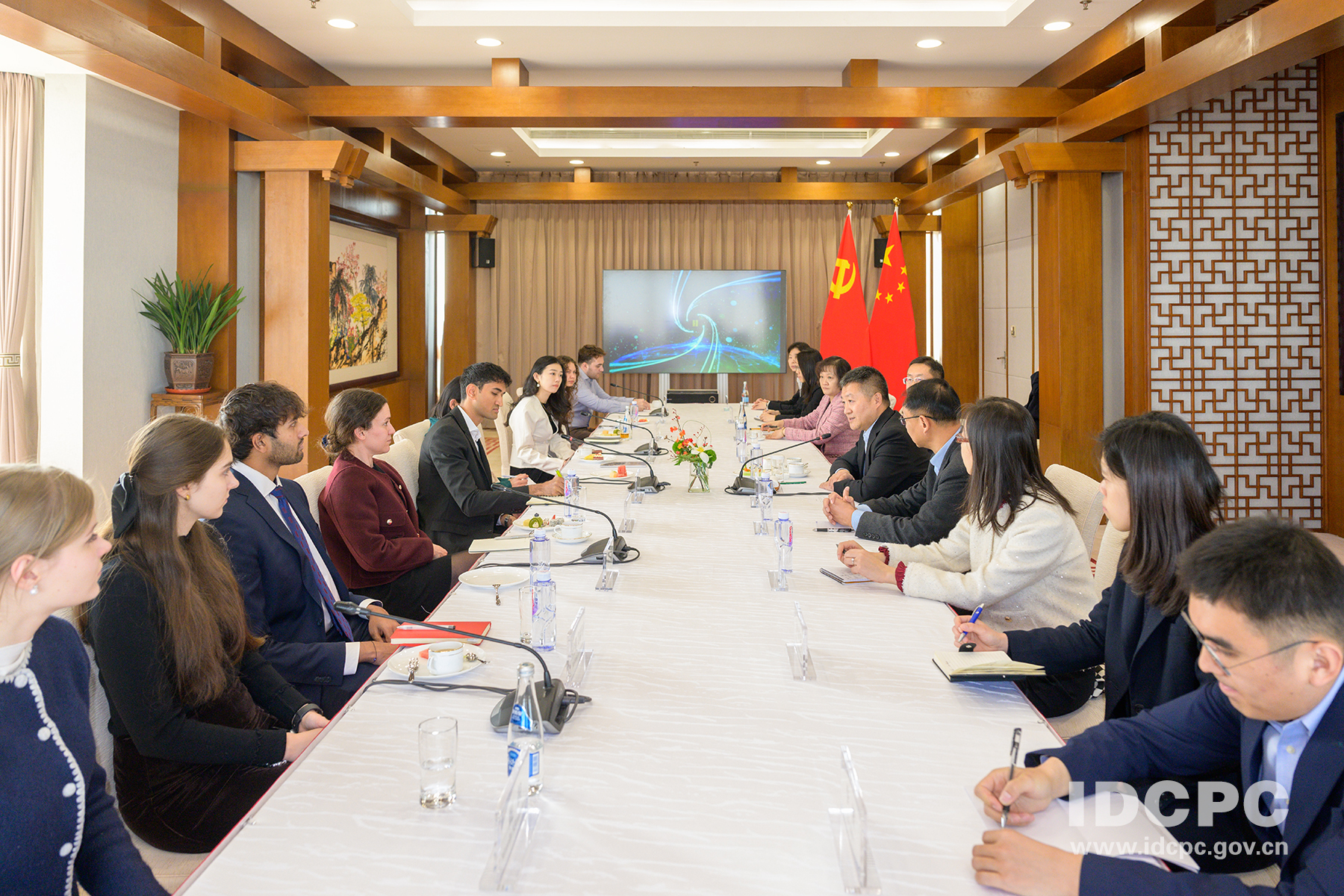
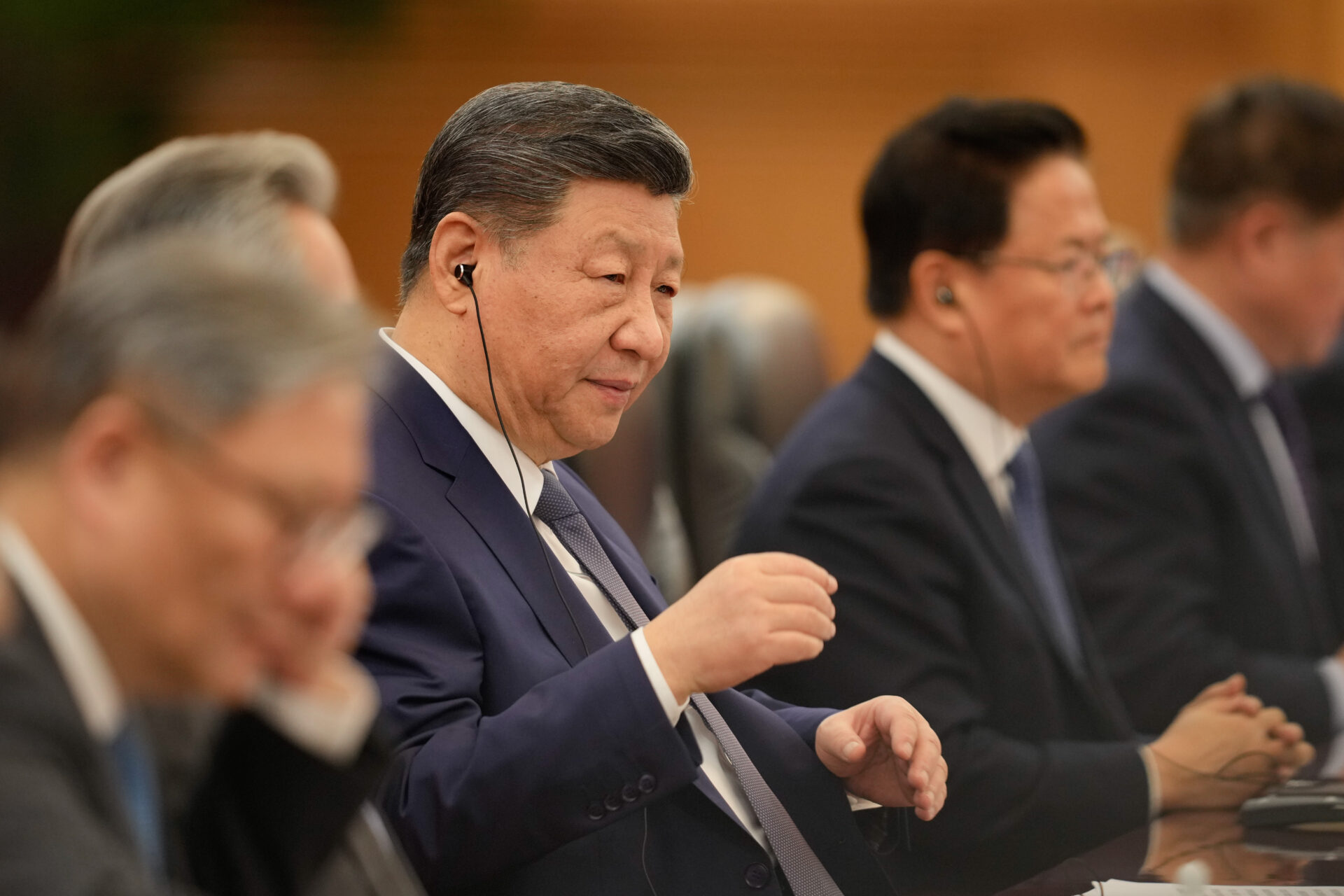
On September 4, the Ministry of Foreign Affairs (MFA) of the People’s Republic of China (PRC) published the readout of a leaders meeting between Xi Jinping and North Korea’s Kim Jong Un. The document highlighted the themes of “traditional friendship” (传统友好), a “shared destiny” (命运与共), and “mutual vigilance and support” (守望相助). It called especially for deeper exchanges in the “governance of party and state affairs” (深化两党治国理政经验交流互鉴) (MFA, September 4). Notably, it omitted “denuclearization.” Four weeks later, the official readout from the meeting between the two countries’ foreign ministers similarly omitted the term, instead elevating governance exchanges among socialist parties (MFA, September 28). When Premier Li Qiang (李强) met Kim Jong Un on October 9, People’s Daily coverage likewise celebrated “traditional friendship and cooperation” (传统友好合作关系) without reference to denuclearization (People’s Daily, October 10). The pattern has now hardened into a deliberate tifa (提法)—a formalized policy wording.
This shift was further confirmed in Gyeongju during the November 1 APEC leaders’ summit. South Korean President Lee Jae-myung held his first bilateral meeting with Xi, in which he called for PRC assistance on denuclearization of the peninsula (YouTube/Yonhap News TV, October 29). Yet the PRC readout entirely omitted the words “denuclearization” (无核化), “Korean Peninsula” (半岛), and “North Korea” (朝鲜) (MFA, November 1). This “split readout” was no clerical slip. In PRC political discourse, such formulation changes never occur by chance. A stock phrase dropped four times in three months across leader-, premier-, and minister-level texts signals deliberate recalibration. Beijing now acknowledges a nuclear Democratic People’s Republic of Korea (DPRK) as reality, not aberration.
Alignment Seen In North Korea, the CCP, and Chinese Provinces
This new policy was quickly visualized. The October 2025 “Victory Day” parade in Pyongyang that marked the 80th anniversary of the Workers’ Party of Korea offered a platform to demonstrate alignment. The PRC dispatched Premier Li Qiang, its highest-ranking emissary to the DPRK in over 15 years, while Russia sent Dmitry Medvedev. PRC and Russian dignitaries watched nuclear missiles parade through Kim Il Sung Square, underscoring a synchronized policy turn: both powers now treated denuclearization as a “closed issue” (The New York Times [NYT], October 11).
The parade, and the Xi–Kim meeting preceding it, granted the DPRK the recognition it craved by putting Kim on equal footing with the PRC and Russia. For Beijing, it restored the optics of a socialist front without paying the reputational cost of defending Pyongyang’s arsenal outright. The omission of “denuclearization” became part of the face-saving choreography of triangular diplomacy.
The infrastructural aspects of this shift are occurring at the Party and provincial levels. At the top, the Chinese Communist Party’s International Liaison Department (CCP ILD) has re-emerged as the core liaison to the Workers’ Party, channeling diplomacy through ideological bonding. As Xi Jinping told Kim Jong-un, “both countries are socialist states led by communist parties” (两国都是共产党领导的社会主义国家) (China Brief, July 26, 2024; MFA, September 4). This is language Beijing usually reserves for comrades, not for transactional partners.
Below the Party layer, local leaders are restoring provincial networks. The 2024 “Friendship Year” produced quiet cooperation agreements on customs, postal exchanges, and broadcasting. Jilin’s G331 Border Tourism Corridor opened in September 2025, linking Yalu and Tumen river towns across the international border (China News, September 29). The same week, the Shenyang–Baihe high-speed rail launched, connecting Changbai/Paektu to the national grid (Xinhua, September 28). Liaoning’s Dandong plan envisions new airport and port facilities to recast the city as a hub for post-sanctions trade. When Ambassador Wang Yajun (王亚军) toured Hyesan and Samjiyon in June 2025, he urged expansion of “ice-and-snow” (冰雪) tourism, a euphemism for reopening frontier commerce (PRC Embassy in the DPRK, June 7). These projects, although mundane in appearance, show how normalization is implemented. They provide a more permanent, sanctions-resistant interface with Pyongyang. Together with the rhetorical omission of ‘denuclearization,’ they signal that Beijing is building a system designed not to defy the rules outright, but to render them obsolete over time.
Triangular Relations Yields Asymmetric Advantages
The PRC continues to benefit from its bilateral ties with Russia. Since 2022, Sino-Russian trade has surged to record levels (Globe Magazine, March 4). Economic alignment is reinforced by increasingly routine military cooperation, including joint bomber patrols, complex naval drills near Japan, and coordinated messaging on Western “containment” (China Brief, June 7; MSN/Newsweek, August 6; Eurasia Daily Monitor [EDM], September 18).
The DPRK and its relations with Russia add to this dynamic. The June 2024 Treaty on Comprehensive Strategic Partnership between Moscow and Pyongyang included mutual-assistance provisions that created a legal framework for military and logistical cooperation (U.S. Congress, June 13). Open-source imagery, U.S. declassifications, and Ukrainian forensic reports have since documented the transfer and battlefield use of North Korean short-range ballistic missiles and artillery shells in Ukraine (Reuters, April 24). South Korean officials also state that troops the DPRK dispatched to the Kursk theater marched in Pyongyang’s October parade (EDM, May 27; NYT, October 11).
For Beijing, Russia–DPRK relations yield asymmetric advantages. Military and trade cooperation stretches U.S. and allied resources, complicates sanctions enforcement, and ties both Moscow and Pyongyang closer to the PRC, without requiring Beijing to arm Russia overtly. This alignment gives the PRC flexibility to profit from the triangle while keeping its hands clean.
This logic extends to the Korean Peninsula’s maritime front. During the November APEC summit, President Trump announced that the United States will arm South Korea with a nuclear submarine (Politico, October 29). While Washington assists an ally’s move toward nuclear propulsion, it demands that the PRC pressure a client state to disarm. The contradiction provides diplomatic cover for Beijing’s silence, allowing it to portray restraint as principle rather than policy choice.
Sanctions fatigue has not diminished the networks beneath this alignment. Western pressure on Chinese banks, and Moscow’s exclusion from SWIFT, have instead prompted adaptation. The renminbi (RMB) has overtaken the U.S. dollar as Russia’s dominant foreign currency, and RMB–ruble settlements now make up the bulk of bilateral trade (Reuters, July 24; Guancha, November 5).
Russian banks increasingly rely on domestic systems to offset Chinese payments, insulating both sides from direct scrutiny. Regulators in Moscow have promoted gold, digital currencies, and closed-loop barter systems as secondary hedges (Reuters, July 8). These workarounds create a semi-formal gray zone through which trade continues with plausible deniability. [1] In effect, these financial and logistical practices allow North Korean commerce to continue under the cover of broader Sino-Russian trade. They also nurture Russian dependence on the RMB and give the PRC a stabilizing hand over DPRK activity. The PRC’s financial infrastructure, Russia’s resource flows, and the DPRK’s sanctioned economy as a result now function as a mutually reinforcing ecosystem designed to withstand external pressure.
The Triangle is Self-Sustaining
Critics of the alignment argue that it rests on conflicting interests, personal mistrust, and uneven power. But three structural realities suggest that the system can be self-sustaining despite historical antagonism and suspicions of transactional convergence.
First, in Leninist political systems, policy endurance arises from bureaucratic embedding. Once a tifa—such as “governance exchanges between socialist parties”—is standardized, it spreads across ministries, embassies, and state media. Repetition creates orthodoxy. Moving past “denuclearization” rhetoric will bolster ongoing tourism, trade, and cooperative initiatives.
Second, with the United Nations Panel of Experts dissolved and Moscow having declared denuclearization a “closed issue,” incentives for policy reversal have disappeared. Embracing the old language would alienate both partners and produce no material gain. The cost of speaking now outweighs the cost of omission.
Third, sunk costs reinforce cooperation. The infrastructure of RMB–ruble settlements, border logistics, and the DPRK–Russia arms pipeline is expensive to build and complex to unwind. It forms an ecosystem of dependency. Compliance shocks, such as Chinese banks temporarily freezing transactions to avoid secondary sanctions, reflect only friction within the network, not its unraveling. These pauses are safety responses in a system built to bend under pressure rather than break. What analysts often mistake for fragility is in fact the noise of adaptation.
Still, tensions persist. Beijing and Moscow continue to negotiate pricing for the Power of Siberia 2 pipeline, Central Asia remains an area of competition, and Beijing’s financial institutions remain wary of excessive exposure to sanctioned networks. Yet these are bargaining problems within a shared project, not precursors to rupture.
Some observers remain skeptical. Andrew Kim, former chief of the CIA’s Korea Mission Center, dismissed the alignment as a “marriage of convenience,” predicting that Kim will eventually pivot back to Washington “when leverage permits” (YouTube/World Knowledge Forum, October 2). Yet this view overlooks how repetition institutionalizes behavior. Diplomacy and interdependence consolidate relations. Even irritations can be managed within that framework, especially as “governance exchanges” introduce symbolic fraternity as a replacement for denuclearization.
The triangular dynamic is neither a formal alliance nor a fleeting convenience. Each actor has incentives to maintain the relationship: for Moscow, diversification from Western dependence; for Pyongyang, regime survival; for Beijing, a buffer that drains U.S. focus and resources. Overall, these forces produce what might be called “consolidated resilience.” The term “axis” may be analytically loaded, yet the structure behaves like one. It is ideologically aligned, materially linked, and strategically convergent.
Conclusion
The notion that the PRC’s relationship with North Korea—and by extension the PRC–DPRK–Russia triangle—is inherently fragile, is no longer backed by evidence. The pivot away from “denuclearization” is deliberate. Beijing’s omission from its highest-level diplomatic texts was a policy decision ratified by repetition across the president, the premier, and the foreign minister, and then confirmed in November at APEC.
This shift was overlooked by many because it was built not through high-profile summits, but through more resilient mechanisms. Party-to-Party governance exchanges replaced transactional diplomacy. Provincial corridor projects and cross-border “Friendship Year” agreements reshaped the frontier. And a sanctions-era payments network now insulates trade from Western scrutiny. Together these layers form a sanctions-hardened system that supports each participant.
Frictions persist, but they are the ordinary frictions of coordination within a consolidated bloc. Despite bargaining over pipeline pricing and influence in Central Asia or Pyongyang’s unpredictable missile tests, each participant has structural incentives to maintain the arrangement. The relationship supports strategic depth for Moscow, regime insurance for Pyongyang, and leverage for Beijing against Western pressure.
The lexicon tells the story. In Beijing’s official discourse, “solidarity” (团结) now occupies the rhetorical space once held by “denuclearization.” Words in PRC diplomacy do not drift; they settle through repetition into doctrine. When a word disappears repeatedly across top-level texts, it signals more than stylistic preference—it signals a strategic choice. By normalizing silence on denuclearization, Beijing has normalized the reality behind it. A nuclear North Korea supports the foundation of a broader Sino-Russian partnership. The world must learn to read that silence as a statement of intent.
Notes
[1] Legal analysts have termed behavior intended to avoid overt sanctions violations while maintaining essential flows “adaptive compliance” (适度合规) (King & Wood Mallesons, 2022).