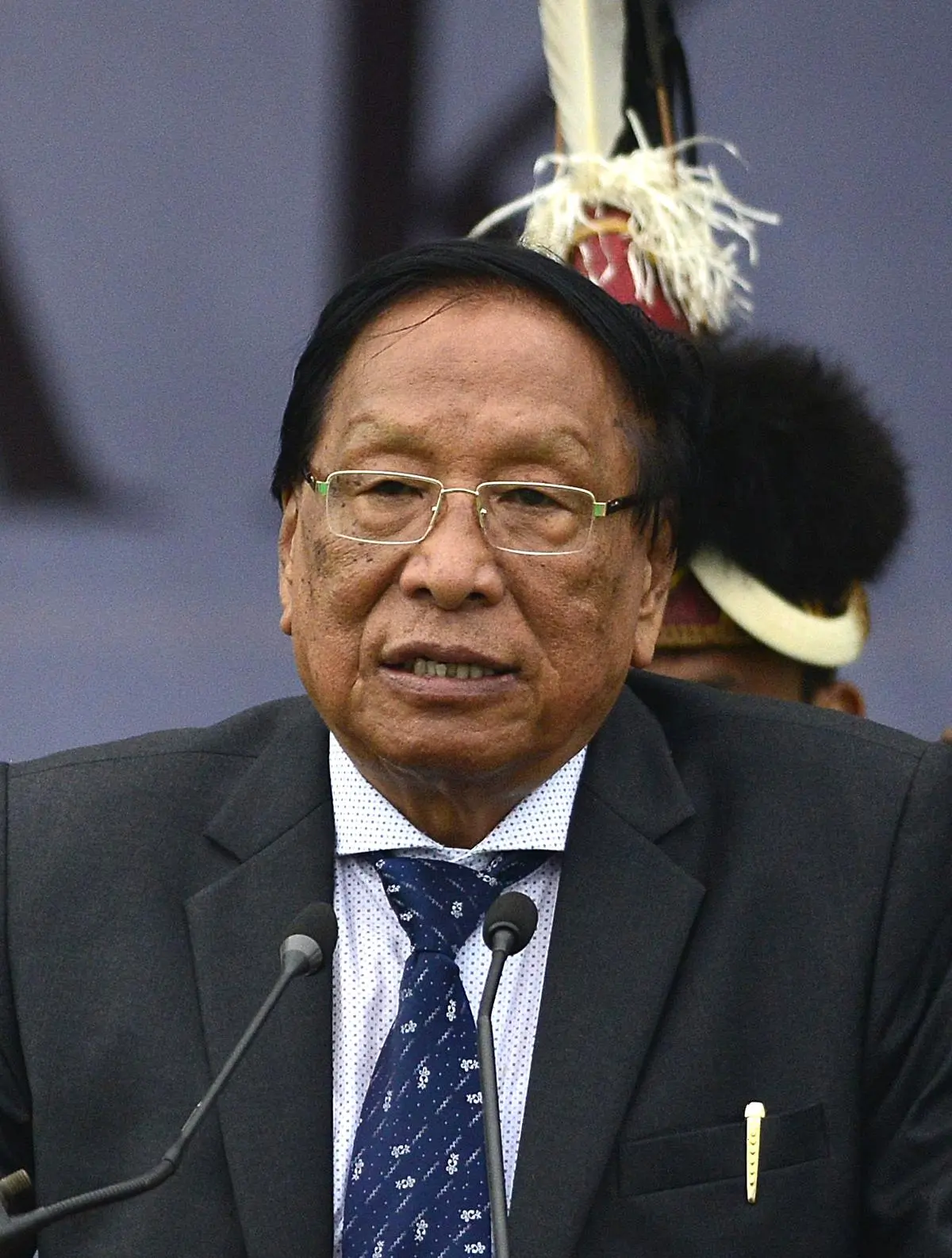
A Portrait of Chechen Rebel Commander Hussein Gakaev
A Portrait of Chechen Rebel Commander Hussein Gakaev
Background
Hussein Vakhaevich Gakaev (a.k.a. Amir Mansur) was born on July 8, 1970, in the village of Kalinovskaya of the Naur district of the Chechen Republic bordering Mozdok, North Ossetia. His identification card states that he is a resident of the village of Elistanzhi in the Vedeno district. Gakaev was one of six brothers, four of whom died in Chechnya’s recent confrontations with the Russian state. His older brothers, Jamalay and Said-Usman, were killed in the initial 1994-96 Russo-Chechen war, in which Hussein fought in units controlled by the infamous commander Shamil Basaev, and the other two during the second military campaign in Chechnya that began in the fall of 1999. His younger brother, Muslim Gakaev, following in Hussein’s footsteps, had served since May 2007 as commander of the Shali mountain sector of the Eastern Front (RFE/RL, October 25, 2010). As of late there have been few reports about Muslim Gakaev’s whereabouts. The Gakaev family also includes several sisters, but their stories remain unknown except for one who was reported abducted in early 2006, likely in a bid to exert pressure on Hussein.
The Evolution from Ordinary Rebel to Militant Leader
From the outset of the Second Russo-Chechen conflict until the spring of 2006, Gakaev was an unremarkable foot soldier. He then became amir of the local Elistanzhi Jamaat of the Vedeno district of the unrecognized Chechen Republic of Ichkeria (ChRI), a de facto independent state that existed only briefly after the signing of the Khasavyurt Accord in 1996 which formally ended the First Chechen War. Following the ceasefire outlined in the Khasavyurt Accord, Gakaev served as deputy commander of the Jundullah Islamic Brigade within the structure of the Eastern Front of ChRI’s armed forces. From the spring of 2006 to May 2007 he was commander of the Shali Sector of the Eastern Mountain Front (on September 24, 2006, that front was renamed the South-Eastern Front). He was appointed to this post by the late president of ChRI, Abdul-Halim Sadulaev, at the request of Military Amir of the Caucasus Mujahideen Shamil Basaev, one of the most renowned military commanders of the armed resistance movement. Simultaneously, Gakaev served as the minister of internal affairs of ChRI from March to October 2007.
From May 2007 to June 2010, Hussein Gakaev was deputy commander of the South-Eastern Front and of the Eastern Front of the ChRI rebels starting in October 3, 2007. He assumed the same position on October 7, 2007, but in the then emerging entity that called itself the Armed Forces of the Caucasus Emirate following the abolishment of the ChRI by Amir Doku Umarov. The Caucasus Emirate stretched from the Republic of Dagestan on the Caspian Sea to Stavropol Krai, and Chechnya was reduced to a constituent territory of a much wider holy war being waged across the North Caucasus. Gakaev supervised the Shali Mountain, Shali Plains, Argun and Ataginsky sectors. From June to September 2010 he served as the wali (head) of Nokhchicho, Wilaya (Province). [1]
The majority of the Chechen rebel commanders elected Gakaev to the post of amir of the Caucasus Emirate on October 7, 2010 (Rosbalt.ru, October 7, 2010). Once Doku Umarov—the controversial amir of the Caucasus Emirate who briefly resigned from his post—realized on October 20, 2010, that the breakaway rebels were refusing to fight under his leadership, he felt he had no choice but to relegate all of them, strip them of the command of Chechen fighters and submit them to a Shari’a court. [2] Nonetheless, this demotion did not have any real impact on the position of the Chechen rebel leaders, since they were little dependant on Umarov. Ethical considerations played a paramount role in choosing Hussein Gakaev in the face of Aslambek Vadalov’s apparent primacy. [3]
Aslambek Vadalov, who spent just a few days in 2010 as the preeminent leader of all Caucasus rebels, politically could not afford to immediately take up the leadership post of Chechen militants, lest he be accused of caring more about his rank than about the future of the armed resistance movement as a whole. Stepping aside, he kept for himself an opportunity to once again become the leader of all Northern Caucasus rebels sometime in the future.
According to Russian law enforcement agencies, Gakaev is wanted by the criminal department of the Leninsky police district of the Republic of Chechnya’s Ministry of Internal Affairs under Article 324 of the Criminal Code (buying or selling official documents and state awards). [4] The charge was submitted on November 20, 2002. The Vedeno and Shalinskyi mountain and foothill areas of Chechnya, specifically Elistanzhi, Agishty, Eshilhatoy and Agishbatoy, are areas of operation for his guerrilla unit. As the commander of a separate military detachment, Gakaev launched a military campaign in the fall of 1999 which continues to this day in same capacity.
Based on an item published in Krasnaya Zvezda, the official organ of the Russian Federation’s Ministry of Defense, one can presume that Hussein Gakaev was not on good terms with foreign volunteers who came to Chechnya from the Arab world and Turkey (Krasnaya Zvezda, November 13, 2002). It is quite possible that Chechen commanders did not in fact always have the best relations with those who fought under the late Amir Khattab. Khattab was the most well known Arab commander in Chechnya at the time and was purportedly in close contact with prominent religious figures and sympathetic jihadi fundraisers in the Persian Gulf and Levant regions. [5] Hussein Gakaev fought under the command of Shamil Basaev, who was a protégé of Amir Khattab and it is therefore somewhat confounding that Gakaev had tension with foreign fighters, a claim made by the Ministry of Defense’s official newspaper.
On August 30, 2003, as amir of Elistanzhi, Gakaev killed Shaiman Madagov, the imam of the Vedeno district, for cooperating with the Russian state (RIA Novosti, March 3, 2009). Some Russian sources claim that Gakaev and his fighters, commanded by Shamil Basaev, took part in the large-scale attack on the city of Nazran, the neighboring Republic of Ingushetia’s commercial capital, on the night of June 22, 2004 (RIA Novosti, June 6, 2008). During the assault, which left nearly 100 killed or wounded, virtually the entire weapons cache of Ingush Republic’s police force was absconded. This operation was a milestone in Gakaev’s career and helped to propel him through the ranks of everyday militants and into the leadership of Chechnya’s armed resistance. At this juncture, Russian sources began to associate Hussein Gakaev with many similar operations in the region.
In all likelihood, not all operations were conducted at Gakaev’s immediate request. Nonetheless, due to the fact that he is the commander of the region, Russians authorities automatically implicate him in these kinds of security incidents, including the suicide bombings in Chechnya in 2008-09, perpetrators of which came from areas under Gakaev’s rebel jurisdiction. According to unconfirmed reports from other sources, after the death of Shamil Basaev a specialized battalion of suicide bombers, “Riyadh-us-Saliheen” (Gardens of the righteous), also came under his leadership. If those assertions prove to be valid, then Gakaev’s power and significance can hardly be compared with any of the prominent political figures in the Chechen armed resistance movement. The Chechen Republic’s Kremlin-backed president, Ramzan Kadyrov, accused Gakaev of organizing an attack on his native village of Tsenteroi in August 2009, in which there were casualties among both law enforcement and the civilian population. Kadyrov announced a reward of 10 million rubles ($335,000) for any information that would help him liquidate Gakaev (Liga.net, September 2, 2010).
Conclusion
Gakaev was among those who initially supported Doku Umarov when the latter proclaimed the creation of the Caucasus Emirate and subjected the former Foreign Minister Akhmed Zakaev of the de facto government of ChRI President Aslan Maskhadov to blunt criticism. However, two years later, against the backdrop of his present personal and ideological discord with Umarov, Gakaev appeals to all Chechen refugees, including Zakaev, who lives in exile in the UK, and offers close cooperation with all those who support Chechnya. Somewhat ironically, Gakaev’s removal as the “head of Chechnya” and deprivation of all ranks (Brigadier General) and honors from newly discredited Umarov brought Gakaev added publicity within the rebel movement.
When he was overshadowed by the personalities of Doku Umarov and Aslambek Vadalov, Hussein Gakaev was a third tier commander. In contrast, today the fate of the inclusive Caucasus Emirate as the overarching political structure of the future armed resistance is now very much dependent on Gakaev. There is an intense online debate focused on which element will come to dominate the Chechen insurgency in the current schism dividing the militant leadership. At present, the path of militancy in Chechnya and the wider North Caucasus region is bitterly adrift as to whether Chechnya is one element in a transformative, borderless struggle heralded by global Islamists, or whether the agenda should hold to Chechnya’s original struggle of localized nationalism, armed resistance and separatism within the Russian Federation. Hussein Gakaev, clearly falling onto the latter side of this schism, has thus become one of the major stakeholders among the top echelons of the North Caucasus resistance movement.
Notes
1. To view the video, see www.imamtv.com/play260.htm.
2. Video statement by Doku Umarov on the demotion of renegade commanders titled, “Amir Doku Abu Usman (Umarov) orders the demotions of amirs who violate their oaths,” September 20, 2010, abror.info.
3. For a biography of Aslambek Vadalov, see Mairbek Vatchagaev, “A Profile of Militant Commander Aslambek Vadalov: The Rising Star of Chechnya’s Separatist Movement,” Militant Leadership Monitor, December 2010.
4. To view the articles from the Russian Federation Criminal Code, see www.uk-rf.com/glava32.html.
5. In March 2002, Khattab died mysteriously from handling a poisoned letter that was delivered to him in a clever, but not uncommon, form of assassination in the post-Soviet space (RIA Novosti, April 28, 2002).