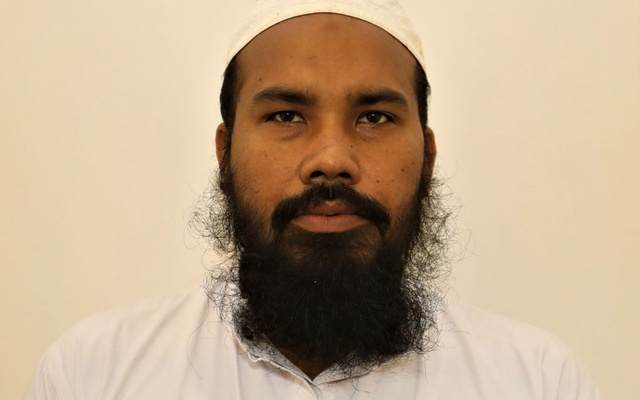
A Post-Mortem Analysis of Pakistani Taliban Military Strategist Wali ur-Rehman
A Post-Mortem Analysis of Pakistani Taliban Military Strategist Wali ur-Rehman
Wali ur-Rehman, the deputy commander of the Tehrik-e-Taliban Pakistan (TTP – the Pakistani Taliban) was killed in a drone strike on a compound in the village of Chasmepul (a.k.a Chashme), three kilometers (1.8 miles) east of Miranshah, the administrative center of the North Waziristan Agency, at roughly 3 PM on the night of May 29. The timing of the strike was significant; it was the first since President Obama’s speech on May 23 wherein he seemed to hint at more narrowly defined drone targeting rules and was also the first since Pakistan’s historic general elections on May 11. The timing also points to the complex background and ramifications of even one drone strike.
The significance of the attack is due in part to the fact that the prime minister, Nawaz Sharif, head of the PML-N (Pakistani Muslim League Nawaz) party, had previously expressed his willingness to negotiate with the TTP and had promised to review the policy of drone strikes. It was also notable in that Wali ur-Rehman had previously expressed his willingness to negotiate with the in coming PML-N government. Since that strike the Taliban have withdrawn their offer to negotiate with the new government and Sharif has called for an end to drone strikes.
The recent killing was not officially supported by the outgoing government or the PML-N. This stems in part from the fact that the drone strike was not perceived by many Pakistanis as a “goodwill strike” (i.e. a CIA strike against a TTP target that Pakistan considers a threat). An analysis of Rehman’s history sheds much needed light on the causes for the mixed reaction to the drone strike.
The Rise of a Taliban Amir
Wali ur-Rehman was born in the Kotkai region of South Waziristan in 1970 and belonged to the Mal Khel branch of the Mahsud tribe. He was the eldest of six children, including one brother who was killed by the Pakistani military in 2010 and another who was injured in the recent drone attack. He attended the Jamia Islamia Imdadia seminary in the city of Faisalabad, near Lahore and graduated in Islamic studies in 1996. Following his graduation, Rehman returned to the FATA region and taught in a madrassa in the town of Kani Guram. There he joined the Jamiat Ulema-e-Islam (JUI – Assembly of Islamic Clergy), a conservative Deobandi religious political party headed by Fazal ur-Rehman. When the Afghan Taliban retreated to North and South Waziristan in 2001, Wali ur-Rehman joined them in operations against Coalition forces in Afghanistan. White House spokesman Jay Carney said Wali ur-Rehman had “participated in cross-border attacks in Afghanistan against U.S. and NATO personnel and horrific attacks against Pakistani civilians and soldiers” (Reuters, May 30).
Wali-ur Rehman joined the Pakistani Taliban in 2004 and was a founding member of the TTP in 2007. He was the TTP’s chief military strategist and had publicly declared the group’s loyalty to and collaboration with the Taliban and al-Qaeda. [1] Following the 2009 killing of the previous head of the TTP, Baitullah Mahsud, in a drone strike, Rehman was promoted to deputy chief of the Pakistani Taliban. At the time there were rumors that Rehman was involved in a shootout with Hakimullah Mahsud, who had been chosen to replace Baitullah Mahsud as the head of the TTP (Reuters, August 9, 2009). To disprove the rumors, Rehman and Hakimullah Mahsud had themselves filmed together in a video.
While the TTP were largely forced from South Waziristan after the Pakistani Army launched Operation Reh-e-Nejat (Path to Salvation) in 2009, Rehman and his 7,000-10,000 Mahsud fighters remained in the Wana Division of South Waziristan. In 2012, however, Mullah Nazir, an independent Taliban leader who was the de facto head of South Waziristan, forced Rehman out of South Waziristan and into North Waziristan after surviving a suicide bombing he blamed on the TTP (Express Tribune [Pakistan], May 30).
Wali ur-Rehman Reaches out to Pakistan
The U.S. government accused Rehman of being involved in the 2008 Marriott Hotel bombing in Islamabad that killed more than 50 people and the infamous triple agent bombing at Camp Chapman in Khost Afghanistan in 2009 that killed seven CIA employees. [2] Rehman was wanted by the U.S. Central Command and the CIA (with a $5 million bounty on his head), even as he was seen as someone willing to reach out to the Pakistanis. This position put him at odds with TTP head Hakimullah Mahsud, whose objectives were to continue the fight against Pakistan.
Rehman put out feelers to the Pakistani government about peace talks in December 2012, although with conditions. For his part, Hakimullah Mahsud said his men would not put down their weapons (al-Jazeera, May 30). Rehman also stipulated that Sharif be involved in negotiations. Sharif had famously declared of the Taliban insurgency in the northwest: “I think guns and bullets are always not the answer to such problems” and spoke of “engagement” with the Taliban terrorists who have killed up to 3,000 Pakistanis a year (The Nation [Lahore], May 6). Rehman also said “If [the] Taliban offers us an option to have dialogue, we should take it seriously” (The Express Tribune [Karachi], May 20).
At the time, Pakistani Army sources reported tensions between Wali ur-Rehman, who was open to talks, and his superior, Hakimullah Mahsud, who was opposed to them. In December 2012, a Pakistani Army colonel said, “Rehman is fast emerging as a consensus candidate to formally replace Hakimullah. Now we may see the brutal commander replaced by a more pragmatic one for whom reconciliation with the Pakistani government has become a priority.” This source also stated “Representing the moderate point of view, there is a probability that under Rehman, TTP will dial down its fight against the Pakistani state, unlike Hakimullah who believes in wanton destruction here” (Reuters, December 6, 2012). Another Pakistani official stated: “Rehman has even held secret negotiations with the Pakistani government in the past but Hakimullah always stood in his way, wanting to carry on fighting the Pakistani military” (Reuters, December 6, 2012).
By the early spring of 2013, it became obvious that Nawaz Sharif, who never publicly criticized the Taliban in his stump speeches, would become Pakistan’s new leader and talks with Rehman appeared to be a possibility. Events moved quickly following the strike on April 17; Nawaz Sharif won the elections on May 11 and on May 23 Obama indicated that he would only carry out drone strikes on targets that were “terrorists who pose a continuing and imminent threat to the American people” (al-Jazeera, June 7).
It can be argued that Rehman was a threat to U.S. military personnel in Afghanistan and that the TTP was also involved in the training of Faisal Shahzad, the failed Times Square bomber, thus his killing fit Obama’s newly defined regulations for a drone strike. But the incoming Sharif government may have felt that they could reach a modus vivendi with Rehman whose fighters might be expected to then refocus their efforts on U.S. and Coalition troops in Afghanistan instead of Pakistani targets. This was clearly not in the interest of the Americans, who want to stabilize Afghanistan before their December 2014 departure. On May 29, CIA spies appeared to have found Rehman and directed a drone that fired two missiles into his compound. Killed alongside Rehman were six people, including his deputy, a high ranking figure named Naseeruddin and two Uzbek foreign fighters.
Ramifications of Rehman’s Death
Sharif responded to the assassination by stating his “serious concern and deep disappointment” and called the strike “highly regrettable.” He further said the “The drone attack was not only a violation of the country’s sovereignty and territorial integrity, but also an action that has been declared as a violation of International Law and the UN Charter” (Dawn [Karachi], May 30). Sharif stated on June 9 that: “Drone attacks must stop. We have protested many a time. This is simply unacceptable” (Express Tribune [Pakistan], June 9). Sharif also stated “The chapter of drone attacks on the country’s soil should now be closed. As we respect others’ sovereignty, ours should also be respected” (The News International [Karachi], June 7). Members of Sharif’s PML-N party went so far as to describe the drone attack on Rehman as a “conspiracy” against their incoming government (Firstpost.com, May 31).
A spokesman for the outgoing Zardari government declared in a similarly critical, but yet formulaic, vein “Any drone strike is against the territorial integrity and sovereignty of Pakistan” (PBS.org, May 29). The Pakistani army, which has lost more soldiers to the TTP than the United States has lost in Afghanistan, however, is likely to be less critical of the attacks and has called on the Taliban to lay down their arms before any negotiations can begin (Independent, May 28).
A retired Pakistani Brigadier General, Mehmood Shah, claims that the new PML-N government is rooted in Punjab province and has no experience with the Taliban’s tendency to break truces and take advantage of them to expand their power in regions like the Swat Valley or the FATA (Radio Free Europe, June 9).
As for the TTP response, a Taliban spokesman declared “We hold the government of Pakistan responsible for this killing. We will teach a lesson to Pakistan and United States for depriving us of our beloved leader” (Reuters, May 30). Pakistani Taliban spokesman Ehsanullah Ehsan said that the TTP will not participate in peace talks with Nawaz Sharif’s incoming government and will exact “revenge in the strongest way” (Zee News, June 4). Another Taliban spokesman told the Pakistani newspaper Dawn, “We are suspending all kinds of contacts and revoke the peace talks offer with the government, soon we shall be responding with full force. On one hand the Pakistani government is advocating the mantra of peace talks, and on the other it is colluding with the United States and killing the Taliban leadership” (Dawn [Karachi], May 30).
Rehman’s TTP successor, the 36-year-old Khan Said (a.k.a. Sajna Mahsud), is infamous for his role in a Taliban attack on a Pakistan naval base in Karachi in 2011. Khan Said, however, lacks the religious credentials of Rehman, who was revered for his religious education, earning him the title maulvi (High Cleric). Khan Said, who was in Afghanistan at the time of Rehman’s death, is also said to have fewer ties to Taliban in Karachi who support the TTP through extortion rackets that Rehman created (Radio Free Europe, June 9).
The Pakistani media, which tends to be anti-American, and Pakistani bloggers were quick to blame the United States for sabotaging peace talks with the TTP and have tended to overlook the fact that Rehman had recently condemned democracy in Pakistan. One Pakistani newspaper, The Nation, declared “Let it be clear, no one mourns Wali ur-Rehman. What may well be mourned, is the loss of an opportunity to negotiate an end to the violence” (The Nation [Lahore], May 31). Such hopes may have been overblown considering the Taliban’s proven tendency to take advantage of truces with Islamabad to extend their influence and conquer more territories. In the interim, the drone war continues and on June 7, a CIA drone killed seven more Taliban members whose in North Waziristan in what appears to have been a “signature strike” (a strike on militants whose “pattern of life” activity would seem to indicate they are Taliban).
The killing of this major figure will certainly hurt Sharif’s chances of reaching out to the Taliban and has certainly removed a key TTP figure who was interested in re-directing jihad efforts against Afghanistan. In this respect it has served U.S. interests even as it has been portrayed by the PML-N as going against their interests. This strike, for all of its tactical benefits to U.S. CENTCOM, may, however, turn out to be a strategic setback as it appears to have strengthened Sharif’s resolve to end Pakistan’s blind eye policy towards the CIA/Joint Special Operations Command (JSOC) drone assassination program.
On June 23, in the worst attack on foreigners in Pakistan in a decade, a Jund al-Hafsa TTP faction killed ten foreign climbers and a Pakistani guide at in their base camp at Nanga Parbat in the relatively safe northern province of Gilgit-Baltisan. A Taliban spokesman said the killings were in retaliation for the killing of Rehman by a drone and stated: “By killing foreigners, we wanted to give a message to the world to play their role in bringing an end to the drone attacks.” (The National [Abu Dhabi], June 23).
Dr. Brian Glyn Williams is Associate Professor of Islamic History at the University of Massachusetts-Dartmouth.
For more on the CIA’s complex drone war in Pakistan see Brian Glyn Williams. Predators: The CIA’s Drone War on al-Qaeda, Washington DC, Potomac Press. (Forthcoming July, 2013). See also Brian Glyn Williams publications at: brianglynwilliams.com
Notes
1. “Wanted For Justice: Wali ur-Rehman,” U.S. Department of State. https://www.state.gov/documents/organization/146936.pdf.
2. Ibid.