From Physician to Separatist Icon: Baloch Guerilla Leader Allah Nazar
From Physician to Separatist Icon: Baloch Guerilla Leader Allah Nazar
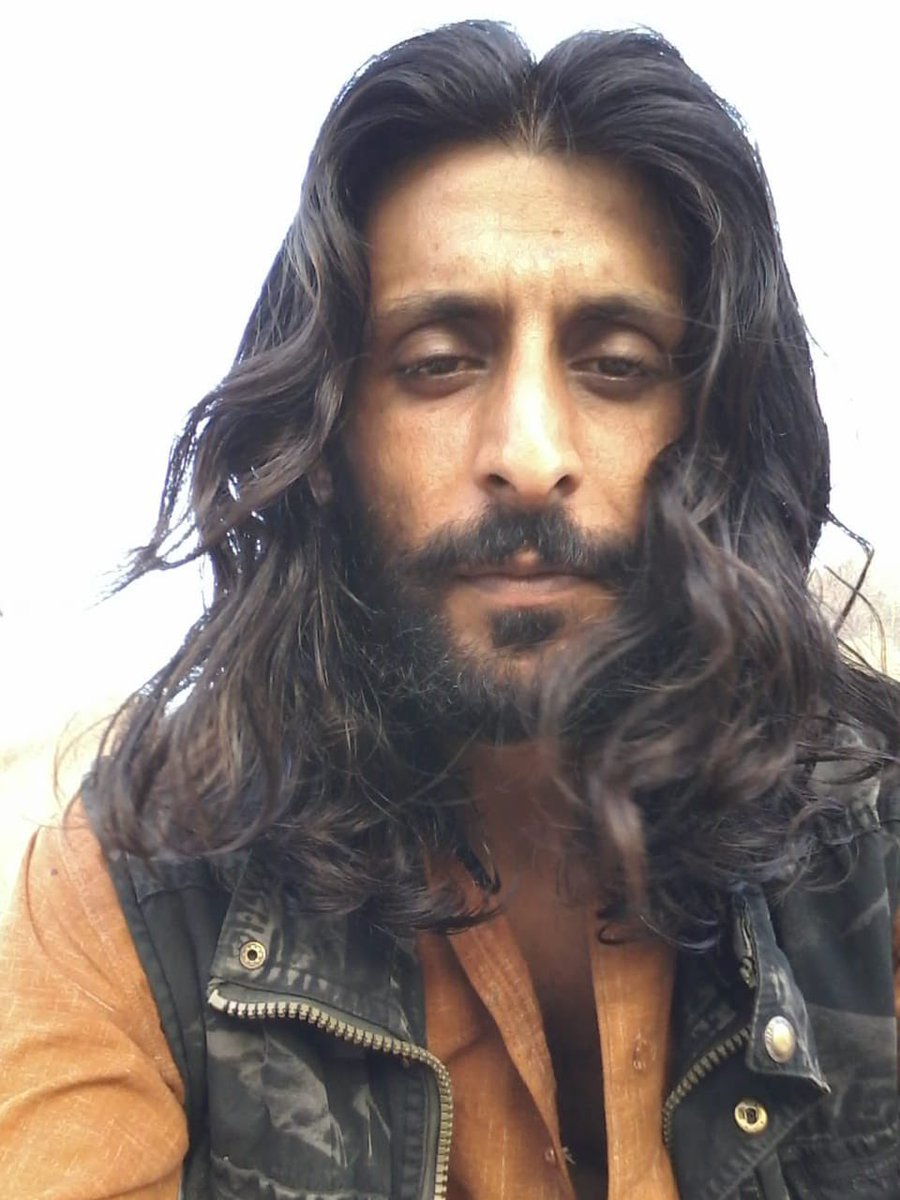
A trained physician has emerged as the leading guerilla commander in the separatist insurgency in Pakistan’s southwestern province of Balochistan. Dr. Allah Nazar leads a group of secular nationalist militants who are fighting for independence for the Baloch minority. Their Balochistan Province homeland makes up nearly half of Pakistan’s territory, but the Baloch population is only five percent of Pakistan’s nearly 180 million people. The insurgency threatens Chinese and Iranian investments and geopolitical interests in the vast and strategically located desert region, which spans the Iranian Plateau along the Arabian Sea. Nazar’s uncompromising posture, and Islamabad’s harsh crackdown against his allies, is expected to keep Balochistan destabilized for the foreseeable future.
Background
Nazar is the first middle-class leader of the loosely coordinated Baloch secessionist movement. Unlike his predecessors, he is not a tribal chief whose hereditary status would earn him the unquestioned loyalty of local clans. Instead, Nazar’s struggle, part of the fifth Baloch uprising in Pakistan’s 67-year history, is backed by students, professionals, traders, peasants and women (Caravan [New Delhi], July 1).
Nazar, a tall, mustachioed figure in his mid-40s, was born to a poor family in a remote village of Balochistan’s southern Awaran district. As a boy in the 1970s, he saw his father arrested and interrogated after Nazar’s elder brother joined an insurrection led by guerillas from the large Marri Baloch tribe. Nazar’s political activism began in the late 1980s when he joined the Baloch Student Organization (BSO). BSO, which is divided into various factions, has been one of the key platforms for Baloch nationalist activism since the 1970s. In the 1990s, he moved to Quetta, Balochistan’s provincial capital, to study medicine. At Bolan Medical College, the soft-spoken and frail student emerged as a key leader of a BSO faction affiliated with the Balochistan National Movement (Caravan [New Delhi], July 1).
Nazar became disillusioned with Pakistani parliamentary politics after General Pervez Musharraf imposed military rule in 1999. Nazar moved toward radicalism and joined a current of Baloch political thinking that advocated complete independence from Pakistan through armed struggle. Supporters of this position view their resistance as a struggle for survival against a state bent on exterminating their identity by encroaching on Baloch land and natural resources. In 2002, Nazar, by then practicing medicine, formed a new faction of the student organization. He called it BSO-Azad (free), highlighting the aspiration for Balochistan’s independence. [1]
Musharraf’s government had very different ideas for Balochistan. It wanted to use the province’s resources and coastline as a catalyst to boost Pakistan’s lagging economy. Baloch nationalists saw these plans as a crude attempt by Pakistan’s ethnic Punjabi majority to rob them of their land and resources. BSO-Azad’s vocal opposition to Islamabad’s scheme led to the persecution of the faction’s leaders. Nazar was detained by Pakistani security services in March 2005 and handed over to the police in August 2006. [2] During his nearly 16-month incarceration, Nazar endured severe physical and psychological torture. After obtaining bail in October 2006, he was released from prison and “escaped to the mountains” – a local euphemism for joining the Baloch armed struggle (Caravan [New Delhi], July 1).
Fighting to the End
The Baloch insurgency reached a turning point after Pakistani security forces killed one of the movement’s nationalist leaders, Akbar Khan Bugti, in August 2006. His death led previously moderate Baloch nationalists to join hardline militants and a number of new armed organizations emerged to fight alongside the Balochistan Liberation Army (BLA), an older organization dominated by Marri tribesman. Bugti’s grandson, Brahamdagh Bugti, established the Baloch Republican Army (BRA), predominantly composed of Bugti tribal members. In the south, the Balochistan Liberation Front (BLF) also emerged during the same period. This last group’s emergence marked the first time in the nearly seven decade-old Baloch nationalist movement that a militant force had emerged in the southern belt of Balochistan, where tribal affinities are weak and most communities engage in trade and agriculture. Another organization, the Baloch National Front, formed to support the insurgency by acting as a political umbrella organization for small nationalist factions (Caravan [New Delhi], July 1).
Nazar assumed leadership of the Balochistan Liberation Front in 2009, after Ghulam Muhammad Baloch, the leader of the BLF’s political wing, the Balochistan National Movement, was killed after he was allegedly detained by security forces. Nazar’s BSO-Azad is closely affiliated with the two wings of the BLF. By the time Nazar rose to head the BLF, the BLA and BRA had been somewhat weakened due to the deaths or exile of some of their leaders. Nazar’s accession to the Baloch militant leadership marked the rise of non-tribal leaders and underscored the shift of the separatist militancy to the south of Balochistan, where previously it had been led by the Marri and Bugti tribes in the north (Caravan [New Delhi], July 1).
In an interview in November 2013, Nazar claimed to command some 6,000 BLF fighters and said the group has good relations with BLA and BRA: “We might disagree on tactics, but we are united on the agenda of independence.” Nazar said these groups are “fighting for the restoration of their historic, cultural [and] geographic boundaries [because] the Baloch homeland has been occupied by force. Our effort is the continuation of the historic struggle that the Baloch has waged against the occupation of Balochistan.” [3]
Nazar has shown little tolerance for Baloch politicians who choose to engage in Pakistani parliamentary politics. He opposes the National Party and the Balochistan National Party, two ethno-nationalist groups that have won parliamentary elections and have formed several provincial administrations in Balochistan since the 1990s: “They have recognized the Pakistani constitutional framework, which is being employed to wage a dirty war against the Baloch through human rights violations such as extra-judicial killings and enforced disappearances.” Nazar has said. Thousands of separatist fighters, soldiers, activists and civilians have been killed in rebel attacks and counter-insurgency operations in Balochistan during the past decade (Foreign Policy, August 4, 2011).
Nazar has rejected suggestions that he was involved in killing or targeting the leaders of the two parties or immigrants to Balochistan from the eastern Pakistani province of Punjab. Baloch separatists accuse Punjabis of suppressing the Baloch by dominating Pakistan’s civil and military bureaucracy and parliament. He has conceded, however, that he has been involved in targeting government agents: “We are not killing the civilian migrants, but those who work undercover for the Inter-Services Intelligence and military intelligence. These include Baloch, Pashtuns, Sindhis and the Punjabis.” [4]
The BLF has been at the forefront of opposition to Chinese investment in Balochistan and the transformation of the province’s Gwadar port into a regional trade hub. The BLF has claimed responsibility for attacks on Chinese engineers and Pakistani security forces (Express Tribune [Karachi], July 28, 2013). “We will resist China or any other power that will sponsor such major [development] projects in Balochistan… Such projects are only aimed at providing oxygen to Pakistan’s dying economy and to render the Baloch a minority in their own homeland. All such projects are aimed at ending the identity of the Baloch nation.” Nazar is also opposed to a major pipeline project through Balochistan that would supply Iranian natural gas to Pakistan and India. [5]
Conclusion
The future of the Baloch insurrection is now closely tied to the fate of Nazar and the new generation of middle-class Baloch activists who are unlikely to accept a rapprochement with Islamabad, in contrast to previous insurrections, when tribal leaders struck deals with Pakistani political and military leaders. More significantly, they will attempt to spoil Islamabad’s grand economic ambitions for Balochistan. Islamabad’s use of harsh counter-insurgency methods has radicalized moderates and empowered hardline separatists who consider engaging in Pakistani parliamentary politics a futile exercise. In the absence of a political settlement and a reorientation of Islamabad’s approach to Balochistan, Nazar and fellow separatist militants are expected to capitalize on the alienation of the region’s population.
Abubakar Siddique is a journalist with RFE/RL and the author of The Pashtun Question: The Unresolved Key to the Future of Pakistan and Afghanistan (London: Hurst and Company, 2014).
Notes
1. Author’s interview with journalist Abdul Hai Kakar, July 2014.
2. Ibid.
3. Boriwal Kakar, Interview with Allah Nazar, September 30, 2013. I am grateful to Kakar for sharing the audio of his unpublished telephone interview with Nazar.
4. Ibid.
5. Ibid.