From the Inner Circle of Ahmed al-Chalabi’s INC to America’s New Specially Designated Terrorist—A Profile of Iraqi Banker Aras Habib
From the Inner Circle of Ahmed al-Chalabi’s INC to America’s New Specially Designated Terrorist—A Profile of Iraqi Banker Aras Habib
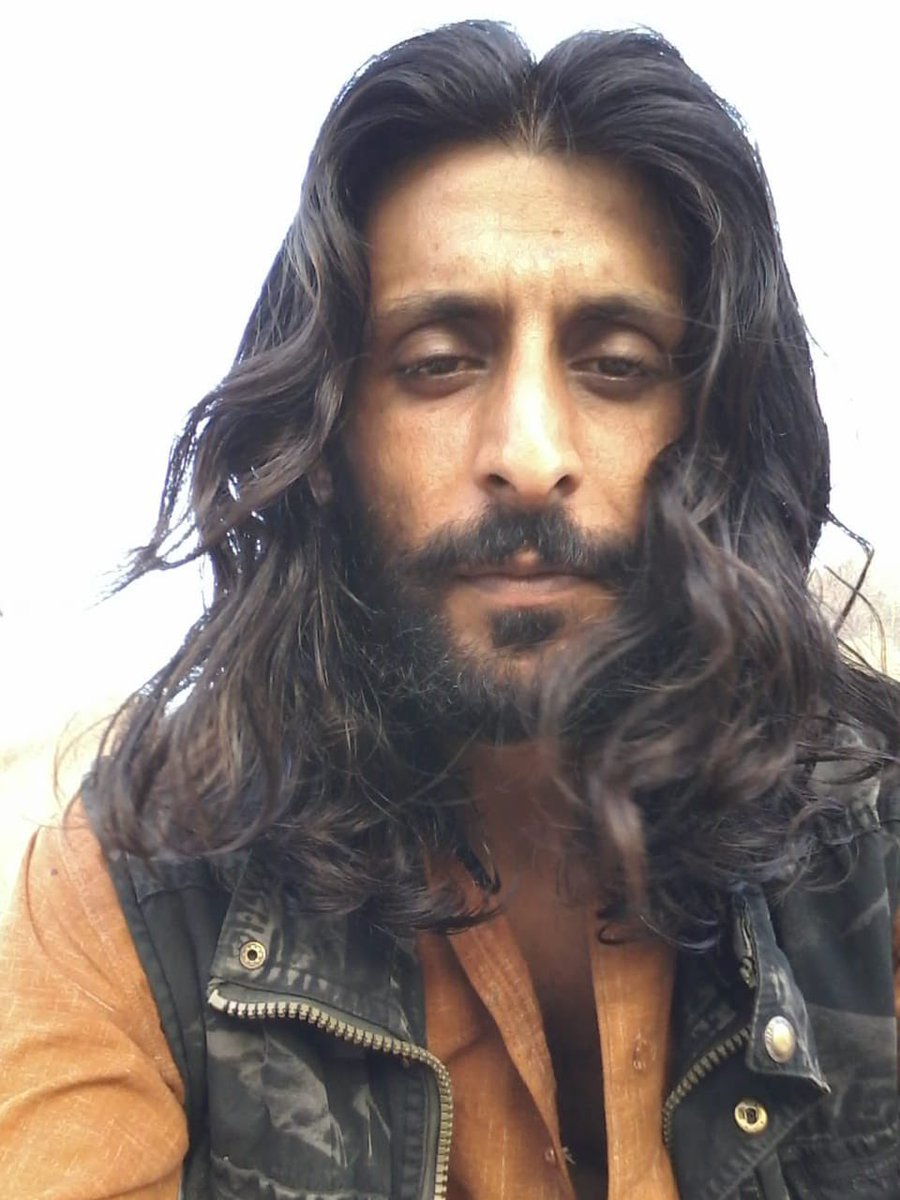
On May 15, the U.S. Treasury Department put the Iraqi banker, businessman, and politician Aras Habib on the list of Specially Designated Global Terrorists for his role in assisting and providing financial support and other services to Iran Republican Guard Corps’s Al-Quds Force (IRGC-QF). He was accused of enabling Iran to exploit Iraq’s banking system to move funds from Tehran to the Lebanese Shia group Hezbollah. Habib is the chairman and chief executive of al-Bilad Islamic Bank, which is based in Baghdad. The bank itself was also designated for being owned or controlled by Habib (U.S. Treasury Department Press Release, May 15).
The announcement came ironically a few days after Habib won a seat in the Iraqi Parliament for the party led by the U.S.-backed Iraqi prime minister, Haider al-Abadi. Habib was defiant in condemning his designation as a terrorist. As the Iraqi government moved to crack down on the al-Bilad bank’s activities, Habib was elected to parliament (Kurdistan 24, May 16).
Habib is the former right-hand man of one of the most controversial figures in the old anti-Saddam Hussein opposition, Ahmed al-Chalabi. Habib succeeded Chalabi as head of the Iraqi National Congress party (INC) after his death in November 2015. The story of Aras Habib reflects the sophistication of Iranian influence in Iraq. The Islamic Republic does not only project influence through its longstanding alliance with the Iraqi Shia Islamist parties, but also through secular and socially liberal parties like Chalabi and Habib’s INC.
Life in the Shadows
Aras Habib Mohammed Kareem al-Fayli was born in Baghdad in the late 1960s to a Shia Kurd family. [1] His father Habib Kareem was a senior member of the Kurdistan Democratic Party (KDP), which is led by the Barzani family. [2]
In the 1990s, Habib became close to Ahmad al-Chalabi. They met in the Kurdistan region in northern Iraq, which had emerged as an autonomous region after the Gulf War in 1991. Chalabi was coming from Iran to hold meetings with the Kurdish leadership. Aras’s father assigned him to meet and greet Chalabi by the border crossing of Haj Imran and accompany him during his stay in Kurdistan. On that day, Habib joined Chalabi’s group and the two men worked closely together until Chalabi’s death. Habib continued to remain active within the ranks of the INC through the 1990s and early 2000s. He was Chalabi’s right-hand man and head of operations of the INC. [3]
Chalabi’s Number 2
Unlike Chalabi—who played a prominent, public role as an opposition figure throughout the 1990s and early 2000s—Habib kept a low profile. Over the years he ran several secret operations and used various aliases, none of which were against U.S. interests. In fact, the INC worked closely with U.S. intelligence agencies against the Saddam Hussein regime. The INC’s involvement in feeding false information to the administration of former President George W. Bush in the buildup to the Iraq war has been well covered. One of the leaders of the INC explained in later years that the INC had a program to collect information for the Defense Intelligence Agency (DIA). The program and the relationship between the INC and the Bush Administration collapsed in 2004, however, over the conclusion that Saddam Hussein’s regime did not actually have any weapons of mass destruction before the invasion. [4]
Habib was at the heart of many of these controversial operations that aimed to convince the United States that Hussein’s regime had WMDs. He orchestrated several operations that presented the media and Western intelligence with people who claimed they had defected from the Saddam Hussein regime and had knowledge that the Iraqi ruler possessed WMDs. Habib also was suspected of having strong links to Iranian intelligence since the 1990s. [5]
The INC was well positioned immediately after the fall of Baghdad because of its ties to the Bush Administration and the U.S. Department of Defense in particular. Chalabi took over the Hunting Club, a luxurious social club in the affluent neighborhood of al-Mansoor in western Baghdad and made it his headquarters. Habib and his militia secured the place and made it their command center.
The INC became more infamous after its involvement in misleading the U.S. and Western intelligence services about Saddam Hussein’s alleged WMDs. After the U.S. invasion of Iraq, the INC became involved in two other very controversial policies. First, the disbanding of the Iraqi Army and banning of the Baath Party, which ruled Iraq from 1968 to 2003. Secondly, Habib was accused of leading death squads that targeted civilians and political rivals.
These human rights violations were exposed when the United States fell out with Chalabi and stormed the INC offices in Baghdad in 2004. Habib fled to Iran and stayed there for more than a year. He was accused of being an Iranian intelligence double agent against the United States. After returning to Iraq, he had to flee to Iran again in 2008 following another U.S. crackdown. He eventually returned to Iraq in 2011, after the withdrawal of U.S. forces.
Habib denies his involvement in human rights violations and other accusations regarding the period that followed the invasion. Instead, he claims that the U.S. authorities in Iraq had set him up as part of a policy change that prolonged the U.S. occupation. This is despite an alleged agreement with the Iraqi opposition to form an Iraqi government right after the fall of the regime [6]
Banking System
The banking system in Iraq is very prone to various types of abuse and exploitation. Dozens of private banks were established after the 2003 invasion. With an economy that is dependent on oil revenue and a political structure that suffers from violence and instability, the Iraqi banking sector is dominated by influential political factions. In this environment, people saw no controversy in having a politician like Habib become the chairman of al-Bilad (alkhaleejonline.net, May 14).
Neither government-owned banks nor private banks are able to provide services like facilitating the payment of salaries of the large number of public-sector employees or enabling citizens to regularly pay their bills to basic service providers. [7] Yet, private banks are in the very privileged position of having direct access to hard currency, primarily U.S. dollars, from the Iraqi Central Bank (ICB).
The ICB pumps millions of U.S. dollars into the market every day. Although the process is called “Hard Currency Auction,” its main purpose is to keep the value of the Iraqi currency artificially high by constantly feeding the market with American currency. Habib’s al-Bilad bank is among those privileged banks authorized to buy U.S. dollars directly from the ICB, paying for it in Iraqi currency (Al-Mada June 22, 2015).
Under former Prime Minister Nouri al-Maliki, a staunch ally of Iran, Iraq became an important part of Iran’s strategy to resist U.S. sanctions when they were first imposed in 2012. The important role Habib and his bank played allowed him to avoid getting caught up in the rivalry forming between his mentor Chalabi and Maliki. His work had become more specific and focused on financial affairs, while his ties to Iran allowed him to operate his bank freely despite Maliki’s anger toward his boss (kitababt.com, February 19).
Recent years have witnessed more field involvement of the IRGC-QF in Iraq, requiring INC and Habib’s assistance. Al-Bilad bank opened a branch in Beirut, apparently to facilitate its role in supporting IRGC-QF and Hezbollah activities. As part of Habib’s operation in Lebanon, the INC also established an Iraqi affairs-focused satellite channel in Beirut (Al-Arabiya, August 11). Asia TV was the mouthpiece of the INC and Habib (Al-Akbhar, November 18, 2011).
Despite his controversial background and record, which was well known to the U.S. intelligence agencies, Habib became an electoral ally of Haider al-Abadi, the U.S.-backed prime minister who succeeded Maliki. Habib secured a place among the top five candidates in the province of Baghdad and is now a member of parliament. With the lack of a whipping system and shifting loyalties, Habib is under no obligation to support Abadi in the new parliament. In fact, as Abadi seemed to have been getting his head around Habib’s designation, Habib received direct backing from the biggest pro-Iran faction in the new parliament (Ayn al Iraq News May 16).
Relaunching With a New Strategy
Chalabi died on November 3, 2015 at the age of 71. Habib succeeded him without dispute. The INC was a small group that was centered on Chalabi and his influential connections. According to an interview with Habib on the Iraqi TV channel Dijla, he made it his initiative to build a political party instead. [8]
Habib is likely to keep enjoying the support of the pro-Iran faction in parliament, al-Bina’a. Like the strategy that the INC pursued under Chalabi, however, Habib might not need to join that faction officially. He now promotes a self-professed liberal brand for his party aimed to attract parts of the Iraqi Shia constituency that grew so frustrated with Iran-linked Shia Islamist parties. The youth and women are at the heart of Habib’s political strategy. He has been increasingly sponsoring sporting events. He has also been meeting and promising support for artists (Asiasat.tv, October 5, 2017).
Even before relaunching the INC, Habib has never presented himself as a pious Muslim who observed Islamic rules. The fact that he decided to establish al-Bilad as an Islamic Bank, which does not charge or pay interest as this is not allowed according to Islamic laws, is quite telling. It could well be because al-Bilad Bank was involved in activities that were in line with Iran and Hezbollah’s Islamic commitments.
Habib’s strategy focuses on identity politics. In addition to promoting secular-liberal lines for the INC, Habib seems to realize that identity politics is still dominant in Iraq. He accordingly includes an identity politics dimension in his strategy. Habib presents his Fayli (Shia Kurd) affiliation consistently and publicly. Some estimates indicate that there are a million Faylis, in Baghdad, Diyala and Wasit provinces. Historically, Faylis were attracted by the appeal of the Kurdistan-based Kurdish nationalist parties, although they were Sunni dominated. Many Faylis also joined the Iraqi communist party. After the 2003 invasion, they came significantly under the influence of the Shia Islamist parties and became part of their base of support (Asia TV, March 31).
As the appeal of Iraqi Shia Islamist parties is waning, Habib is choosing the right moment to build his own base. With patronage and clientelism being the main features of the relationships between political parties and their supporters, much of Habib’s success will depend on his influence in the new government. With the support he received from Iran and the pro-Iran faction in the Iraqi parliament, his historical strong ties with Kurdish parties, and his newly polished liberal secular rhetoric, Habib appears to be in a good position.
After his terrorist designation, it is unlikely that he will be a member of the next prime minister’s cabinet, for fear of angering the U.S. Yet the new prime minister will also need to assure Iran that he will not be its enemy. Abadi’s measures against Habib’s bank were not trumpeted publicly, nor did Abadi exclude Habib or denounce him. Even if he does not come from the pro-Iran faction, the new PM will need to give attention to the significant number of Iranian allies in the parliament (Alghad Press, May 17).
After his designation by the Treasury Department, Habib has reorganized his activities. His position in the business community and politics has not been affected. In parliament, he has gained even more tools to exert influence. Even in the past parliament, the Iran-backed faction were proven so powerful and managed to bring down charismatic members of the cabinet. There are reports that Habib actually had extended his influence to members of parliament from other parties by financing their campaigns. [9] Habib’s bank is now under more scrutiny from the Iraqi government than ever but he himself will likely retain a strong influence on Iraqi politics.
Notes
[1] The majority of Kurds are Sunni Muslim and they are concentrated in the Kurdistan region in norther Iraq. Shia Kurds, known also as Faylis, are a minority among Iraqi Kurds. They are concentrated in Baghdad and other parts of central and southern Iraq, especially along the border with Iran. While the two major dialects of the Kurdish language spoken in Iraqi Kurdistan have the characteristics of a language developed from its Farsi origin, Faylis speak a dialect that is closer to the Luri language spoken in western Iran. [2] Despite the fact that the KDP had been leading an insurrection against Saddam Hussein’s government, and that Faylis (Shia Kurds) were persecuted and were perceived by Saddam’s regime as possible collaborators with Iran, Habib lived and received a good education in Baghdad. He claims that he graduated as an engineer from the University of Baghdad, the same department that Saddam Hussein’s eldest son Uday graduated from. Habib has never provided explanation to that early period of his life. [3] Interview with Habib on Asia TV uploaded on YouTube, March 19. [4] More details available in a 2015 interview with Intifadh Qanbar, a former leader of the INC who was close to Chalabi and knew Habib well but left the group after disagreements with both. Interview published on YouTube on October 1, 2015. [5] For detailed accounts on Aras Habib’s history with Chalabi see Roston, Aram. The Man Who Pushed America to War, the Extra Ordinary Life, Adventures and Obsessions of Ahmad al-Chalabi. Nation Books, New York 2008. [6] Habib’s interview with Asia TV cited earlier. March 19. https://www.youtube.com/watch?v=8v4x9-HbTz4&t=291s [7] Only 11% of Iraqis have bank accounts. See Al-Araby al-Jadeed Nov 22, 2017 https://www.alaraby.co.uk/economy/2017/11/22/المركزي-العراقي-89-من-المواطنين-لا-يملكون-حسابات-مصرفية) [8] Interview with Habib on the Iraqi TV channel Dijla, May 8 [9] Author’s interview with a parliament staffer who preferred to remain anonymous.