Islamabad’s Umme Hassan: Female Mobilizer and Jihadist Inspirer at the Red Mosque
Islamabad’s Umme Hassan: Female Mobilizer and Jihadist Inspirer at the Red Mosque
In a video statement on November 24, 2014, burka clad students of Islamabad’s Lal Masjid-affiliated (Red Mosque) female seminary, Jamia-e-Hafsa, pledged allegiance to Islamic State amir Abu Bakr al-Baghdadi. It was shocking, as the all-girls madrassa had long been known for supporting al-Qaeda and the Taliban. A student representative of the Hafsa girls said in the video:
The female students’ proclamation of joining the Islamic State may pave the way for the all-boys Faridia madrassa to pledge allegiance to the foreign group as well. This may create a chain reaction, with hundreds of thousands of students at other Pakistani madrassas doing the same, generating a new jihadist class associated with the Islamic State.
The existence of links between Red Mosque cleric Abdul Aziz and the Islamic State have long been the subject of speculation. When the Islamic State’s predecessor, the Islamic State of Iraq and Syria (ISIS), surfaced in Iraq in early 2014, and Mosul fell, a training camp established by the Islamic State was named after Abdul Rashid, the brother of Abdul Aziz, who was killed by Pakistani forces in a raid in 2007. Abdul Aziz had spoken positively about the Islamic State in July 2014, and regarded the establishment of an Islamic caliphate as the solution to all problems (The News International [Karachi], December 8, 2014). However, Abdul Aziz was not behind the female student’s declaration of allegiance. Umme Hassan, Abdul Aziz’s wife, is the principal of Jamia-e-Hafsa in Islamabad. It is pertinent, then, to explore her ideology and motives behind this move.
The Ideologue
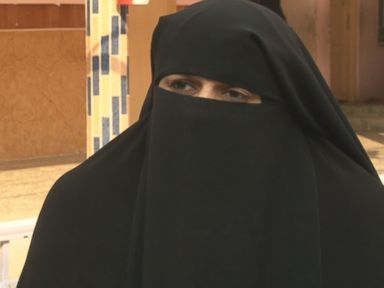
Majida Younis (a.k.a. Umme Hassan) married Abdul Aziz in the early 1980s. Because of her profound interest in the radical Deobandi School of Islam, she was appointed as the principal of Jamia-e-Hafsa Madrassa by her husband, the prayer leader of the Red Mosque. She acts as the madrassa students’ mentor, spiritual mother and guide. Her lectures and speeches are known for ultra-extremist views. Always dressed head-to-toe in a black burka with black glasses to cover her eyes, Umme Hassan is believed to have much harsher views than her husband, the head of a family historically known for promoting Shari’a and Pakistan’s transformation into a theocracy. For example, when asked about Pakistani Nobel laureate Malala Yousafzai, Hassan said, “There is some problem with this child. She was not given the proper education” (ABC News, October 11, 2013).
Hassan is a strict disciplinarian. Alongside her administrative responsibilities in running the day-to-day affairs of Jamia-e-Hafsa, she also deliverers sermons and indoctrinates students, who are mostly from Pakistan’s Khyber-Pakhtunkhwa province, into becoming violent radical Islamists. Many of the students are survivors of the 2005 earthquake in Pakistan-administered Kashmir with little or no other family, so Hassan has “adopted” them. In spite of her strict behavior, she is idolized by her students, who could go to any limits on her orders. The raison d’etre of her madrassa is to turn girls into “pious and loyal” wives of mujahideen. According to her teachings,
· Muslim women must marry mujahideen;
· Muslim women have a responsibility to raise children in accordance with Shari’a;
· Children must be prepared for jihad, and Muslim women bear this very important responsibility;
· During times of jihad, women must safeguard the interests of mujahideen and raise children even if their husbands are waging jihad. [2]
Protests
Hassan has repeatedly played a pivotal role in instigating female students of Hafsa madrassa to participate in violent protests on the streets of downtown Islamabad. Jamia-e-Hafsa students violently demonstrated against the assassination of Azam Tariq, the amir of the violently anti-Shi’a organization Sipah-e-Sahaba (a.k.a. Millat-e-Islamia), on the outskirts of Islamabad in October 2003 on Hassan’s orders (Dawn [Karachi], October 7, 2003). The female students marched out of the madrassa and burned down the nearby Sufi shrine and cinema, where seven people died. The burka-clad female seminary students, armed with batons, destroyed police vehicles when police officers tried to stop them.
In 2007, the female students, under the directions of Umme Hassan and her brother-in law Abdul Rashid, held violent protests against the government when the Capital Development Authority served them legal notices on the issue of encroachment. The seminary students occupied the children’s library next door, with help from male students from Faridia madrassa, who also barricaded themselves inside the mosque and madrassa complex. Umme Hassan and Abdul Rashid then demanded the implementation of Shari’a law in Pakistan. The heavily armed students, both male and female, continues their violent spree. They harassed passersby who were not “modestly dressed,” kidnapped police officials and Chinese beauticians and damaged nearby businesses, such as barber and CD shops (The Friday Times [Lahore], December 21-27, 2012).
Whereas Abdul Rashid was the main voice behind the male students, the female students were led by Umme Hassan, who shrewdly kept the female students on the frontlines of all violent protests. In Pakistan, a male police officer cannot arrest a woman; he has to call in a female police officer to complete the arrest. There are also separate police stations for women in every district. The use of force against women has also focused a lot of media coverage on and sparked actions against the police.
The Red Mosque crisis finally ended with military intervention in July 2007. Abdul Rashid and some 84 other militants were killed by Pakistani special forces during the operation. Two months later, a suicide bomber managed to sneak into the special forces’ base and killed 22 commandos, all of whom had been involved in the earlier operation (The Friday Times [Lahore], December 21-27, 2012).
Pledging Allegiance to the Islamic State
In December 2014, shortly after the allegiance video was released, Umme Hassan endorsed the Hafsa students’ decision to support the Islamic State:
In another statement, Hassan denied abandoning Mullah Omar, the leader of Afghanistan Taliban:
Conclusion
Umme Hassan epitomizes the female jihadist mindset and personifies women who are involved in jihadist activities in Pakistan through her ultra-orthodox Deobandi beliefs, anti-feminist ideas and the subservient role she wants Muslim women to play in following the jihadi footsteps of her husband while rearing children. After long supporting al-Qaeda and Taliban, Umme Hassan appears to have changed sides with the pledge of allegiance to the Islamic State. She does have a substantial following among the women of her madrassa, which could be pivotal for the Islamic State gaining a greater foothold in Pakistan.
Farhan Zahid writes on counter-terrorism, al-Qaeda, Pakistani al-Qaeda-linked groups, Islamist violent non-state actors in Pakistan, militant landscapes in Pakistan and the Afghan Taliban.
Note
1. The video may be viewed here https://www.dailymotion.com/video/x2cr867_shocking-lal-mashid-jamia-hafsa-girls-support-and-invite-isis-to-pakistan_news.
2. Discussions with an Islamabad based journalist, who had earlier interviewed Umme Hassan, March 10, 2015.