Jewel Ali: The Founder of Imam Mahmuder Kafela in Bangladesh
Jewel Ali: The Founder of Imam Mahmuder Kafela in Bangladesh
Executive Summary
- The charismatic leader of a new Bangladeshi terrorist group called Imam Mahmuder Kafela (IMK), Jewel Ali, was recently arrested. Despite his arrest, Ali’s ability to fundraise, organize, and promote his ideology on social media combine with the persistent popularity of his message to represent a continued threat to the Bangladeshi public.
- Over 40 members were arrested with him, including women and families, who were training for an “end-of-times” jihad against India.
- Law enforcement arrested many members of IMK in August 2023, seizing explosives, detonators, cash, and training materials, disrupting the group’s plans for attacks on state officials.
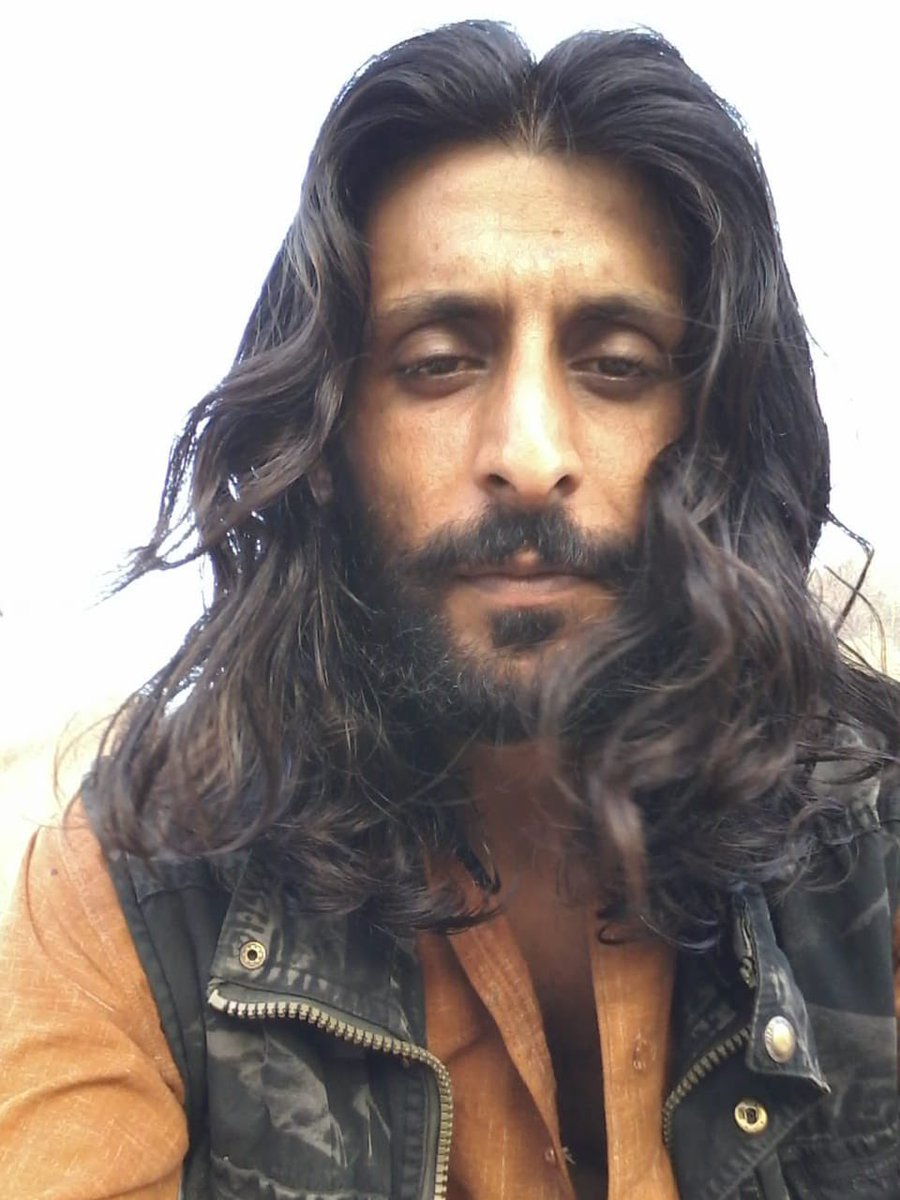
Jewel Ali, [1] who is also known by the aliases Habibullah Mahmud, Jewel Mahmud, Abdul Ahad Mendi, and Sohel, serves as the emir (leader) of Imam Mahmuder Kafela (IMK). This is a new and relatively obscure terrorist group in Bangladesh. Since August 2023, law enforcement has apprehended at least 40 members of IMK, including Jewel Ali himself, although Ali had previously been arrested in 2019 and 2020, during which time he was a member of another former terrorist group named Jama’atul Mujahideen Bangladesh (JMB). JMB followed the ideology of al-Qaeda (Bangladesh Post, November 21, 2020).
Subsequent investigations brought to light IMK’s recruitment efforts, which encompassed a broad spectrum of individuals, including youths (mostly teenagers), women, and families (Samakal, August 16). These recruits were trained in remote areas of Bangladesh, with the goal of preparing for what they believed was “Ghazwatul Hind,” or a jihadist eschatological battle against Hindu India, which overlaps with the narratives put forth by al-Qaeda in the Indian Subcontinent (AQIS) (The Daily Star, August 13, 2023). After the completion of training, the organization was planning surprise attacks on state officials and law enforcement personnel in Bangladesh (Dhaka Post, August 13, 2023).
Although IMK’s attacks have been thwarted, the group still has a residual capacity for terror, as well as significant finances. The emergence of IMK under the leadership of Jewel Ali underscores the diversified tactics of al-Qaeda-oriented groups in Bangladesh and their successful use of apocalyptic end-of-times narratives. Indeed, despite some of his bizarre claims, Ali appears to be a persistent and charismatic militant leader with significant organizational skill despite his relatively young age. He therefore poses a unique threat that cannot be underestimated. More broadly, Ali’s case highlights the ongoing challenges of radicalization in Bangladesh and the allure of such narratives within the extremist landscape.
Path to Jihadist Leadership
The 28-year old Jewel Ali was born in Gaopara village of the Bagatipara Sub-District within the Natore District of northern Bangladesh. The salafi-jihadist JMB was active in Natore in the early to mid-2000s. Ali came from a poor family and his father, Abdul Kader, died in Ali’s childhood. His mother was a housewife, and Ali was the younger of two brothers, who were also farmers (Jamuna TV, October 15, 2023). The financial constraints of his upbringing significantly limited Ali’s educational opportunities. Beyond this, Ali faces physical challenges to the extent that he is unable to walk unassisted. While some might assume that this would limit the efficacy of Ali’s leadership in a jihadist group, Ali’s ability to overcome poverty and other adversity has been demonstrated throughout his career (Bhorer Kagoj, August 16, 2023). [2]
Ali’s formal education came to an end before he completed primary school, and he subsequently attended the local Gaopara Hafezia Fuqania madrassa for several years. This is where he came across some of the Islamic concepts that he later adopted. It is highly likely that Ali witnessed the emergence of the JMB in his home district of Natore during his formative years as a primary school student. [3] At one point, he also served as an imam at a local mosque in the Rampara area of Natore. However, his involvement was marred by an incident in 2013, when Ali was dismissed for harassing a girl, which led to his incarceration. Following his release, he joined the Gausul Azam Jame Masjid in Singra, Natore (Jamuna TV, October 15, 2023). Not much information is available on this period, although Ali eventually joined the JMB formally.
On September 11, 2019, Ali was arrested in Uttara area of Dhaka, the capital of Bangladesh, due to his association with the JMB. After his release, Ali went back to the JMB and eventually rose to the position of a regional leader. Ali was then arrested again, this time with three other JMB members on November 20, 2020 in Shah Makhdum area of Rajshahi, a northern district of Bangladesh. Law enforcement agencies recovered 154 banned books, six leaflets, one pistol, five round of bullets, one magazine, two motor bikes, and one first aid kit (Bangladesh Post, November 21, 2020). This arrest led to Ali’s imprisonment in the Rajshahi Central Jail. Upon his release, Ali married the sister of a JMB member, Ruhul Amin, in Sathia, Pabna District, further solidifying his connections within that group (Benar News, September 29, 2016). [4]
Formation of Imam Mahmuder Kafela (IMK)
IMK was conceptualized while Ali was in prison. During this time, he reportedly received advice from incarcerated senior leaders of various terrorist groups that he should establish a camp in Bangladesh’s hilly areas. Remarkably, even from behind bars, Ali managed to communicate with his followers by sending them short, handwritten messages, which he asserted were divine revelations, or “ilhams.”
After his release from prison, Ali focused on organizing a new group, which he called “kafela,” or “caravan.” However, he also set up Talimul Islam Academy madrassa in Ataikula, Pabna District, which is where his wife’s family lived. Ali started delivering public speeches in the madrassa and used them to fundraise—and possibly as a cover for his more militant activities. Even with his limited formal education, Ali possesses a remarkable degree of charisma (Jamuna TV, October 15, 2023).
Social media, such as Facebook and YouTube, became the key platform to share his ideas and attract new recruits. However, in addition to social media platforms, Ali wrote several books in Bengali under a pseudonym “Habibullah Mahmud,” which were edited by someone named “Jihadul Islam.” These books reflected his salafi-jihadist views and were distributed both in print and as a PDF online. Ali’s on-the-ground preaching was also a key recruitment method, with the core recruitment narrative being a claim that between 2023 and 2026 there will be a global famine and everyone except IMK followers will die (Jugantor, October 20, 2023). He claimed also that he himself would be the Imam Mahmud, who is the forerunner of the Mahdi (an eschatological figure who Muslims believe will usher in an era of justice and true belief just prior to the end of time). His recruits were told that the preliminary stage of jihad is hijrah (migration) and that they would have to go to a certain place for training. Those who participate in jihad in this way would be rewarded in the hereafter, Ali declared (BBC Bangla, August 15, 2023).
Ali attracted individuals from all walks of life, including farmers, laborers, drivers, students, and even doctors. IMK also recruited from various districts of Bangladesh including Natore, Pabna, Gaibandha, Jamalpur, Sirajganj, Tangail, Narayanganj, Jessore, and Cox’s Bazar. The youngest arrested member of the group was a 17-year-old high school student, and IMK recruited both men and women. Some of the recruits brought their families—at least 11 children were found in the training camp when it was discovered (The Daily Star, August 16, 2023).
Resources and Counter-Terrorism Reaction
Ali received financial support from his followers, both within and outside Bangladesh, and donations from inside the country predominantly were made in cash or by using popular money transfer services like bKash. Some of Ali’s followers were so committed that they sold land, jewelry, and other properties to join his group. Donations from overseas, particularly from some members of the Bangladeshi diaspora in the Gulf countries, were channeled through informal means like Hundi remittance instruments (Kalerkantho, August 18, 2023).
On August 12, 2023, the Counter Terrorism and Transnational Crime (CTTC) unit of the Dhaka Metropolitan Police arrested 10 members of IMK, who were involved in both recruitment and training activities. The arrests took place in the hilly area of Kulaura in Maulvibazar District (Sylhet Division) and led to the seizure of three kilograms of explosives, 50 detonators, gold jewelry, training materials, combat boots, boxing bags, jihadi literature, and the equivalent of $3,250 in cash. Three children were also found among the arrestees (Dhaka Tribune, August 12, 2023).
On August 14, 2023, an additional 17 individuals suspected to be IMK operatives were arrested in Karmadha Union in the Kulaura Sub-District of Maulvibazar District (Prothom Alo English, August 14). Then, on August 15, the CTTC unit’s Special Weapons and Tactics (SWAT) team, along with the bomb disposal unit, discovered five kilograms of explosives, 95 detonators, and 14 rounds of bullets in a raid on an IMK hideout in the hilly area of Kulaura in Maulvibazar District (The Business Standard, August 15, 2023). Overall, these arrests and seizures appear to have had a significant impact on the IMK’s operations, disrupting the group’s plans and potentially reducing the threat it posed.
Conclusion
Jewel Ali has emerged as a new threat in Bangladesh’s jihadist landscape. His association with the JMB and his creation of IMK reflects his commitment to jihadist ideology. Moreover, his ability to recruit diverse individuals, his successful fundraising, and IMK’s developed operational capabilities are deeply concerning to Bangladeshi authorities.
Despite the arrest of Ali and many of his associates, many members of IMK are still at large, and the group’s propaganda materials are still easily available on social media. IMK’s eschatological narratives, including the emphasis on an impending “Ghazwatul Hind,” will continue to attract followers both within Bangladesh as well as among the Bangladeshi diaspora. Ali’s case underscores the challenges of radicalization and jihadism in Bangladesh and beyond.
Notes:
[1] In his national ID card, his name is spelled as “Md. Jwel Ali.”
[2] Author’s remote interview with Bangladeshi security personnel, October 11, 2023.
[3] The JMB strongly encourages marriages within the membership and their families. This is part of the JMB strategy to ensure secrecy and group cohesion and to gain new members, especially women.