June 2014 Briefs
June 2014 Briefs
ISIS’ NEMESIS IN ALEPPO: KHALID HAYANI AND ITIHAD LIWA SHUHADA BADR
Nicholas A. Heras
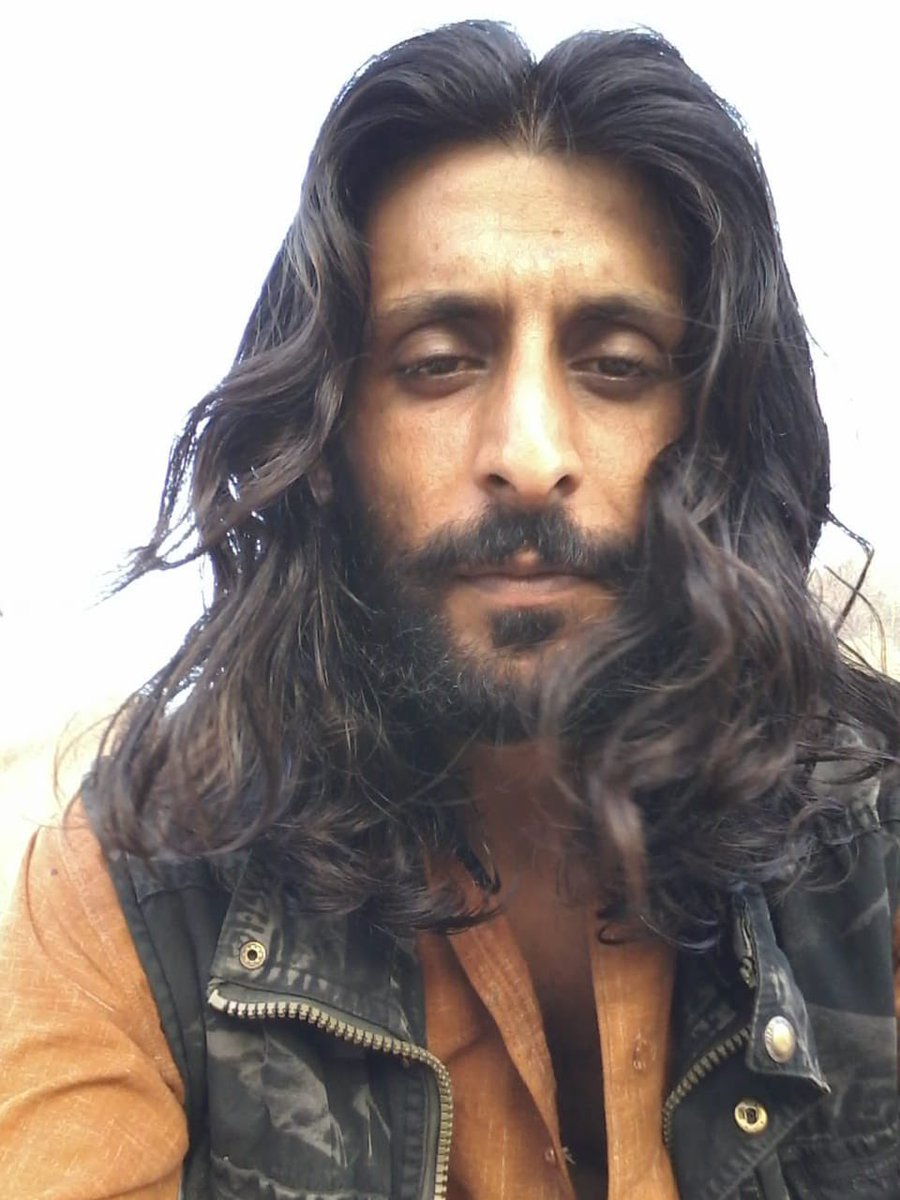
In spite of the Islamic State of Iraq and Syria’s (ISIS) success in Iraq, it is worth remembering that it is battling against a number of armed groups in Syria, not just the Assad government. One of the armed opposition groups that has been the most committed to fighting ISIS in Aleppo and its suburbs is Itihad Liwa Shuhada Badr (Union of the Battalions of the Martyrs of Badr). Liwa Shuhada Badr’s leader is Khalid bin Ahmad Siraj Ali (a.k.a. “Khalid Hayani”), who serves as the group’s commander.
Hayani, 34, was born and raised in the northern Aleppo city district of Khaldiya to a family originally from Hayan, a northwestern suburb of the city (al-Safir [Beirut], November 12, 2013). Hayani, who is from an underprivileged background, is believed to have held a series of jobs prior to the start of the Syrian uprising, working as a diesel seller, a fishmonger and as a bodyguard at a night club. These jobs are believed to have involved him in sometimes violent disputes between the city’s powerful mercantile class (al-Safir [Beirut], November 12, 2013). He has been a commentator for global, Arabic-language media on the conflict in Aleppo and is portrayed as a rebel commander who leads from the front-line, even to the extent of directing attacks against specific Syrian government-held neighborhoods. [1]
Hayani is a very controversial armed opposition leader. He has drawn a great deal of criticism and anger from Syrian opposition activists, rival rebel militias and the Assad government and its allies for reportedly directing his group to rob, attack and commit human rights abuses against civilians in and around Aleppo (al-Safir [Beirut], November 12, 2013; Al-Monitor, November 11, 2013). [2] Under Hayani’s command Liwa Shuhada Badr is believed to operate two prisons nicknamed “Guantanamo” and “Abu Ghraib” that hold Syrian opposition members, pro-Assad fighters and civilians in the northern Aleppo suburbs (al-Sharq al-Awsat, November 29, 2013). Syrian opposition members from Aleppo’s northern districts, where Liwa Shuhada Badr is most heavily concentrated, state that the group, like other rebel factions in the city, strongly discouraged relations between Arab and Kurdish opposition activists in civilian Local Coordinating Committees (LCCs), out of suspicion toward the Kurds and out of fear that the LCCs would undermine the group’s power. [3] It is reported that Liwa Shuhada Badr operates the infamous “hell cannons,” which are improvised mortar-type weapons that fire TNT out of large gas cylinders. These are notorious in Aleppo for being utilized against both pro-rebel and pro-Assad civilian districts (al-Akhbar [Beirut], January 6; Al-Monitor, November 11, 2013). [4]
Armed opposition groups, including ISIS, allege that they have seized narcotics, gas canisters used for Liwa Shuhada Badr’s hell cannons and stolen jewelry and precious stones from the group’s operating bases in Aleppo (al-Khabar [Damascus], November 2, 2013). In April, a coalition of Aleppo-based Syrian civilian activist groups declared that Hayani was a “butcher,” encouraged Liwa Shuhada Badr fighters to leave his group and launched a campaign to lobby armed opposition groups in the city to arrest Hayani and prosecute him for alleged abuses against the city’s civilians. These abuses include: directing his fighters to bombard civilians with conventional artillery and hell cannons, encouraging his fighters to rape civilian women and prisoners in Liwa Shuhada Badr prisons and seizing industrial machinery and laboratory equipment from factories and shops in Aleppo to be sold to Turkish businesses (al-Nafir [Damascus], April 22).
Liwa Shuhada Badr controls large areas of the formerly ethnically mixed northern Aleppo districts of Shaykh Maksoud, Bani Zayd, al-Khaldiya and Ashrafiya and is believed to have more than 3,000 fighters organized from towns northwest of Aleppo including Hayan, Bayanoun and Haraytan. [5] The group is an active combatant against the Syrian military and its auxiliaries in and around Aleppo. The rebel group recently battled against pro-Assad forces in western districts of Aleppo, including pro-Assad civilian areas, as a response to Syria’s June presidential elections (al-Sharq al-Awsat, June 2). It has been one of the fiercest opponents of the militant Salafist organization al-Dawlat al-Islamiya fi al-Iraq wa’l-Sham (Islamic State of Iraq and Syria – ISIS) in Aleppo. Omar al-Shishani, a Chechen Salafi-Jihadist veteran and the leader of the Chechen-majority ISIS auxiliary fighting group Muhajareen Wa’l-Ansar (Emigrants and Partisans), has been a vocal and committed opponent of Hayani and has directed several attacks against Liwa Shuhada Badr positions in Aleppo city (al-Alam [Tehran], November 4, 2013). ISIS’ campaign against Hayani and Liwa Shuhada Badr fighters in and around Aleppo city, including against members of Hayani’s family in the village of Hayan, was part of a Fall 2013 effort to attack, capture and prosecute FSA-aligned armed groups associated with committing abuses against civilians (Cham Times [Damascus], November 1, 2013).
The ISIS campaign initially threatened to overwhelm Liwa Shuhada Badr’s positions in the suburbs of northern Aleppo and forced the group to consolidate its positions in the city (Al-Monitor, November 11, 2013). Significant numbers of Liwa Shuhada Badr fighters, however, participated in an armed opposition’s campaign against ISIS in and around Aleppo in January and February 2014 that dislodged the militant Salafist group from many areas of the city and its suburbs and it maintains uneasy relations with the largest anti-ISIS rebel factions in and around Aleppo, including the recently announced Amaliyyat Ghurfat Mushtarakat Ahl al-Sham (AGMAS – Joint Operations Room of the Syrians), which coordinates the Aleppo governorate military campaigns of the al-Qaeda affiliate Jabhat al-Nusra (Victory Front), the powerful armed opposition coalitions al-Jabhat al-Islamiya (Islamic Front – IF) and al-Jaysh al-Mujahideen (Army of the Mujahideen). [6]
It is likely that ISIS will continue its campaign in eastern Aleppo governorate against the Syrian armed opposition in order to eventually seize control over the city. In spite of his infamous reputation, Hayani and his group have thus far been dedicated opponents against ISIS and are in control over several important districts of Aleppo city and the roads to the north out of it. As a result, it is unlikely in the near future that the armed opposition that opposes ISIS, especially the governorate’s powerful AGMAS coalition, will move aggressively against Hayani who is a useful ally in the fighting against ISIS.
Notes
1. “Union of the Battalions of the Martyrs of Badr,” Shero Kashosh YouTube page, February 17, 2013, https://www.youtube.com/watch?v=DuZLKnHOKUs; “Aleppo, Al-Khaldiya-Khalid Hayani (General Commander of the Union of the Battalions of the Martyrs of Badr) – From the Battlefield – April 20, 2013,” Halab wa Idlib YouTube page, April 20, 2013, https://www.youtube.com/watch?v=RBEtGvCuu1s.
2. See also: “Al-Manar Channel-Aleppo Militia Terrorist Khalid Hayani Perpetrated Massacres in the Neighborhood of ‘Ashrafiya,” Shabakat Akhbar Sooria al-Mutahida FSNN-United Syrian News Network YouTube page, May 17, 2014, https://www.youtube.com/watch?v=cPwd9vRxQcw; “Message from the Guardians of the Republic [Qadash Battalion] to the Dog Khalid Hayani,” Syria AssadHD YouTube page, January 1, 2014, https://www.youtube.com/watch?v=6JGyz23Qut8.
3. Interviews conducted by the author with Syrians from Shaykh Maqsoud and Ashrafiya districts in Aleppo, interviews conducted in Gaziantep, Turkey in January and May 2014.
4. For a picture of a “hell cannon” see: “The Jehanem (Hell) Cannon With Gas Canisters Full of TNT That Rebels Use to Shell Residents in West Aleppo,” “Edward Dark” Twitter page, October 31, 2013, https://twitter.com/edwardedark/status/396016466249531392/photo/1.
5. Interviews conducted by the author with Syrians from Shaykh Maqsoud and Ashrafiya districts in Aleppo, interviews conducted in Gaziantep, Turkey in January and May 2014.
6. Ibid.
BATTLEFIELD ACCOMPLISHMENTS PROPEL SYRIAN REBEL LEADER ABD ALLAH AWDA TO EARN U.S. MILITARY ASSISTANCE
Nicholas A. Heras
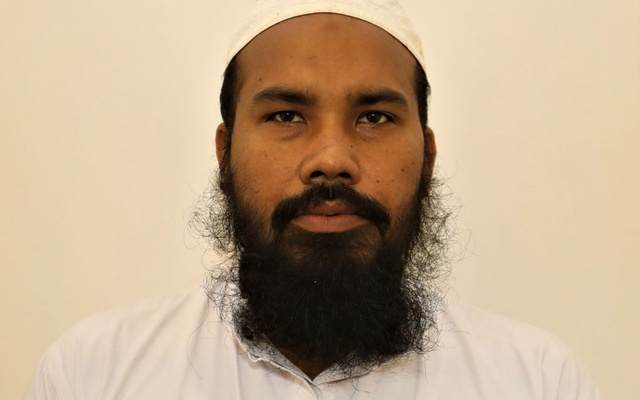
Harakat Hazm (Movement of the Steadfast), a coalition of armed groups that is based in northwestern Syria near the Turkish border, is a potential recipient of the $500 million of direct military assistance by the United States for “vetted” armed opposition groups in the Syrian conflict (AP, June 27). Harakat Hazm has reportedly already received a shipment of U.S.-manufactured BGM 71 TOW anti-tank missiles through another nation, likely Saudi Arabia or Turkey, with the approval of U.S. officials (Public Radio International, April 29; Reuters, April 15; AFP, April 15). The military commander of Harakat Hazm is First Lieutenant Abd Allah Awda (a.k.a. “Abu Zayd”). [1]
Awda supposedly served as an officer in the Syrian Army before defecting. [2] He gained notoriety early in the Syrian uprising when, in June 2011, al-Jazeera aired the video of his declaration of defection from the Syrian military to join the growing rebel movement as a result of his dissatisfaction with Syrian security forces’ attacks against civilians. [3] After his defection, Awda helped to create and lead Harakat al-Dabat al-Ahrar (Free Officers’ Movement), an organization that preceded the formation of the Free Syrian Army (FSA). [4] In 2012, Awda announced the formation of Katiba al-Farouq al-Shmaal (Northern Farouq Brigade) in and around the town of Khan al-Subul in the northwestern Syrian governorate of Idlib. Katiba al-Farouq al-Shmaal was part of Kata’ib al-Farouq (Farouq Brigades), one of the first Syrian armed opposition coalitions that attempted to establish a national presence. [5] Arab media asserts that Kata’ib al-Farouq maintained close ties to the Syrian Muslim Brotherhood (SMB) and through the SMB to the governments of Turkey and Qatar (al-Akhbar [Beirut], May 22).
As the military commander of Katiba al-Farouq al-Shmaal, Awda was an occasional commentator for Arab media outlets, for whom he would analyze the struggle for control over strategic areas, such as the M5 highway in Idlib and Aleppo governorates. [6] He had been the commander of the armed opposition groups that cooperated in a “joint operations room” in Idlib where Katiba al-Farouq al-Shmaal operated. [7] In December 2013, Katiba al-Farouq al-Shmaal, led by Awda, became a member in the armed opposition coalition al-Jabhat al-Thuwar al-Sooria (Syrian Revolutionaries’ Front – SRF), which included 14 constituent militias primarily based in the northwestern governorates of Idlib, Aleppo, Latakia and Hama (al-Mokhtsar [Riyadh], December 10, 2013). The SRF is led by Jamal Ma’rouf, another Idlib-based armed opposition commander, himself famous for being the first rebel fighter to shoot down a Syrian military plane. He has reportedly received military assistance from countries such as the United States, Saudi Arabia and Turkey, which are seeking the removal of Bashar al-Assad from power (AP, June 27; Washington Post, February 16; al-Arabiya [Dubai], December 29, 2012).
In January 2014, Awda led Katiba al-Farouq al-Shmaal in joint operations with Harakat Hazm against the Syrian military and Islamic State of Iraq and Syria (ISIS) in a campaign called Geneve II (Geneva II), timed to coincide with the Geneva II peace talks between Syrian rebels and the Assad government in Switzerland. [8] He gave an interview to Arab media discussing his group’s participation in the Geneva II campaign and indicated that Katiba al-Farouq al-Shmaal was cooperating with, but was distinct from Harakat Hazm. [9] In late January, however, Harakat Hazm released a video announcing its existence, which named Awda as its military commander. [10] It is reported that a majority of the military and political leadership in Harakat Hazm were members of or associated with Katiba al-Farouq al-Shmaal (al-Akhbar [Beirut], May 22). Speaking to the U.S. journalist Liz Sly, Awda stated that he supports a democratically elected post-Assad government that promotes equality and represents Syria’s diversity, although he expects that government to be informed by Shari’a. He said that Harakat Hazm is:
A military movement capable of toppling the regime; protecting citizens and their property; and filling the void after the regime falls… a nationalistic, unifying mission to include all the Syrians, with their different backgrounds, in a military movement that will serve as the basis of a future army (Washington Post, April 28).
In spite of Harakat Hazm’s reported relationship with foreign actors, including the United States, that are seeking the removal of Bashar al-Assad, it is probably not one of the more powerful rebel factions operating in northwestern Syria. Although Abd Allah Awda is a relatively well-known and experienced Syrian armed opposition leader, he may or may not appeal as a national rebel commander to other Syrian armed opposition groups. It is also unclear whether Harakat Hazm can become as powerful as the other armed opposition coalitions, such as the constituent militias of al-Jabhat al-Islamiya (Islamic Front – IF). Assuming continued assistance from the United States, it is more likely that Awda’s position as an important local, rebel leader in northwestern Syria, particularly in Idlib, will be maintained and that he will cooperate in stability operations with rebel military and civilian organizations at the village and sub-governorate district level.
Notes
1. “Statement of the Formation of Harakat Hazm with the Blessing of the Chairman of the General Staff,” al-Maktab al-Alami li-Quwat al-Thawra al-Sooria (Information Office of the Forces of the Syrian Revolution) YouTube page, January 25, 2014, https://www.youtube.com/watch?v=kflK7DkPQok.
2. “Story of the Defection of First Lieutenant Abd Allah ‘Awda, Commander of the Northern al-Farouq Brigade,” Tayseer Bakru YouTube page, August 14, 2012, https://www.youtube.com/watch?v=ac6moXFtO1E&app=desktop.
3. “Al-Jazeera: Defection of 1st Lieutenant Abd Allah ‘Awda,” Jabar Athrat al-Karam YouTube page, June 26, 2011, https://www.youtube.com/watch?v=VEAWj8M_yD4&app=desktop.
4. Op. cit.
5. “Formation of the Northern al-Farouq Brigade in the Idlib Countryside,” Battalions Farouq YouTube page, August 4, 2012, https://www.youtube.com/watch?v=qLRLa17ASGM.
6. “Al-Jazeera Report on the Northern al-Farouq Brigade,” Tayseer Bakru YouTube page, August 17, 2012, https://www.youtube.com/watch?v=qUSr1CdCtf8&app=desktop.
7. “Al-‘Arabiya-Syrian Media Center: The Northern al-Farouq Brigade’s Military Base,” al-Markaz al-Alami al-Soori (Syrian Media Center) YouTube page, December 24, 2012, https://www.youtube.com/watch?v=oPRYsrY49rk.
8. “Al-‘Arabiya Channel Event-Presentation of 1st Lieutenant Abd Allah ‘Awda Abu Zeid from the Northern al-Farouq Brigade,” Shaam News Network, January 17, 2014, https://www.youtube.com/watch?v=2j4cI_yRr_k.
9. Ibid.
10. Op. cit.