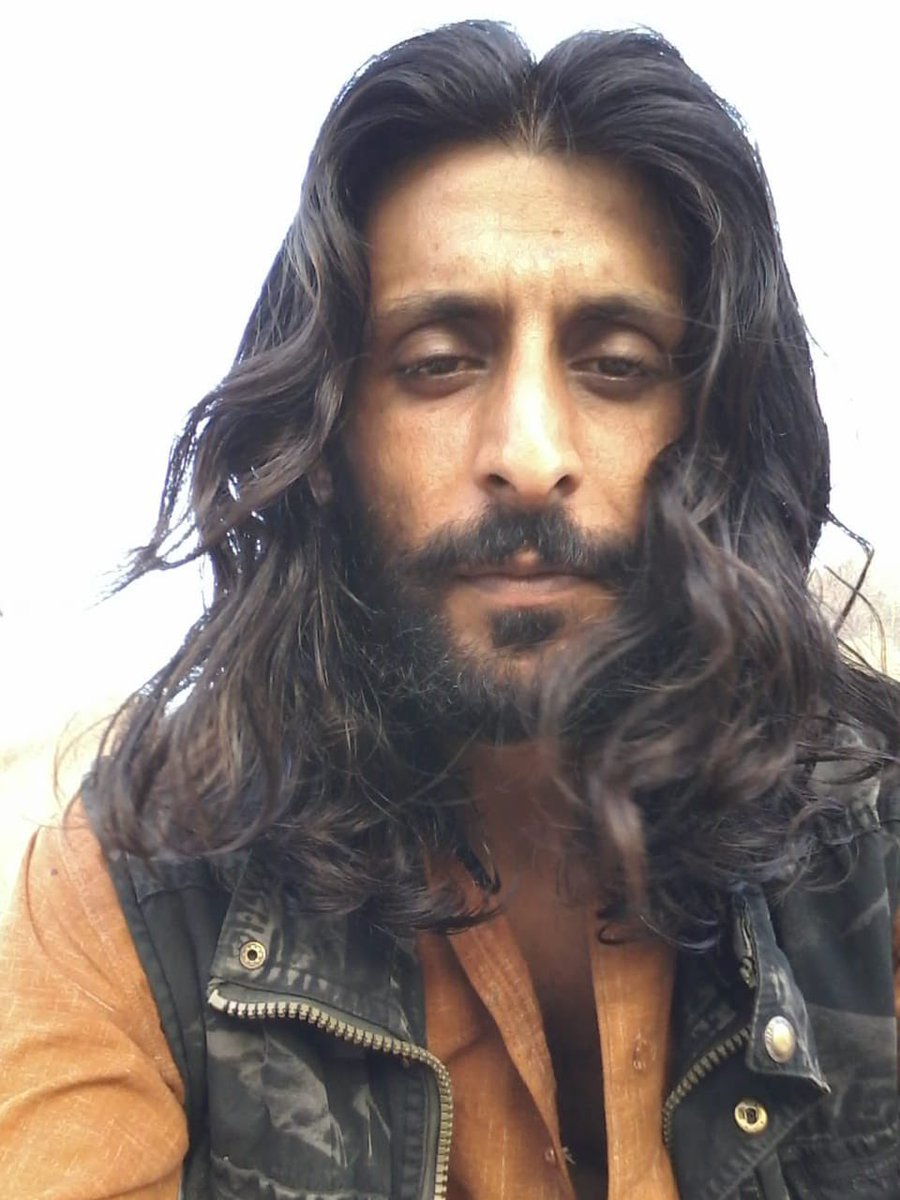
Riyaan Saalim Sadeq al-Kaldani: The Pro-Iran Iraqi Christian Militia Leader
Riyaan Saalim Sadeq al-Kaldani: The Pro-Iran Iraqi Christian Militia Leader
In the wake of the Islamic State’s June 2014 takeover of Mosul, Iraq’s second-largest city, the Iraqi government created al-Hashd al-Sha’bi (Popular Mobilization Committees—PMCs), a militia network to help counter the jihadist organization. Though dominated by Shi’a armed groups, several militias within the network are composed along different religious and ethnic lines (YouTube, July 16; al-Watan Voice [Baghdad], July 7; YouTube, July 6; YouTube, May 4). Kata’ib Babilon (Babylon Brigades), for instance, is primarily Assyrian-Chaldean Christian, including the secretary general, Riyaan Saalim Sadeq al-Kaldani. Al-Kaldani has emerged as an increasingly visible and noteworthy spokesperson for the PMCs to an international, Arabic-speaking audience, and he consistently emphasizes the pan-sectarian nature of the PMCs, and the importance of its resistance mission against the Islamic State for the future of Iraq (YouTube, August 5; YouTube, July 21; YouTube, June 22; YouTube, June 4; YouTube, May 23).
Al-Kaldani’s increased visibility among the Iraqi Assyrian-Chaldean community has led to his advocacy for the unity of Iraq’s diverse Christian sects and their emerging realization of themselves as part of the majority of Iraqis who reject militant Salafist organizations such as the Islamic State and not as an isolated minority within Iraq (YouTube, June 4; YouTube, March 16; al-Hewar [Baghdad], June 1, 2013; YouTube, March 9). According to al-Kaldani, Kata’ib Babilon has mobilized at least 800 Assyrian-Chaldean fighters—most of whom are displaced residents of areas that the Islamic State has targeted—who are undergoing training conducted by the PMCs, particularly by Iranian Revolutionary Guard Corps (IRGC)-linked Iraqi Shi’a militias. Once this is completed, Kata’ib Babilon intends to participate in offensive operations against the Islamic State (YouTube, July 8; al-Watan Voice [Baghdad], July 7; al-Quds al-Arabi, July 7; Assyrian International News Agency [Baghdad], July 2; Fars News Agency [Tehran], June 23; Iraqi News, June 10; YouTube, June 3). Interestingly, Kata’ib Babilon utilizes revolutionary motifs, such as those used by the IRGC and its proxy groups and the Assyrian-Chaldean nationalist movement, alongside symbols stressing the pan-sectarian, common Mesopotamian heritage of Iraq in its promotional videos and media content.
Biography
Al-Kaldani, who is believed to be only 26-years-old, is an ethnically Assyrian, Chaldean Catholic who resides in eastern Baghdad. However, his family origins are in the city of al-Qosh in Iraq’s northwestern Ninewah Governorate, a center of Assyrian-Chaldean nationalism (YouTube, June 22; Ishtar TV [Baghdad], February 17, 2014; Iraqi Aramic House, January 2, 2013). Al-Kaldani is a controversial figure despite this background; he allegedly looted public buildings in Baghdad after the fall of the Saddam Hussein government in 2003 as a member of a street gang. He also supposedly worked as a broker in the city’s theme parks (Iraqi Aramic House, January 2, 2013). More recently, al-Kaldani unsuccessfully ran for the Iraqi Parliament in the 2014 elections as the head of Qa’ima Babilon (Babylon List), a political party that campaigned on a message of inter-ethnic, and inter-sectarian solidarity in Iraq, and the union of Iraq’s diverse Christian communities under one political banner (YouTube, June 22; Facebook, April 26, 2014; Facebook, February 26, 2014; Ishtar TV [Baghdad], February 17, 2014; YouTube, January 31, 2014; al-Kashf [Baghdad], December 7, 2013; al-Nnas [Baghdad], December 6, 2013; Kaldiya.net, April 25, 2013).
Al-Kaldani likely has a well-established network among the Iraqi Assyrian-Chaldean diaspora, including in the United States (Kaldiya.net, January 21, 2014; YouTube, December 31, 2013; Kaldiya.net, December 23, 2013). Since the Islamic State’s seizure of Mosul and a significant portion of Mosul’s surrounding areas in June 2014, including many Assyrian-Chaldean districts, he has cultivated an image of being the defender of Iraq’s Christian population, reimagining himself as a soldier first, and then a politician; this is potentially powerful messaging for the diaspora audience worried about the future of their kinsmen in Iraq (Facebook, September 8; Facebook, August 11; Facebook, August 3; YouTube, June 22; Facebook, May 19; Facebook, May 18). Financial support from the diaspora, particularly from the large Assyrian-Chaldean communities in Western Europe and North America, has the potential to provide significant financial and socio-political support for the newly mobilized and empowered Iraqi Christian militias, such as Kata’ib Babilon, as well as increase the public profile and relevance of Iraqi Christian leaders such as al-Kaldani (al-Jazeera, February 26).
Relationship to Iran and Shi’a Islam
In recent media appearances, al-Kaldani has expressed great admiration for the role of IRGC Quds Force leader General Qasem Soleimani and Abu Muhandis al-Mahdi, an important leader within the PMC command structure and a prominent Iraqi Shi’a militant commander with close connections to the IRGC, in organizing the anti-Islamic State campaign that includes the mobilization of the PMCs (YouTube, September 23; YouTube, August 27; YouTube, July 23; YouTube, May 2; al-Araby al-Jadeed, January 4; Reuters, November 12, 2014). Kata’ib Babilon is depicted as having a particularly close relationship with the PMC affiliate Kataib al-Imam Ali (Imam Ali Brigades), which al-Mahdi commands (al-Jazeera, August 28; France 24, June 2; YouTube, May 29; YouTube, April 17; Facebook, March 23; YouTube, March 4). [4] Al-Kaldani also maintains close relationship with several prominent Shi’a politicians, including former Iraqi Prime Minister Nuri al-Maliki, who is rumored to have been al-Kaldani’s sponsor when the young Assyrian-Chaldean entered political life (YouTube, June 22; Facebook, June 18; Iraqi Aramic House, January 2, 2013).
Al-Kaldani also has made several public statements that could be interpreted as reflecting the world view of the “Resistance Axis,” a loose coalition of Middle Eastern actors led by Iran and includes Bashar al-Assad’s government and Hezbollah; the axis is generally opposed to the policies of the United States and several of its regional partners, including Saudi Arabia. Al-Kaldani has asserted that the policies of the governments of Saudi Arabia and Qatar have contributed to the rise and sustainment of the Islamic State, and that the U.S.-led Coalition effort to counter the Islamic State has been ineffectual. He is also a critic of Saudi Arabia’s policies in the current Yemeni civil war (YouTube, July 21; YouTube, June 22; YouTube, September 23; al-Alam [Tehran], April 5). In keeping with this worldview, al-Kaldani supports Bashar al-Assad’s government in Syria, particularly the regime’s incorporation of Christian militias into its security structures and its combat against militant Islamist armed opposition groups (YouTube, September 19; YouTube, June 22).
Under al-Kaldani’s leadership, Kata’ib Babilon portrays itself as the “Harakat Misaheyeen fi al-Iraq” (The Christian Movement in Iraq), stylizing itself in line with the narrative of resistance that is a hallmark of IRGC-backed militias. For example, the logo of Kata’ib Babilon features a hand clenching a Kalashnikov rifle, a common symbol among the affiliates of the IRGC’s Shi’a-majority action network, such as Hezbollah in Lebanon and Asa’ib Ahl al-Haq in Iraq. It also incorporates the star, two rivers and the Ishtar Gate of the ancient city of Babylon, a reference to Iraq’s Mesopotamian cultural heritage; this gate is a common symbol among supporters of the Iraqi Assyrian-Chaldean nationalist movement. [1]
The militia also frequently uses symbolism in its media production to emphasize bonds of brotherhood between Christianity and Shi’a Islam, going so far as to name the group’s fighters “Afhaad Wahab” (Descendants of Wahab). This references Abdullah ibn Omayr Abu Wahab al-Kalbi, an Iraqi Christian merchant and friend of the revered Shi’a Imam Husayn. Al-Kalbi converted to Islam with his mother and new bride on the eve of the Battle of Karbala, and fought and died with Husayn’s forces in that battle (Facebook, July 21; YouTube, May 29). [2] These references to militant Shi’a symbolism, and the role of Christianity within this category of Shi’a Islamist symbolic mobilization, distinguishes Kata’ib Babilon from other newly mobilized Assyrian-Chaldean militias, such as the Assyrian Democratic Movement’s Nineveh Plains Forces, which operate in northern Iraq against the Islamic State. [3]
Iraqi Assyrian-Chaldean Community
Al-Kaldani’s critics assert that his quick rise to prominence as a leader within the Assyrian-Chaldean community, to whom he was an unknown prior to 2011-2012, is tied to an association with Iraqi Shi’a militias, such as Sayyid Muqtada al-Sadr’s Jaysh al-Mahdi (Mahdi Army), and other Shi’a Islamist organizations in Baghdad. Al-Kaldani himself has said that he had “brothers” who were local fighters in Jaysh al-Mahdi and conducted operations against the U.S.-led Coalition in Iraq in the 2000s (YouTube, June 22; Iraqi Aramic House, January 2, 2013). He is also charged by his opponents with having converted, in practice if not by official attestation, to Shi’a Islam, under the influence of Jaysh al-Mahdi. Al-Kaldani’s connection to Baghdad’s Iraqi Shi’a militias, and his rising public profile, likely motivated an unsuccessful assassination attempt against him near his home in Baghdad in September 2012 (Iraqi Aramic House, January 2, 2013; Iraqi National News Agency, September 9, 2012; Baghdadia News Agency, September 9, 2012).
His supporters, however, assert that his relationship with Baghdad’s local, Shi’a militias have made al-Kaldani an effective advocate for Christians who were targeted by these groups, and that his relationship with powerful Iraqi Islamist movements, particularly Shi’a movements, and other important socio-political actors, such as Arab tribes, allows him to be an effective advocate for the larger Iraqi Christian community (Facebook, September 9; YouTube, July 16; Peyanmer News Agency [al-Qosh], July 14, 2013; al-Hewar [Baghdad], June 1, 2013). In reference to this interpretation of his role in contemporary Iraq’s socio-politics, he is frequently referred to as “al-Shaykh,” an honorific applied to him by his supporters, both within the Assyrian-Chaldean community and from Iraq’s other sectarian communities, whoare seeking to establish al-Kaldani as a national political figure and potential overall leader of Iraq’s various Christian communities (YouTube, June 22; YouTube, March 16; YouTube, September 5, 2014; Facebook, March 12, 2014; Facebook, March 3, 2014; YouTube, February 21, 2014; al-Ahrar [Maysan], June 16, 2013; YouTube, April 1, 2013; Iraqi Ministry of Interior, November 7, 2012).
Conclusion
Al-Kaldani is well positioned to be a significant Iraqi socio-political actor into the foreseeable future due to his strong ties to the IRGC-backed, Iraqi Shi’a security establishment and his rising profile among the Assyrian-Chaldean community, both in Iraq and abroad. His backers are positioning him to be a shaykh in both honorific and practical impact, placing him forward as a nationalist, Christian politician and military leader who has the influence to be the guardian of Iraq’s beleaguered Christian communities. Although this is still an ongoing process, the increased visibility of al-Kaldani as a representative of the PMCs to an Iraqi and international audience is indicative of the post-June 2014 environment where Iraq’s Christian communities, which traditionally sought a disarmed and protected status in Iraq’s socio-politics, are playing a more assertive and militant role. Kata’ib Babilon, which is being built to be such an assertive, but compliant to Baghdad, Iraqi Christian militia organization that can be used as frontline force against the Islamic State, could be a tool of considerable power for al-Kaldani in the future, and would position him as one of the most powerful, if not the most powerful, Iraqi Christian figures in the foreseeable future.
Nicholas A. Heras is a Middle East researcher at the Center for a New American Security (CNAS) and an associate fellow for the Jamestown Foundation.
Notes
1. See Kata’ib Babilon’s Facebook page, and other examples from al-Kaldani’s Facebook page here such as, Facebook, September 8.
2. The story of Abdullah ibn Omayr Abu Wahab al-Kalbi is prominently featured during the Shi’a holiday of Ashura, commemorating the martyrdom of the Imam Husayn and his companions at the Battle of Karbala. While al-Kaldani, in his media appearances and rhetoric, emphasizes pan-sectarian unity and cooperation in Iraq, his and Kata’ib Babilon’s reference to being the descendants of Wahab, taken in the context of the connection to the Battle of Karbala, is an association that has the connotation of placing Kata’ib Babilon as a proponent of muscular Shi’a militant activism against the Sunni population. For more on Abdullah ibn Omayr Abu Wahab al-Kalbi, see: Facebook, August 29; YouTube, February 7, 2012.
3. Al-Kaldani asserts that he does not have any disagreements with any of the other, predominately Assyrian-Chaldean militias or with the Kurdistan Regional Government with which they operate in the same battlespace. Speculation over al-Kaldani’s, and by extension his Shi’a political allies in Baghdad, disagreement with these other Iraqi Christian armed groups is strong enough that the topic has been referenced in recent media interviews that he has granted. See: YouTube, July 21; YouTube, June 22. For more on the Nineveh Plains Protection Units, see: Facebook and Restore Nineveh Now.
4. For more on Kata’ib al-Imam Ali, see Matthew Levit and Phillip Smyth, “Kataib al-Imam Ali: Portrait of an Iraqi Shiite Militant Group Fighting ISIS,” The Washington Institute for Near East Policy, January 5, 2015, https://www.washingtoninstitute.org/policy-analysis/view/kataib-al-imam-ali-portrait-of-an-iraqi-shiite-militant-group-fighting-isis.