Sahelian Jihadists with the Islamic State in Libya: A Post-Mortem Profile of Abu Asim al-Sudani
Sahelian Jihadists with the Islamic State in Libya: A Post-Mortem Profile of Abu Asim al-Sudani
On July 11, 2019, Islamic State’s (IS) weekly publication al-Naba released a tribute to a “martyred” Sudanese fighter who had initially fought for IS’s West Africa wilaya (province) (ISWAP) and eventually was killed while fighting in Libya under the banner of the local wilaya there. The militant path of Abu Asim al-Sudani does not represent an isolated case. Since the emergence of the IS wilaya in Libya (ISL) in 2014, hundreds of jihadists from the Sahel and other African regions have joined the group in the North African country, attracted by the only experiment of a Caliphate state established by the group beyond Syria and Iraq (Alarab, July 20, 2016; Afrigatenews, January 11). According to some estimates, more foreigners were fighting with ISL than locals. [1] However, what emerges from Abu Asim al-Sudani’s story is not only the relationship between ISL and ISWAP, but, most importantly, the fact that Libya remains the top destination for regional jihadists willing to continue their fight. This is a dangerous trend considering the new opportunities that the current Libyan civil war is opening up for IS to revive its insurgency in the country.
The al-Naba Biography
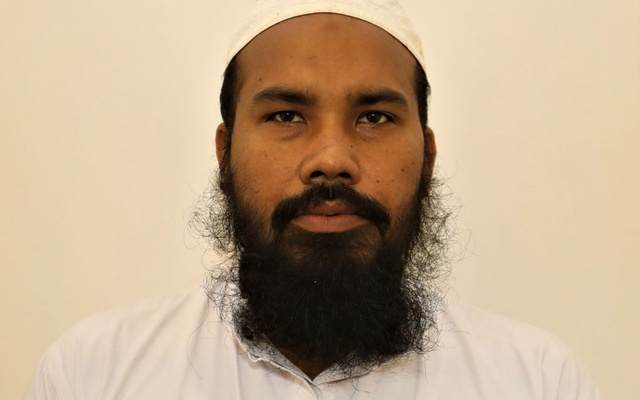
According to the biography provided by al-Naba, Muhammad Ahmad Ali Bilo al-Fallata (a.k.a. Abu Asim al-Sudani), was born in 1989 in an unspecified location in Sudan (Jihadology, July 11). The account goes on to reveal that al-Sudani spent his adolescence in Saudi Arabia, where the development of his jihadist ideology was triggered by the U.S. invasion of Iraq in 2003. The article states that al-Sudani increasingly began watching and reading jihadist propaganda, especially propaganda material featuring the infamous Abu Musab al-Zarqawi, who at that time was the emir of the IS’ predecessor, al-Qaeda in Iraq. Sudanese media also maintain that at that time Saudi authorities arrested several of al-Sudani’s comrades and teachers. That crackdown pushed him to become quite active in the media arena, supporting and spreading jihadist ideology online (Sudanile, July 12, 2019). The biography also claims that al-Sudani had an educated background, having studied computer science at the International University of Africa in the Sudanese capital Khartoum, where he returned to complete his post-graduate studies. According to al-Naba, al-Sudani attempted to join a jihadist organization on several occasions while in Sudan. He was likely on the radar of the local authorities, as he was arrested several times between 2010 and 2014 and accused of plotting attacks to be carried out in the country (Arabnn.net, July 12).
In 2015, al-Sudani managed to leave the country and join ISWAP (it is unclear whether it was in Nigeria or Chad, the two countries where ISWAP is active), at a time when militants from Boko Haram had pledged allegiance to IS leader Abu Bakr al-Baghdadi (al-Jazeera, November 12, 2015). Sudanese media reports indicate that al-Sudani was arrested in Chad alongside others from ISWAP, who were allegedly in the country to plot a series of terrorist attacks (Sudanile, July 12). Regional media reported that he was extradited to Sudan in 2016, where he remained in prison until sometime in 2017 (Arabnn.net, July 12). After his release from prison, al-Sudani decided to try joining another branch of IS, ending up in Libya after crossing the Libya-Chad border (218tv.net, July 12, 2018). Al-Sudani’s shift in membership represents a further confirmation of the on-going strategic cooperation between different local IS branches—in this particular case, between ISL and ISWAP—thanks to the easy flow of weapons through the Sahel and the undetected movement of fighters. On July 5, for instance, ISWAP for the first time published propaganda material taken by a drone, a tactic initially seen in Syria and Iraq, but later emerging in Libya, and which was likely transferred to ISWAP (Twitter.com/Minguspozar, July 9).
According to al-Naba’s article, al-Sudani was in Libya around the time “the Crusader campaign against the Islamic State was its fiercest”—a likely reference to the military offensive spearheaded by militias from the city of Misratah in 2016 and supported by U.S. airstrikes. At this time the group was at the peak of its strength in Libya and in control of the coastal city of Sirte and surrounding areas (Middle East Eye, December 1, 2016; al-Jazeera, January 19, 2017). His presence in Libya corresponds with multiple reports from that period of an increasing presence of African foreign jihadists in the ISL ranks, an influx of militants facilitated by the long and porous Libyan southern borders at a time of collapsing state institutions. [2] According to IS’ eulogy for al-Sudani, he was killed in an undated attack carried out by the group on a police station in the village of Qanan, which was run by the Libyan National Army (LNA), a coalition of different eastern-based militias led by self-declared Field Marshall Khalifa Haftar. The LNA is currently involved in a six-month long offensive aimed at capturing Libya’s capital Tripoli.
IS effectively claimed an assault on a police station in Qanan on June 3, 2018, which, according to local media, was directed by al-Sudani himself (al-Araby, June 3, 2018; 218tv.net, July 12, 2018). This suggests that al-Sudani was among those IS militants who left Sirte during the Misrata-led assault—leaving behind a group of militants to defend their stronghold—and who sought refuge in more isolated areas of the country to plan their reorganization (al-Jazeera, September 29, 2017; Middle East Eye, August 2, 2018). Al-Qanan is a village some 20 kilometers south of Ajdabiya, a strategic location connecting both eastern and western Libya with the south.
ISL Propaganda Minister?
The fact that al-Sudani was part of that group of IS militants who did not remain in Sirte suggests that he was either a high-profile member or that he had some core competences that made him a key asset. The answer is provided by the very same al-Naba account, which includes details on al-Sudani’s role in the organization’s media apparatus. The biography states that al-Sudani was media and tech savvy thanks to his background in computer science, and that he was involved in the production of propaganda material for the group. The article goes on, emphasizing al-Sudani’s own interest in the role of media as a tool to convey the message of jihad to the world, adding that he enhanced his skills by receiving training “in media technology and software, both audio and video” as well as digital security (Jihadology, July 11). Although the article does not say what exactly al-Sudani’s media role was, several regional media portrayed him as a senior media official, while Libyan sources quoted by local media went even further, portraying him as the group’s propaganda minister (Sudanile, July 12; EwanLibya, July 12; 218tv.net, July 12, 2018). While it is almost certain that al-Sudani played a key role in the group’s media apparatus, as emphasized by the al-Naba article, it seems unlikely that he was in charge of the ISL information office, as he has never been identified previously as such and open-source information about him only started to emerge after his death. Moreover, it is hard to believe that such a senior leader would have conducted a raid on a police station in an isolated Libyan location—despite the strategic relevance of the location they had attacked—especially at a time when the media output of the Islamic State in Libya was at its lowest. It is far more likely that al-Sudani was associated with one of IS’ desert sarayat (or brigades). The sarayat are mobile units of IS militants, which since 2017 have been conducting most of the hit-and-run operations against Libyan security services in eastern and southern Libya (Almotawasat, August 3, 2018; Libyaschannel, July 17).
Conclusions
Al-Sudani is just one among hundreds of African foreign fighters who have been travelling to Libya to join IS there. These include a considerable number of Sudanese jihadists who have been making this journey since 2015 (Dabanga Sudan, September 20, 2015). Sudan, in particular, continues to remain a key entry point for foreign militants attempting to reach North Africa, as highlighted in the June 2019 UN Security Council report on IS that reported on the movement of fighters in small numbers from Syria to Libya and Algeria through Sudan. [3] As the Libyan civil war has now entered a more violent chapter following the LNA assault on Tripoli, which began in April, this trend is set to endure, enabling ISL to continue its current process of steady re-organization, as the UNSC report had already warned. Since it is improbable that al-Sudani was the ISL propaganda minister, despite some media suggestions, his death will most likely have a minimal impact on ISL’s already debilitated media operations, even though the group has surely lost a key asset in this regard. Up to this point, ISL has shown a certain degree of resilience facilitated by the local factors of the Libyan theater, such as the eastern-western divide in governance, the lack of a national army, and the absence of a unified national security body able to lead the counter-terrorism effort nationwide and share intelligence with security agencies from neighboring countries. This aspect is of particular relevance, since al-Sudani’s militant trajectory from Sudan into Libya, and more specifically its membership shift from ISW to ISL, demonstrates how cooperation between terrorist organizations across the Sahel region is a key factor enabling their continuity.
Notes
[1] https://ctc.usma.edu/islamic-state-africa-estimating-fighter-numbers-cells-across-continent/ [2] https://ctc.usma.edu/islamic-states-revitalization-libya-post-2016-war-attrition/ [3] https://undocs.org/S/2019/570