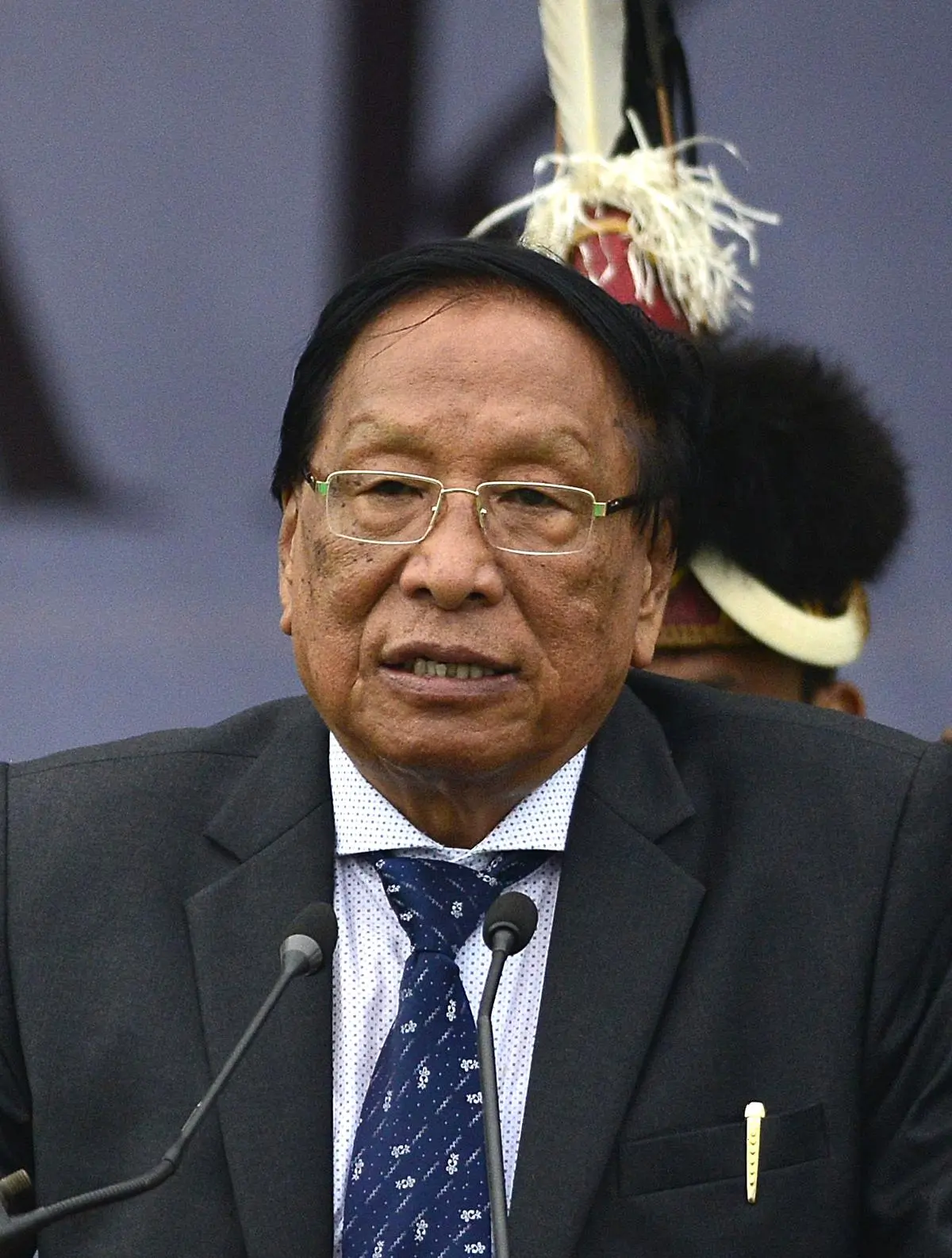
Sheikh Salah Hablas: The Idlib Leader Facing Down Salafist-Jihadism and the Assad Regime
Sheikh Salah Hablas: The Idlib Leader Facing Down Salafist-Jihadism and the Assad Regime
Introduction
Negotiations between Russia and Turkey in Ankara on September 16 over the present situation in Syria’s Idlib governorate yielded no tangible results. The failure of the talks opens the door for the Bashir al-Assad regime and its Russian allies to attempt a seizure of the governorate by force. Such a scenario could see the Salafist-jihadist organization Hay’at Tahrir al-Sham (HTS), the leading rebel group in Idlib governorate, defeated and driven out of the area, to the benefit of local elites who have long resisted their presence.
HTS is currently well established as the leading rebel group in Idlib governorate. Despite Damascus successfully gaining control of large segments of the governorate, HTS remains the most influential militant faction. However, despite the group’s entrenchment in Idlib, it has failed to successfully embed itself into the local society due to local civilians’ negative reaction to the Salafist group’s attempt to dominate the local economy and impose a harsher Islamist ideology.
Local elites have been able to take the local discontent of northwestern Syrians and translate it into action against HTS, keeping the group from completely dominating this section of the war-torn country. Understanding these local elites and their regional networks of influence is key to understanding the complicated conflict that is gripping this area. Furthermore, HTS’ potential defeat by Assad’s forces would give these local leaders opportunities to expand their own influence. One such local leader who successfully organized and led local fighters against both Islamic State (IS) and HTS, and stands to have a bigger role in a post-HTS region, is Sheikh Salah Hablas.
Background
Hablas comes from an influential conservative family, based in the village of Hazano in Idlib governorate, that is well-known in the region for its opposition to the Syrian regime since the 1980s. The sheikh has a brother who was killed in the 1980 Palmyra prison massacre of political detainees. The killings were carried out by the Defense Companies, a paramilitary organization led by General Rifat al-Assad, brother of the late Syrian President Hafez al-Assad. Hablas has another brother who was imprisoned for nearly 20 years, also in Palmyra, and was released at the end of the 1990s. A third brother has been detained by the Syrian regime for the past several years.
Sheikh Hablas’ family is also known to be traditional members of the Syrian Muslim Brotherhood. However, Hablas has kept his distance from the Brotherhood and its military arm in Syria, represented by the Sham Legion. He has preferred not to approach or be affiliated with the organization in any way. The Sham Legion, however, is well established in the areas surrounding Hablas’ home base of Hazano. The influential commander-in-chief of the Sham Legion, Colonel Fadlallah al-Hajji, is from the nearby village of Kafr Yahmoul, and most of the military commanders are also from the surrounding areas.
Managing Local Tensions and Forming the Fudoul Alliance
In the early years of the civil war in 2011 and 2012, Hablas played an important role in easing tension that had been building between the two Shia towns of Al-Fu’ah and Kafariyyah, north of Idlib. He also was able to convince neighboring Sunnis to join the revolution against the Assad regime. He pressured some opposition groups into releasing Shia civilians working in government institutions, including Zain al-Din, director of the Agricultural Bank in the town of Maar Tamasrin, who was a Shia from the neighboring town of Kafria. [1]
On May 25, 2013, Sheikh Hablas announced the formation of the Fudoul Alliance in opposition to the expansion of Islamist groups and the emergence of extremists, such as Islamic State (IS). Hablas was instrumental in working with and organizing the local leaders, village notables, military officers, and judges who had defected from the Syrian government to establish the alliance (YouTube, May 28, 2013). In his statement announcing the formation of the organization, Hablas stated three goals: changing the direction of the revolution against the Assad regime away from the Islamist direction it was heading; supporting oppressed Syrians, regardless of their religion, nationality, race and sect; and working to achieve security and peace by addressing sectarian and separatist strife.
The alliance’s emergence was a major challenge to Islamist factions. Hablas took care of the privacy of minorities, including Christians, Shias, and Druze. Eighteen Druze villages are located in the Jabal al-Summaq region of Idlib governorate, near Hablas’ town of Hizano.
The Fudoul Alliance attempted to present itself as an alternative opposition institution inside Syria. The group quickly announced its military and civilian leaderships, headed by the dissident Brigadier General Abdullah Harraq and a lawyer, Abd al-Rahman Allaf, respectively (YouTube, May 28, 2013; YouTube, May 29, 2013).
Reaction to Chemical Weapons Attack in Eastern Ghouta
On August 22, 2013, after the Syrian regime bombed Eastern Ghouta, a rural suburban area near Damascus, with chemical weapons, the leaders of the opposition fronts and military councils announced the cessation of cooperation with the decision-making countries of the UN Security Council, until an international investigation committee was formed. The opposition leaders threatened to resign from their posts, and called on their commander, then-Chief of Staff of the opposition, Major General Salim Idris to resign if the necessary military support was not provided. The group stated that the National Coalition, which is the political representative of the opposition, had lost legitimacy. Sheikh Hablas supported the statement, and stood alongside leaders of the Aleppo and Idlib military opposition as it was read in a video recording. [2]
Fight Against Islamic State
The month of September 2013 was decisive for IS’ presence in northwestern Syria. During this time, Islamic State attempted to assassinate Sheikh Hablas in an ambush, severely injuring him and killing a companion (Zamanalwsl, September 15, 2013). The Fudoul Alliance arrested the perpetrators of the attack, and IS eventually launched an assault on the town of Hazano in order to rescue the perpetrators. Alliance fighters repelled the attack and killed 20 IS operatives. Among those killed was an Islamic State emir from the nearby town of Dana, Abu Abdullah al-Libi (Aawsat, September 24, 2013). On September 18, IS took control of Azaz, north of Aleppo, and tried to seize the Bab al-Salama border crossing with Turkey (Al-Quds, September 23, 2013). This action had the effect of enlargening the coalition against IS in Syria, and encouraged the Fudoul Alliance to take a clear decision to mobilize against it.
On September 30, 2013, IS spokesman Abu Muhammad al-Adnani released a blistering statement against various opposition groups and factions. Al-Adnani accused Hablas and the Fudoul Alliance of having sided with the “crusaders” to fight against his organization and claimed he had conclusive evidence of the partnership.
Days later, IS maneuvered to ease tensions between it and the Fudoul Alliance, releasing a statement referring to Hablas as a “brother in religion” (Zamanalwsl, October 4, 2013). This change in IS policy toward the alliance was short lived, as factions from the Aleppo countryside organized under the Jaysh al-Mujahideen umbrella group in order to fight IS. Jaysh al-Mujahideen was a smaller coalition that worked closely with the Fudoul Alliance and collaborated militarily with Hablas himself, who acted as a political leader for the group. The clashes resulted in the death of Abu Saber al-Tunisi, the IS emir in Atarib, near Hazano.
Sheikh Hablas’ Role in the HTS-SLF Fighting
On February 26, 2018, Sheikh Salah Hablas appeared, for the first time in several years, on social media, while fighting was taking place between HTS and the Syrian Liberation Front (SLF), a coalition of Islamist and revolutionary factions. The SLF coalition notably included the Nour al-Din al-Zanki movement, the largest opposition faction in the western countryside of Aleppo, and the Ahrar al-Sham movement.
During the fighting, the majority of Idlib’s towns erupted in protest against HTS forces, staging multiple demonstrations against the Salafist group. In one such protest, hundreds of demonstrators gathered at Hablas’ house and chanted, “Sheikh Salah … God protect you” and “With our souls and blood we sacrifice, Sheikh Salah” (Facebook, August 17, 2017).
Sheikh Hablas had previously warned HTS not to launch hostilities against the coalition, reminding the group that the SLF provided safety to elements of HTS in 2014 during the war against Islamic State. Security had been provided to HTS members on the condition that they remain at home and not interfere in the active fighting with IS (YouTube, February 26, 2018).
Hablas played a large role in persuading factions that had previously retired from fighting to return to the frontlines against HTS. Hablas played a similar role organizing factions and tribes in Idlib to fight in the war against IS in 2013. However, local and international circumstances had changed dramatically. The most important of these changes is the cessation of U.S. support for the factions fighting the Assad regime.
During the conflict with the SLF, HTS surrounded the Hablas’ hometown of Hazano and attempted to storm it several times (Smart News Agency, February 26, 2018; YouTube, February 26, 2018). HTS attacked Hazano because local fighters were blocking a road that would have allowed HTS to reach the strongholds of the Nour al-Din Zanki movement in the northern countryside of Aleppo. Hablas attempted to motivate the town’s fighters to counter the attack by giving speeches that were broadcast through loudspeakers in the local mosque (Twitter.com/abo987khaled, February 25, 2018). Sheikh Hablas’ failure to assemble various local factions to counteract HTS resulted in the end of clashes. Hazano was largely spared from fighting, and the town’s revolutionaries did not attempt further to interrupt the HTS convoys.
Conclusion
Today, Sheikh Hablas maintains a much lower profile in comparison to his initial activism at the beginning of the Syrian Civil War, and now avoids making public appearances. Despite this, Hablas maintains a venerated status among the people of northern Idlib. He is a popular religious figure, especially in his home base of Hazano. Hablas has not lost influence in the area after a nearly 18-month absence. His past injuries from IS’ assassination attempt and fear of further attempts of his life seem to have resulted in a temporary retreat from public life for much of the past few years. Hablas reappeared in early 2018, to great local fanfare. Local leaders, activists, and rural notables quickly rallied around him.
Hablas has inspired a fervent following among average Syrians, having shown an alternative governing model for the region that stands apart from the Salafist mold. Idlib has experienced multiple Salafist-jihadist militias in power, including the Islamic Ahrar al-Sham movement, Jaysh al-Islam, Islamic State, and more recently, HTS.
Although Sheikh Hablas is not currently active on social media, his home in Hazano remains a daily destination for dignitaries, factional leaders, and activists. While his home has lost its traditional role as a place for negotiation and reconciliation, it nevertheless remains a gathering place where people can freely exchange news and opinions and coordinate their actions. Sheikh Hablas still plays a major role in bringing together divergent opinions and mobilizing the public. Hablas, practically speaking, oversees much of the day-to-day activities of the western countryside of Idlib, and he is well suited to play a regional political role in the future, when and if his political moment arrives.
Notes
[1] “My experience in the Syrian revolution, Kufra and Al Foah … and Idlib countryside (personal testimony)”. Khatib Suit, Arab Center for Research and Policy Studies 2017 https://bookstore.dohainstitute.org/p-1333.aspx [2] Statement by the leaders of the fronts regarding the chemical weapons massacre in Damascus (YouTube, August 22, 2013).