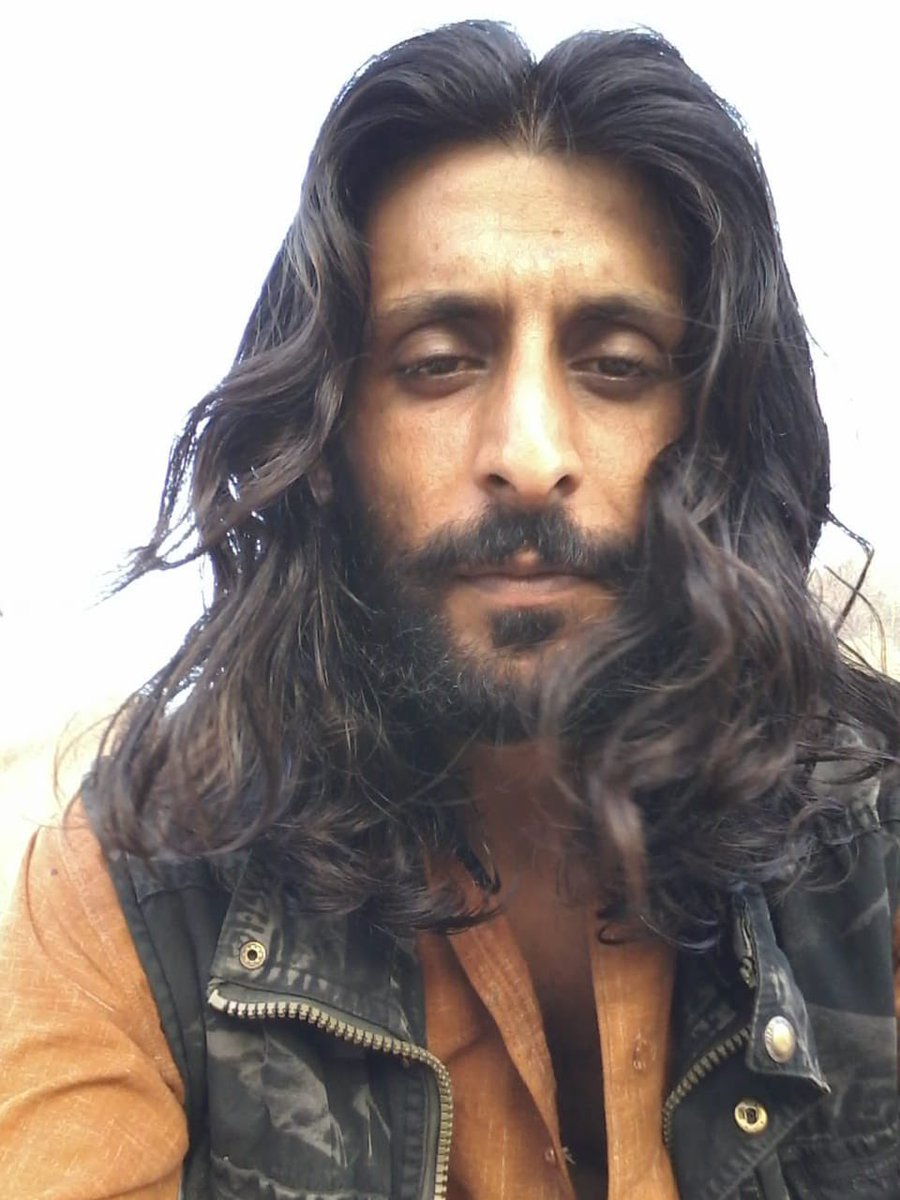
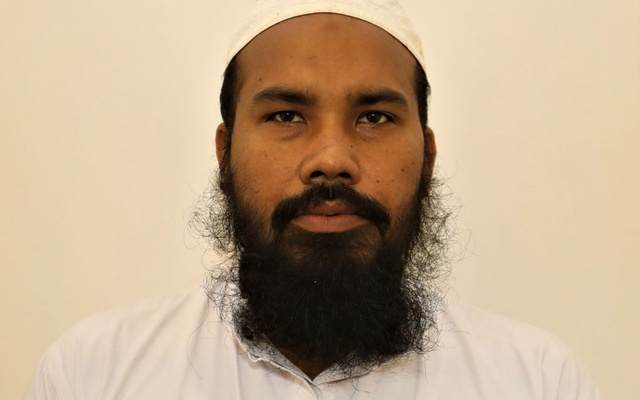
Sultan Aziz Azam: Can the Propagandist Revive IS-K’s Fortunes in Afghanistan?
Sultan Aziz Azam: Can the Propagandist Revive IS-K’s Fortunes in Afghanistan?
While Islamic State’s (IS) so-called caliphate was crumbling in Syria, the group was gaining ground in Afghanistan. IS’ self-styled “Khorasan Province,” a.k.a. Islamic State Khorasan (IS-K), seized swathes of land in the country, defying the setbacks for the group elsewhere. IS-K quickly became the most potent of all the IS branches, claiming regular attacks against high-profile targets in Afghanistan. A key figure behind IS-K’s spectacular rise is Sultan Aziz Azam, a former journalist in Jalalabad who later became the spokesperson of the group and led its media operation. As the group’s leaders avoid appearances while in hiding, Azam became a public face for IS-K. He successfully recruited new members through his rousing radio speeches and built a sophisticated media empire. His transformation from a popular local media professional to a ruthless jihadist propagandist—who even threatened his former colleagues—is synonymous with IS-K’s success in Afghanistan. Azam built a media ecosystem for IS-K that was perhaps unmatched even by the well-established propaganda machine run by IS’ jihadist rival, the Taliban. Despite IS-K’s recent rout in its stronghold of eastern Nangarhar province, Azam survived and vowed to continue his mission to revive the group in Afghanistan.
The Journalist and the Writer
Sultan Aziz Azam (also spelt as Ezam) is a resident of the Barikab area of Bati Kot district of Nangarhar. He spent his early years with his family at the Aza Khel camp in Peshawar during the Soviet occupation of Afghanistan. He completed schooling in his hometown and later attended Nangarhar University (Telegram, August 26, 2019; Islamic Theology of Counter-terrorism, December 27, 2018)
Before he joined IS in 2015, Azam worked for at least three local radio stations over the course of a decade, including Eslah Radio in the provincial capital Jalalabad. His name is still listed on the website of the radio as a financial and administrative manager (Voice of America, December 25, 2015; Eslah Radio website).
He is a poet and writer and his work often appeared on social media platforms such as Facebook prior to his joining IS. According to his own account, Azam started writing while at the university. He has said that he aspired to live under an Islamic system and that he fulfilled his ambition of being a jihadist when he joined IS (Telegram, August 26, 2019). Soon after joining the group, he encouraged others, including his former colleagues, to be part of the group and threatened to target them if they did not do so.
There is little information about his family, but Azam once claimed that his 13-year-old son was killed in a U.S. drone strike and that his second son, Omid, 12, would follow in his own footsteps after his death.
U.S. and Afghan officials declared Azam dead in a drone strike in Nangarhar in December 2018, but he later re-emerged in a purported audio message denying reports he had been killed. He admitted to being injured in the attack, but said he had recovered and was fit to carry on (Ariana News, December 27, 2018).
The Afghan government had earlier, in February 2016, declared that Azam was killed in an airstrike. However, he reappeared five months later and spearheaded IS’ media operation with more active participation (Afghan Islamic Press, May 11, 2016).
Azam and Voice of the Caliphate
Azam has been functioning as IS-K’s chief propagandist and spokesperson since its founding. The role gave him more visibility than anyone else in the organization, including its regional leaders, who have traditionally kept a low profile.
His vast experience in broadcast journalism enabled him to effectively fulfil that role and build a propaganda machine that is unique and different from the other IS branches.
Building on his expertise in radio, in December 2015, he spearheaded the launch of IS’ Seda-i-Khilafat (Voice of the Caliphate) FM radio broadcasts in parts of Nangarhar.
Azam successfully used the FM station, based in Bandar Valley in Achin district, to connect with young people and recruit members for IS in Afghanistan, where radio remains a popular medium (Afghan Analysts Network, March 25, 2019).
The radio broadcasts proved effective for IS-K, and the group would occasionally use them to disseminate official messages, unlike IS’ other branches, whose news and propaganda come out only through the organization’s central media outlets. The radio broadcasts stood out and were sometimes uncharacteristic of communication from IS “provinces” elsewhere.
For example, in June 2018, Azam, via the Voice of the Caliphate, ordered the closure of all schools for girls in Nangahar, threatening to target them otherwise. The warning was a deviation from official IS policy elsewhere, where the group has not been seen threatening schools (Telegram, June 4, 2018).
Under Azam, the Voice of the Caliphate has amplified its content and reach. The radio broadcast, which started its operations with Pashto-language broadcasts, later offered programs in Uzbek, Dari, Arabic and Urdu. It also expanded its range of propaganda items from religious programs and news bulletins to regular interviews with fighters and local residents, and reports about life under the caliphate.
The FM broadcasting was disrupted on several occasions due to attacks by Afghan and U.S. forces. However, IS quickly restored its operations, a fact that highlights its indispensable role in IS recruitment and propaganda dissemination in Afghanistan.
In its erroneous February 2016 announcement of Azam’s death, the Afghan government also said it had destroyed the Voice of the Caliphate radio station. However, the broadcast returned three months later with Azam leading most of the programs (Pajhwok News, February 2, 2016).
Similarly, it was widely reported that the radio station was destroyed and many militants killed following a bombing campaign in Nangarhar by the United States in April 2017. Four days later, however, the Voice of the Caliphate was back on air and Azam denied the death of IS fighters (Pajhwok News, April 17, 2017).
Aside from his key role in Voice of the Caliphate, Azam has also taken the lead on running the Pashto-language version of IS’ al-Bayan radio. In addition to his own propaganda speeches, he often translates and presents IS leadership messages, selected articles from IS’ weekly newspaper al-Naba and stories about jihadists via al-Bayan. In February, he translated a key audio message from the new IS spokesperson Abu Hamza al-Qurashi, in which the jihadist leader insisted the group was far from defeated (Telegram, February 2).
IS’ Chief Recruiter in Afghanistan
Sultan Aziz Azam has been credited with recruiting IS members to carry out high-profile attacks in Afghanistan. He has written several books and articles narrating stories about jihadists in order to inspire people to join IS ranks. IS supporters often share excerpts and anecdotes from his books on the messaging app Telegram.
His major work is a multi-part book titled “Travelers of the Maze,” which tells the purported stories of IS jihadists living in the Spin Ghar mountains, a highly mountainous and isolated terrain where IS had built its base and controlled several districts. The book highlights stories of IS-K jihadists, their migration to Afghanistan and the hardships they faced on the mountain. Recently, IS supporters launched a Pashto-language mobile app containing the first volume of the book (Telegram, December 27, 2019).
Many educated youths have reportedly joined IS after being radicalized by the group’s public messages. Students and professionals in Jalalabad have admitted that they were genuinely interested in IS’ narrative of jihad after listening to the Voice of the Caliphate radio (Afghanistan Analysts Network, March 9).
A key tactic adopted by Azam has been poaching disenchanted militants from the Taliban by repeatedly exposing the latter’s perceived ideological fallacies. He has constantly accused the Taliban of desecrating jihad by siding with the Pakistani government, which IS considers an infidel body, and surrendering to the United States under the pretext of signing a peace deal.
The Man to Revive Islamic State?
IS will now be pinning its hopes on Azam and his media prowess in order to revive its Khorasan branch, which was once described as the crown jewel of the group’s caliphate. And signs have begun to emerge that Azam has already embarked on this difficult mission.
Even before the controversy over the Afghan President Ashraf Ghani’s announcement in November 2019 that IS-K had been obliterated subsided, Azam warned in an audio message that the group was on course for a comeback. Admitting his group’s setbacks without any qualms—something not expected from IS—he vowed to carry out deadly attacks, particularly in the capital Kabul.
In early March, IS carried out several deadly attacks in Kabul targeting politicians. More worryingly, its attacks in Kabul have been on the rise since then, a trend that has alarmed Afghan authorities and security experts.
IS may now be a shadow of its former self in Afghanistan, but its media operations have continued to thrive under Azam. IS-K and its supporters have been prolifically using social media platforms in order to amplify the group’s jihadist propaganda as well as to reach out to potential recruits. It remains to be seen if such rhetoric and media can bring back IS-K’s lost territory and lethality.