The Deradicalization of Indonesian Jihadist Ali Fauzi
The Deradicalization of Indonesian Jihadist Ali Fauzi
In a speech on radicalization, terrorism, and deradicalization at a workshop with the Indonesian National Counterterrorism Agency (BNPT), Ali Fauzi, the youngest brother of three of the 2002 Bali bombers, once stated: “Everyone has the right to become a better person” (ITS News, August 2, 2022). Imam Samudera, another Bali bomber, as well as Fauzi’s brothers, Ali Imron, Amrosi, and Ali Ghufron (Mukhlas) were all sentenced to death and eventually executed in 2008 (with the exception of Ali Imron, who remained in prison) (ABC News, August 17, 2017; CNN Indonesia, June 22, 2018). Following his brothers’ trials, Fauzi completed a PhD in Islamic Studies cum laude at the University of Muhammadiyah Malang on January 17, 2023. His dissertation found that terrorist inmates are unlikely to completely abandon their doctrine and ideology if prison deradicalization programs fail to include a sufficient component of religious moderation (ITS News, January 18, 2023; ITS News, January, 20, 2023; Beritajatim, January 27, 2023).
Further, Fauzi noted that his PhD would only make him a better person if it helped him guide others to pledge loyalty to Indonesia and abandon their involvement in terrorist acts, accepting religious moderation and the Islamic concept of rahmatan lil alamin (“providing grace to all mankind and the world”) (Rri, January 17, 2023; Beritajatim, January 28). This includes radicalized members of Fauzi’s friends and family, to whom he dedicated his thesis (KOMPAS, January 20). His arguments were unsurprisingly supported by the BNPT chairman, who stated that, unlike Fauzi, at least 80 percent of former terrorist inmates remain steadfast in their ideology (CNN Indonesia, February, 14).
Who is Ali Fauzi?
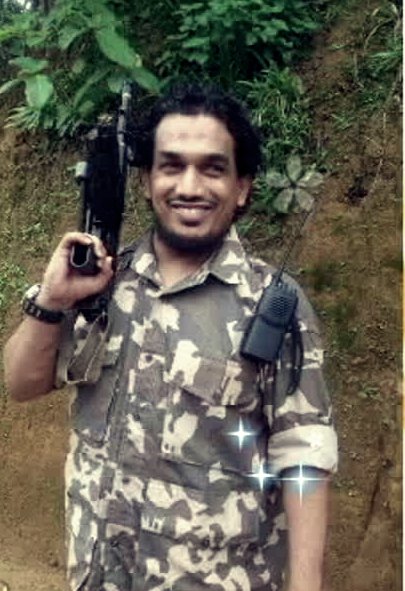
Ali Fauzi served a three-year sentence from 2006 to 2009 for charges of terrorism, having supplied components for explosive devices used in an attack on the Polda Metro Jaya (Indonesia Police Metro Jaya) in Jakarta (ABC News, August 17, 2017; AIDA, April, 2020). While Fauzi himself had no role in the 2002 Bali bombing, the event opened the eyes of Indonesian authorities to the dangers of returning Jemaah Islamiyah (JI) militants, such as Fauzi, Hambali, Umar Patek, Doktor Azhari, and Imam Samudera. Militants such as these completed their military training either at al-Qaeda’s Kandahar-based camps in Afghanistan or the Moro Liberation Islamic Front’s (MILF) camps in the Philippines. As a result of Fauzi’s foreign training, he was consequently included on a police “red notice” in the aftermath of the devastating 2002 bombing in Bali (Ngopibareng, March 7, 2018).
Fauzi’s radicalization began in 1991 at Lukmanul Hakim Islamic School in Johor Baru, Malaysia, where he worked as a language instructor. He relocated to Johor Baru after receiving an invitation letter from Ali Ghufron to assist with running the school, and later he swore his allegiance to Indonesia’s first jihadist movement—Negara Islam Indonesia (Islamic State of Indonesia, or NII). However, Fauzi eventually pledged his allegiance to JI in 1994 after Abu Bakar Ba’asyir separated from NII and created JI. After joining JI, he was chosen to join Ba’asyir’s military camp on the island of Mindanao in the Philippines. (Ngopibareng, March 7, 2018). At this camp, Fauzi aided the MILF in its fight against the Philippine government, while also receiving training in firearms, guerrilla warfare tactics, and bomb-making during his time there in 1994.
In addition, while Fauzi was in Mindanao, he helped establish and instruct at a new military camp called “Hudaibiyah.” In 1997, after completing his training with the MILF, he lived in Kuala Lumpur and interacted with Hambali, who was the military commander of JI’s Malaysian component, as well as Imam Samudera. After the fall of Indonesian President Suharto in 1998, Fauzi returned home and was appointed as JI’s bomb instructor for province of East Java. Later, during the 1999-2002 conflict in Poso and Ambon, he moved to those regions to instruct others in bomb-making and other military matters. This required him to travel every three months between Desa Tenggulum, Lamongan, and Ambon or Poso where he carried weapons and up to 500 kilograms of potassium chlorate (a raw material used to assemble bombs) (Ngopibareng, March 7, 2018).
Fauzi only learned about the 2002 Bali bombing while on a ship from Ambon to Surabaya, but knew by the type of bomb used that the attack was performed by someone with similar training as his. After being listed on the police “red notice,” Fauzi escaped to the “Hudaibiyah” camp in Mindanao through Sabah, Malaysia, where he reunited with Umar Patek. (Tempo, March 30, 2011). In 2005, Fauzi and other militants established another military camp further inside the jungles of Mindanao. The establishment of this new military training camp led to Fauzi’s capture by the Philippine military, after Fauzi and several other militants with various allegiances were discovered (Ngopibareng, March 7, 2018). By the time he was detained, Fauzi had already trained approximately 3,000 combatants (Pojoksatu, May 17, 2018).
Fauzi’s Imprisonment and Release
In 2006, Fauzi and 20 other JI members were extradited to Jakarta, where they were investigated to determine their involvement in the 2002 Bali bombing. In 2008, the Indonesian Police issued a release letter, clearing their names and concluding that they were not involved in the Bali bombing (Ngopibareng, March 7, 2018). Given that he had spent the better part of two decades training others to conduct terrorist acts, Fauzi was still sentenced to three years of prison (ABC News, August 17, 2017).
After his release from prison, Fauzi continued down the path of deradicalization. In 2009, he returned to his hometown, Desa Tenggulun, to teach at the Islamic school owned by his family—Pondok Pesantren Al-Islam (Ngopibareng, March 7, 2018). Fauzi eventually began assisting the BNPT deradicalization program as a speaker in BNPT workshops and a mentor for the former inmates charged with terrorism (Detik, April 11, 2017; Detik, March 29, 2017). The workshops focused on deradicalizing terrorists and educating the public about the dangers of extremism. In 2017, the BNPT began to cooperate with Fauzi’s Yayasan Lingkar Perdamaian (YLP, or The Circle of Peace Foundation) in Desa Tenggulun as a deradicalization and education center outside of the prison system (Detik, March 29, 2017).
Fauzi has transformed Desa Tenggulun, which was once known as the epicenter of terrorism in Indonesia, into an education hub for children, widows, and women whose husbands are still imprisoned for terrorist acts (Muhammadiyah Studies, November 13, 2017). Furthermore, YLP became a temporary home for terrorist who were not yet ready to fully reintegrate with society. At times, Fauzi would even pick up former inmates upon their release and shelter them in his compound (ANTARA News, May 4, 2019; BBC, February 20, 2020). According to YLP, the center aims to reaffirm former terrorists’ loyalty to Indonesia, empower former combatants through training in life skills, and offer educational scholarships to the children of convicts and widows whose husbands were imprisoned on charges of terrorism (Beritajatim, January 27).
Fauzi’s Deradicalization Doctrine
In assisting the BNPT deradicalization program, during his speeches at BNPT workshops, Fauzi always shared not only his own experiences of radicalization, but also the four elements of the deradicalization process, a path he began down in 2007 (Ngopibareng, March 7, 2018; AIDA, September 12, 2017). The four elements include scholar Marc Sageman’s philosophy of friendship and kinship, the humanistic approach of the Indonesian police, continuing education in Islamic Studies, and meeting the victims and their families (AIDA, October 4, 2021). In his speaking engagements, Fauzi always apologizes and asks forgiveness for both what his friends and family did in Bali in 2002 and for what his former students did in the years since, as bombings became more frequent in Indonesia (merdeka, February 15, 2016; Tempo, October 11, 2012; KOMPAS, October 13, 2022; BBC, February 20, 2020). More recently, during his doctoral commencement speech on February 21, 2023, Fauzi again apologized to the victims and families of the 2002 Bali bombing, as well as to the society that had given him a second chance (merdeka, February 21; ngopibareng, February 21; Tempo, February 21).
Further, as a deradicalization mentor for former terrorists, Fauzi believes that the deradicalization program at BNPT has successfully altered the lives of those such as Umar Patek, who was released on December 7, 2022, and Ahmad Ulul Albab, who was released on January 30 (Beritasatu, May 3, 2019; KOMPAS, December 7, 2022; SURYA, January 30). When Patek was released on December 7, 2022, Fauzi guaranteed that he had transformed not “by 100 percent, but by 1,000 percent” after more than eight years in a prison deradicalization program (KOMPAS, December 14, 2022). Fauzi acknowledged, however, that some people were still not convinced that deradicalization could persuade former terrorists to abandon their radical ideology (CNN Indonesia, February 14). To push against this, Fauzi promised that he himself would return to prison if Patek broke parole and returned to terrorism (CNN Indonesia, December 16, 2022).
Fauzi’s Turning Points
For Fauzi, there were three turning points in his life that led to his deradicalization. First, in 2011, he met the victims of the 2009 JW Marriott bombing for the first time and witnessed the physical and mental scars on those left behind while he was completing his master’s thesis on terrorism in Indonesia (KOMPAS, February, 22, 2020; AIDA, October 4, 2021). Education, he said, opened his eyes to the reality of the heinousness of what he and his jihadists were doing (Beritajatim, January 27).
Second, in 2013, he sent his oldest son to an Islamic boarding school which belonged to his friend, who had graduated from Al-Azhar University in Cairo, Egypt. He wanted his son to be a “mujahid,” not a terrorist. Furthermore, he encouraged his son not to discriminate in forming friendships with Nahdlatul Ulama, Muhammadiyah (other Islamic Indonesian religious organizations), and non-Muslims (Tribunnews, June 6, 2013).
Third, on November 6, 2016, he reached out to Buya Syafii, the former Chairman of Muhammadiyah—whom he regarded almost as a father—and asked to allow himself to continue his education with funding from the charitable organization, requesting “permission, if there is an opportunity for ex-terrorists to receive scholarships…” Fauzi continued by stating that he was the only recipient of a scholarship that allowed him to pursue an MA in Islamic Studies at the Muhammadiyah University of Surabaya, from which he graduated in 2011. After Syafii forwarded Fauzi’s message to the chairman of BNPT, Fauzi and the chairman engaged in a series of meetings. The scholarship request was eventually granted as a part of his deradicalization program (Republika, July 22, 2017; Nusantara, July 22, 2017). Fauzi funded his PhD in Islamic Studies himself, which he began in 2019 (Terakota, October 31, 2019).
Conclusion
Fauzi’s case demonstrates the benefits of Indonesia’s “soft approach” deradicalization programs, with a particular emphasis on religious moderation. Fauzi hopes his YLP will grow into an entrepreneurship-oriented Islamic boarding school in the future (ngopibareng, March, 4, 2018). In this way, Fauzi may use his knowledge and teaching skills to help former terrorists inmates and their families (UMM News, January 18; KOMPAS, January 20).