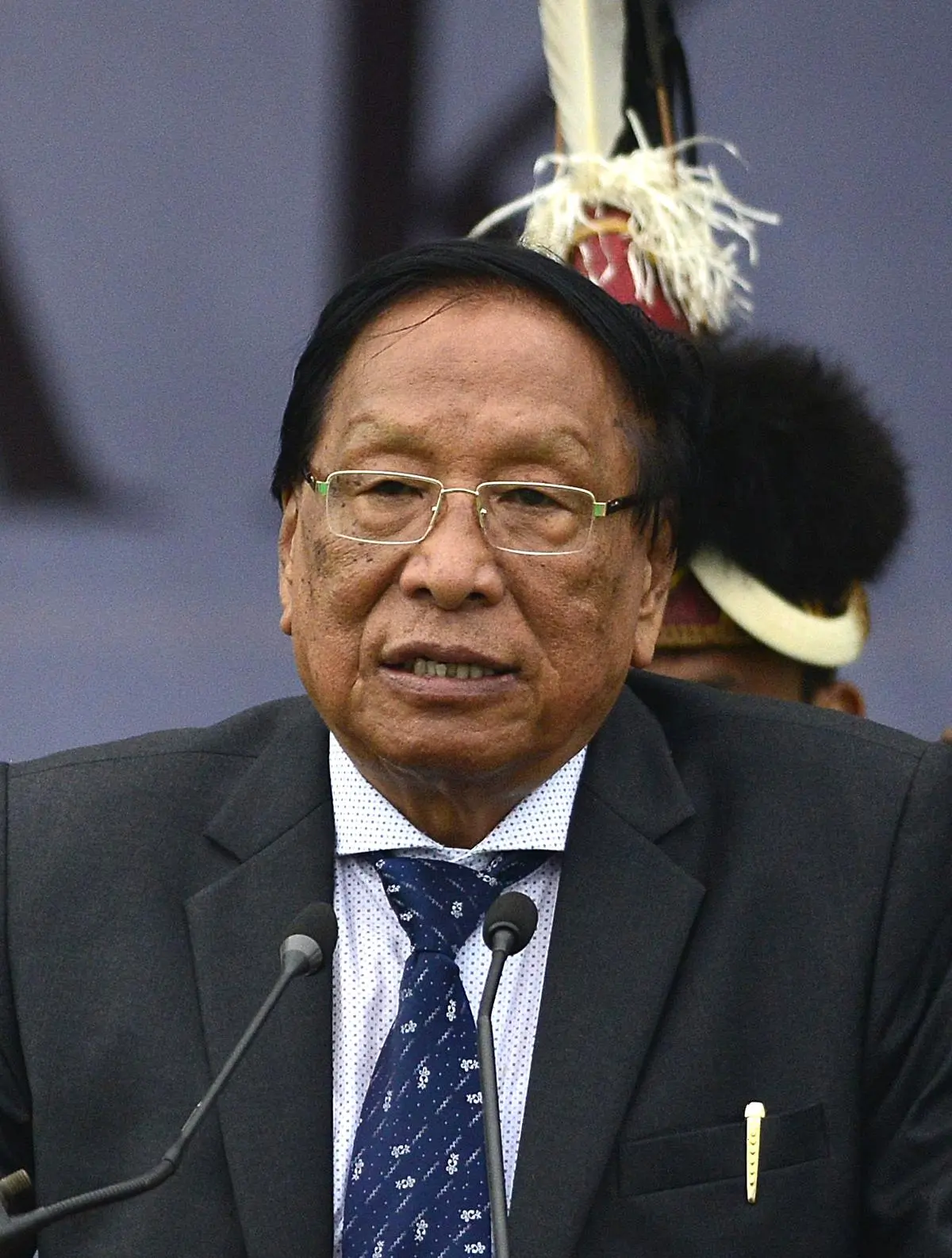
The GNA’s Muscle in Southern Libya: Southern Protection Force Leader Hassan Moussa Keley
The GNA’s Muscle in Southern Libya: Southern Protection Force Leader Hassan Moussa Keley
Recently, fierce fighting has been raging in southern Libya for control over crucial oasis towns that serve as important nodes in trans-Saharan traffic—both licit and illicit—that moves into and out of Libya, and which are located close to significant oil resources. August has seen fierce fighting between forces loyal to the Tripoli-based Government of National Accord (GNA) and forces loyal to the Tobruk-based House of Representatives (Hour) and the Libyan National Army (LNA), commanded by Field Marshal Khalifa Haftar, for control of the strategic town of Murzuq, which is located in the south-central area of the oil-rich Fezzan province (RFI, August 8; Anadolu Agency [Ankara], August 7). By mid-August, the GNA-aligned South Protection Force seized control over Murzuq, which not only places the HoR’s presence in southern Libya at risk, but represents a significant setback for the LNA and Haftar’s military activities seeking to control large areas of that region (Libya Ahrar [Tripoli], August 18). The leader of the Southern Protection Force is Hassan Moussa Keley (Libya Observer [Tripoli], August 18).
Hassan Moussa Keley (generally referred to as Hassan Moussa), 52, is a native of the city of al-Kufra, an oasis town in the Sahara Desert located in the south-central area of Libya’s Cyrenaica province. He is also believed to have a large extended family among the Tubu community inside Chad. Prior to the start of the uprising and subsequent civil war against the Gadhafi government in February 2011, Hassan Moussa was associated with ethnic Tubu, Chad-based armed groups that opposed the Gadhafi government for its harsh and repressive policies towards the Tubu community in Libya (al-Ain, June 7; Facebook, August 27, 2017). [1] During the 2011 civil war, Hassan Moussa became one of the most important armed opposition leaders in southern Cyrenaica province, where he built a base of power among the Tubu community inside of al-Kufra and in its surrounding areas (Inter Press Service, October 11, 2012; France 24, July 2, 2012).
Shortly after the start of the 2011 Libyan civil war, Moussa organized the Martyr Ahmad al-Sharif Battalion, which was mainly composed of ethnic Tubu from al-Kufra and reportedly from Chad, although it included some local Arabs allied with the Tubu community (al-Ain, June 7). [2] The Martyr Ahmad al-Sharif Battalion was one of the most powerful armed opposition groups in the al-Kufra region, and it spearheaded the capture of the city and surrounding Libyan military bases from the Gadhafi government. After the removal of the Gadhafi government, and under Moussa’s leadership, the Martyr Ahmad al-Sharif Battalion became one of the primary protectors of the ethnic Tubu community in al-Kufra, and as a leader he is noted for his militant commitment to protecting the rights of the Tubu after years of repression under Gadhafi (France 24, July 2, 2012; al-Hurra, June 29, 2012). This repression is frequently associated by the Tubu with ethnic Arab chauvinism, which has been a contributing factor to communal violence between Arabs and Tubu in al-Kufra (Inter Press Service, October 11, 2012; France 24, July 2, 2012).
He has been one of the Tubu militant leaders most active in seeking power over the productive oil fields in southern Libya. Since 2013, the Martyr Ahmad al-Sharif Battalion has been one of the armed groups organized into the Petroleum Guards — units charged with protecting, and determining who has access to, southern Libya’s oil facilities. [3] Under Moussa’s leadership, the Martyr Ahmad al-Sharif Battalion has built up considerable influence in the oil-rich areas around the strategic and important oil-producing city of Sabha in south-central Fezzan province. This is why the Southern Protection Force has advantages in the battle for control over Murzuq, which is near Sabha (al-Ain, June 7; Libo Press [Tripoli], March 4). [4]
Further, Moussa reportedly has enmity toward Haftar because of the perception that the LNA is biased in favor of ethnic Arab units. Promoting ethnic Tubu strength and solidarity has been one of the key themes of Moussa’s career, both before and since the Libyan revolution in 2011. [5] However, Moussa has reportedly played the “ethnic card” himself by recruiting Chadian Tubu fighters to join the Southern Protection Force (al-Ain, June 7). [6] As a result of his opposition to the HoR and the LNA, in January 2019, prosecutors associated with the Tobruk-based government listed Moussa as a “Chadian national,” and are seeking his arrest and expulsion from Libya (RFI, January 11). Although a Libyan, Moussa can draw from a trans-national Tubu community, and his access to oil revenues through his force’s participation in the Petroleum Guards bolsters his ability to recruit fighters.
Moussa, already one of the more prominent ethnic Tubu militant leaders in southern Libya, is becoming more powerful as a result of his association with the GNA and the possibility that he could become the powerbroker over some of Libya’s best oil resources, which are located in this region. His association with the GNA is also important for the Tripoli-based government, as it has been seeking out local allies in southern Libya that can competently mobilize and deploy local security forces to take and hold oil resources and the oasis towns that are the main nodes in the trans-Saharan transit and smuggling routes that run through Libya. Moussa, who has already developed a reputation as one of the more aggressive militant leaders in southern Libya, fits the model for the type of local leader with which the GNA is strenuously trying to network in this region. The relationship between the GNA and Moussa is symbiotic: he provides the Tripoli-based government with local muscle, and it provides him with legitimacy. Although Moussa’s fortunes will depend on the degree to which the GNA can develop a network in southern Libya, the potential reward of having foreign patronage through the GNA, and the legitimacy to patrol and control trans-Sahara transit routes, makes Moussa a Libyan militant leader whose power could continue to grow.
Notes
[1] Jerome Tubiana and Claudio Gramizzi, Lost in Trans-Nation: Tubu and Other Armed Groups and Smugglers Along Libya’s Southern Border, (Geneva: Small Arms Survey, December 2018); Rebecca Murray, Southern Libya Destabilized: The Case of Ubari, (Geneva: Small Arms Survey, April 2017). [2] Jerome Tubiana and Claudio Gramizzi, Lost in Trans-Nation: Tubu and Other Armed Groups and Smugglers Along Libya’s Southern Border, (Geneva: Small Arms Survey, December 2018). [3] Jerome Tubiana and Claudio Gramizzi, Lost in Trans-Nation: Tubu and Other Armed Groups and Smugglers Along Libya’s Southern Border, (Geneva: Small Arms Survey, December 2018); United Nations Security Council, Final Report of the Panel of Experts on Libya Established Pursuant to Resolution 1973 (2011), September 5, 2018; Rebecca Murray, Southern Libya Destabilized: The Case of Ubari, (Geneva: Small Arms Survey, April 2017). [4] United Nations Security Council, Final Report of the Panel of Experts on Libya Established Pursuant to Resolution 1973 (2011), September 5, 2018. [5] Jerome Tubiana and Claudio Gramizzi, Lost in Trans-Nation: Tubu and Other Armed Groups and Smugglers Along Libya’s Southern Border, (Geneva: Small Arms Survey, December 2018); Rebecca Murray, Southern Libya Destabilized: The Case of Ubari, (Geneva: Small Arms Survey, April 2017). [6] United Nations Security Council, Final Report of the Panel of Experts on Libya Established Pursuant to Resolution 1973 (2011), September 5, 2018.