The Gubden Wolf: A Profile of Dagestan’s Late Magomedali Vagabov
The Gubden Wolf: A Profile of Dagestan’s Late Magomedali Vagabov
Since the end of 2009, reports coming from the republic of Dagestan in Russia’s North Caucasus region have mentioned the name of the Gubden-based rebels’ leader, Magomedali Vagabov, more often than ever before.
Background
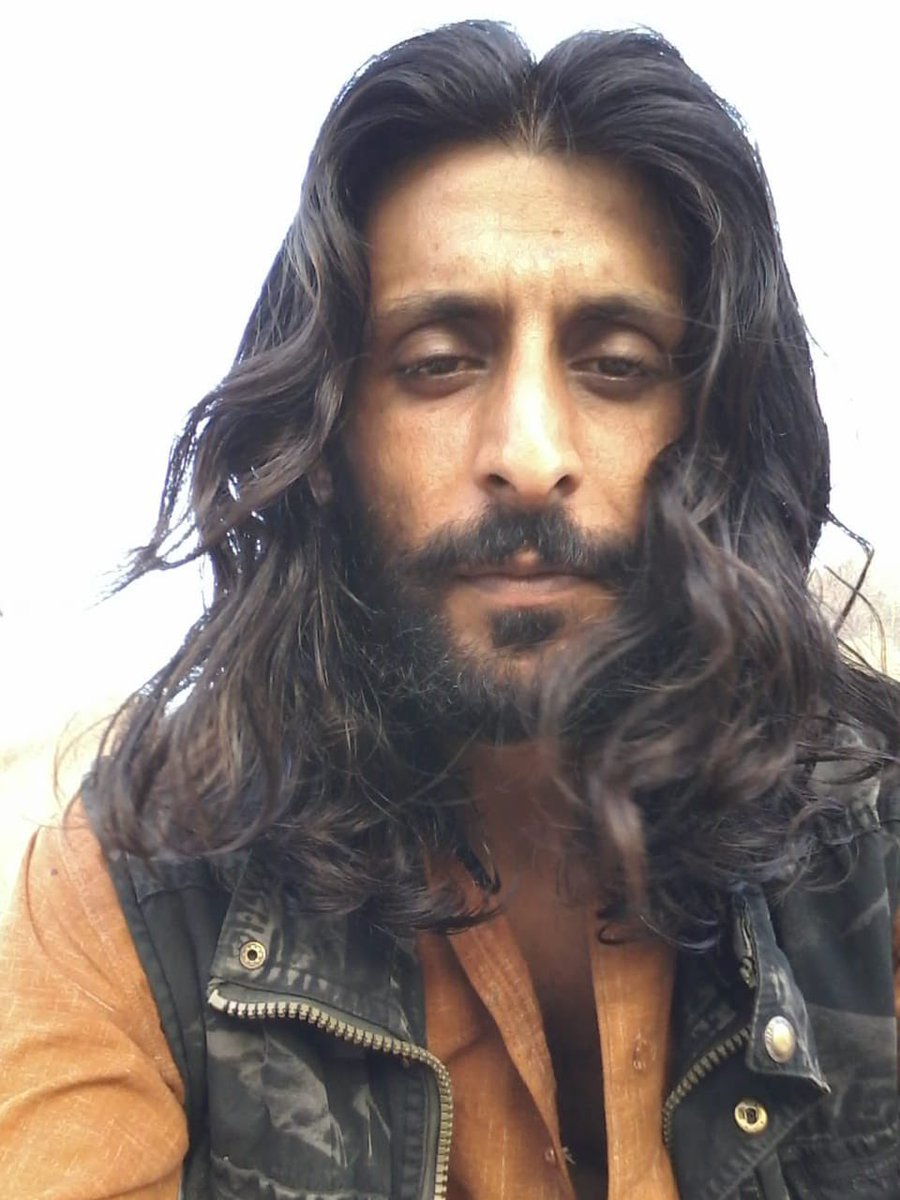
Known among the North Caucasus rebels as Amir Sayfullah of Gubden (a.k.a. Amir Sayfullah Gubdenski), Vagabov was born in 1978 in the village of Gubden in Dagestan’s Karabudakhkent district. Gubden, populated by ethnic Dargins and completely surrounded by the Kumyk, a Turkic ethnic group, is a sui generis enclave with time-enduring and well-preserved religious traditions. During the Soviet period the local residents had notably managed to open a mosque, a rather unusual occurrence in the Soviet Union at that time. [1] The future amir of the Gubden Islamic Jamaat, Magomedali Vagabov, made the hajj to Mecca in the 1990s and stayed abroad to receive his education (as did one of his brothers, who was studying in Syria at the time). Upon his return to the North Caucasus, Vagabov became actively engaged in Salafi thought and Islamist circles in Dagestan. According to some reports, Vagabov may have studied in Pakistan. [2] As a young man, he completed his studies at two Islamic schools, was proficient in Arabic and Farsi and could speak Pashto. His purported time in Pakistan would explain his knowledge of Middle Eastern and South Asian languages, uncharacteristic for a person from the North Caucasus.
Vagabov led one of the most active jamaats (assembly) in Dagestan, mainly serving the Karabudakhkent and Segokalin districts of that republic. In February 2010, odd reports appeared in the media alleging that Ibragim Gajidadaev had been appointed as Amir of Dagestan. However, those reports did not accurately portray the reality on the ground, as Gajidadaev had not been elevated to that position. The truth was that Doku Umarov, amir of the Caucasus Emirate, on July 15, 2010, after months of deliberation and consultations, appointed Amir Sayfullah as the leader of the Dagestan Front and the qadi, or the supreme Shari’a judge, of the Caucasus Emirate. With the recent appointment of Vagabov, Umarov had merged two positions into one and replaced two loyal people, Amir Al Bar and Anzor Astemirov, who had been killed months earlier, with one individual. Now after the reported death of Vagabov on August 21, 2010, this position must be filled again.
Since official Russian reports often mention the names of the members of the Gubden Jamaat as liquidated in the Dagestan capital of Makhachkala and its surroundings, it can be assumed that Amir Sayfullah had a broad support network throughout Dagestan.
The Ministry of Internal Affairs of Dagestan estimates that there were up to 50 men under arms in Vagabov’s Gubden Jamaat during his tenure as Amir. Meanwhile, members of the jamaat themselves claim that there were up to 100 active rebels under his command. [3] In any case, it must be taken into account that jamaats usually have four times as many sympathizers than those functioning as actual active members. This brings the total number to 200 individuals, or twice that number, if figures provided by the rebels are accurate. Sympathizers and helpers are presumably those who provide cover and sustenance for jamaats (Gazeta.ru, June 8, 2010).
Vagabov was engaged in armed revolt against the Russian state ever since Moscow began its second major military campaign in the North Caucasus and deployed troops to Chechnya in the fall of 1999. Vagabov became the leader of the local jamaat in 2006 after the death of the previous amir, Shamil Abidov. According to some reports, Vagabov’s rebel unit also included his own brothers, one of whom, Magomednasyr Vagabov, 29, was killed on August 3, 2007.
As Vagabov became known as Amir Sayfullah and started to lead the Gubden Jamaat, his first act was the killing of some of his fellow villagers who were against radical Islam (REGNUM, October 20, 2008). When Russian authorities undertook their first attempts to capture him in the fall of 2007, Vagabov managed to slip through their encirclement. Then, on September 25, 2007, the local police chief’s house was burned down in Vagabov’s native village of Gubden. Several days later the clergyman of the local mosque, 59-year-old Nurmagomed Gajimagomedov, was killed. A year later, on October 21, 2008, several police officers and residents of the village of Gubden, were killed in an armed assault, including the head of the local police unit. In November 2009, the former village police chief’s widow, daughter and sister died in an explosion at the local cemetery. The motivation behind the attack was their alleged criticism of Salafis. Police officers and individuals who cooperated with the Russian authorities became regular targets of the explosions and assaults that the Gubden Jamaat organized. Annoyed and angered by the frequent special police operations aimed at neutralizing the militant groups, almost all of Vagabov’s fellow villagers turned against him and his group and demanded that the jamaat sympathizers be banished from the village (Kavkaz Uzel, October 26, 2007). Following the village tension, little was heard of Vagabov until the summer of 2008, when he started to gain frequent mention in the Ministry of Internal Affairs’ (Ministerstvo Vnutrennikh Del- MVD) official information on Dagestan.
Before his ultimate demise on August 21, 2010, Vagabov had been reported as “killed” or “encircled” by both Russia’s federal and local Special Forces on many occasions. But, until now, he always managed to escape unscathed, continually irking Russian authorities with his ability to remain alive. On December 17, 2009, one of the largest special operations was organized, involving joint forces of the Federal Security Service (Federal’naya sluzhba bezopasnosti Rossiyskoy Federatsii-FSB), the MVD, and interior troops, collectively called the siloviki, against Vagabov. The operation was supported with military aviation and heavy artillery. Despite the efforts of the siloviki, Amir Sayfullah once again left the battlefield alive and unharmed. According to police, the suicide bombing on January 6, 2010 that killed five officers was perpetrated by his men, as was the April 5, 2010 murder of Gapiza Isaeva, the chief of the inter-district department for countering extremism.
Having failed again to kill Amir Sayfullah in a four-day special operation in the village of Gubden in April, the siloviki felt compelled to report that they had found lists of Vagabov sympathizers, including dozens of Gubden residents (Rosbalt, April 19). This operation was targeted at those who ordered the March 29, 2010 Moscow metro bombings and, apparently, the siloviki had hoped to kill the leader of the Gubden Jamaat. The second suicide bomber, Maryam Sharipova, who died in the blast at Moscow Lubyanka metro station, was not, according to her father, Rasul Magomedov, Vagabov’s wife (Novaya Gazeta, April 2, 2010). Had she been married to Vagabov, it would not have been a secret to her family. What Russian investigators apparently sought to do was to continue the existing narrative that “wives of shahids are black widows.”
Three militants were killed during a special operation in a residential area of Makhachkala on June 4, 2010. One of those killed, Elgar Novruzov, had been one of Magomedali Vagabov’s closest associates (Newsinfo, June 4, 2010). If the police information is correct, Novruzov (who was born in Azerbaijan) came to Makhachkala to coordinate the activities of the Gubden Jamaat and the Makhachkala group. But the primary target of the special operation was, of course, Amir Sayfullah, who managed to safely get away from Russia’s FSB and MVD for the last time.
One of Amir Sayfullah’s last exploits was the role he played in “salvaging” the reputation of the Caucasus’ overall rebel leader, Amir Doku Umarov, who announced his resignation but then, strangely, two days later reversed his decision under pressure from his overseas counselors in the Chechen Diaspora. Umarov’s indecision caused quite a stir within the Chechen faction of the jamaat. Amir Sayfullah came out with a statement unequivocally supporting Umarov and requesting that all other leaders also remain loyal to the pledge of allegiance they had given to the amir of the Caucasus Emirate. [4]
The Death of an Amir
Amir Sayfullah fought his final battle in the village of Gunib, where he was killed alongside four of his fighters on August 21 (ITAR-TASS, August 21, 2010). The house where he was hiding with his comrades-in-arms was completely surrounded by Russian Special Forces and local police. Amir Sayfullah died from wounds after several hours of intense battle. Salakhuddin Zakaryaev, the chief of the press service of the Caucasus Emirate’s qadi and Dagestan Front, was also killed. Incidentally, Zakaryaev died while reporting the death of his boss on the phone. [5] Although Amir Sayfullah’s death is a great loss for the jamaat and Umarov personally, it is not of enough magnitude to cause disorganization within the armed rebel movement. The most recent actions undertaken by Dagestan’s Sharia Jamaat prove that the loss of the leader has not impacted the veracity of its activities throughout the region.
Thus, the Dagestan rebels now await the appointment of their third leader within the past year. In all probability, Ibragim Gajidadaev, the head of the Gimrin Jamaat, will assume command.
Notes
1. See the June 9, 2009 Human Rights Watch report (in Russian): www.hrw.org/ru/news/2009/06/09-1.
2. See Chernovik.net (in Russian): www.chernovik.net/print.php?new=3444.
3. See the official website of Islamic Jamaat of Dagestan Shari’a: www.jamaatshariat.com/islam/28-islam/1105–2-.html.
4. See the official website of Islamic Jamaat of Dagestan Shari’a: www.jamaatshariat.com/islam/28-islam/1103-2010-08-12-20-30-12.html.
5. See the official website of Islamic Jamaat of Dagestan Shari’at: www.jamaatshariat.com/new/15-new/1145-2010-08-21-11-45-50.html.