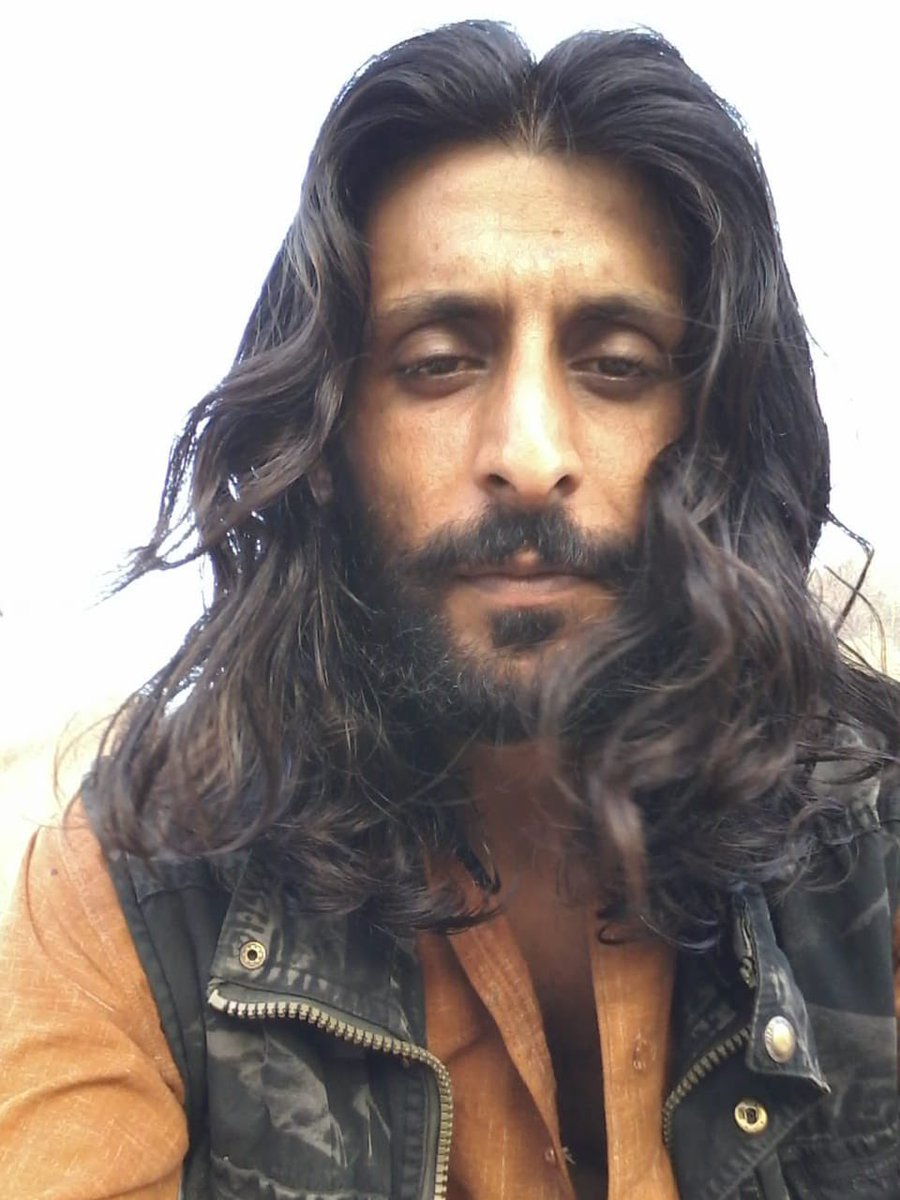
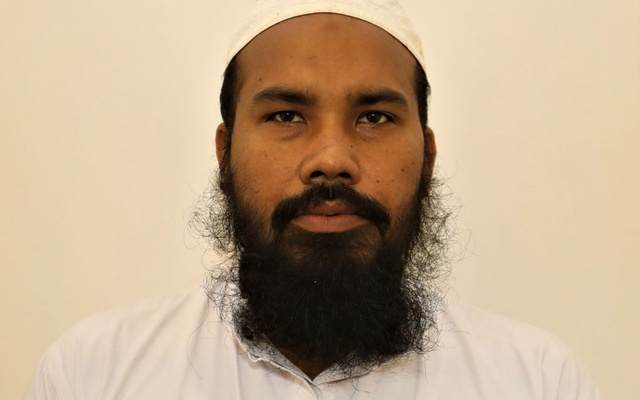
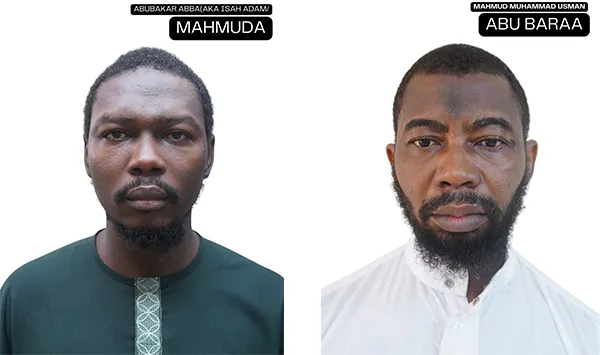
The Mysterious Case of Shaikh Abdul Rahim Muslim Dost – The Founder of IS-K
The Mysterious Case of Shaikh Abdul Rahim Muslim Dost – The Founder of IS-K
On November 14, the spokesman for the Pakistan Army in a joint press conference with the Pakistani foreign minister accused an Afghan national, Shaikh Abdul Rahim Muslim Dost, of organizing a group of fighters affiliated with Islamic State Khurasan Province (IS-K) for the purposes of conducting terrorism in Pakistan. The spokesman accused Muslim Dost of doing so with support from the Indian government (Geo News, November 14, 2020). The Pakistani state has often accused Indian spy agencies of covertly supporting anti-state Islamist militants and Baloch separatists operating from Afghan soil. But this is the first time they have charged an important figure of the post-9/11 Afghanistan-Pakistan (Af-Pak) jihadist landscape of assisting Indian plans to destabilize Pakistan.
Muslim Dost quickly released a statement denying the Pakistani government charges (Taand, November 18, 2020). His statement provided a new glimpse into his beliefs, as an Afghan nationalist and severe critic of the Pakistani state.
Muslim Dost has remained a spiritual mentor to the senior leadership of the militant group Tehreek-e-Taliban Pakistan (TTP), particularly to its second emir, Hakim Ullah Mehsud [1]. He emerged internationally as an important actor on the Af-Pak jihadist landscape after his influential role in founding the IS-K in 2014 (Nawai Waqt, November 14, 2014.) Muslim Dost is also a well-known religious figure of Afghanistan’s Salafist community and Pakistan’s Pashtun belt. In addition, he is a famous poet and writer, having authored dozens of books and remained imprisoned in the U.S. Guantanamo Bay detention camp on charges of alleged ties with al-Qaeda (Archives, July 10, 2014). This article aims to analyze Muslim Dost through his leading roles in the Islamist militancy in Pakistan and Afghanistan.
Who is Muslim Dost?
Muslim Dost was born in 1958 in the Kot district of Nangarhar province, Afghanistan. He migrated to Peshawar, Pakistan, in 1973 after the military coup led by Mohammed Daud Khan overthrew the Afghan King Zahir Shah (Archives, July 10, 2014). Afghan Islamists fled the country after the coup, fearing persecution at the hands of their political rivals—the Khalq and Parcham factions of the Communist party in Afghanistan. The latter played a central role in the coup. [2]
Dost joined the Islamic Party of Gulbuddin Hikmatyar (HIG) and then switched to Jumat-ul-Dawa lil-Quran wal-Sunnah (JDLQWS), the first Salafist party in Afghanistan, established by Shaikh Jamil-ur-Rehman in 1980. [3] He became head of the cultural wing of JDLQWS and editor of its Arabic periodical. [4]
After the killing of Shaikh Jamil, Dost had severe differences with influential leaders of the party and Shaikh Jami’s nephews, as a result of which he quit JDLQWS in the early 1990s. [5] During this period, he served as a teacher in the Salafist religious seminaries in Peshawar and ran multiple businesses, including a gemstone store. [6]
Muslim Dost was among the 800 individuals the Pakistani government arrested after 9/11 and handed to the U.S. for their alleged ties with al-Qaeda. [7] After spending three years at Guantanamo, the U.S. authorities handed him over to the Afghan government. [8] They assessed him as posing a negligible threat to the U.S. (The Nation, Feb 27, 2017). After his release, Dost went from Kabul directly to Peshawar, Pakistan, where his family was still living. [9]
Dost became popular in the Af-Pak jihadist landscape when he published a book – The Broken Shackles of Guantanamo – narrating his prison experience. [10] The book intensely criticized Pakistan’s spy agency, Inter-Services Intelligence (ISI), and the nephews of Shaikh Jamil. He alleged that Shaikh Jamil’s nephews used their connections in ISI to send him to Guantanamo Bay on false charges of links to al-Qaeda. The Pakistani security agencies arrested him shortly after he published his prison memoirs. Later, the TTP obtained his release in a prisoner’s swap with the Pakistani army at the beginning of 2009 (Taand, November 18, 2020).
TTP shifted Dost to its stronghold in Pakistan’s Orakzay agency. There, Dost remained close to Hakeem Ullah Mehsud, an influential TTP commander who later became its second emir. [11] Rifat Ullah Orakzay, a senior Pakistani journalist hailing from Orakzay agency, who has covered TTP since its start, says Dost served as a spiritual mentor of Mehsud until the latter’s killing, but Orakzay says there is no proof of Dost’s direct involvement in terrorism in Pakistan. [12]
The current chief of TTP, Mufti Noor Wali Mehsud, writes in his book that Dost presided over a high-level TTP Shura (council) meeting held in the Orakzay agency in August 2009. [13] The meeting chose Hakeem Ullah as the second emir of TTP. He succeeded the group’s founder, Bait Ullah Mehsud, who was killed in a U.S. drone strike on August 5, 2009.
Dost denies any connections to al-Qaeda but Tahir Khan, a leading Pakistani journalist and expert on Afghan politics, contradicts Dost´s denial [14]. According to Khan, Dost was enrolled in Medina University in 1989 but was extradited by the Saudi authorities due to visa issues and returned to Peshawar [15]. Khan says in Medina, Dost got close to Arab extremist Islamists, who maintained a large presence in Peshawar during the peak of the Afghan-Soviet war. Dost’s relationship with these Arab Islamists grew after he returned to Peshawar. Most of these Arab Islamists were members of al-Qaeda.
Sami Yousafzai, an internationally renowned Afghan journalist who has known Dost over the years, says that the mental torture that took place over his years in prison and the resulting suffering to his family and business turned Dost into an extremist writer [16]. Sami further says that Dost always remained critical of the Pakistani state for his arrest and his imprisonment in Guantanamo Bay. According to Sami, his harsh narrative against Islamabad made him famous in the TTP, but Yousafzai says that Dost never joined the group.
Dost – Founding Role in the Establishment of IS-K
Dost became an influential jihadist leader in the Af-Pak region due to his central role in establishing IS-K in late 2014 (Jihadology, Jul 26, 2020). He announced his allegiance to Abu Bakr Baghdadi just two days after the IS leader proclaimed himself as Caliph (Archives, Jul 10th, 2014). This quick bay’ah (oath of allegiance) from Dost came from his decades-old desperation for the establishment of the Caliphate.
Before Baghdadi, he had also pledged loyalty to Juhiman al-Utaybbi in 1979, when the latter declared himself a Caliph during the siege of the Holy Mosque in Mecca (Archives, July 10, 2014). Dost was in Mecca for Hajj, where he became a follower of al-Utaybbi during the siege. The Saudi security forces broke the siege, killing and arresting hundreds of followers, including the self-proclaimed Caliph. [17] Dost fled the scene and made his way back to Peshawar. Dost wrote a detailed book in Arabic, Malak-ul-Amjaad, on the religious debates surrounding the necessity of establishing an Islamic caliphate (Archives, July 10, 2014).
Following his pledge to Baghdadi, Dost began an effort to convince other jihadist groups to join IS (Nun Asia, July 12, 2016). Dost was then living in the Pakistani tribal areas of Khyber agency bordering his home province of Nangahar (Nun Asia, July 12, 2016). Due to his organizing efforts on behalf of Baghdadi, the TTP leadership in the Orakzay agency – who were loyalists of Hakeem Ullah Mehsud, Dost’s slain jihadist disciple – became the founding leadership of IS-K. Soon after IS-K was created, the mainstream media reported rumors that Dost was its head. However, it later emerged that Hafiz Saeed Khan became the TTP’s central commander and emir of the group in Orakzay agency (Dawn News, November 14, 2014; The News, January 13, 2015).
Within a few months, IS-K shifted its headquarters to Nangarhar by forcing the Afghan Taliban and government forces out from many districts in the area (Nun Asia, Nov 21st, 2015). Notably, the home district of Dost, Kot, and its surrounding areas became the center of IS-K. During the IS-K’s operations that established its strongholds in Nangarhar, the group inflicted heavy costs on local citizens, looting their properties and killing them for minor allegations.
Statements by Dost indicated that IS-K crimes against the people of Nangarhar highly enraged him (Nun Asia, October 21, 2015). According to Dost, the decision of IS-K’s leadership to shift its focus from attacks in Pakistan to Afghanistan forced him to separate from the group. Dost criticized IS-K leadership in the media, including Khan, for being ignorant, illiterate and not fulfilling the religious conditions for becoming a Wali (governor) of the Islamic Caliphate (Kabull, October 18, 2015). He even accused Khan of being surrounded by covert ISI agents, who infiltrated the ISKP ranks through a pro-Pakistani Salafist group, Lashkar-e-Tayyaba (LeT), which, Dost alleged, provided Khan with a large amount of funding (Nun Asia, July 12, 2016).
According to Sami, Dost claims that his condemnation of IS-K resulted in the assassinations of two of his close family members. [18] His brother was mysteriously killed in IS-K-held territory in Nangarhar. Later, his nephew was killed in Syria. IS never claimed responsibility for these killings (AIP, Jan 18th, 2016).
An Islamist Extremist Ideologue and an Anti-Pakistan Afghan Nationalist
A close reading of Dost’s many essays and books show a unique aspect of his life. His writings, especially those he wrote after parting ways with IS-K, show that he is a Pashtun/Afghan nationalist. In his essays, he even praises Khan Abdul Ghafar Khan, a.k.a. Bacha Khan, praising him for his slogan of Lar aw Bar Yao Pukhtoon (“The Pashtun of Pakistan and Afghanistan are one”) (Dawat Media, February 9, 2018). Bacha Khan is the founder of modern Pashtun nationalism, who struggled for Pashtun rights during British rule in India. [19] He was a liberal nationalist leader and opposed religious extremism.
Dost’s admiration for Bacha Khan is quite surprising for two reasons. First, Salafist jihadists typically oppose nationalism and consider it against their global agenda of pan-Islamism. Secondly, Bacha Khan opposed jihadist violence in Afghanistan since the 1973 uprising of Islamists against President Daud Khan, who Dost also revolted against (Archives, July 10, 2014). [20] Bacha Khan even opposed the Afghan Islamists’ war against Afghanistan’s Soviet-backed communist regimes between 1978-1989. Bacha Khan openly regarded the Islamists fighting against the Afghan governments not as jihad, but as a proxy war between regional and global powers.
Dost’s latest statement refuting the Pakistani state’s recent allegations against him were similar to narratives used by Afghan/Pashtun nationalists (Taand, November 18). Like them, Dost accused Islamabad of suppressing Afghanistan through its proxies in the country.
Afrasiab Khattak, a leading Af-Pak politician and expert on Afghan affairs, says that Dost’s shift to nationalism from hardline Afghan jihadism is not an isolated event. Khattak reports that multiple other senior Afghan jihadists who have been active in the Islamist militancy in Afghanistan have undergone a similar ideological shift. [21] According to Khattak, this trend emerged post-2001, when some Afghan Islamists realized that regional powers were using the Islamist ideology to push their own interests and were not helping out of any sympathy for Islam or Afghanistan.
Notes
[1] The author’s interview with Rifat Ullah Orakzai, a Peshawar-based senior Pakistani journalist hailing from the Orakzay agency who has closely monitored TTP since the beginning of its formation, conducted remotely, December 5, 2020. [2] For details on Islamists’ revolt against President Daud Khan and support of Afghan communist parties in his military coup against King Zahir Shah, see Chris Sands and Fazelminallah Qazizai, Night Letters, (Hurst Publishers: London, 2019). [3] Ibid. [4] See Abdul Rahim Muslim Dost and Badru Zaman Badr, Da Guantanamo Mati Zolani (The Broken Shackles of Guantanamo) [In Pashto], (Al-Khilafa Publishers: Peshawar, 2006). [5] Ibid. [6] Ibid. [7] Ibid. [8] Ibid. [9] Ibid. [10] Ibid. [11] For details on the post-9/11, al-Qaeda-linked arrests in Pakistan, see former Pakistani President General Pervez Musharraf’s memoir (Pervez Musharraf, In the Line of Fire, Hurst Publishers: London, 2006). [12] The author’s interview with Rifat Ullah Orakzai, conducted remotely, December 5, 2020. [13] Mufti Noor Wali Mehsud, Inqilab-i-Mehsud, (Mehsud’s Revolution) [In Urdu], (Al-Shahab Publishers: Paktika, 2017). [14] Dost and Badr, 2006. [15] The author’s interview with Tahir, an Islamabad-based senior Pakistani journalist and expert on Afghan militant and political groups, conducted remotely, December 8, 2020. [16] The author’s interview with Sami Yousafzai, a veteran Afghan journalist who has closely known Muslim Dost and his family over the years, conducted remotely, December 6, 2020. [17] For details on Juhiman al-Utaybbi and Mecca’s siege, see Yaroslav Trofimov, The Siege of Mecca: The1979 Uprising at Islam’s Holiest Shrine, (Doubleday Publishers: USA, 2007). [18] The author’s interview with Sami Yousafzai, conducted remotely, December 6, 2020. [19] For details on Khan Abdul Ghafar Khan, see Abdul Ghafar Khan, My Life and My Struggle, (Hind Pocket Books: Publishers, Delhi, 1969). [20] For details, see Juma Khan Sufi, Faraib-e-Natamam (Unbelievable confessions) [In Urdu], (Pak Book Empire: Publishers, Lahore, 2015). [21] The author’s interview with Afrasiab Khattak, a senior Af-Pak politician and expert on Afghan affairs, conducted remotely, December 8, 2020.