Will New Sanctions Slow Down Houthi Commanders Mansur al-Saadi and Ahmad al-Hamzi in Yemen?
Will New Sanctions Slow Down Houthi Commanders Mansur al-Saadi and Ahmad al-Hamzi in Yemen?
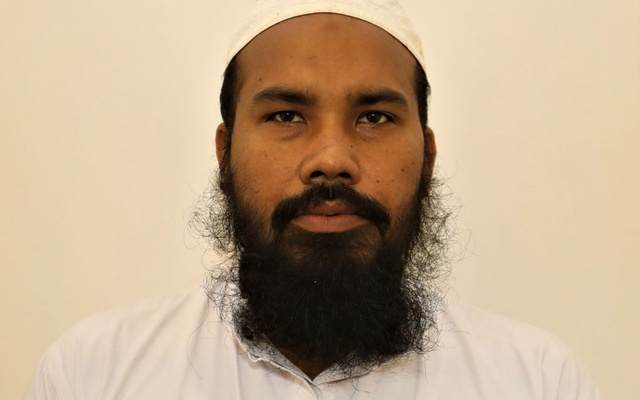
On March 2, the United States imposed sanctions on two senior military commanders of the Houthi organization: Mansur al-Saadi, chief of staff of the Houthis’ Navy and Ahmad al-Hamzi, commander of the Houthis’ Air Force (Middle East Eye, March 2). The announcement by the U.S. Department of the Treasury cited the two commanders’ involvement in cross-border attacks and assaults on international shipping. [1] The sanctions are designed to block the designees’ access to any assets held in the United States and to block their ability to transact with U.S. persons or U.S. registered entities. Sanctioning these two individuals will have no impact on them since it is unlikely that either of the two men hold assets outside of Yemen.
The imposition of sanctions on al-Saadi and al-Hamzi followed the reversal of the designation of the Houthis as a foreign terrorist organization (FTO) by the Biden administration (al-Jazeera, February 12). As such, it is more a case of political posturing and messaging than a real attempt to impede the ability of these two commanders to operate in Yemen. Singling out these two military commanders will have little impact on the continued development of the forces they—at least nominally—oversee.
Mansur al-Saadi: Houthi Naval Forces Chief of Staff
Mansur al-Saadi, often referred to as Abu Sajjad, hails from Saada, a Houthi stronghold in northwestern Yemen (al-Arabiya, March 2). Al-Saadi, who is in his early 30s, almost certainly joined the Houthis as a fighter in his late teens. At that time, the Houthis were engaged in a bitter and protracted war against the Yemeni Army, which lasted from 2004 to 2010. The Houthis recruited hundreds and, later on, thousands, of teenagers and young men from Saada and the neighboring governorates of Hajjah and Amran. It was during these years, and what ended up being six wars separated by short periods of relative calm, that the Houthis developed their formidable fighting skills.
Despite being outgunned, outmanned, and, at times, desperately short of ammunition and supplies, the Houthis fought the Yemeni Army and Air Force to a standstill. In 2009-10, Saudi Arabia intervened in the war by launching airstrikes and deploying small numbers of special forces soldiers. The Houthis killed and captured numerous Saudi soldiers, and as a result, Saudi Arabia ended its direct involvement in the war. [2]
The bitter wars that the Houthis fought between 2004 and 2010 acted as a deadly laboratory in which they perfected their guerrilla tactics and their strategies of tribal engagement. The wars forced the Houthis and their fighters to either evolve and refine their skills or die. The wars were a catalyst for the development of what are some of the most capable guerrilla fighters in the world. The fact that Mansur al-Saadi survived these years all but guaranteed that he was capable and would be favored for promotion.
The Houthis, especially in their early years, functioned as a meritocracy. Even within the al-Houthi family itself, those who proved their merit on the battlefield rose in the ranks. Those who were not capable either did not survive or would be denied command roles. The senior leadership of the Houthis is insular and dominated by the family. Those individuals in senior roles, like al-Saadi, are most often men who have fought alongside the Houthis since the first years of their battle against the Yemeni government of former President Ali Abdullah Saleh.
Al-Saadi, who began his career as a foot soldier, rose through the Houthis’ informal but clearly defined ranks. After the cessation of widespread fighting following the revolt against former president Ali Abdullah Saleh in 2011, al-Saadi likely traveled to Iran and possibly Lebanon for training. Some evidence also points to al-Saadi being an active early participant in the Houthis’ attempts to procure specialized weapons and materiel. [3] Al-Saadi is said to have been aboard the Jihan 1 ship when it was boarded by the Yemeni Coast Guard on January 23, 2013. The ship was carrying a large cache of small arms, explosives and diesel supposedly bound for Somalia. The government of Iran denied all links to the vessel and the arms it was carrying. Al-Saadi is reported to have been taken prisoner after the ship was seized along with three Iranian Republican Guard Corps (IRGC) personnel and two members of Hezbollah. [4] He was subsequently released when the Houthis took over Sana’a in September 2014.
While al-Saadi is chief of staff of the Houthis’ naval forces, he has no naval background. Al-Saadi was chosen for the role due to his being a trusted member of the Houthi leadership’s outer circle. He may have also been chosen due to the relationship he has with Yemen’s well-established arms smugglers. It is the men around al-Saadi who are responsible for the development of the Houthis’ weapons and tactics. Many of these individuals do have naval backgrounds and extensive training since many were formerly members of the Yemeni Coast Guard and Navy.
The weapons and tactics used by the Houthis’ navy closely resemble those used by the Iranian Republican Guard Navy (IRGCN). The IRGCN is distinct from the Islamic Republic of Iran Navy (IRIN). The IRGCN is tasked with coastal defenses and, over the last ten years, has built out its asymmetric warfare capabilities. These naval forces rely largely on fast patrol boats, skiffs, unmanned vessels, semi-submersible vessels, and mines to carry out its missions. The IRGCN has worked to perfect its ability to “swarm” larger ships with fast patrol boats—both manned and unmanned—to destroy or overtake them. [5]
While the Houthis’ capabilities and budget are quite limited, the weapons they are developing and the tactics they employ all point to growing Iranian involvement. The Houthis failed to seize any of the Yemeni Navy’s or Coast Guard’s ships or boats. All of the Yemeni Navy ships are inoperable. However, the Houthis do use small boats and skiffs to patrol the limited areas of Yemen’s west coast that they control. More concerning is the Houthis use of unmanned boats loaded with explosives and mines. The mines and remote-control boats are manufactured in Yemen, but, just as with the Houthis drones, rockets, and missiles, there is evidence that Iran is providing key components and technical help.
The Houthis have carried out numerous attacks on ships transiting the Red Sea. Ships have been targeted with rockets (seized by the Houthis from the Yemeni Armed Forces), mines, and remote-controlled explosive laden boats (Arab News, November 26, 2020; Daily Sabah, December 25, 2020).
Ahmad al-Hamzi: Commander of the Houthi’s Air Force
Less is known about Ahmad al-Hamzi who was appointed to head the air force at the beginning of 2019. Al-Hamzi replaced Major General Ibrahim al-Shami, who was likely assassinated as a result of internal disputes within the Houthi organization (Youm7, March 2; see Militant Leadership Monitor, April 3, 2019).
Like al-Saadi, al-Hamzi is from Saada and is in his early or mid-30s. Al-Hamzi held no public role before his appointment as commander of the Air Force. However, he, like al-Saadi, was likely an early member of the Houthi movement and has risen through the ranks. It is reported that al-Hamzi received some training in Iran.
The Houthis’ Air Force, like its Navy, is not a conventional force. All of the Yemeni Air Force’s aircraft were either destroyed or rendered inoperable following Saudi Arabia’s and the UAE’s intervention in March 2015. Instead, the Houthis’ Air Force is made up entirely of unmanned drones, rockets and missiles. In contrast with their naval forces, the Air Force is far larger, better funded and more capable. The Houthis have fully integrated the use of drones into their armed forces. Even the smallest units—often no more than ten men—use hand-launched drones to conduct surveillance. The Houthis’ Air Force is responsible for developing, supplying and maintaining these drones as well as the Houthis’ missiles and rockets, which it uses to attack targets within Saudi Arabia (TRT World, March 26).
Al-Hamzi, like al-Saadi, is a member of the Houthis’ trusted outer circle of leaders. However, it is those in the inner circle—largely members of the Houthi family—who make most key decisions. It is difficult to ascertain how much control al-Hamzi or al-Saadi have over their respective forces. Given the importance of the air force to the Houthis, al-Hamzi was undoubtedly carefully chosen and vetted by the Houthis’ top leaders. However, the Houthis also routinely appoint figureheads to public roles as a way of diverting attention from those who actually make key decisions. [6]
Outlook
The U.S. decision to sanction al-Saadi and al-Hamzi will have little or no impact on them or the Houthis’ ability to continue to develop their military capabilities. As a group and as individual members, the Houthis are all but impervious to financial sanctions, since they do not rely on international banking. As long as the war in Yemen persists, the Houthis will continue to develop their capabilities across multiple fronts. They, like nation-state militaries around the globe, recognize that unmanned war fighting technologies are cheap, relatively easy to develop and deploy, and ideal for asymmetric warfare.
Michael Horton is a fellow for Arabian Affairs at the Jamestown Foundation. Horton has completed in-depth field-based studies on a range of subjects and issues related to security and development in the Middle East and Africa for the public and private sectors. He has briefed senior members of the U.S. National Security Council, the U.S. State Department, the British Foreign Ministry, British Ministry of Defense, as well as members of the British Parliament and U.S. Congress. Michael is a co-founder of Red Sea Analytics International (RSAI).
Notes
[1] See: https://home.treasury.gov/news/press-releases/jy0043 [2] See: “Borderline Crisis,” Janes Intelligence Review, January 2010. [3] Author interview with a Yemen-based analyst, March 2021. [4] See: “Could the Houthis be the Next Hizballah? Iranian Proxy Development in Yemen and the Future of the Houthi Movement,” Rand Corporation 2020. [5] See: Anthony H. Cordesman, “The Gulf and Iran’s Capabilities for Asymmetric Warfare,” Center for Strategic and International Studies, January 13, 2020. [6] Author interview with a Yemen-based analyst, March 2021.