Quadcopter Drones Reshaping Pakistan’s Militant Landscape (Part One)
Quadcopter Drones Reshaping Pakistan’s Militant Landscape (Part One)
Executive Summary:
- Militant organizations, particularly the Tehreek-e-Taliban Pakistan (TTP) and the Ittehad-ul-Mujahideen Pakistan (IMP), have begun using commercially available quadcopter drones for offensive operations, shifting the warfare modes beyond Improvised Explosive Devices (IEDs) and suicide bombings.
- The doctrinal shift has exacerbated casualties of security personnel, as Pakistan’s anti-drone systems were unprepared for this shift, while minimizing the operational risks posed to the militant groups’ fighters.
- The resurging intensity and technical complexity of the quadcopter drone campaign by the militants predict a new and sophisticated era of hybrid warfare and militancy, which, if not properly tackled, can pose serious threats to Pakistan’s security landscape.
New battlefield Calculus
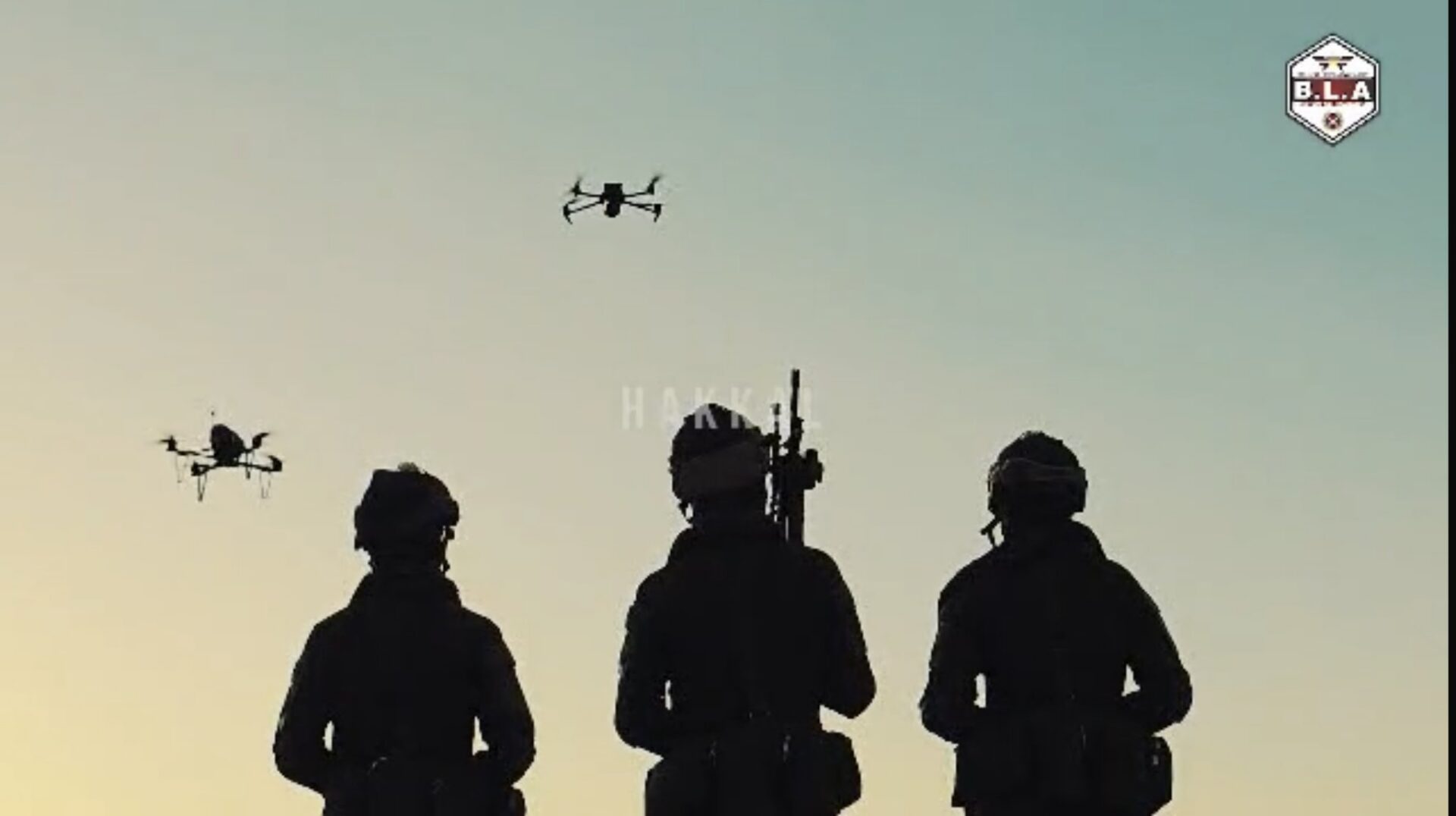
Pakistan’s security landscape in the Khyber Pakhtunkhwa (KP) province is rapidly changing. Militant groups, including Tehreek-e-Taliban Pakistan (TTP) and Ittehad-ul-Mujahideen Pakistan (IMP)—which is an alliance comprising the Hafiz Gul Bahadur Group (HGBG), Lashkar-e-Islam (LeI), and Harakat Inqilab-e-Islami (HII)—are shifting their attacks from conventional assaults to the strategic use of quadcopter drone technology (Khorasan Diary, April 11, 2025; PICSS, April 18, 2025). This helps them bypass traditional security checkpoints and conduct direct strikes. Despite a ban on importing drones, these quadcopters—priced from $200 to $1000—are commercially available in Pakistani markets and mostly sourced from Chinese companies such as Da-Jiang Innovations (DJI) (Dawn, April 11, 2025). The militant groups then modify and weaponize the drones to extend their surveillance capabilities and increase the lethality of their attacks.
Quadcopter drones underpin a doctrinal shift that exploits gaps in Pakistan’s counterinsurgency and counter-terrorism architecture. The infusion of low-cost quadcopters into operational doctrine—designating standoff encounter as the primary focus, improving SRI (surveillance, reconnaissance, and intelligence), and prioritizing aerial precision—marks a significant shift from proximity-based violence to asymmetric, technology-based warfare aimed at blunting the state’s kinetic superiority (YouTube/@dawnnewsenglish, August 7, 2025; SVI, September 3, 2025). The impacts of this transition would lead to a multi-domain environment: challenging the state’s monopoly in the air domain, exacerbating vulnerability, exposing the secrecy of counter-insurgency operations, surveillance of security architectures, and enhancing propaganda projection.
Aerial Precision Strikes
KP-based militant organizations—particularly TTP, which has emerged as the most lethal militant group in the region—increasingly equip explosives on quadcopter drones. For example, these groups often drop improvised explosive devices (IEDs), mortar shells, and grenades for precision strikes. These strikes have become the central strategy in the offensive playbook of militant groups in Pakistan (Express Tribune, March 6, 2025). For precision aerial strikes, quadcopter drones use ground surveillance to observe enemy movements at low altitude, reconnoiter the target, and strike accurately by delivering explosive loads (SVI, October 1, 2025).
The results of these precision drone strikes have depended on the nature of the attacks and targets, as can be seen in the following examples:
- Militants hit a checkpoint in Upper South Waziristan District with a mortar shell using a quadcopter drone, resulting in three deaths and leaving three others, including a captain, seriously injured (Khorasan, July 22, 2025);
- While TTP militants and Pakistani security forces were engaged in clashes in the area, a quadcopter drone struck a house in the Hormuz village of Mir Ali, North Waziristan, leaving four children dead and five others injured. (Dawn, May 20, 2025);
- TTP militants targeted the Miryan Police Station in the Bannu district of KP with a quadcopter drone that dropped explosive payloads, leaving six security personnel injured (Dawn, August 1, 2025);
- TTP militants attacked the Takhti Khel Check-Post of the Frontier Corps (FC) with a quadcopter drone by dropping explosives, which left one dead and 3 other injured (The News, August 8, 2025).
Quadcopter drones remain highly effective at three types of targets despite their short range: security checkpoints, military vehicles, and police stations. As the Director General of Public Relations for the Inter-Services Intelligence (ISI) acknowledged, Pakistan suffered 5,397 terrorist incidents in 2025 (Express Tribune, January 7). Nearly 10 percent, or 410, were quadcopter drone attacks (Khorasan Diary, January 6).
Asymmetric Advantages
The strategic use of inexpensive quadcopter drones and their modifications for dropping explosive payloads provides asymmetric advantages to the militant groups. Notably, the militants’ drone strategies are helping them minimize operational risks and increase casualties of security forces. Their operations can now be monitored at a reasonable distance from the target, while also allowing the militants to operate in hidden positions and avoid direct confrontation (Khaama Press, July 22, 2025). Drone usage also gives the militants psychological leverage over the security forces, forcing the latter to maintain 360-degree alertness for attacks that can occur anywhere, at any time (Dawn, November 26, 2025). The militant groups additionally gain propaganda advantages by claiming successful quadcopter drone strikes, while disowning any such attacks that cause civilian casualties. Militants often blame the security forces for such incidents on social media to erode public trust in the state (Dawn, May 21, 2025; Voicepk, June 26, 2025).
Conclusion
Pakistan’s security forces were initially unprepared for the quadcopter drone threat. The security services had begun to adapt, however, and now prefer reactive defenses by extending resource support and equipping themselves with anti-drone guns to counter the quadcopter drone usage of KP-based militants (Pakistan Today, June 26, 2025). As per security officials, militants have conducted around 320 drone attacks in the Bannu district alone, following 34 in North and South Waziristan, and 21 in Bajaur in 2025. Since acquiring anti-drone technology last July, however, security forces claim to have thwarted around 300 quadcopter drones (Dawn, January 2).
Pakistan’s future security in the skies is therefore contested. As the security forces update their defenses, the TTP has established its own air force wing and selected Maulvi Saleem Haqqani as its head, tasked with prioritizing the organization’s modern warfare demands (Times of Islamabad, December 26, 2025). This will help the militants to further exploit the offensive flexibility of quadcopter drones or even more advanced war technology. In the era of sophisticated and hybrid warfare, this quadcopter drone challenge, if not properly addressed, will pose more serious threats to Pakistan’s security landscape.