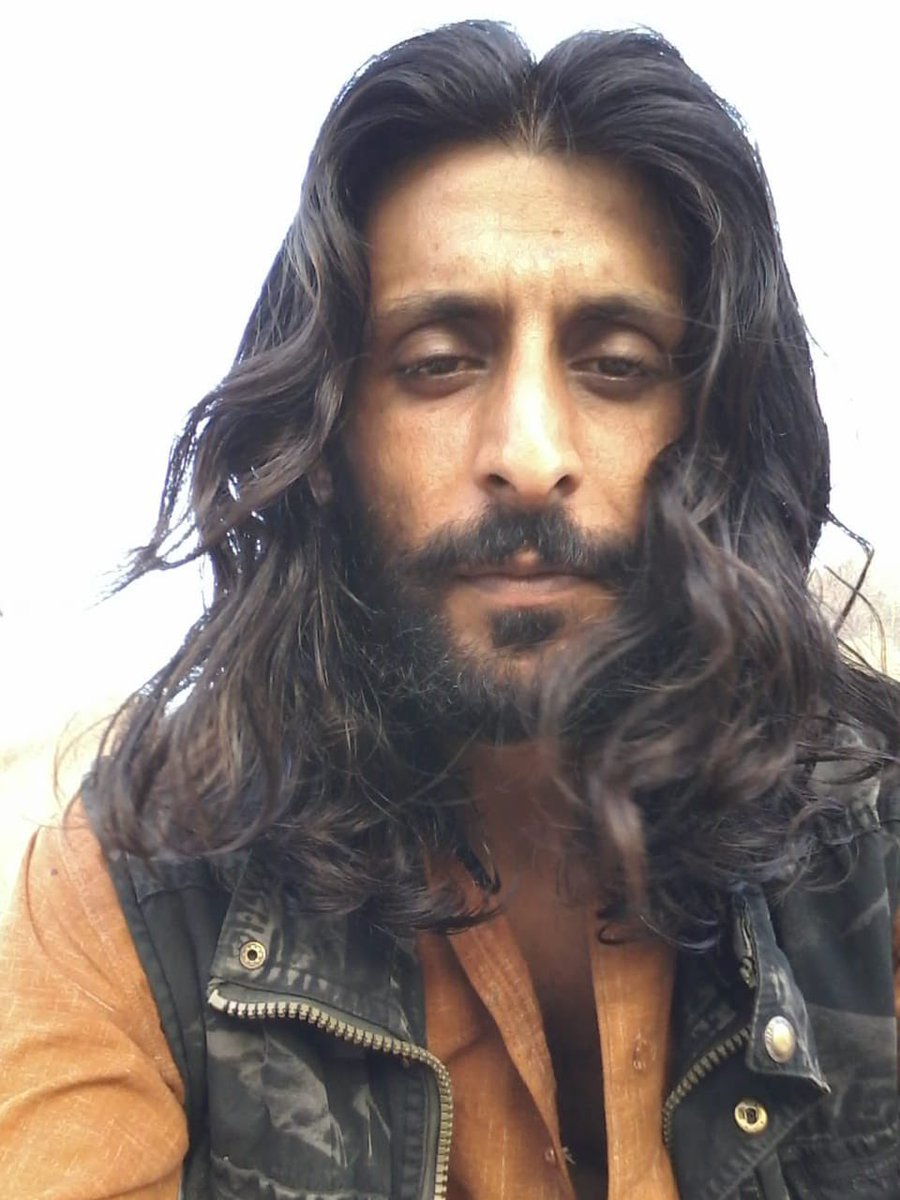
Saddam Haftar: The Marshal’s Heir Apparent in Libya
Saddam Haftar: The Marshal’s Heir Apparent in Libya
At the end of August, forces from the so-called “Libyan National Army” conducted a combined air-raid and airborne assault on Umm al-Araneb, Murzug District in Libya’s southern region of Fezzan. The operation targeted rebels from the Chadian Front for Change and Concord (Front pour l’alternance et la concorde au Tchad, FACT), who were using Libyan territory to launch attacks against neighboring Chad. The forces involved were spearheaded by the Tariq Ben Zeyd (TBZ) brigade, led personally by Saddam Haftar—Marshal Khalifa Haftar’s son. Saddam is considered to be the elder Haftar’s likely successor (Al Jazeera, August 25).
Saddam’s Prospects Amid Libya’s Political Divisions
Libya has been engulfed in armed conflict since 2011. The actors involved have coalesced into parallel governments, each supported by unaccountable militias and armed groups. Based out of Benghazi, military strongman Khalifa Haftar leads a struggle against Prime Minister Abdul Hamid Dbeibah’s internationally recognized, Tripoli-based administration. While the mercurial Haftar has built up his powerbase in eastern Libya, age and persistent rumors of ill health (following an alleged stroke in 2018) are forcing the 80-year-old Haftar to consider succession (France24, April 27, 2018).
In recent years, Khalifa Haftar has started to delegate his powers to his sons, cousins, and close advisers. Saddam is currently speculated to be the “heir apparent.” Born into the al-Furjani tribe in Benghazi in 1991, Saddam is the youngest of six brothers. It is not known how Saddam overtook his older brothers to become the Marshal’s preferred successor. However, two of his brothers, Okba and al-Muntasir, live in the United States. This makes them unlikely contestants for their father’s position; a third brother, Belqasim, serves as a top political advisor to the elder Haftar.
It is thought that Saddam’s brazen behavior may have partially improved his standing. This was exemplified by his starting of a bank shootout in Tripoli in 2011, an incident in which Saddam was injured. Saddam also appears to have worked to finance his father’s regime (Libya Tribune, October 12, 2020). As a result, Saddam and another brother, Khaled, stand out as their father’s most prominent partners. Moreover, both are army officers and command forces within the Libyan Arab Armed Forces (LAAF), which is also often referred to as their father’s self-styled “Libyan National Army” (LNA) (Al-Estiklal, March 2).
Saddam’s Stature
The 32-year-old Saddam now holds the rank of Brigadier and has been rapidly promoted through the ranks of the LAAF. In 2016, Saddam was made Captain, being promoted five years later to Colonel, despite the fact that he is otherwise a civilian lacking any prior experience in military institutions or academies. Moreover, Saddam did not even finish high school with a diploma (The Libya Observer, December 26, 2016; Libya Update, December 1, 2021, May 4).
Saddam compensated for his lack of formal education by establishing the “106th Battalion” in 2016 as an internal security force and sort-of praetorian guard for his father. Commanding the 106th Battalion, Saddam recaptured Benghazi after hard fighting from Islamic State (IS)-affiliated jihadists in December 2017. The Battalion gained notoriety the same month, however, when it removed cash worth hundreds of millions of dollars from the Central Bank building in Benghazi. Much of the cash vanished—possibly financing the expansion of the 106th Battalion to a brigade size in 2018.
The force has since been assessed to be the most professional of all LAAF brigades and has benefitted from obtaining a large amount of advanced foreign weaponry. Many of these arms were aquired as a result of Russian and Emirati-backing during the Second Libyan Civil War. [1] In 2016, Saddam Haftar took over the command of yet another unit, the TBZ, which is named after the eighth-century Muslim commander who conquered the Iberian Peninsula. The TBZ consists of former veterans of Muammar Gaddafi’s forces and fighters from tribes allied to Khalifa Haftar. The TBZ is also believed to be one of the most capable armed groups within LAAF. The 106th Brigade has been accused of war crimes by Amnesty International (Amnesty International, December 19, 2022). In addition, the UN has condemned the TBZ for evicting people and demolishing their homes in Benghazi (Middle East Eye, September 5).
All in the Family
While Saddam’s brother Khaled has also made a career in the LAAF, Saddam himself has carried out additional activities in the family’s diplomatic and business ventures (The New Arab, July 13). Khaled is known for his time as commander of the Khalid Ibn al-Wahid Brigade (KWB), and later for his appointment as head of the newly created “Security Units,” which serve as an amalgamation of the 106th Brigade and the KWB. Saddam was reportedly his father’s choice as envoy to meet with Jordanian military representatives in 2016. Saddam also allegedly met with the head of Turkish intelligence and Turkish Foreign Minister Hakan Fidan sometime before 2019. Saddam is also believed to have made additional trips to the UAE and Tel Aviv in March 2021 to offer diplomatic normalization to Israel in return for military aid (Haaretz, November 8, 2021).
The Haftars can be considered a “military-commercial” family through their vast portfolio of international properties in the United States, UAE, and Jordan. In the United States, Okba Haftar has been representing the family’s interests. This has become particularly relevant, as the family has faced lawsuits under the Torture Victim Protection Act of 1991, which allows family members of the victims of extrajudicial killings and torture perpetrated by individuals acting in an official government capacity to sue those responsible (Middle East Eye, August 10, 2022). Saddam, meanwhile, has been associated with murkier businesses, including a gold-for-cash venture involving Venezuela as well as the selling of scrap metal and oil to Turkey (Minbar Libya, October 12, 2020). Saddam, has, however, also been accused of outright criminality, due to his alleged involvement in human trafficking and drug smuggling rings across the Mediterranean region. Funds from these sources are supposedly used to finance and preserve the Haftar family politico-military entity in eastern Libya; Saddam is said to oversee and control the flow of migrants and drugs from Libya to Europe (Lighthouse Report, July 20).
Like his father, Saddam Haftar does not enjoy broad popularity across Libya. This may be due in part to his ostentatious 2020 wedding, where his father supposedly plied guests with $10 million in money and gifts. At the lavish event, poets sang praises to Saddam—40 Toyota Hilux vehicles (infamous as one of the main vehicles used as a “technical”) were reportedly given to 40 poets in eastern Libya for glorifying the Haftar family, for example (Libyan Express, November 24, 2020).
The Secret to Saddam’s Success
Regardless, Libyan politics are not a popularity contest. Thus, for Saddam’s success, the backing of his father’s allies and his tribe has been crucial. His father reportedly supports Saddam through his partners in eastern Libya, namely the Speaker of the Parliament of Tobruk, Aguila Saleh, and the head of Libya’s Presidential Council, Mohammed Menfi (The New Arab, January 30). Also crucial for Saddam will be the unity of the Haftar family; there are reports that conflicts have begun to unfold between Saddam and his brother, Belqasim, with the latter opposing many of his brother’s decisions. Saddam has been able to cement his position in the family in part by winning these struggles (Fikra Forum, October 21, 2020).
Khalifa Haftar’s opponents at home and abroad as well as foreign backers will need to analyze the benefits and risks involved with Saddam taking over from his father. The elder Haftar’s history of working with opposing backers complicates things further. While Russia is generally understood to be a close supporter of Haftar, they find his American citizenship and 21 years in the United States suspect (Fikra Forum, October 21, 2020). In return, the United States has concerns about human rights violations by Haftar’s faction as well as the Marshal’s links to Russia’s Wagner Group (Al-Estiklal, March 2).
It remains to be seen how regional actors, such as the UAE and Egypt, view Saddam. Given the ongoing civil war in neighboring Sudan, Egypt would likely prefer a smooth transition in eastern Libya for security reasons. On the other hand, those who oppose Haftar may celebrate his stepping down as a sign that the LAAF is weakening.
Conclusion
It is not known how a dynastic transfer of power will be accepted locally and regionally. Khalifa Haftar has done his upmost to restructure LAAF forces and groom Saddam. This should be understood as an attempt to cement the Haftar family legacy. Absent major change, the Marshal’s youngest son appears to have the pole position in the race to succeed Haftar.
Notes:
[1] See Wolfram Lacher, November 2020, SWP Working paper “A Most Irregular Army” https://www.swp-berlin.org/publications/products/arbeitspapiere/2020WP02_FG06_lac.pdf and Tim Eaton, June 2, 2021, Chatham House Research Paper “The Libyan Arab Armed Forces,” https://www.chathamhouse.org/2021/06/libyan-arab-armed-forces/02-inside-laafs-armed-networks.