Sahel’s Eternal Yesterday: Chosen Traumas Sustain Jihadist Violence
Executive Summary:
- On January 13, Nigerien authorities revoked the operating licenses of dozens of fuel transporters and tanker drivers who refused to continue deliveries into Mali amid escalating jihadist attacks along the Niger–Mali corridor.
- The ongoing conflict in the Sahel is not only driven by material factors such as poverty, political instability, and military presence, but also by overlapping “chosen traumas” of past humiliations, which are reactivated by modern-day crises, thereby narrowing the political space and fueling violence.
- Counterterrorism measures that focus on force—whether they are of Western or Russian-backed origin—often fail, as they reactivate these traumas, which in turn makes jihadist narratives and recruitment stronger.
- To put an end to the cycle of violence going back to the past requires the statecraft approach to be aware of the trauma: localized reconciliation, restraint in security operations, and political processes that recognize historical memory rather than try to suppress it.
On January 13, Nigerien authorities revoked the operating licenses of dozens of fuel transporters and tanker drivers who refused to continue deliveries into Mali amid escalating jihadist attacks along the Niger–Mali corridor. The decision followed months of mounting pressure from Bamako, which accused regional partners of failing to uphold the Alliance of Sahel States (AES) solidarity amid Jama’at Nusrat ul-Islam wa al-Muslimin (JNIM) attacks on fuel convoys supplying Mali’s capital (African News, January 13).
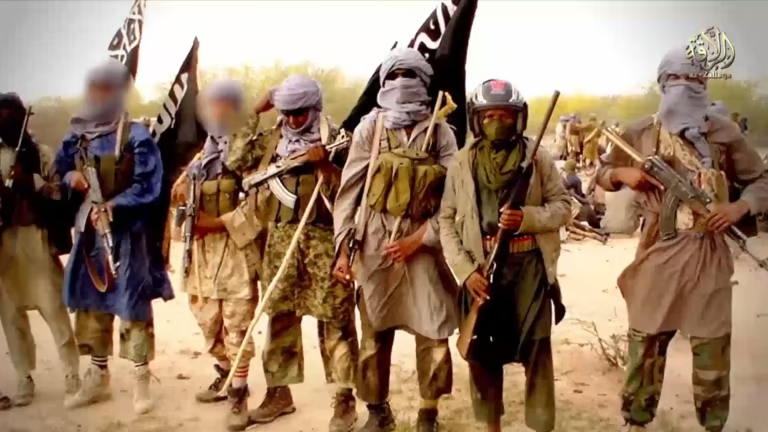
The blockade itself began in September 2025, when JNIM announced a campaign to sever Mali’s strategic supply lines from Niger, Senegal, Côte d’Ivoire, and Guinea. Since then, more than 300 fuel tankers have been destroyed or disabled, drivers have been killed or abducted, and escorted convoys have repeatedly come under attack despite Malian military protection (Africa Defense Forum, September 23, 2025; Al Jazeera, November 6, 2025; BBC News, November 12, 2025).
At first glance, the blockade appears to be a classic insurgent tactic: asymmetric warfare targeting logistics to undermine a militarized regime. Yet its deeper significance lies elsewhere. The crisis has reactivated unresolved historical anxieties across the Sahel: memories of state collapse, ethnic repression, abandonment, and humiliation. These memories shape how communities interpret the present and why political responses repeatedly escalate rather than stabilize.
The Sahel’s conflict cannot be understood or resolved without grappling with these collective psychological dynamics. Vamik Volkan’s theory of large-group psychology examines how overlapping chosen traumas among states, ethnic communities, and armed actors generate a persistent “eternal yesterday,” trapping the region in cyclical violence and empowering jihadist movements. The past has not been just one day but rather an endless repetition, which has looped the region in the winding road of violence and nourished militant Islamic groups.
Chosen Trauma and Time Collapse in the Sahel
Volkan defines his theory of a chosen trauma as a collective psychological image of a historical event involving loss, humiliation, or a similar experience that has become the core of the group’s identity and is passed down from one generation to the next (Volkan, 1997). [1] Such traumas are not created; they are, instead, remembered, ritualized, and politicized in ways that give them particular significance. The result is a time collapse in which the past and the present merge emotionally, and political behavior becomes reactive, absolutist, and resistant to compromise when contemporary stressors resemble or resonate with the original wound.
The Sahel is an area where this phenomenon is likely to occur. The region forms a belt running from Mauritania to Chad, including countries whose borders were drawn by external powers, which influenced their post-colonial histories through rebellions and repression, and where public loyalty to the government remains relatively weak. In 2012, jihadist insurgencies marked the beginning of new violence on top of the already existing grievances. These insurgencies have continued till the present day. The Armed Conflict Location & Event Data Project (ACLED) recorded that the political violence in Mali, Burkina Faso, and Niger remained at very high levels in 2024, with the instability spreading and the death toll running into thousands due to the increased militant activity (ACLED, December, 12, 2024). Rather than replacing older conflicts, jihadism has created new ones.
Tuareg Chosen Trauma: Suppression, Betrayal, and Kidal
The Tuareg communities’ memories—particularly in northern Mali—have a historical background marked by cycles of revolt, repression, and unfulfilled political agreements. The traumatic experience was the 1963–1964 uprising, known locally as Alfellaga, against the newly independent government of Modibo Keïta. The uprising was put down with tremendous cruelty: the destruction of villages, the massacre of civilians, the poisoning of water sources, and the arrest or extradition of tribal leaders by neighboring countries such as Algeria and Morocco. Tuareg oral history continues to recount these events (CRU Report, 2015).
A series of rebellions in the 1990s—culminating in the Tamanrasset Accords and subsequent uprisings in the mid-2000s—called for decentralization, development, and political inclusion. The implementation of the accords remains very low and selective, thereby solidifying the trauma. Kidal gradually became not only a strategically important town but also a symbolic place where the Tuaregs’ dignity, autonomy, and empty promises were stored (Sahel Research Group, March 2014).
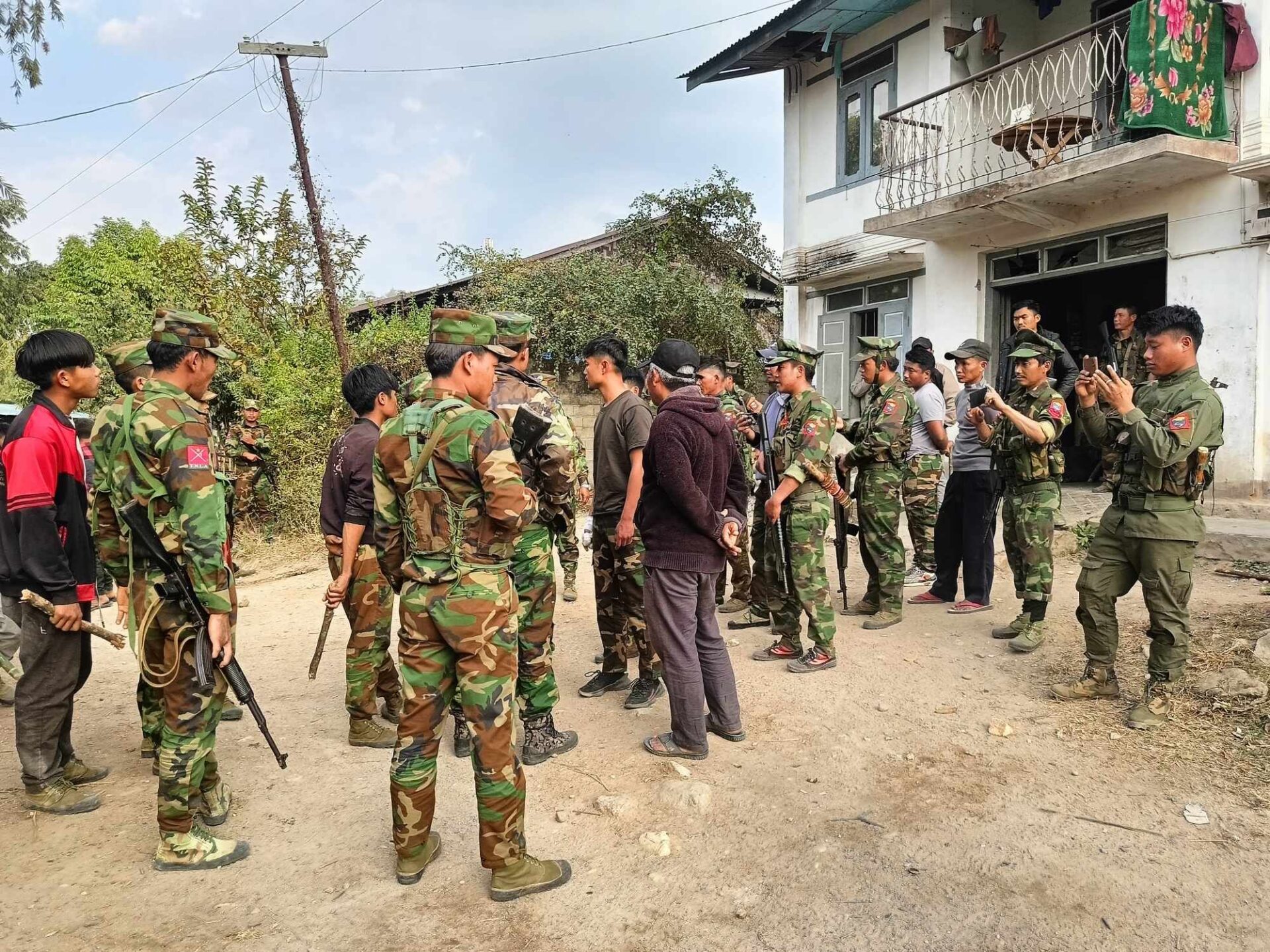
Tuareg rebels saw the late 2023 Malian forces’ return to Kidal with the support of Russia not as the beginning of law and order but as the repetition of a history of repression. The reports of human rights abuses against civilians during the operations that followed, which were documented by Human Rights Watch, reactivated past traumas and created even more alienation among the people. As a result, some groups within the population began to resort to tactical, non-ideological collaboration with jihadist actors, viewing it as the only option (Mali; ACLED, December 12, 2024; Human Rights Watch, World Report 2025).
Mali’s Foundational Wound: The Loss of the North (2012)
Political and military leaders in Mali regard the 2012 insurgent outbreaks not only as a military defeat but also as a generational trauma (mouryyaniger.com, November 14, 2023). [2] State authority over the northern part of the country crumbled fast after the Tuareg-led rebellion, and soon, the advances of the jihadists shattered the myth of the post-colonial era of unity. In a matter of weeks, the Malian army deserted the military posts they occupied in Kidal, Gao, and Timbuktu, which resulted in a coup in Bamako and the division of the country into two parts: the north and the south (Al Jazeera, March 22, 2012; see Hot Issue, March 23, 2012 allafrica.com, March 24, 2012; United Nations Security Council, November 28, 2012).
France’s Operation Serval—which aided the Malian government—retook the lost territories of the north in 2013, but the mental trauma, nonetheless, remained. The Malian state perceived 2012 as a year of suffering, during which both insiders and outsiders contributed to the downfall beyond the limits of forgiveness. In response to this trauma, the Malian government’s political responses are as follows: sovereignty must be proclaimed at any cost, and negotiating with the northern tribes is tantamount to the loss of the entire nation (Al Jazeera, September 6, 2024).
This situation became evident in 2023–2024, when the Malian junta withdrew from the Algiers Peace Accord and launched military operations to retake Kidal from the Coordination of Azawad Movements (CMA). Although it was labelled a restoration of law and order, the campaign rekindled the 2012 experiences in Bamako and the north alike. By 2025, the violence from jihadists increased correspondingly with the progress of the state forces, as JNIM roused the bitterness of the north and presented itself as the only power that could ever protect the south from being re-occupied (ACLED, September 21, 2023).
The fuel blockade has brought this wound to the surface again. The Malian government—which has lost two-thirds of its territory in recent years—now struggles to secure its economic lifelines. Public discourse in Bamako is increasingly framed in existential terms, thereby narrowing the space for pragmatic de-escalation as the siege mentality intensifies.
Fulani Trauma: From Marginalization to Massacre
The Fulani (Peulh) pastoralists of central Mali, northern Burkina Faso, and western Niger are the community that most clearly demonstrates the deliberate exploitation of trauma as a tactic. The ever-strained relations over land use, movements of herding, and political sidelining grew even more dramatic after 2015, when jihadist factions that had implanted themselves in the already state-deficient and competition-ridden areas of the Fulani turned them into battlegrounds.
Violent conflicts have come to define the memory of the Fulani people. The massacre at Ogossagou in 2019, where more than 160 Fulani non-combatants fell victim to Dogon militias, is drawn as a trauma, widely interpreted as a state’s failure to protect, if not cooperation in violence (International Crisis Group, March 25, 2019; Human Rights Watch, Mali, March 18, 2020).
The Moura killings of March 2022, during a joint operation by Malian forces and Russian auxiliaries, have intensified the views of state-sponsored persecution. Reports from Human Rights Watch and International Crisis Group characterize these occurrences as amongst the most lethal instances of civilian casualty in Mali, thus reinforcing the Fulani belief of being collectively targeted (International Crisis, March 19, 2019; Human Rights Watch, April 5, 2022).
According to ACLED data, between 2018 and 2025, thousands of civilians were killed each year in the violence that was either communal or state-related in the central Sahel area, with the Fulani communities suffering the most (ACLED, October 8, 2025). These communities have used these developments as proof of an anti-Fulani identity campaign to justify the jihad as a form of self-defensive struggle rather than an ideological one (see Terrorism Monitor, November 7, 2025).
In this situation, time collapse is evident. The contemporary security operations are viewed through the histories of extermination that have been narrated over time, and this makes it socially dangerous and mentally unfeasible to dissociate from violent groups. Violence is therefore constantly reproduced through both the collective memory and the material incentives.
Military Trauma and the Politics of Humiliation
The armed forces in the Sahel region are not merely neutral tools of state policy; rather, they are traumatized institutions. Over the years, a combination of battlefield defeats, inadequate equipment, and enduring corruption has fostered widespread humiliation among junior officers and other ranks. The military coups in Mali (2020 and 2021), Burkina Faso (2022), and Niger (2023) can be seen as part of the process where the military tried to regain their lost honor through an expression of disgruntlement towards the civilian leaders who were viewed as corrupt, inefficient, and detached from the soldiers’ suffering (DW, August 19, 2020; X/@olivier_salgado, May 25, 2021; Le Monde, September 30, 2022; New Afrique, July 27, 2023).
This humiliation can be understood as a form of institutionalized trauma. The series of defeats, from the collapse of the northern part of Mali in 2012 to the still ongoing ambushes in central areas, was experienced as collective shame. The junior officers paid the price on the front lines, while the senior elites reaped the benefits of corruption, creating a narrative of betrayal that was shared in the barracks’ culture and public discourse. The coups were psychological “cleansing” events, interpreted as necessary breaks to regain power, dignity, and the national objective.
This reasoning is evident in the junta’s statements and actions. In Mali, Colonel Assimi Goïta’s coup followed protests against corruption and security issues under President Ibrahim Boubacar Keïta. The military presented itself as the only protector of sovereignty (International Crisis Group, December 3, 2024; Africa is a Country, October 27, 2025). In Burkina Faso, Captain Ibrahim Traoré’s 2022 counter-coup was marked by decisive action and rejected what he considered weak, foreign-influenced embellishments (Le Monde, May 25, 2024). The 2023 coup in Niger was a clear indication that top military officers were dissatisfied with President Mohamed Bazoum’s approach to security and regarded him as a figure dependent on external actors (International Crisis Group, October 4, 2023; May 22, 2025).
The expulsion of French forces and the rejection of UN missions further illustrate this search for psychological redemption. Operations Barkhane and MINUSMA increasingly symbolized neo-colonial humiliation—foreign troops operating on sovereign territory with limited accountability and contested effectiveness (Benbere, November 8, 2019; Mali Actu, January 12, 2023). Their removal enabled junta leaders to present themselves as sovereign avengers restoring national pride, a narrative reinforced by public celebrations during the French withdrawal (Benbere, December 31, 2022).
Russian security partnerships served as an alternative symbolic framework of a different nature. Through the Wagner Group deployments—later formalized under Russia’s Africa Corps—Moscow provided unconditional military assistance framed as respect for sovereignty and equality (see EDM, July 16, 2025). This pivot reframed Sahelian militaries from humiliated dependents to assertive actors choosing their alliances (The Sentry, August, 2025)
This redemption proved illusory, however. Russian-linked operations have been implicated in serious violations, the most notable being the Moura massacre, which has been documented by both Human Rights Watch and UN experts as one of the conflict’s worst atrocities (Human Rights Watch, April 5, 2022). ACLED data connects Malian and Russian forces with over 1,400 civilian deaths between 2024 and mid-2025 (ACLED, July 4, 2025; Africa Defense Forum, November 12, 2025). These abuses create new communal traumas, especially among the Fulani and Tuareg groups, thus reinforcing the jihadist recruitment narratives and eroding the legitimacy the juntas sought to restore.
In effect, the military trauma of the Sahel region operates as a self-reinforcing loop: humiliation leads to coups and shifts in alliances; brutal counterinsurgency tactics create new civilian traumas; and these traumas ultimately empower jihadist actors. If these institutional and societal wounds are not dealt with through the means of accountability, restraint, and inclusive political processes, the cycle of humiliation and violence will continue.
Matrix for Sahelian Trauma
Historical Trauma → Time Collapse → Militarization → Civilian Harm → Recruitment → Insurgency → New Trauma ↺
Conclusion
The Jihadist insurgency in the Sahel—represented by JNIM’s tight control over Mali’s supply routes since September 2025—is not just a matter of combating violent extremism. It is a confrontation with historical traumas (African Centre for Strategic Studies, December 17, 2025).
Volkan’s notion of “chosen trauma”—collective, mythologized memories of historical loss, humiliation, or victimization transmitted across generations—helps explain much of the region’s apparent political and strategic irrationality. Societies trapped in this framework live in an “eternal yesterday,” where unresolved past wounds dictate present behavior. In the Sahel, these wounds include the Tuareg repression dating back to 1963, the 2012 collapse of the Malian state, Tuareg repression dating back to 1963, Fulani massacres since 2019, and military humiliation under corrupt civilian regimes. Together, they foster reactive absolutism, render compromise synonymous with betrayal, and lock actors into cycles of retaliation that empower jihadists rather than resolve conflict (Security Council Report, April 2025; ACLED, December 11, 2025).
This produces a self-reinforcing dynamic. State military operations reactivate ethnic memories of repression, driving tactical—often reluctant—alliances with jihadist groups. Jihadist recruitment then exploits narratives of persecution to radicalize youth. Brutal counterterrorism campaigns, including Russian-backed operations implicated in mass civilian abuse, generate new traumas that feed the next round of insurgency. The failure is therefore not merely tactical or operational; it is psychological and structural, creating an impasse in which negotiation, reconciliation, or power-sharing becomes emotionally and politically impossible (R4 Sahel, January 1).
Why the Cycle Persists
| Approach | Intended Goal | Actual Effect |
| Military offensives | Restore state control | Reactivates ethnic trauma |
| Russian-backed force | Sovereign redemption | Mass abuses → backlash |
| Drone strikes | Precision targeting | Civilian fear & radicalization |
| Aid without reconciliation | Stabilization | Dependency & resentment |
| Suppression of memory | National unity | Deepened fragmentation |
Failure to acknowledge and resolve historical issues will entrench a permanent conflict system in the Sahel, continuing to be a source of instability for the region and contributing to the decay of governance and the prolongation of humanitarian crises (Africa News Room, January 8).
Notes
[1] Volkan, Vamik D. (1997). Bloodlines: From Ethnic Pride to Ethnic Terrorism. 1st ed. New York: Farrar, Straus and Giroux.
[2] Boisvert, Marc-Andre (2019). The Malian Armed Forces and its discontents: civil-military relations, cohesion and the resilience of a postcolonial military institution in the aftermath of the 2012 crisis. Doctoral thesis, University of East Anglia.