Skip to content
Screenshot 2025-12-02 at 11.11.57 AM

Tajmir Jawad: Taliban Deputy Intelligence Chief Unusually Radical

Military & Security Publication Militant Leadership Monitor Afghanistan Volume 16 Issue 8

12.02.2025 Osama Ahmad

Tajmir Jawad: Taliban Deputy Intelligence Chief Unusually Radical

Executive Summary:

● Tajmir Jawad, the Taliban’s Deputy Intelligence Chief and self-proclaimed “Emir of Suicide Bombers,” has a long record of directing mass-casualty attacks and openly threatens renewed suicide operations in response to U.S. actions.
● Jawad’s career links him deeply to al-Qaeda, the Haqqani Network, and even individuals later tied to Islamic State–Khorasan, highlighting his central role in a cross-network militant ecosystem that spans Afghanistan and Pakistan.
● His presence at the top of the Taliban intelligence apparatus signals continued radicalization within the regime and raises the risk of internal purges, renewed insurgency, and broader regional destabilization.


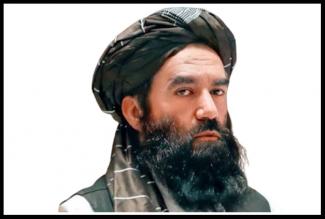
Mullah Tajmir Jawad (Dari/Pashto: تاجمیر جواد), also called Tajmir Akhund or Zabihullah Jawad (Pashto: تاجمیر اخوند; ذبیح الله جواد) is the Afghan Taliban’s Deputy Intelligence Chief. In September, he threatened that the Afghan Taliban would defend its rule by resuming suicide bombings after U.S. President Donald Trump stated, “we’re trying to get back the Bagram airbase” (Afghanistan International, September 20). Jawad, nicknamed the “Emir of Suicide Bombers,” has become one of the most fearsome leaders in the Taliban. His reputation is bolstered by his continued dedication to jihad in spite of losing his sight and several fingers in combat over a decade ago. 

Jawad’s Jihadist Career 

Jawad reports to ex-Guantanamo Bay detainee Abdul Haq Wasiq (Pashto/Dari: عبدالحق وثیق), who served as the Taliban’s deputy director general of intelligence before the September 11 attacks and is the Taliban administration’s current intelligence chief. Wasiq was captured by the United States in 2001. According to the United Nations, Wasiq was in charge of handling relations with al-Qaeda’s foreign fighters and al-Qaeda-backed training camps in Afghanistan (Militant Leadership Monitor, October 7).

The U.S. military unsuccessfully targeted Tajmir Jawad’s network multiple times in the early 2010s. Jawad himself was again targeted in 2013 and captured in a raid led by the U.S.-led coalition and Afghan special operations forces in Paktia Province (Dari: ولایت پکتیا) (TOLOnews, April 30, 2013). He was later released from detention on unclear grounds. 

Jawad has been responsible for some of the deadliest attacks in Afghanistan. In January 2023, he appeared on Afghan television station TOLONews (Dari/Pashto: طلوع‌نیوز) to brag about his involvement in the killings of thousands of Afghans and hundreds of U.S. and coalition personnel through suicide bombings, IED attacks, and ambushes over nearly fifteen years leading up to the U.S. withdrawal from Afghanistan. He candidly admitted to his participation in the suicide attack on January 28, 2018 in Kabul that resulted in the deaths of more than 100 people, including women and children. During this attack, the suicide bomber used an ambulance filled with explosives to target the former Ministry of Interior building in Kabul (Al Jazeera, January 28, 2018).

A Taliban Veteran

Following the collapse of the first Taliban regime, Jawad was assigned the task of supplying equipment and resources to suicide bombers linked to the Taliban. In 2010, he took the lead of a Taliban-affiliated group known as the Kabul Attack Network, working closely with a Taliban commander who functioned as the shadow governor of Kabul. The Kabul Attack Network was involved in numerous high-profile attacks across Kabul and its neighboring provinces, including Wardak, Logar, Nangarhar, Laghman, Kapisa, Khost, Paktia, and Paktika (names in Dari: وردک; لوگر; ننگرهار; لغمان; کاپیسا; خوست; پکتیا; پکتیکا). The network received assistance from several groups, such as al-Qaeda, Lashkar-e-Taiba (Urdu: لشکر طیبہ), the Islamic Movement of Uzbekistan (Uzbek: Ўзбекистон исломий ҳаракати)  and Hizb-i-Islami Gulbuddin (Dari: حزب اسلامی گلبدین), to carry out their operations (Hindustan Times, September 9, 2021). 

Jawad was involved in the Taliban intelligence apparatus from very early on in his career. He served as director of intelligence in Nangarhar Province (Dari: ولایت ننگرهار) during the Taliban’s first period of control from 1996 until 2001. In 2001, Jawad was responsible for the kidnapping of French journalist Michel Peyrard in Nangarhar (Dawn, November 4, 2001). He also led covert operations against Ahmad Shah Massoud (Dari/Pashto: احمد شاه مسعود) during the first Taliban government and, after 2001, commanded a brigade known as Fateh Zwak (Pashto: فاتح ځواک), which carried out some of the deadliest car bombings in Afghanistan’s history (X/@nahafghan, April 26, 2023).

Jawad served as the Taliban’s shadow governor for Paktia during the tenure of the U.S.-backed Islamic Republic of Afghanistan government. Following the collapse of the Afghan government in 2021, he consolidated his position within the Taliban’s intelligence structure and became a trusted confidant of the new regime’s leadership (Sangar, December 30, 2024). He was regarded as the driving force behind the Taliban’s intelligence apparatus.

Ties with the Haqqani Network

Jawad was affiliated with the hardline faction Haqqani Network (Pashto: د حقاني شبکې) faction from 2013 as he steadily rose through the ranks to become a senior commander. He is believed to have received direct training from Sirajuddin Haqqani (Pashto: سراج الدین حقاني), the network’s infamous leader and current Interior Minister of the Islamic Emirate of Afghanistan (Hindustan Times, September 9, 2021). In addition to his military responsibilities, Jawad played a significant role in the Taliban’s propaganda apparatus, working closely with Zabihullah Mujahid (Pashto: ذبیح الله مجاهد), the group’s official spokesperson. 

Jawad had supervised the Haqqani Network-linked al-Hamza Martyrdom Brigade. Beginning in 2018, he oversaw the brigade’s suicide-bomber training program and managed the training camp until the Taliban’s takeover in August 2021. Jawad was mostly based in Peshawar (Pashto: پېښور) across the border with Pakistan. During this period, he was instrumental in the assassination of General Abdul Raziq Achakzai (Pashto: عبدالرازق اچکزی), one of Afghanistan’s most powerful security figures, who had previously expelled the Taliban from Kandahar Province (Dari: ولایت قندهار) (DID Press Agency, October 24, 2018).

Jawad’s role has long been viewed with suspicion due to his alleged links with elements of the Islamic State (IS). The mastermind of the Abbey Gate suicide attack in 2021 was a close associate of Jawad and is believed to have received safe passage from him after the bombing. Trained by al-Qaeda operatives in Waziristan (Pashto/Urdu:  وزیرستان), Salahudin (Pashto: صلاح الدین) joined the Haqqani Network in 2009, serving for years under Jawad’s command before defecting to the Islamic State in Khorasan Province (IS–KP). There, he led the group’s Kabul Katiba, a military battalion, while maintaining direct contact with the IS core leadership. Salahudin also orchestrated the assassination of Mullah Dawood Muzammil (Pashto: داود مزمل), the Taliban governor of Balkh (Dari: بلخ), which deepened suspicion around Jawad’s divided loyalties and covert connections (X/@bsarwary, April 26, 2023).

Jawad flew from Kabul to Mazar-e-Sharif (Dari: مزار شریف) after the Abbey Gate attack in 2021 to personally facilitate Salahudin’s escape. First, they went to Faryab (Dari: فاریاب) and later to Herat (Dari: هرات). This episode underscored Jawad’s entrenched ties with elements of both IS and al-Qaeda, casting further doubt on his unwavering allegiance to the Taliban. It also reveals the complex web of collaboration that persists among militant groups within Afghanistan linked by shared operatives (X/@bsarwary, April 26, 2023).

Conclusion

Jawad’s role at the top of the Taliban’s intelligence hierarchy is extremely concerning for those hoping to see the Taliban moderate. His recent threats of suicide bombings in response to President Trump’s remarks about the Bagram Airbase expose his remaining militant mindset and willingness to invoke mass violence to serve the Taliban government’s ends. Jawad’s close affiliations with al-Qaeda and IS–KP are even more dangerous, as he might leverage their networks to eliminate rival Taliban leaders or destabilize Taliban internal power structures. Allowing someone with such violent inclinations and complex organizational connections to hold a powerful intelligence position risks pushing Afghanistan toward renewed internal conflict—worsening the country’s isolation and contributing to continued destabilization for the country and its neighbors.


Jamestown
Privacy Overview

This website uses cookies so that we can provide you with the best user experience possible. Cookie information is stored in your browser and performs functions such as recognising you when you return to our website and helping our team to understand which sections of the website you find most interesting and useful.