The Rise of Azerbaijani Fighters in Syria – A Profile of Muhammad al-Azeri
The Rise of Azerbaijani Fighters in Syria – A Profile of Muhammad al-Azeri
As fighting for the northern Syrian town of Kobane raged in early October, videos of Islamic State militants speaking the Azerbaijani language began appearing on YouTube (RFE/RL, October 14). These video clips were followed by reports about Azerbaijani nationals found among dead Islamic State fighters in Kobane (Azeri-Press Agency, October 17). According to jihadist sources, these men arrived as reinforcements from the Islamic State organization’s stronghold in Syria’s Raqqa province, which also serves as home base for a sizable Azerbaijani militant jama’at (religious fighting unit) led by Muhammad al-Azeri. [1]
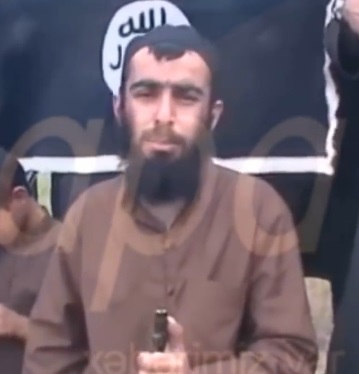
Muhammad al-Azeri, whose real name and identity remain unknown, presents himself as the leader of Azerbaijanis fighting in the ranks of Islamic State in Syria. He assumed the position of amir of the Azerbaijani jama’at in Raqqa after the death of Musab al-Azeri, and is a shadowy figure who shuns public appearances. Since his appointment as the amir of the Azerbaijani jama’at in Syria, al-Azeri, unlike other well-known Azerbaijani militants, remains unknown to either he jihadist communities in Azerbaijan or to Azerbaijan’s security services. However, it is largely owing to his efforts to recruit jihadist fighters specifically from Azerbaijan that the Azerbaijani jama’at in Syria has managed to significantly increase numbers of its fighters.
A number of local jihadist sources report that al-Azeri, and many of his fighters, likely hail from northern regions of Azerbaijan, such as the Ismayilli and Sheki districts (Odnoklassniki.ru, May 10). Another native of Ismayilli district is the famous Azerbaijani wrestler Rashad Bakhshaliyev, who joined the Islamic State organization (most likely al-Azeri’s jama’at) in August and died fighting around Kobane in mid-October (RFE/RL, October 17). Although Bakhshaliyev did not achieve fame within the Islamic State, he is by far the most well-known Azeribaijani citizen to have joined the Islamic State. The ability of Muhammad al-Azeri to attract recruits like Bakhshaliyev and a number of other militants from the northern districts of Azerbaijan recently killed in Syria suggests that Muhammad al-Azeri is most likely a member of northern Azerbaijan’s Salafist community These Salafist groups have been particularly active in Azerbaijan over the past several years.
Al-Azeri made his only public appearance in a video address delivered in Azerbaijani and released in early May 2014, which targeted potential recruits from Azerbaijan. In his own words:
His speech was followed by a brief address by his deputy, Umeir, who spoke about the righteous path of jihad followed by the Islamic State organization and criticized Muslim scholars who condemn the Islamic State. Al-Azeri and his deputy are shown in the video with a group of about 30 heavily armed militants, who according to al-Azeri are members of the jama’at and all ethnic Azerbaijanis. The video clip also shows several boys standing among militants, who are thought to be children of Azerbaijani militants brought to Syria along with other family members (Zerkalo.az, May 1). The video address by Muhammad al-Azeri is the first evidence that significant numbers of Azerbaijani militants are fighting for the Islamic State organization.
According to sources within Azerbaijan’s security services, hundreds of Azerbaijani citizens are currently participating in the Syrian conflict and over 100 Azeribaijani militants have been killed in Syria since mid-2013. Although it is not known precisely how large Muhammad al-Azeri’s group in Raqqa is, the ability of Azeribaijani militants to create their own jama’at in Raqqa and to dispatch significant numbers of fighters to attack Kobane demonstrates the growing strength of the group. [3] As indicated on Azeribaijani and Russian language jihadist online discussion boards, Muhammad al-Azeri’s jama’at in Raqqa is the largest group of Azeribaijani fighters in Syria. [4]
Unlike other ethnic Azerbaijani commanders in the Islamic State organization’s ranks, such as slain amir Abu Yahya al-Azeri and amir Abu Hamza al-Azeri, who currently serves under the command of the Chechen Omar al-Shishani in Aleppo, Muhammad al-Azeri has chosen to build his jama’at in Raqqa away from areas traditionally frequented by Azerbaijani fighters. Other Azerbaijani commanders preferred to be based in and around Aleppo, Idlib and Hama, primarily because these areas have large communities of Syrian Turkmens, who share similar linguistic and cultural heritage with Azerbaijanis. [5] Raqqa province is currently an Islamic State stronghold and Raqqa city is its de-facto capital in Syria, so Muhammad al-Azeri’s choice of location is not surprising. The relative safety of Raqqa also allows the Azerbaijani jama’at to build up its military strength and train its fighters without the threat of being rooted out by the Syrian Army, as was usually the case with Azeribaijani militant groups in western Syria.
This recent strengthening of Raqqa-based Azerbaijani militants under the command of Muhammad al-Azeri, as evidenced by their active participation in the siege of Kobane, demonstrates that al-Azeri most likely seeks to assume a higher position within the Islamic State. Unlike other Azerbaijani jihadist commanders, who, thus far, have preferred to lead smaller groups of fighters and chose to be based away from the Islamic State’s centers of power, al-Azeri has managed to amass significant numbers of Azerbaijani militants within the Raqqa stronghold. By taking an active part in the fighting for the strategically important town of Kobane, al-Azeri’s jama’at continues to increase its influence within the Islamic State organization. Indeed, despite suffering relatively high casualties in Kobane, Raqqa-based Azerbaijani jihadists have managed to capture much more attention than fighters of Azerbaijani origin in other parts of Syria or Iraq (Haqqin.az, October 23). As the flow of volunteers from Azerbaijan continues, Muhammad al-Azeri might soon be expected to occupy a leading position with the Islamic State organization (Poliqon.org, October 31).
Huseyn Aliyev is an independent researcher whose work focuses on democratic institution-building and armed conflicts in the former Soviet Union.
Notes
1. This was detailed in a vKontakte post, October 20, 2014, https://vk.com/wall-7636416_134080.
2. See the video address in Azerbaijani at: https://www.youtube.com/watch?v=yJNxgp-Pu0g.
3. During the early stages of the Syrian civil war many Azerbaijani jihadists served in brigades led by Chechen commanders like Omar al-Shishani and Muslim al-Shishani.
4. These are public and private forums or discussion walls on social networking websites and many of the posts get removed by moderators on a daily basis. Here are the examples of sources I used: https://vk.com/dajjalisis, https://vk.com/wall-23232544_1206355?reply=1206425 and https://venus.disput.az/index.php?showtopic=630336&page=1.
5. For example, prior to the establishment of the Azerbaijani jama’at in Raqqa, the most well-known group of Azerbaijani jihadists in Syria was the jama’at led by Abu Yahya al-Azeri, a native of the Azerbaijani city of Sumgayit and a former employee of the state electric company. He joined Syrian Islamists based between Aleppo and Idlib in 2013, and that group suffered significant casualties in battles against the Syrian Army that year. Many of its members were from Azerbaijan’s Sumgayit jama’at.