The Toulouse Gunman: A Portrait of French Islamist Muhammad Merah
The Toulouse Gunman: A Portrait of French Islamist Muhammad Merah
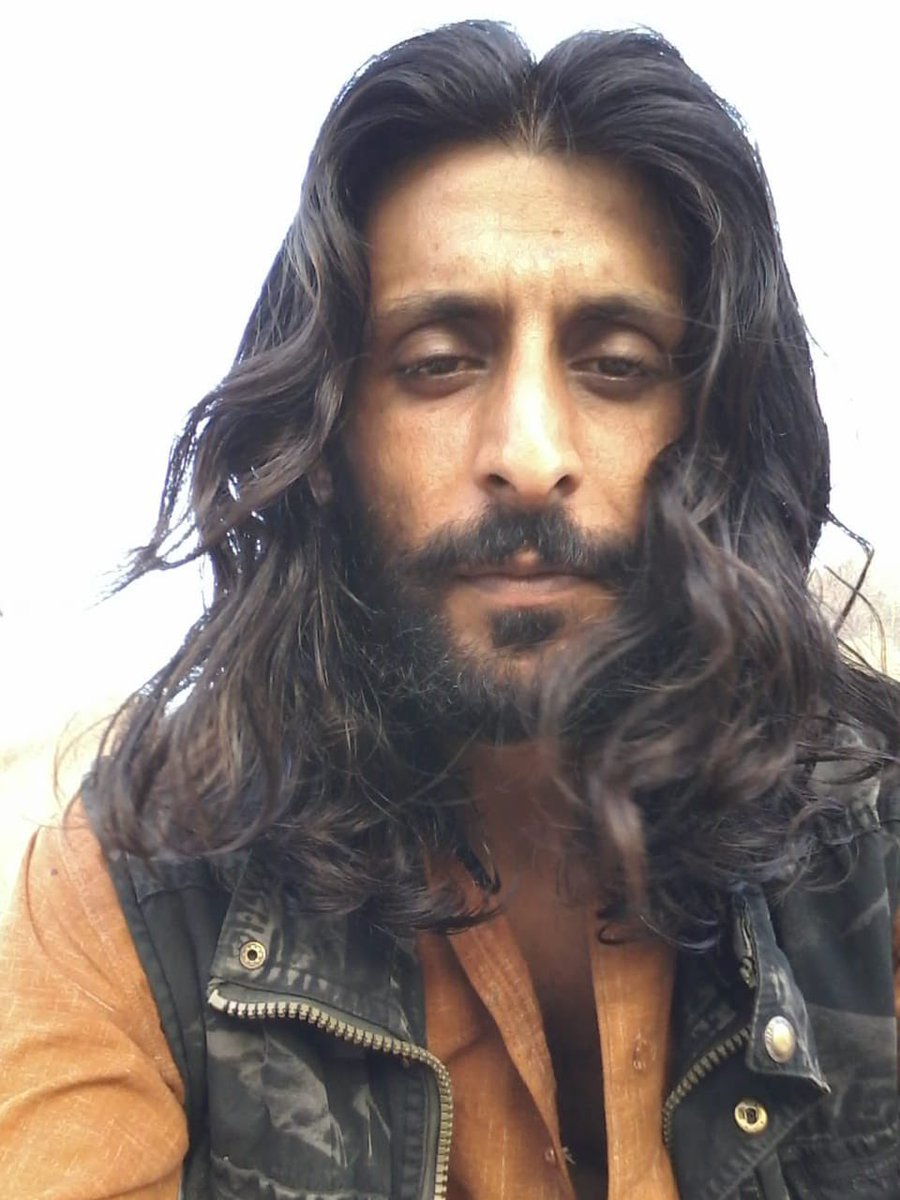
Muhammad Merah, a 23-year-old Frenchman of Muslim faith, killed seven innocent victims and severely wounded another one in March 2012. The murder spree shocked France. The perpetrator left them bewildered. Those who knew him could not reconcile his cold-blooded violence with the mild manners he displayed in society (Libération, March 21, 2012). [1] Those who did not know him repeatedly contrasted his angelic baby face with his dark, troubled soul (Le Monde, March 22, 2012). The Direction Centrale du Renseignement Intérieur (intelligence services) failed to uncover the plot, as he did not behave in a way that was typical of a Salafist-Jihadist planning an attack (Le Monde, March 23, 2012).
A broken, fatherless home
Merah was born on October 10, 1988 in Toulouse, France to Muhammad Ben-Allal Merah and Zoulikha Aziri; he was the last of five kids. He spent his early years in a broken, dysfunctional home marked by verbal abuse, physical violence and neglect. After his parents’ divorce in 1993, much to Muhammad’s dismay, the father fell out of contact and his mother neglected him. [1] At six years old, Merah was capricious and violent; his mother was unable to impose any constraints or rules on him. According to a psychologist commissioned by the Appeals Court in Toulouse, Merah waited for everyone to be asleep to leave the house, go outside and act like the area’s teenagers (L’International, 13 June 2012). At eight years old, social services placed him in a group home where he frequently acted out. Due to his behavioral problems, he was assigned to five different group homes between the ages of 10 and 13 (Mediapart, April 1, 2012).
Merah did not find any reprieve in school. His teachers noted that he was capable and willing, however, they also reported that he was subject to sadness as well as to unforeseeable and uncontrollable outbursts of violence. His behavioral problems earned him various sanctions, suspensions, and exclusions at school. As a result, he changed schools frequently. [2]
School officials and social services repeatedly outlined the familial deficiencies and called for support. In 1997, a social worker observed that Merah came back from school when he wanted, ate as he pleased, and went to bed when he felt like it. She concluded, “Muhammad is in danger by lack of proper educational environment.” [3] In 2001, the school’s principal requested that the court mandate another social services’ intervention. She wrote: “Muhammad and his mother are in grave danger…An intervention in this family environment is urgent to restore calm. Muhammad is at risk of becoming dangerous.” [4] However, no amount of intervention restored any sense of calm and balance; Merah remained disruptive, unable to accept and abide by limits and rules and was in constant need of reassurance. All too often, he was either the victim—notably at the hands of his brother Kader—or the perpetrator of violence and vandalism (L’International, June 13, 2012).
At 16, an opportunity to turn a corner arose when Merah started a vocational training program to work in a body shop. The program seemed well suited. Merah liked cars, motorcycles, and speed. His boss found him gifted and dedicated and told reported that he could have succeeded in this career path (La Dépêche du Midi, June 12, 2012).
Delinquency
The respite, however, was short-lived and Merah followed the familial pattern into delinquency. In the Merah family, the mother encouraged her kids to steal for her at the local drugstore. Starting in 2004, Merah accumulated run-ins with the law. In 2004, he stoned a city bus; he was arrested but because he was young, he was only reprimanded. In 2005, he assaulted a social worker and received a suspended five-month sentence. Two months later, he was arrested for driving a stolen motorcycle. In 2006, he stole a cell phone using violence. In 2007, after one last beating from Kader, armed with a pistol, Merah ransacked his brother’s home and warned, “If you piss me off again, I will kill you” (Paris Match, November 8, 2012). In 2007, he stole a BMW X5 during a home jacking, but evaded police during a high-speed chase.
Police arrested Merah for snatching an old lady’s purse in December 2007. He was of-age then—the leniency he benefited from as a juvenile ended—and his past suspended sentences were restored. He got eighteen months in jail. Accounts of his time in prison are contradictory. The wardens reported that Merah followed the prison’s rules and did not socialize with Islamists. On the other hand, Me Etelin, his lawyer at the time, said that he felt his imprisonment constituted a grave injustice (Paris Match, March 30, 2012).
On account of good behavior, Muhammad Merah’s sentence was modified, and he was sent to a semi-open structure in October 2008 where he stayed for two months. He did not, however, take advantage of the support system that could have helped his reinsertion. The director reported, “Muhammad Merah never subscribed to our educational, psychological, or professional project. He was not aggressive, but we constantly had to remind him of the rules. He said that only God was important and he listened to religious music all the time” (Le Nouvel Observateur, April 3, 2012).
Released in December 2008, he was re-arrested within weeks after he refused to comply with a roadside police check and was sent back to prison. After forty-eight hours, he tried to hang himself and spent the next two weeks in a psychiatric ward. According to the expert Alain Penin, Merah displayed average intellectual capacities and no pathological issues. However, he also found him introverted, anxious, and emotionally vulnerable. He concluded that psychotherapeutic support was necessary (La Dépêche du Midi, 22 March 2012). He was released in September 2009.
During his conversation with the Direction Centrale du Renseignement Intérieur (DCRI) (intelligence services) negotiator who tried to convince him to surrender, Merah explained that his conversion to Salafist-Jihadism occurred on February 18, 2008. That day, he was interrogated about the 2007 high-speed chase on the beltway. “I prayed to Allah. I asked for his help. Then I realized that the gendarmes were completely off the mark. That was proof of Allah.” (Libération, July 17, 2012).
The reality however, may be a bit more complicated. Back in 2006, the Renseignements Généraux (RG) identified Merah as close to the radical Salafist movement because of his link to Sabri Essid, a man accused and later convicted of running a network dedicated to recruiting volunteers for jihad in Iraq (Terrorism Monitor, March 1, 2007). The RG established at the time that Merah was “likely to travel abroad and providing logistical assistance to extremist militants” (France TV Info, March 31, 2012).
As years passed, Merah found in Salafist-Jihadism a meaning, a call and a blueprint for action. After self-styled studies, he concluded that radical Islamists were “in the right.” He accepted the creed that the world is divided between believers (Muslims) and miscreants (everyone else) and that it was a Muslim’s duty to fight against the miscreants (Libération, July 17, 2012). In his distorted view of the world, stealing from miscreants and terrorizing them was equivocal to accomplishing God’s will. Salafist-Jihadism also gave him a messianic purpose in life, a way to accomplish what he viewed as his religious duty and secure his place in the cosmic order (Libération, July 17, 2012).
During his second stay in prison, his religiosity and his interest in jihad increased rapidly and dramatically (Le Journal du Dimanche, March 25, 2012). Although he did not participate in the state-sponsored religious activities, he read the Quran and countless Salafist books. According to a fellow inmate, he spent his time listening to Islamist chants and appeals in support of Jihad (Le Nouvel Observateur, April 3, 2012). Released from prison in September 2009, he continued to live the same lifestyle, spending his time between prayers surfing jihadist websites on the internet (Le Nouvel Observateur, April 3, 2012).
Merah moved at this point in his life from belief to action and embarked on a series of trips to the greater Middle East in an effort to “find and join his brothers.” In May 2010, he went to Algeria hoping to link up with Algerian fighters. From July to September 2010, he visited Turkey, Lebanon, Israel (Jerusalem) and Egypt. From October to November 2010, he traveled to Tajikistan and Afghanistan where he was arrested by the Afghan National Security Forces (ANSF) at a checkpoint, handed over to the U.S. Army and then sent back to France. In August 2011, he traveled to Pakistan via Oman. In Islamabad, he found a facilitator who helped him join a training camp where he stayed for an undetermined period of time and received handgun training. He returned to France two months later with Hepatitis A.
Taqiyya
At this time, Merah’s family, fellow inmates and acquaintances became aware of his radicalization. The Imam of the Basso Cambo mosque watched helplessly: “Since he was released from prison, things got worse. He was confused and mixed up everything. He did not understand the Quran. He thought we lived in a country of miscreants whom we should punish. I tried to reason with him a thousand times” (Le Nouvel Observateur, April 3, 2012). Meanwhile, in 2010 and 2011, the DCRI noted that Merah was in episodic contact with the local Salafist movement, lead a life of reclusion and displayed signs of mistrust toward society (Le Parisien, August 9, 2012). In June 2011, the head of the local branch of the DCRI recommended that Merah be placed under judicial investigation. The central office ignored the request.
Merah went to great lengths to disguise his activities and evade surveillance. By his own account, he developed his own plans to “join his brothers in arms” first in Algeria, then in the Levant, afterwards in Afghanistan and finally in Pakistan. He paid for his trips by selling the BMW he restored and petty criminality (Libération, July 17, 2012). He avoided border detection by taking an indirect flight via Oman to Pakistan. He searched for his “brothers in arms” on his own by visiting mosques, failing in Algeria and Afghanistan due to the states’ security measures. He also took pains to act as a tourist, taking pictures, documenting his travels, to build a cover story in case police questioned him.
He took great pride in evading the surveillance of the DCRI seeing his ability to fool the police as a messianic sign that he was accomplishing God’s will. “You and your director, you are going to be in trouble. You could have stopped me; you could have stopped this massacre. But look what Allah did. You had a stratagem against me and my Creator, but look, Allah is a better strategist, he turned your stratagem against you and he allowed me to attack you (Libération, July 17, 2012).
Merah was killed a few hours after this conversation ended during the RAID’s assault on his hideout, putting an end to his murderous spree. While Merah claimed to be affiliated with al-Qaeda and Merah had made several trips to the Middle East and Afghanistan, Merah was a very unique cockatil of psychological vulnerability, delinquency and radicalization unlikely to be replicated in the future. It is important nevertheless for intelligence services to adapt their posture to interdict these individuals before they act.
Notes
1. Adbelghani Merah and Muhammad Sifaoui, “Mon frère, ce terroriste: Un homme dénonce l’islamisme,” Calman-Lévy, 2012.
2. Eric Pelletier and Jean-Marie Pontaut, “Affaire Merah: l’enquête,” Michel Lafon, 2012.
3. Pelletier, op cit.
4. M6 Enquête exclusive, “Muhammad Merah: Itinéraire d’un terroriste français,” November 11, 2012.