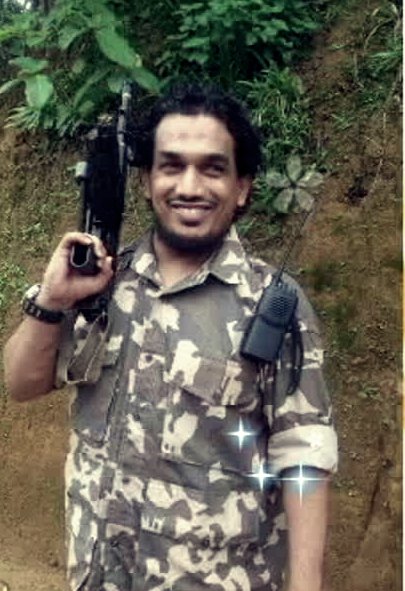
Twan Mrat Naing: Ruler of Rakhine and Leader of the Arakan Army
Twan Mrat Naing: Ruler of Rakhine and Leader of the Arakan Army
Executive Summary:- Twan Mrat Naing is the leader of one of the major anti-junta ethnic factions in Myanmar, the Arakan Army (AA). Twan has pushed fairly successfully for a separate Rakhine State under his leadership, either independent or in confederation with a new national government once the junta falls.
- Twan’s success stems from a coherent and influential ideological vision, his skill in establishing alliances with other ethnic militias in Myanmar as well as international actors, and his ability to create parallel state institutions in the territories the AA controls.
- Support for Twan internationally has been complicated by the fact that his faction has been accused of having participated in the genocide of the Rohingya. He himself generally refers to the Rohingya as outsiders, despite occasional efforts at reconciliation.
- Similarly, Twan has voiced his unwillingness to submit Rakhine State to the democratic National Unity Government he fights alongside, as he views majority rule as a return to the domination of the Rakhine people by the country’s dominant ethnic group.
The tide of Myanmar’s civil war shifted significantly in favor of anti-junta forces since Operation 1027 in late 2023. The anti-junta effort was launched by the three major ethnic armed militias that compose the Three Brotherhood Alliance (3BA) (Burma News International, December 11, 2023). The Arakan Army (AA), which has since rebranded as the “Arakha Army,” is a key member of the 3BA, led by its Commander-in-Chief, Twan Mrat Naing (Twan). Twan is cautious about giving interviews in English, out of concern that his words might be misinterpreted. As a result, he tends not to be widely known, but Twan’s tone has been bold in his few public appearances (Prothom Alo, January 2, 2022). Twan has arguably become the most prominent and successful ethnic armed militia leader in western Myanmar, primarily in Rakhine (Burma News International, February 8). The keys to his success are the implementation of his ideological vision, the building of alliances within Myanmar and internationally, and the establishment of functional local governance structures. Despite this, Twan remains controversial in many circles, due to his staunch nationalism, chauvinism toward the Rohingya, and his denial of rights to non-Rakhine people. The junta and the AA are both strongly opposed to the Rohingya people and adhere to Buddhist nationalism. Both performed actions against the Rohingya people during the genocide. Currently, the junta is in a vulnerable position. This has pushed them to reverse their position and incorporate the Rohingya into their ranks instead. This effort centers around working to convince the Rohingya that the AA represents the greater evil. Currently, the Rohingya are predominantly being persecuted by the AA. Twan’s Early Life and the Formation of the Arakan Army Twan was born in 1978 in Rakhine State, Myanmar, and studied at the Technological University in Sittwe, Rakhine State’s capital. He is married to Ma Hin Zar Pru and has two children, though they fled to Switzerland in 2020 after being detained by Thai officials for two months in 2019 (Narinjara News, February 26, 2020). In the same year, Singaporean authorities arrested and later released Ko Aung Myat Kyaw, one of Twan’s brothers, for allegedly financing the AA (The Irrawaddy, July 10, 2019). Twan served as a tour guide in Yangon at a young age and had ambitions to join Rakhine-based nationalist political groups. During his time as a tour guide, he developed a strong national and foreign network. Twan was among many young men who traveled to Kachin in search of lucrative employment in jade extraction operations (Mongabay, April 25, 2022; Reuters, January 15, 2019). Dissatisfied, Twan convinced 25 other men to join him in forming the AA in the town of Laiza in Kachin State on April 10, 2009, invoking Rakhine nationalism and denouncing the exploitation of Rakhine men by the Bamars, Myanmar’s largest ethnic group (The Irrawaddy, January 9, 2019). ‘Arakan Nation Through the Way of Rakhita’ Twan’s political ideology evolves around his vision of forming “An Arakan Nation Through the Way of Rakhita.” This mantra expresses his desire to regain the sovereignty of the Arakan State and people, which was lost during the period of British colonial occupation and later at the hands of the Bamars who have ruled the country since its independence (Center for Arakan Studies, July 2). [1] Although Twan is ambiguous about achieving full sovereignty over Rakhine State or the timeline for potential independence, he has affirmed his focus on securing internal sovereignty first. As a first step, his goal is for Rakhine State to become part of a looser confederation within Myanmar in the future (Burma News International, September 15, 2022). Twan believes that the Bamars of central Myanmar have always exploited the ethnic Rakhines and denied them their rights and proper respect. He thus asserts the need to achieve the AA’s goals through action rather than negotiation, trying to evoke a spirit of lost Rakhine glory and independence (Narinjara News, April 11, 2023). As a result, in 2016 Twan formed the political wing of the AA, the United League of Arakan (ULA), based on his vision of “Rakhita.” In 2019, Twan also initiated “Arakan Dream 2020” to mobilize the young Rakhine population behind the AA’s nationalist cause (Frontier Myanmar, May 2, 2022). Twan has ideological differences with Myanmar’s pro-democratic National Unity Government (NUG), which wants Myanmar to be a federal state rather than a confederation. This is one reason the AA did not participate in the Civil Disobedience Movement (CDM) launched by the NUG after the junta-led coup in February 2021 (Asia Times, January 18, 2022). Despite criticizing the NUG, Twan later assisted the NUG’s military wing, the People’s Defense Force (PDF). This primarily came in the form of training, arms supply, and joint operations against the Tatmadaw (military)-led State Administration Council (SAC). Twan claims that the foundation of his strategic partnership with the PDF is their common adversary (The Irrawaddy, April 10, 2023). That being said, Twan opposes a democratic Myanmar in which the Bamar majority would continue to have political power over his people. Internal Alliances and External Liaisons Twan has always understood the benefits of making friends within and outside of Myanmar. In particular, he has focused on building strong connections and alliances with key ethnic armed militias nationwide. The Kachin-based Kachin Independence Army (KIA) supported the formation of the AA, and the AA has also received armaments from Peng Daxun and his Myanmar National Democratic Alliance Army (MNDAA), the Shan-based ethnic armed militia (Militant Leadership Monitor, July 31, 2024). Twan also enjoyed support from the MNDAA under its previous leader, Peng Jiasheng—Peng Daxun’s father (Burma News International, April 19, 2022). The AA also maintains strong ties with other significant ethnic armed militias, such as the Chin National Army (CNA) in Chin State, the Karen National Liberation Army (KNLA) of Kayah and Kayin states, the United Wa State Army (UWSA; Militant Leadership Monitor, May 21, 2024), and the Ta’ang National Liberation Army (TNLA) of Shan State. In a broader sense, the AA is a part of the two main alliances of ethnic armed militias: the Northern Alliance (established in 2016 by the KIA, TNLA, and MNDAA) and the 3BA (created in 2019 by the TNLA and MNDAA) (Frontier Myanmar, January 30, 2023). Since 2017, the AA has also been a member of the largest ethnic armed militia negotiation group, the Federal Political Negotiation and Consultative Committee (FPNCC), which is led by the UWSA and includes five other ethnic armed militias (Center for Arakan Studies, July 2, 2024). While the AA fought across several states of Myanmar, Twan was able to solidify his position and influence within the group due in part to these contacts. Furthermore, the AA worked with the MNDAA and UWSA to fight the Tatmadaw during the Kokang Offensive in 2015. A long history of such engagements enhanced the AA’s credibility as an ally, and Twan leveraged this in order to procure weapons, money, and logistical support from the ethnic armed factions bordering China and Thailand (Asia Times, February 1, 2024). Twan also secured China’s tacit support by allying with pro-Chinese ethnic armed militias such as the UWSA, TNLA, and MNDAA. Beijing, in turn, reportedly supplied the AA with significant armaments in exchange for an agreement not to attack Chinese establishments or projects in Rakhine (The Institute of Chinese Studies, Delhi, June 14, 2021). As a result, the AA attacked Indian projects multiple times but left competing Chinese projects alone (Light of Catholics in Asia News, May 28, 2020). Twan confirmed that he maintains contact with Beijing concerning a variety of military issues. Eventually, a diplomatic solution was sought, and Twan confirmed in February 2024 that the AA would not target any future Indian projects in Rakhine (The New Indian Express, February 16). Twan has also expressed his willingness to work with Bangladesh on border security and Rohingya issues (Prothom Alo, January 2, 2022). The SAC is still by and large the internationally recognized government of Myanmar, and has designated the AA as a terrorist group and pushed others to do the same. This means that the militia has had to face strong international pressure and restrictions when dealing with other global actors, especially China (Channel News Independent, September 4). Twan, on the other hand, understands the geopolitical importance of controlling Rakhine and has used this card to secure his interests with international actors. Military Successes and Local Governance Twan believes Rakhine State needs its own army to survive. Bamars make up the majority of Myanmar’s Armed Forces, also known as the Sit-tat or Tatmadaw. Therefore, a separate armed force like the AA is considered necessary by Twan for the Rakhine people’s survival and self-defense. Twan’s ranks swelled in the period following the junta-led coup in 2021, when the AA took control of key cities, airports, and border towns (Radio Free Asia, August 27). Twan also established the Arakan Army Auxiliary (AAA) to handle law enforcement and intelligence gathering. These are, of course, in addition to the AA’s main army, which has at least 30,000 regular troops, many of whom are currently stationed in different states (Burma News International, April 19, 2022). To increase the AA’s strength and inclusivity, Twan has also opened its ranks to women. During the COVID-19 pandemic, Twan established a strong shadow government in Rakhine, as well as the Arakan People’s Authority (APA), which acts as the region’s judicial and administrative system (Burma News International, April 19, 2022). In doing so, Twan ensured the establishment of a proper legal system, something the junta had neglected. He also focused on promoting social security, improving healthcare, educating students, and securing taxes from the local population (Center for Operational Analysis and Research, September 27, 2023). Through all these efforts, he has secured a place of acceptance among the common Rakhine people and ensured his influence over the region from top to bottom. By seizing cities like Paletwa, Twan has solidified the AA’s hold on neighboring Chin State, bringing more than half of it under his authority (The Irrawaddy, May 28). Conclusion Twan, despite his rising image as the leader of the Rakhine people, is not without controversy. He previously refused to accept the Rohingya people as a valid identity and referred to them as outsiders. The Arakan Rohingya Salvation Army (ARSA) and Rohingya Solidarity Organisation (RSO) accuse his forces of sectarian violence, including the killing of 200 Rohingyas in the town of Buthidaung in Rakhine State (Prothom Alo, August 27). The ARSA and RSO also accuse him of human rights abuses, human trafficking, and drug smuggling (Mizzima, February 10). Genocide scholars have condemned Twan’s revisionist view of the former Arakan State’s history and disregard for Rohingyas (Prothom Alo, January 9, 2022). Further, Twan has criticized and disregarded the NUG’s pro-Rohingya views and suggested that the NUG ought not “meddle” in Rakhine affairs (Burma News International, June 5, 2024). This reflects his two-faced policy of recognizing the need to help the stranded Rohingyas in Bangladesh but denying them a place in building an inclusive Rakhine State. Overall, Twan Mrat Naing has established himself as the image of “Rakhine Destiny.” This phenomenon is not uncommon in Myanmar, as UNSW leader Bao Youxiang presents himself similarly (see Militant Leadership Monitor, May 21, 2024). Twan acknowledges the similarities between his dream of creating a Rakhine State and Bao Youxiang’s efforts to build a Wa State. With consecutive victories and increasing influence, Twan has become one of the most formidable and powerful warlords in Myanmar. Notes: [1] The Bamar people are often referred to as the “Burmese” in English, though this introduces a number of complications. The Bamar lent their name to the country they dominated upon independence, and so “Burmese” was for a time the correct demonym for a person from the country of Burma. After the junta seized power and changed the English translation of the country’s name to Myanmar in 1989, the demonym officially became “Myanma” or “Myanma people.” This has not been adopted widely for a number of reasons—ranging from a preference in the English-speaking world for the old terminology, concerns over historical and ethnic implications, as well as questions as to whether or not acceding to the change enhances the junta’s legitimacy. For the sake of the reader, we use Bamar to describe the largest ethnic group, as it is the most correct and least complicated term available.