A Post-Mortem Profile of AQAP Shari’a Official Harith bin Ghazi al-Nadhari
A Post-Mortem Profile of AQAP Shari’a Official Harith bin Ghazi al-Nadhari
On January 31, a U.S. drone strike in Shabwah, a province in south Yemen, killed Shaykh Harith bin Ghazi al-Nadhari, a high-ranking jihadist scholar and one of the most prominent members of al-Qaeda in the Arabian Peninsula (AQAP) (Yemen Times, February 2; al-Sharq al-Awsat, February 5). AQAP confirmed al-Nadhari’s death with a message posted on Twitter on February 5, in which the group claimed he was killed in a “crusader American drone strike against his car,” along with two other AQAP militants (The National [Abu Dhabi], February 5). What follows is a post-mortem profile of al-Nadhari and an assessment of what his death means for the future militant path of AQAP.
From the Shadow to AQAP’s Voice
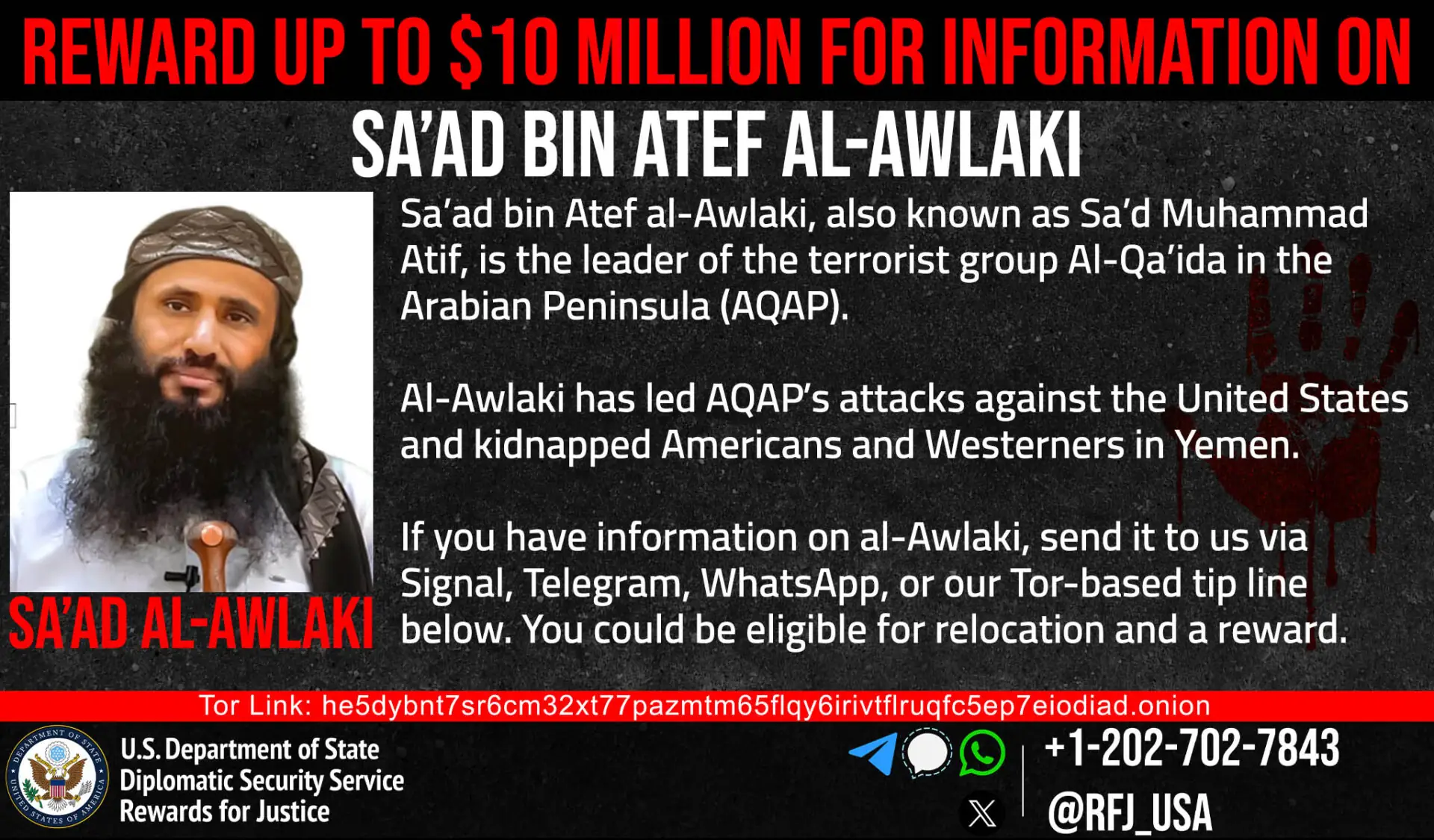
Information on al-Nadhari’s life before AQAP as well as on his militant path is scarce. However, Yemeni and Arab media often identified al-Nadhari by his real name, Muhammad Murshidi (al-Tagheer.com, February 6; al-Arabiya, February 10; al-Hayat, February 28). According to a Yemeni media report, he was from al-Hawta, in Hadramawt province, and he obtained a degree in Islamic studies (Yemen-Press.com, February 5). He appeared as al-Nadhari for the first time in September 2011, after which he started to appear with growing frequency in AQAP media releases under the form of religious statements and lectures, audio clips and videos. Al-Nadhari’s emergence at that time as a leading religious figure within AQAP might be connected with the demise of Anwar al-Awlaki, the U.S.-born radical preacher who was killed in a U.S. drone strike in September 2011 and who, until then, was the main mouthpiece for AQAP’s religious propaganda. Gradually, al-Nadhari became the new voice in AQAP religious releases as the main source for the group’s ideological guidance after al-Awlaki’s death (al-Jazeera, September 30, 2011).
Al-Nadhari’s prominence as a jihadist preacher and ideologue within the broader jihadist movement started to flourish with a series of audio lectures titled “The Merits of Martyr and the Virtue of Martyrs.” In these lectures, al-Nadhari discussed an extensive range of doctrinal issues from the necessity for Muslims to participate in jihad and the rewards for being a martyr to much more politically-oriented topics such as the necessity for Muslims to “rise” against the United States. He also offered practical advice to lone-wolf jihadists in the West. The fact that his audio lectures have been widely disseminated across different jihadist media outlets reflects his reputation as a jihadist scholar beyond AQAP’s audience. Indeed, al-Nadhari’s writings have also been featured in “Voice of the Afghan Jihad,” a magazine that publishes statements of high-ranking al-Qaeda jihadist scholars. [1]
The Debate With the Islamic State
Al-Nadhari’s prominence as a leading jihadist theoretician and senior AQAP member became evident when the internal rift between al-Qaeda’s leadership and the Islamic State (formerly known as Islamic State of Iraq and Syria or ISIS) broke out in 2014. In July of that year, al-Nadhari released a joint audio statement with another high-ranking AQAP ideologue, Ibrahim al-Rubaish, in which he defended the reputations of unnamed jihadist “scholars” and warned against “slandering” them. The audio, despite its lack of direct references, was a clear allusion to the pro-Islamic State scholars who had heavily criticized al-Qaeda leader Ayman al-Zawahiri and veteran jihadist ideologues for rejecting the legitimacy of the caliphate proclaimed by the Islamic State in June 2014. Then, in November 2014, al-Nadhari denounced the Islamic State again, criticizing its “expansionist intentions” as they were “driving a wedge” among jihadist groups (Yemen Fox, November 23, 2014; al-Arabiya, November 22, 2014). In January 2015, he and nine other high-ranking scholars, including Abu Mariya al-Qahtani (a Shari’a official from the official al-Qaeda affiliate in greater Syria, Jabhat al-Nusra) signed a letter addressing a group of Caucasus jihadists who had defected to the Islamic State. In the statement, the ten scholars denounced these defections, arguing that the Islamic State’s self-proclaimed caliphate was illegitimate because it was not established according to Shari’a, and it was proclaimed without consultation with al-Qaeda’s leadership. Al-Nadhari’s statements were a clear reflection of AQAP’s stance on the (on-going) ideological debate between the Islamic State and al-Qaeda, with AQAP siding with al-Zawahiri in condemning the Islamic State’s insubordination and its bid to defy al-Qaeda authority. However, al-Nadhari’s constant involvement in such a divisive issue visibly reflected the degree of religious authority and credibility he had reached in only three years.
The Role of al-Nadhari Within AQAP
Al-Nadhari’s role within AQAP appears to have been related to the dissemination of religious guidance and propaganda material. Despite a picture posted to social media in November 2014 showing an armed al-Nadhari manning a checkpoint in southern Yemen, there is no indication that he actively engaged in militant operations in Yemen, or that he held any specific combat role within the organization (Twitter, November 30, 2014). Media reports claimed that he was at some point nominated as AQAP’s deputy manager, although no mention of this role emerged in official communiqués (Hournews.net, August 8, 2014). By contrast, AQAP’s “martyrdom” statement identified al-Nadhari as the group’s senior Shari’a official (al-Tagheer.com, February 6). [2] Nevertheless, since January 2015, al-Nadhari’s statements had noticeably been more focused on strategic and tactical issues rather than religious topics, suggesting that his role within the group was becoming more operational.
On January 10, al-Nadhari released an audio message praising the January 7 attack on the French magazine Charlie Hebdo in Paris. Although the audio did not include any claims of credit for the attack, al-Nadhari justified the massacre by accusing France of being “among the leaders of disbelief,” and threatened more attacks against the country (al-Jazeera, January 10). On January 14, AQAP’s senior member, Nasser bin Ali al-Ansi, officially took responsibility for the Paris attack with a video posted on YouTube claiming that AQAP had been “ordered” by al-Zawahiri to carry out the attack. He also stated that AQAP directed the operation and “carefully chose the targets” (al-Akhbar, January 14).
A few days later, on January 24, al-Nadhari released another statement, in which he issued a number of guidelines for “suicide operations.” [3] In the video, he reiterated al-Qaeda’s view that mujahideen must avoid the “unjust shedding of inviolable blood,” warning against carrying out martyrdom operations targeting fellow Muslims. Al-Nadhari stated that jihadists should avoid using “mass killing methods” in places such as mosques or markets where Muslims congregate in large numbers. He concluded that only those individuals who have a proper understanding of Shari’a are entitled to issue fatwa (religious edicts) concerning this specific topic. Again, al-Nadhari’s statement was another indirect yet powerful criticism of the Islamic State, and, specifically, a rejection of the indiscriminate killings of Shi’a and Sunni Muslims carried out by that group.
Conclusion
Al-Nadhari’s death represents a powerful blow to AQAP’s ranks as it deprives the organization of a prominent senior figure and an ideological point of reference. However, it also removes an influential pro-al-Qaeda voice from Yemen and, potentially, a counter-weight to the increasing pro-Islamic State trends taking root in the country. In November 2014, the Islamic State’s self-proclaimed caliph, Abu Bakr al-Baghdadi, announced the establishment of Wilaya al-Yaman (a province in Yemen) alongside the ones proclaimed for Saudi Arabia, Libya, Algeria and Sinai (Akhbaralyom, November 14, 2014; Cairo Post, November 15, 2014; al-Akhbar, November 21, 2014). Since then, and different from the Islamic State wilayat in Sinai, Algeria and Libya, the activities of Wilaya al-Yaman seem to have been mainly limited to propaganda and recruitment efforts, for instance, publicizing the establishment of Shari’a courts in places such as Shabwa or Aden. [4] Islamic State supporters have also attempted to directly reach out to AQAP militants in Yemen on social media, using Twitter hashtags such as “Lions of Yemen the Khilafah is your destiny” to urge them to join the group and to pledge allegiance to the Caliph al-Baghdadi.
In early 2015, however, anonymous Yemeni security officials reported that the Islamic State had established a presence in at least three provinces in southern and central Yemen (Ibb, Hadramawt and Lahij), where the group was probably attempting to build its operational capabilities (Khabaragency, January 17; al-Marsd, January 22; al-Mashhad al-Yemeni, March 22). These accounts proved to be reliable on March 20, when the Islamic State wilayat in Sana’a claimed responsibility for its first attacks in the country. [5] The first operation targeted two mosques frequented by supporters of the Zaydi-Shi’a Houthi movement, the Badr and the al-Hashoosh mosques, where four suicide bombers blew themselves up during Friday prayers, killing 137 people and injuring 345 others (Barakish.net, March 20; al-Masdar Online, March 20). In the second attack, a suicide bomber targeted the Department of Criminal Investigation in Sa’ada city, a Houthi stronghold in northern Yemen, killing an unspecified number of people (al-Masdar Online, March 20). On March 21, the Islamic State allegedly claimed responsibility for a third attack in al-Hawta, in which 29 soldiers from the Special Security Forces were executed (al-Shorfa, March 23; al-Arab Online, March 23). Tellingly, the Islamic State wilayat in Sanaa claimed on March 22 that the four suicide bombers of the Sana’a attacks were all Yemeni militants (three from Ibb city and one from Sana’a), suggesting that the group’s base of supporters is mainly made up of Yemeni militants rather than foreigners (YemenNews24, March 24). If genuine, the claim suggests that the Islamic State is already a strong competitor of AQAP in Yemen, where it would probably try to exploit the current Yemeni political and security vacuum to boost its ranks, attract potential defectors from AQAP and ultimately challenge its authority in the country.
The absence of a fierce critical voice such as al-Nadhari might facilitate the Islamic State’s scheme, undermining AQAP’s attempt to headline the jihad in Yemen. His absence could also give more room to more hardline factions within AQAP that might resort to more spectacular attacks to challenge the Islamic State’s quest for prominence and evade the boundaries for waging jihad set by al-Nadhari.
Ludovico Carlino is a Middle East and North Africa analyst at IHS Country Risk specializing in jihadist movements across the region. The views expressed here are those of the author and do not reflect the official policy or position of IHS.
Notes
1. https://jihadology.net/2014/07/01/july-2014-issue-of-nawai-afghan-jihad-magazine/.
2. https://nasher.me/anedary/.
3. https://justpaste.it/KOATER10.
4. https://justpaste.it/yemencaliphate1; https://justpaste.it/adenwilayat.