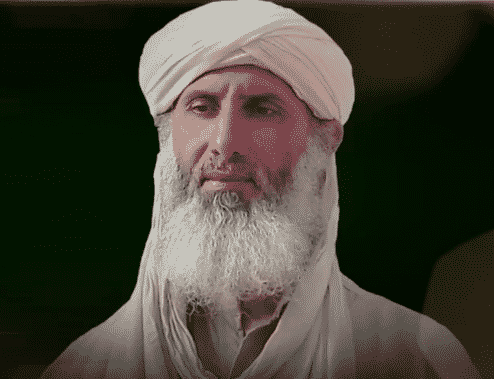
Egypt’s Most Wanted—Hisham Ali Ashmawy Mosaad Ibrahim
Egypt’s Most Wanted—Hisham Ali Ashmawy Mosaad Ibrahim
Hisham Ali Ashmawy Mosaad Ibrahim (a.k.a. Abu Omar al-Muhajir al-Masri) is a former Egyptian military officer turned al-Qaeda jihadist who has become the most wanted militant in Egypt. He defected from Ansar Bayt al-Maqdis (ABM), a Sinai Peninsula-based group, after the group declared an oath of allegiance to Abu Bakr al-Baghdadi, the leader of the Islamic State, in November 2014, and became the organization’s Wilayat Sinai (Sinai Province). Unswayed by the Islamic State’s powerful appeal, Ashmawy continues to follow in the footsteps of al-Qaeda leader Ayman al-Zawahiri, the leader of al-Qaeda, who recently ridiculed the Islamic State’s discourse; he described al-Baghdadi’s caliphate in an audio message released last month as “illegitimate,” adding that “we do not acknowledge the caliphate, and Muslims are not obliged to pledge allegiance to al-Baghdadi” (YouTube, October 9). Like his icon, Ashmawy believes the Islamic State deviates from the right jihadist path. For this reason, he formed a new al-Qaeda-inspired group within Egypt called al-Murabitun.
Ashmawy was first mentioned by former Egyptian interior minister Mohamed Ibrahim as the mastermind of the foiled assassination against him in 2013 (al-Arabiya, October 3). After carrying out a series of attacks against police and military personnel over two years, in July 2015, Ashmawy announced that he was the amir of “al-Murabitun,” a word with a Quranic connotation, meaning “Sentinels” (Sasa Post, July 26). The newly-founded group seems to be an extension of the al-Murabitun group in Mali, which has also refused to switch allegiance from al-Qaeda to the Islamic State. The Egyptian al-Murabitun appears to be trying to fill the shoes of other al-Qaeda-inspired groups that were weakened by the heavy-handed security crackdowns, such as Ajnad Misr (Soldiers of Egypt).
For its part, al-Qaeda views al-Murabitun as a face-saving attempt to compete in Egypt with the Islamic State by supporting and funding Ashmawy’s group. According to Egyptian security investigations, in fall 2014, a delegation from al-Qaeda travelled to Sinai to convince ABM to stay loyal (al-Watan, July 23). However, after the group declared allegiance to al-Baghdadi, al-Qaeda cut off its funding and support and encouraged Ashmawy and others to split and form a new group.
Ashmawy, 35, is a former Egyptian special forces officer known as “Thunderbolt,” who was dismissed for his radical anti-military views in either 2009 or 2011 after serving roughly 14 years in the Egyptian military. He subsequently received training in manufacturing explosive charges in Syria and Libya from Abdul Baset Azoz, one of Ayman al-Zawahiri’s aides. In 2013, after Egyptian President Abd al-Fattah al-Sisi’s crackdown on the Muslim Brotherhood, Ashmawy joined ABM, which was then inspired by al-Qaeda (al-Watan, July 2). While there, Ashmawy was training the group’s militants, drawing on his in-depth knowledge of military tactics; concurrently, he led several operations against the Egyptian military, including the Farafra attack on July 19, 2014, which claimed the lives of 22 soldiers, and the Sinai attacks that killed 29 soldiers near al-Arish in February 2015.
His paramount role in orchestrating and carrying out terrorist operations against military and police officers made him one of the most wanted men in the country by the Egyptian government. Members of the security apparatus accused him of being the mastermind of the foiled assassination against then-Interior Minister Mohamed Ibrahim in September 2013 and the assassination that killed Egypt’s General Prosecutor in 2015, although no group has claimed responsibility for that specific attack (al-Watan, July 2).
Ashmawy’s new group reflects the deep state of polarization—not only in Egypt but in other countries—between Abu Bakr al-Baghdadi and Ayman al-Zawahiri. For instance, members of the Sinai-based ABM were divided about whether or not to switch allegiance from al-Zawahiri to al-Baghdadi in late 2014. Ultimately, the majority—led by Kamal Alaam, Ahmad Zaid al-Kilany and Abo Osama al-Masry—decided to be a part of the Islamic State (Sasa Post, July 26). The decision was strategic as it enhanced the group’s survival against subsequent military crackdowns; it also meant a flow of regional weaponry as well as financial and recruitment support from the Islamic State in Syria and Iraq and in bordering Libya, leading to several subsequent attacks on the Egyptian military). Yet, for Ashmawy, this shift in allegiance and attack styles was not strategically correct, given the seeming impossibility of gaining territory in Sinai, where the Egyptian military still has the upper hand.
For that reason, the minority—led by Ashmawy—remained in the same track of al-Zawahiri, preferring the usual al-Qaeda tactics of hit-and-run attacks, booby-trapped cars and assassination attempts of high-profile figures in the al-Sisi government; such tactics seem to be more realistic and less costly despite the fact that al-Qaeda-affiliated groups currently have less leverage and support, which also makes them easier targets for security crackdowns. For instance, al-Qaeda-inspired Ajnad Misr, which emerged in 2014 by dealing harsh blows to security forces in Cairo, became ineffective after security forces killed the group’s leader Magd Eddin al-Masry Humam Muhammed in April 2015 (al-Youm al-Saba, July 27). Also, unlike in the Sinai, with its rough terrain and lighter police presence, the Egyptian police are much stronger in Cairo and the Delta, areas where al-Murabitun will likely operate. Proving Ashmawy correct, in January 2015, the Sinai Province launched a series of intensive attacks on military and police bases, but the group was unable to contend with a long direct exchange of fire with the military. The militants suffered a high number of casualties, and operations have been badly affected since then (Al-Monitor, July 6).
Ashmawy introduced al-Murabitun in an audio message posted on July 20 on an al-Qaeda-affiliated forum. The six-minute message was introduced by a recorded voice of al-Zawahiri calling for jihad followed by Ashmawy condemning President al-Sisi, saying that the country is “overpowered by the new pharaoh.” He then accused Sisi “and his soldiers” of fighting “our religion” and killing “our men and women” (YouTube, July 22; al-Ahram, July 24). Ashmawy’s message was reminiscent of previous al-Qaeda messages in the Arabian Peninsula in 2009, and it was also similar to the message announcing the foundation of Jabhat al-Nusra in Syria. All of these messages included snippets of old speeches from Osama bin Laden and al-Zawahiri on topics ranging from liberating Jerusalem from the “Zionists” and Israel to launching jihad against Western targets and supporters of the West. According to July’s message, Ashmawy’s al-Murabitun lists the Palestinian cause as its supreme goal. This is a subtle attack on the Islamic State’s Sinai Province, since the original name of the group (Ansar Bayt al-Maqdis) means Supporters of Jerusalem.
Ashmawy then released a 42-minute audio speech on October 1, in which he called on Muslims in Egypt to carry out lone wolf attacks on Egyptian police, soldiers and media personnel who “fight the religion of Allah day and night through their media channels.” [1] He also told listeners to record evidence of the murder and send it to al-Murabitun through the forums or Telegrams, a new messaging platform. In the audio message, released on the al-Fida and the Areen al-Mujahideen jihadist forums, Ashmawy also called on Muslims to take revenge for the killing of Palestinian teenager Hadeel al-Hashlamon by Israeli soldiers.
Ashmawy’s decision to take al-Zawahiri’s side and resume al-Qaeda-style operations adds to the already heavy burdens that the security apparatus in Egypt endures in its crackdown on the Sinai Province’s strongholds in the peninsula. The success of the military in dismantling the Sinai insurgency could mean more defections from the Islamic State group to Ashmawy’s group, especially if it operates well in Cairo and the Delta. Already, Ashmawy is more popular and has achieved more than any other jihadist in Egypt, making him the new icon for many would-be militants across the country.
Muhammad Mansour is an investigative journalist who covers a broad range of topics related to Egyptian politics and global affairs.
Note
1. A link to the audio message can be seen at Site https://sitemultimedia.org/video/SITE_Murabiteen_Ashmawi_Not_Become_Weak.mp4.