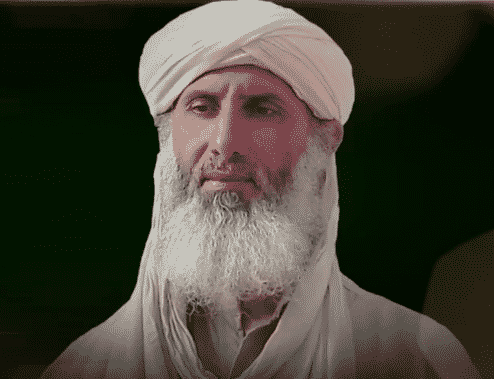
Is He Really Dead This Time?: The Nine Lives of Mokhtar Belmokhtar
Is He Really Dead This Time?: The Nine Lives of Mokhtar Belmokhtar
In the extremely fluid and opaque Northern African jihadist landscape, recent events have brought into the spotlight the fate of likely the most famous, and in a sense “mythical,” jihadist—Mokhtar Belmokhtar (a.k.a. Khaled Abu Abbass, and his many nicknames include “the Elusive,” “Marlboro man” and Belawarr, meaning “one-eyed”). He was one of the emerging fighters within the Groupe islamique armé (GIA) first and the Groupe salafiste pour la prédication et le combat (GSPC) later, before turning into one of the key leaders of al-Qaeda in the Islamic Maghreb (AQIM), with increasing operational and financial independence. He left AQIM in December 2012, creating his own group called Les Signataires par le sang, which later would merge with the Movement for Unity and Justice in West Africa (MUJWA), an AQIM splinter jihadist group that emerged in the northern African theater in 2012 and was characterized by a greater ethnic diversity than AQIM, reducing the influence of Algerian fighters in its higher ranks (Terrorism Monitor, April 6, 2012). [1] The product of this merger was a group called the al-Murabitun.
A terrorist attack targeting the Byblos hotel in Sévaré, Central Mali, on August 8, 2015 put Belmokhtar’s name in the headlines again. Twelve people (five soldiers, five terrorists and two foreign UN workers) were killed after Malian troops stormed the building. This attack highlighted, once again, the existence of a significant jihadist threat in Mali, the territory that became Belmokhtar’s stronghold before he was forced to flee in 2013. However, the militant who claimed responsibility for the attack is Souleyman Mohamed Kennen, allegedly part of the Malian battalion of Belmokhtar’s Les Signataires par le sang in 2012 (AFP, August 11). A statement dated July 17, but released on jihadist forums in August 2015 by the group al-Murabitun, claimed that Belmokhtar is their new leader, and that the group is now “Al Qaeda in West Africa.” The statement also denied any links with the Islamic State (for more on al-Murabitun, see Terrorism Monitor, October 17, 2013). In this new statement, the group threatened France and its allies, stating that it would attack French interests in France and the world (al-Jarida [Tunis], August 16). Belmokhtar’s “obsession” with France is not only linked to the current role of the former colonial power in the region. It is also rooted in his family history: his family was active in the resistance against the French in the 1950s, and his father named him “Mokhtar” after his uncle, who was killed by the French army (al-Bawaba, August 19).
In a sense, the July 17 statement is normal: in the fragmented world of global jihadism, statements either confirming or denying alliances and allegiances and threatening various countries or some political leaders are routine. However, in this case, a very interesting element concerns the protagonist of this statement, Mokhtar Belmokhtar, who has been now appointed as formal leader of al-Murabitun (of which he was already the de facto leader) despite the fact that a number of sources have reported that he was dead: indeed, the internationally recognized Libyan government said he was killed in an airstrike in Ajdabiya in June 2015. His case resembles that of Mullah Omar, who apparently continued to be recognized as leader of the Taliban for several years after he was killed. But while Belmokhtar has been declared dead, his fellow jihadists have denied it, and there is no actual proof he is dead. Indeed, Belmokhtar has been declared dead several times but has always reemerged. As such, caution concerning his fate and an exploration of Belmokhtar’s previous resurrections are essential to understanding the current dynamics of jihadism in North Africa.
The “Immortal” Belmokhtar
Belmokhtar has turned into a figure of almost mystical status in the jihadist world only partially for his “achievements,” but also because the repeated statements by regional and international actors concerning his death have boosted his credentials as the “uncatchable,” a nickname that the French intelligence service gave him back in the 2000s. Historically, Belmokhtar has been the subject of significant speculation concerning his role in the wider Northern African jihadist theater. For instance, in 2008 and again in 2009 it was announced that he was ready to surrender and enter a period of peace with the Algerian authorities (al-Sharq al-Awsat, September 20, 2009; Opex 360, April 24, 2008). However, he reappeared following each of these announcements, carrying out terrorists attacks or kidnapping foreigners in the Sahel.
The 2013 ‘Death’
In North Africa, 2013 started with a major terrorist attack targeting the Tigantourine gas facility at In Amenas, which was carried out by Belmokhtar’s group and had an overwhelming impact on Algeria and the wider region, bringing Belmokhtar back into the spotlight (see Terrorism Monitor, January 25, 2013).
After France launched Operation Serval in January 2013—in cooperation with a number of regional militaries—to halt the Islamist takeover of Mali (at that time, the groups that took over Kidal, Gao and Timbutku were heading south, threating the rest of the country), a number of jihadist leaders were killed. One of them, Abou Zeid, was a key leader of AQIM, and was considered the “man on the ground” of AQIM amir Abdelmalek Droukhdel (see Militant Leadership Monitor, October 2011). Zeid was allegedly killed by the Chadian army and photographs of his corpse were posted online. His death was subsequently confirmed by AQIM itself (Reuters, March 1, 2013).
Belmokhtar was also believed to have been killed, at least according to Chadian President Idriss Deby (Koaci [Abidjan], March 5, 2013). The Chadian Army also released a statement announcing that the famous terrorist had been killed in a military operation in Northern Mali. Chad considered a rather unclear picture taken by one of its soldiers of a corpse of a man whose face was half-covered as proof of Belmokhtar’s death (RFI, March 4, 2013). Deby confirmed Belmokhtar’s death, claiming Chadian authorities chose not to show the body as a sign of respect. A few weeks later, Chad’s president even claimed that Belmokhtar “blew himself up in despair after the death of Abou Zeid,” together with three or four other jihadists (AFP, April 15, 2013). Interestingly, Deby “forgot” that relations between Belmokhtar and Abou Zeid were, to say the least, strained and complex; Belmokhtar committing suicide in despair over the death of Abou Zeid sounded a bit exaggerated. Nevertheless, the idea that Belmokhtar was killed gained further momentum. In May 2013, some European intelligence services considered his death a “fact,” despite the lack of any reliable proof—such as much clearer photographs or DNA tests or al-Qaeda statements confirming his death. However, this fact turned suddenly into an “opinion” after the terrorist attacks that hit Niger at the end of May 2013 were claimed by Belmokhtar and his group (TamTamInfo [Niamey], May 23, 2013; Jeune Afrique, May 24, 2013).
The 2015 ‘Death’
In April 2015, Belmokhtar emerged once again after Malian rebel forces and the Malian government signed a peace document in Algiers, claiming responsibility for the attack on a restaurant in Mali in March. Algerian newspapers spoke of Belmokhtar as someone who had “resuscitated,” mocking those who believed he was dead (Jeune Independent, April 1).
However, a few weeks later, a new round of speculation concerning Belmokhtar’s fate began. In June 2015, the internationally-recognized Libyan government (Tobruq/Bayda) announced that Belmokhtar had been killed in an American-led airstrike carried out in Ajdabiya (Reuters, June 15). Allegedly, Belmokhtar was attending a meeting at farm there owned by al-Sadi al-Nawfali al-Maghrebi, a key leader of Ansar al-Shari’a in Libya, the group that allowed Belmokhtar to relocate to Libya after the French-led operation in northern Mali dismantled the jihadists networks that had been built in the country over the previous ten years (see Terrorism Monitor, May 30, 2013). After the attacks, the American military confirmed that Belmokhtar had been targeted in that airstrike, but did not claim that he was killed. A short time later, his group released a statement denying Belmokhtar had been killed. The statement said the news concerning Belmokhtar’s death was “false” and simply an attempt to justify an attack in which innocent Libyan people were killed (al-Arabiya, June 19; Libya Herald, June 15).
Belmokhtar, Islamic State and North African Jihadist Geopolitics
The mystery concerning Belmokhtar’s fate continues. However, in recent years, al-Qaeda has not been particularly reluctant to admit the deaths of its members. For instance, as shown above, they admitted that Abou Zeid had been killed. As such, it would be fairly inconsistent—and would not make much sense strategically—to hide the death of one of its most important members. Moreover, recent developments suggest that Belmokhtar may indeed be alive, and that the stories of his June 2015 death may be just another false alarm.
In mid-August, Belmokhtar’s group, al-Murabitun released a statement on a jihadist forum stressing that it remained a part of al-Qaeda, while also denying that Belmokhtar had been killed by the United States and stating that he remains the group’s leader. The statement was dated July 21, and part of this document had already been published (AFP, August 15; al-Jazeera, July 22). Specifically, the statement said that Belmokhtar is the amir of “al-Qaeda in West Africa,” which could be the new name of the organization (Jeune Afrique, August 14). At the time of the group’s inception in 2013, Belmokhtar did not claim to want the formal leadership, but said he wanted to allow a new generation of jihadists to take over. However, this was just a formal move, as personal history, local networks and “fame” made Belmokhtar the true leader and mastermind behind a number of the group’s actions.
The recent al-Murabitun statement and its timing raise a number of questions about its actual meaning. This statement should probably be seen as a response to what is going on in the wider jihadist global space and the narrower Northern African theater. The rise of the Islamic State as the main global jihadist organization has reshuffled—and in many cases destroyed—some consolidated balances of power within these domains. It is also likely a development that needs to be analyzed in the context of the historically troubled relations between Belmokhtar and the AQIM central leadership.
Concerning the former, the wider North Africa area (the Maghreb and the Sahel) has remained somehow marginal in the rise of the Islamic State, with a couple of very notable exceptions (Libya first and foremost, and then Tunisia with the Bardo and Sousse attacks). However, the presence of this new, powerful jihadist brand has sparked dynamics of differentiation and fragmentation. The rise of the Islamic State has pushed some regional leaders, and the groups they lead, to pledge their allegiance (bay’ah) to the Islamic State (for instance, Boko Haram), which has affected the alliances and ambitions of local jihadists. Many see the rise of a sort of powerful “revolutionary actor” within the wider jihadist camp as a chance to bandwagon, raise their organizational profile and launch bids to control local groups or marginalize their internal enemies. This was something particularly appealing to the new generation of jihadists, as the Islamic State seems to be very different from al-Qaeda in terms of its composition along generational, cultural and social lines. It is, in a sense, less elitist than al-Qaeda.
This is likely what has happened inside Al-Murabitun: in May 2015, Walid Abu Adnan Sahrawi, the former spokesperson for MUJWA and one of the leaders of the group, announced that he had pledged allegiance to the Islamic State, and thus his group entered the wider Islamic State organizational structure. Bay’ah is always personal, but when the person who pledges bay’ah is the leader of a group, this group becomes associated with the organization led by the person who received the bay’ah (in this case, Islamic State leader and self-proclaimed caliph Abu Bakr al-Baghdadi). In May 2015, Sahrawi and some members of his inner circle released an audio statement in which they announced the merger of the group with the Islamic State and called on all jihadist groups to do the same in order to defend Muslim people from the enemy of religion, to defend the caliphate and to reject division (fitna) among the believers (al-Akhbar [Nouakchott], May 13). This move sparked speculation concerning who was the actual leader of the group, since by pledging bay’ah, Sahrawi considered himself the actual leader of al-Murabitun. This was seen as an open challenge to Belmokhtar’s authority (Jeune Afrique, May 14). However, this was immediately denied by Belmokhtar, who a few days later released a statement in which he denied that al-Murabitun was a part of the Islamic State (Jeune Afrique, May 16). As such, it is likely that the July/August statement aims at clarifying Belmokhtar’s position and his consistency in supporting al-Qaeda against a group that he considers an element of division among mujahideen.
In relation to AQIM, this is likely only the latest in a long list of moves by Belmokhtar to reduce the power and the influence of Droukdel and his leadership. However, this does not mean Belmokhtar will oppose AQIM central leadership the same way he opposes the Islamic State. Belmokhtar has been a substantially independent player in the region since the mid-2000s, but he never rejected opportunities for tactical cooperation with AQIM, as was the case in Mali between 2011 and 2013. As such, this may be a bid to raise further his profile by being finally considered al-Qaeda’s man in the wider North African theater without leading to an open and harsh confrontation with AQIM and its outlets.
Conclusion
Despite the announcements of his death, it seems that Belmokhtar is still around. This would not be surprising at all, given that past announcements concerning his death, such as the one made by the Libyan Tobruq government in June 2015, proved to be false. The new al-Murabitun announcement also raises a number of questions: would it make sense, strategically, to announce the appointment of a leader who is dead? In the opaque world of terrorism and militancy, anything is possible, but this sounds like an extreme strategy of deception. More realistically, Belmokhtar is likely still alive, trying to preserve his jihadist influence in North Africa against the rise of the Islamic State, fighting his internal enemies and reducing their influence, while accepting some tactical convergences from time to time with the AQIM central leadership and his former boss Droukdel.
Dario Cristiani is an adjunct professor in international affairs at Vesalius College in Brussels and a senior analyst at the Global Governance Institute.
Note
1. For a more “historically-focused” analyses on Belmokhtar’s life, see “Mokhtar Belmokhtar: The Algerian Jihad’s Southern Amir,” Jamestown Foundation, Terrorism Monitor, Volume: 7 Issue: 12, May 8, 2009, https://www.jamestown.org/programs/tm/single/article_id=34964&tx_ttnews%5BbackPid%5D=412&no_cache=1, and “Mixing Ideological and Pragmatic Jihad: A Fresh Look at AQIM’s Mokhtar Belmokhtar,” Militant Leadership Monitor, Volume II, Issue 12, December 2011, https://mlm.jamestown.org/single/article_id=38825&tx_ttnews%5BbackPid%5D=567&no_cache=1.