Raising Saleh’s Flag in Southern Yemen: Brigadier General Tariq Saleh Attempts to Finish His Uncle’s Work
Raising Saleh’s Flag in Southern Yemen: Brigadier General Tariq Saleh Attempts to Finish His Uncle’s Work
On December 2, 2017, former Yemeni President Ali Abdulla Saleh announced he was breaking his alliance with the Iran-backed Houthi rebel movement, which controls the Yemeni capital of Sana’a and a large part of the country. Ali Abdulla Saleh, who ruled Yemen between 1978 and 2012 and had been removed by a Saudi-brokered deal, called for renewed relations with Saudi Arabia and the coalition it leads. Ali Saleh had fought the coalition alongside the Houthis since the war started in 2015, but under shifting conditions he decided that it was time to switch sides (Sky News Arabiya, December 2, 2017).
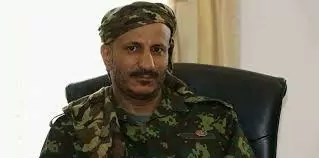
Brigadier General Tariq Saleh is the nephew of the former Yemeni president. He was also the head of his uncle’s special guard unit. Under his uncle’s command, Tariq led a military uprising against the Houthis. The uprising failed miserably, and Ali Saleh was captured by the Houthis while trying to flee Sana’a. The former president was killed on the spot along with a couple of his aides (BBC, December 4, 2017). It was widely reported that Tariq was also killed (al-Jazeera, December 5, 2017). A few weeks later, however, Tariq made a public appearance in the southern province of Shabwa—located 180 miles away from Sana’a—which is under the control of the internationally recognized government. There, Tariq attended the mourning ceremony of an aide who was killed with his uncle. He also used the occasion to renew his uncle’s last position: condemning the Houthis, appealing to Saudi Arabia and vowing to continue his uncle’s fight (al-Araby al-Jadeed, January 11; YouTube, January 11).
The late president Saleh’s surprising move to side with the Houthis in 2014 was vital to their success in controlling Sana’a and forcing the government into exile in Saudi Arabia and the southern city of Aden. His last shift was no less dramatic. The Saudi-led coalition hoped that this move would ultimately lead to the Houthis defeat, curtailing the influence of Iran, which is Saudi Arabia’s main regional foe, in Yemen. The failure of Saleh’s uprising, however, was a matter of celebration for the Houthis, who had always been cautious about their alliance with Saleh (al-Youm al-Saba, December 4, 2017). After the short-lived December uprising, the Houthis quickly regained control of Sana’a and seemed to have deterred any immediate reactions from the former president’s supporters (Arabi21, December 5, 2017). The killing of Saleh was a major blow to his supporters and to the Saudi-led Arab coalition. Now, Tariq Saleh may be the only person who has a serious chance at reorganizing the remnants of his uncle’s regime in the struggle against the Houthis.
Background
Brigadier General Tariq Muhammad Abdullah Saleh is the son of Ali Saleh’s brother. He was one of his uncle’s most trusted lieutenants, and he has been active in all the battles his uncle waged against the various competing Yemeni factions. The alliance between the Saleh family and the Houthis had been one of convenience more than of conviction. Over the last half of 2017, Saleh and supporters showed signs of breaking their ties with the Iranian-backed group, which had grown significantly and extended its influence beyond its traditional base in the Sa’da province in northern Yemen. Tariq was at his uncle’s side throughout all phases of the war: he fought on the side of the Houthis, and in the last few months, he organized the efforts to turn against them. But rehabilitation of Ali Saleh and reconciliation with him was not going to be easy for Saudi Arabia and the Gulf countries, which had previously coordinated his removal. Further complicating the situation, he was also under international sanctions. [1] After his uncle’s death, Tariq now stands poised for somewhat of a fresh start.
Forging New Alliances and Rallying the Base
With each of the main parties in the Yemeni civil war enjoying the support of certain foreign powers, Ali Saleh’s party was the least fortunate. Their alliance with the Houthis between 2014 and 2017 did not give them access to the Houthis’ support from Iran, which is run by a Shia regime. [2] Meanwhile, the predominantly Sunni Gulf nations supported the government that was established after Saleh’s removal. The former president’s last move was apparently a play to change this situation. The United Arab Emirates (UAE), which is the second largest partner in the Saudi-led coalition, started to see the Saleh family as having the potential to build a force that could both fight the Houthis and limit the power of the Muslim Brotherhood’s al-Islah party, which has significant influence within the government and played a major role in the 2011 popular uprising that led to Saleh’s removal from office. [3]
The UAE forces and their local Yemeni allies welcomed Tariq in southern Yemen. A number of military bases, including al-Anad, which is the biggest in the country, have been offered to him to build a military force of two brigades in preparation to attack the Houthis in their strongholds in Sana’a and the rest of northern Yemen. The former network that his uncle had built over his 32-year reign is weaker that what it once was, but it still represents a real power base if organized and revived (al-Janoob al-Youm, January 14; emasc-uae.com, January 17).
Saleh’s party, the General People’s Congress (GPC) is severely divided. Until his death, the former president led the biggest wing, which was based in Sana’a. [4] That wing elected a successor to Saleh and chose not to antagonize the Houthis who remain in control of the area. However, many of the party leaders and members fled Sana’a after the failed uprising. President Abd Rabo Mansour Hadi, who lives in exile in Saudi Arabia, leads another wing of the party. Yet a man with Saleh’s last name has the biggest chance to rally the party’s base and convince its members that a return to power is possible. Tariq Saleh’s first appearance after the killing of his uncle was at the mourning ceremony for Arif al-Zoka, the secretary general of the GPC, who was killed with Ali Saleh. Tariq’s visit was a clear call for the supporters of the GPC to rally around the cause after its loss of leadership.
Tariq is the only person with a viable claim to Saleh’s name. The former president’s son, Ahmed Saleh, stated clearly from his UAE exile that he had no intention to join the power struggle in Yemen; and other family members are in the Houthis’ custody. The former president’s son had lost his position as commander of the elite Republican Guard Forces after his father lost power. Tariq also lost his position as commander of the president’s special protection unit, but he managed to keep most of the men from his smaller force and remain close to his uncle until the end. Now in the south, Tariq is working to attract Republican Guard soldiers to join him, and the success of any future attempt to attack the Houthis will depend on them (al-Arab, January 14).
The Southern Secessionist Movement
The civil war has inflicted a heavy cost on Yemen’s civilian population. It has also significantly increased the threat of militant groups, most notably the Shia Houthis, with their clear anti-Western sentiment, in the northern part of the country, and the fundamentalist Sunnis of al-Qaeda and Islamic State (IS) who operate primarily from their well-established bases in the south. Still, the war, which is about to enter its fourth year, is at a stalemate; the Houthis are in control of most of what was the Yemen Arab Republic (or North Yemen) until the unification of Yemen in 1990. The government had to relocate to Aden, which was the capital of The People’s Democratic Republic of Yemen (or South Yemen). Under these conditions, the southern secessionist movement, which Saleh defeated in the civil war of 1994, has gained a new momentum during the current war. [5]
Before making any attempt to attack the Houthis in the north, Tariq Saleh’s relocation to the south has already caused noticeable political and military consequences. On January 28, the forces of the Southern Transitional Council (STC), the biggest of the secessionist groups in the south, attacked Aden, the seat of the government. Supporters of the government accused the UAE of orchestrating the operation as part of the Abu Dhabi’s new strategy, which prioritizes confronting the Muslim Brotherhood’s Islah Party (El-Watan News, January 29). Tariq himself was accused of playing a role in the Aden clashes (al-Janoob al-Youm, January 28). Those accusations were not confirmed, and the coalition leadership mediated a ceasefire (arabi21.com, February 1). The STC, which now shares control of Aden with the government, declared that it supports Tariq Saleh. Likewise, the STC stated that it did not view Tariq as a threat to the southern secessionist cause despite his history of fighting southerners, whether recently during the current civil war or previously under his uncle’s rule during and after the 1994 North-South civil war (Aden al-Ghad, January 30; France 24 [via YouTube], January 30).
Outlook
The southerners played the main role in pushing back against the Houthis during the first months of the current civil war. The Saudi-led coalition air strikes were vital to stopping the Houthis’ progress after they reached Aden three years ago, but a significant part of the ground troops that regained control of Aden and other areas consisted of southern secessionists. (al-Jazeera, July 16, 2015). After three years of fighting, it has become clear that the coalition needs a powerful northern partner in order to recapture Sana’a and the North. Al-Islah party forces are active in areas like Ta’az and Marib on the borders between the North and the South. But they have long been unable to make inroads further north. The Houthis-Saleh alliance was too tough to defeat. It is now up to Tariq Saleh to prepare a plan to attack the Houthis from his southern bases. However, he is not going to enjoy the Islah party’s support. In fact, he might see himself fighting on two fronts. Both al-Islah and the internationally recognized government have been very skeptical about him and what he represents (eremnews.com, January 15).
Tariq might have lost the December battle in Sana’a and failed in his main task of protecting the life of his uncle. However, there are reports that the former president had actually ordered Tariq to take another escape route so that one of them might live and fight another day (Sky Yemen, December 9, 2017). Tariq is now preparing for that, although attacking the Houthis from the outside might be harder than from within as he tried and failed to do in December. Moreover, in order to launch a campaign against the Houthis in the North, he will need the support of Saudi Arabia, which still supports President Hadi’s government. Driving the Houthis out of Sana’a, however, would be a major turning point in the war. If Tariq Saleh manages to achieve that, the many actors involved in the civil war will be forced to take notice of him.
NOTES
[1] Ali Abdullah Saleh was designated for UN sanctions on November 7, 2014. Under UN Security Council resolution 2140, he was accused of being a threat to peace and stability in Yemen. See https://www.un.org/sc/suborg/en/sanctions/2140/materials/summaries/individual/ali-abdullah-saleh
[2] Like the Houthis, Saleh comes from the Zaidi branch of Shia Islam. However, Saleh ran a secular regime and remained faithful to the traditional nature of Zaidi faith, which is close to Sunni Islam. On the other hand, the Houthis, over the past two decades, have become very close to the practices of the Twelver branch of Shia Islam, which is practiced in Iran, Iraq, Lebanon and most of the Shia communities elsewhere in the Middle East.
[3] In 2015, al-Islah’s leadership declared that the party was not a part of the Muslim Brotherhood movement. Yet, it was only in December 2017 that the leaders of Saudi Arabia and the UAE, who consider the Brotherhood a terrorist organization, met with al-Islah leader for the first time since the war started. The two countries still support the Yemeni government, which is on friendly terms with al-Islah.
[4] A few months before his death, Saleh defied the Houthis’ opposition and restrictions and gathered dozens of thousands of his supporters in central Sana’a to celebrate the 35th anniversary of his party. See video here https://www.youtube.com/watch?v=-49nMIj-wTc
[5] The 1994 civil war resulted in the defeat of the former rulers of the Marxist regime of South Yemen to secede from the united Yemen they agreed to four years earlier. They were supported by Saudi Arabia, which wanted to weaken Saleh after he supported Iraq during the 1990 Gulf crisis and the subsequent Gulf war in 1991. Many southerners accused Saleh of pursuing discriminatory policies against them before and after the war. During the last years of Saleh’s rule, a secessionist movement grew big and visible. After the current civil war started, the secessionists became a powerful warring party.